Image 1 of 20
1 / 20
Plant Reference
Heuchera, Genus, spp., Multiple species,
- Genus
- Multiple species
coral bells
North America — the genus Heuchera is native to the continent with approximately 50 species distributed across the Pacific Coast ranges, Rocky Mountains, Great Plains, Appalachian Mountains, and southeastern woodlands from Alaska south through the United States and into Mexico; species grow in a range of habitats from dry rocky alpine slopes to moist deciduous forest understory depending on the species
Overview
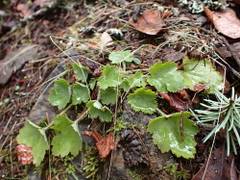
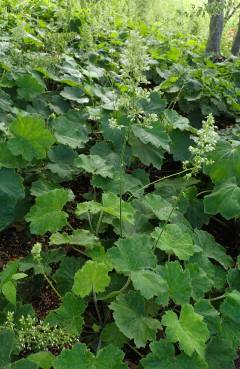
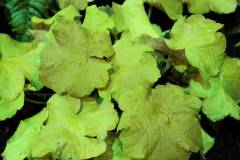
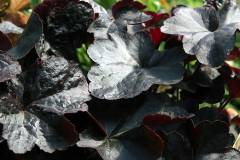
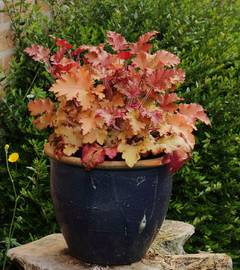
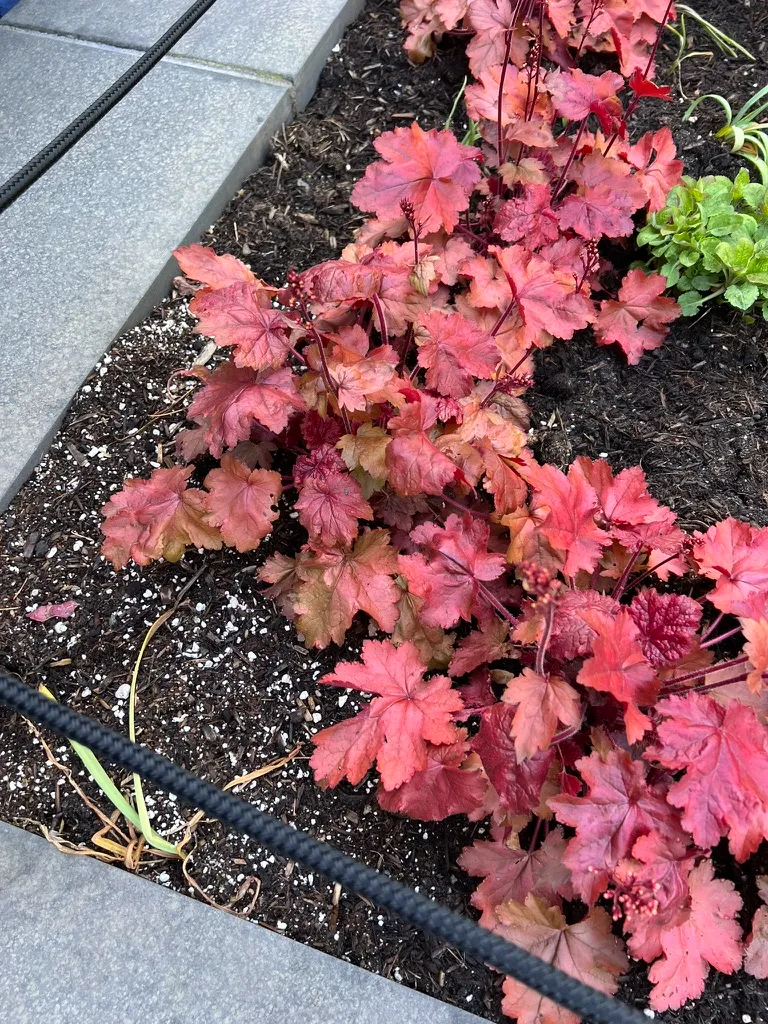
Heuchera is a genus of evergreen to semi-evergreen herbaceous perennials in the saxifrage family Saxifragaceae containing approximately 50 species all native to North America. Plants grow 6-18 inches (15-45 cm) tall in the basal foliage rosette and 12-24 inches (30-60 cm) wide, with flower stalks reaching 12-24 inches (30-60 cm) above the foliage mound during the bloom period. The basal rosette of heart-shaped to rounded shallowly lobed leaves 2-5 inches (5-13 cm) across on long petioles is the central ornamental feature of the genus in garden cultivation. Modern plant breeding has produced a foliage color range across cultivars that no other hardy shade perennial can match: cultivar foliage spans green, chartreuse, gold, amber, orange, copper, bronze, burgundy, deep purple, plum, near-black, and silver-marbled combinations, with many cultivars shifting color seasonally as new growth emerges in one tone and matures through another. This foliage color development is driven by plant-breeding programs over the past several decades, particularly the work of Terra Nova Nurseries and other specialist shade-perennial breeders who have crossed parent species to combine traits, and the modern named Heuchera lineup now runs to hundreds of cultivars with annual releases of new color forms. Tiny bell-shaped flowers 0.25 inch (6 mm) long open in loose airy panicles on wiry flower stalks during May through July for 6-8 weeks; flower color ranges from white and cream through pink to coral and red depending on cultivar, and hummingbirds visit the tubular flowers consistently across the range. Most modern Heuchera cultivars are grown for foliage rather than for flowers — the foliage display runs year-round in most of the hardiness range while the flower display is a shorter seasonal accent. The genus is distinguished from the visually similar Tiarella (foamflower, another native North American saxifrage) by larger and less deeply cut leaves and from the intergeneric hybrid × Heucherella (the Heuchera × Tiarella cross) by the absence of Tiarella parentage. Most garden cultivars are complex hybrids derived from several parent species including H. americana (American alumroot, eastern North American forests), H. sanguinea (coral bells, the species with the showiest flowers, from Arizona and northern Mexico), H. micrantha (small-flowered alumroot, Pacific Coast ranges), and H. villosa (hairy alumroot, Appalachian region) — different breeding lines draw on different parent species to produce different trait combinations, and cultivars labeled with parent species information give clues about their tolerance ranges. The central cultivation limitation is woody crown heaving: the thick woody rootstock of mature plants gradually pushes upward out of the soil over several growing seasons as old root tissue dies back and new tissue forms above it, and plants left in place without intervention eventually stand on a woody stump several inches above the soil surface with the foliage rosette hanging over empty space and the feeding roots struggling to reach soil moisture. The standard correction is to lift, divide, and replant the crown every 3-4 years, resetting the rootstock at soil level and splitting congested clumps into smaller sections. Foliage color holds through the winter months in zones 6-9 and the rosette is present year-round in those zones; colder zones experience more dieback. Full sun is tolerated in cool northern climates (zones 4-6) but causes leaf scorch on the darker-leaved cultivars in hot exposed sites and afternoon shade is needed in warmer climates. Dark-leaved cultivars hold their color well in deeper shade while gold and chartreuse cultivars need brighter indirect light to develop vivid color. Non-toxic. Deer-resistant. Native to North America.
Native Range
Heuchera is a North American genus with approximately 50 species distributed across the continent from Alaska south through the United States to Mexico. The genus covers a wide range of habitats and climates through its native distribution: H. americana (American alumroot) ranges across eastern North American deciduous forests from Ontario south to Georgia; H. sanguinea (true coral bells, the species with the showiest red flowers and the original source of the common name) grows on rocky slopes of Arizona, New Mexico, and northern Mexico; H. micrantha (small-flowered alumroot) grows in moist forests and along stream banks through the Pacific Coast ranges of California, Oregon, Washington, and British Columbia; H. villosa (hairy alumroot) grows in the Appalachian mountains and southeastern woodlands; H. cylindrica (roundleaf alumroot) grows on rocky slopes through the Rocky Mountain region. Modern garden cultivars are complex hybrids derived from multiple parent species, bred primarily in North American and European horticultural breeding programs from the mid-20th century onward and accelerating in the 1990s and 2000s with the development of the colored-foliage cultivars that dominate the current market. The species is native to North America and the genus is sometimes grown in native plant gardens as a regionally appropriate shade perennial, though most cultivars offered commercially are hybrids rather than pure native species.Suggested Uses
Planted as a shade-border accent, a container specimen carrying the 'thriller' role in mixed planters, a woodland-understory companion, a front-of-border color specimen in mixed perennial borders, and a native shade plant in North American native gardens, at 12-18 inch (30-45 cm) spacing in containers of 2 gallons (7.5 L) or larger in zones 4-9. The foliage color range gives the genus a central role in shade-border design because no other hardy shade perennial carries the same range of colored-leaf options — dark-purple cultivars pair with silver-foliage companions for high-contrast color theming, gold and chartreuse cultivars brighten deep-shade positions where most other plants carry dark-green foliage, and orange-bronze cultivars carry warm tones into shaded areas that would otherwise read as cool. Combined with ferns, Hosta, Astilbe, Tiarella, Epimedium, and Brunnera in shade-perennial plantings where the foliage colors and textures interact for layered visual effect. The hummingbird-visited flowers extend the value of the planting to pollinator gardens despite the secondary role of the flowers in most cultivars. Not suited to hot full-sun positions outside cool northern climates where leaf scorch damages the foliage, poorly drained or wet winter soils where crown rot develops, or gardens where the 3-4 year division schedule to correct crown heaving is not practical as routine maintenance.How to Identify
Appearance
Size & Dimensions
Height6" - 1'6"
Width/Spread1' - 2'
Colors
Bloom Information
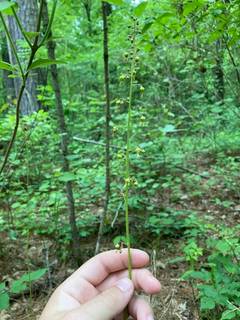
Tiny bell-shaped flowers 0.25 inch (6 mm) long open in loose airy panicles on wiry flower stalks 12-24 inches (30-60 cm) above the foliage mound during May through July in zones 4-9, lasting approximately 6-8 weeks. Flower color ranges from white and cream through pink to coral and red depending on cultivar — the common name coral bells refers to H. sanguinea, the original species introduced to horticulture and the source of the red-flowered breeding lineage, while modern foliage-focused cultivars often carry more modest white or cream flowers as a secondary feature. Hummingbirds visit the tubular flowers consistently and the species draws ruby-throated hummingbirds in eastern gardens and Anna's and Rufous hummingbirds in western gardens. The flower display is secondary to the foliage color as the primary garden feature in most modern cultivars, and the foliage rosette carries the main ornamental interest across the full year while the flowers are a shorter seasonal accent.
Detailed Descriptions
Flower Description
white, cream, pink, coral, or red; tiny bell-shaped flowers 0.25 inch (6 mm) carried in loose airy panicles on wiry flower stalks 12-24 inches (30-60 cm) tall above the basal foliage moundFoliage Description
wide range by cultivar — green, chartreuse, gold, orange, bronze, copper, burgundy, deep purple, near-black, silver-marbled, and combinations; heart-shaped to rounded shallowly lobed basal leaves 2-5 inches (5-13 cm) across on long petioles arranged in a dense basal rosette from a thick woody rootstock; foliage persists through winter in most of the hardiness rangeGrowing Conditions
Sun Requirements
Requires 2-6 hours of direct sunlight daily
• Full Sun: 6+ hours of direct sunlight
• Partial Shade: 3-6 hours of direct sunlight
• Full Shade: Less than 3 hours of direct sunlight
Care & Maintenance
Care Guide
Plant in well-drained humus-rich loam with a pH of 5.5-7.0 in part shade to full shade (2-6 hours of direct sun), with full sun tolerated only in cool northern climates (zones 4-6) where the lower summer heat prevents leaf scorch. Afternoon shade is needed in warmer climates and the darker-leaved cultivars are more prone to scorch than the lighter gold and chartreuse lines. Dark-leaved cultivars hold their color well in deeper shade while gold and chartreuse cultivars need brighter indirect light to develop vivid color — matching the cultivar color to the planting site exposure is the key to getting the intended foliage color display. The central cultivation limitation is woody crown heaving: the thick woody rootstock gradually pushes upward out of the soil over several growing seasons, and plants left in place without intervention eventually stand on a woody stump several inches above the soil surface with the foliage rosette hanging over empty space. The correction is to lift, divide, and replant the crown every 3-4 years — dig the whole clump, reset the rootstock at soil level, split congested clumps into smaller sections at the same time, and replant at the original depth. Old tattered winter-damaged foliage is cut individually at the leaf base in early spring before new growth emerges, rather than shearing the entire rosette. Non-toxic to humans and pets. Deer-resistant — the genus is reliably avoided by deer browsing in garden settings. Native to North America.Pruning
Old, tattered, and winter-damaged foliage is removed in early spring (March-April) by cutting individual leaves at the leaf base rather than by shearing the entire rosette, because shearing damages emerging new growth at the crown. Spent flower stalks are cut to the base after bloom finishes in July or August if the dried panicles are not wanted as a textural accent. Division and replanting is the central periodic maintenance task for the genus and is done every 3-4 years to correct the woody crown heaving that develops as the rootstock pushes upward out of the soil: the whole clump is dug in early spring or early fall, the woody rootstock is split into smaller sections with a knife or sharp spade, and the sections are replanted at the original soil level to reset the crown position. Congested clumps that have not been divided for several years can be split into 4-6 sections at one time for replanting.Pruning Schedule
Prune: March–April
early spring
Container Growing
Suitable for container growing
Minimum container size: 2 gallons