Heuchera, Genus,
- Genus
alumroots
North America (Canada to northern Mexico)
Overview
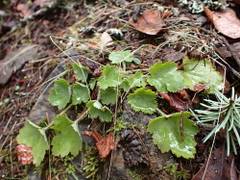
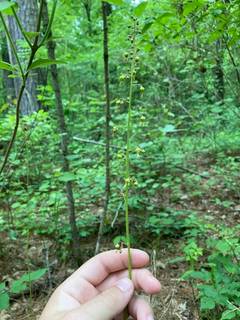
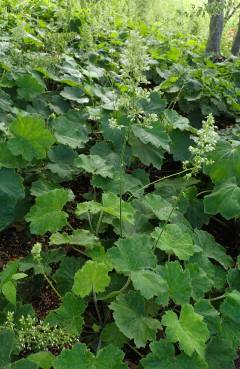
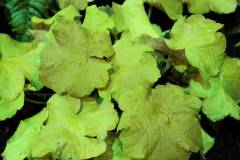
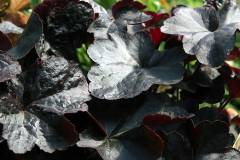
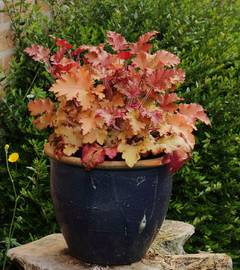
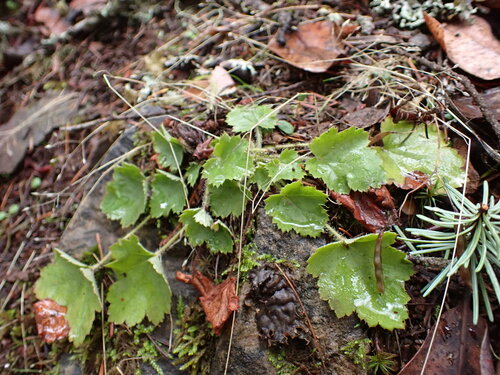
Heuchera is a genus of about 50 species of clump-forming perennials in the saxifrage family (Saxifragaceae), known as alumroots or coral bells, all native to North America. Plants form low mounds 8-18 inches (20-45 cm) high of long-stalked, rounded to maple-shaped leaves that are evergreen to semi-evergreen in mild climates. Wild species have green leaves, but cultivated forms range widely in foliage color across purple, bronze, amber, lime, silver, and red, often with contrasting veins. In late spring and summer, wiry stems rise 1-3 feet (30-90 cm) above the foliage, carrying airy sprays of tiny bell-shaped flowers in white, pink, red, or coral that draw hummingbirds and bees. Most species grow in woodland, rocky slopes, and stream banks, and the genus is grown chiefly for its mounded, colorful foliage rather than the small flowers. Plants form a woody crown that tends to lift out of the ground over a few years and needs occasional resetting. The genus grows in part shade and humus-rich, well-drained soil, and the dark-leaved cultivars hold their color in brighter light.
Native Range
Heuchera is native to North America, from Canada through the United States to northern Mexico, with species in eastern woodlands, the Rocky Mountains, and the Pacific states. Plants grow on shaded slopes, rock outcrops, and along streams.Suggested Uses
Grown for foliage color in shade and woodland borders, as edging and groundcover in part shade, and in containers and mixed plantings for season-long leaf interest. The flower sprays are used in pollinator and hummingbird plantings and as cut flowers. Dark- and bright-leaved cultivars are planted for contrast among greens in mixed beds.How to Identify
Appearance
Size & Dimensions
Height8" - 1'6"
Width/Spread1' - 2'
Colors
Bloom Information
Most Heuchera bloom from late spring into midsummer, with the airy flower sprays lasting several weeks above the foliage. The small bell-shaped flowers carry nectar that draws hummingbirds and bees. Removing the spent stems can bring a lighter second flush in some types.
Detailed Descriptions
Flower Description
white, pink, red, or coralFoliage Description
green, purple, bronze, amber, lime, silver, or redGrowing Conditions
Sun Requirements
Requires 3-6 hours of direct sunlight daily
• Full Sun: 6+ hours of direct sunlight
• Partial Shade: 3-6 hours of direct sunlight
• Full Shade: Less than 3 hours of direct sunlight
Care & Maintenance
Care Guide
Grow Heuchera in part shade in humus-rich, moist but well-drained soil with a pH of 6.0-7.0; many take full sun in cool, moist climates, while afternoon shade prevents leaf scorch in hot regions. Keep the soil evenly moist, as plants suffer in both drought and waterlogging. The woody crown lifts above the soil over time, so plants are reset deeper or divided every three to four years to keep them vigorous. Feed lightly in spring with compost or a balanced fertilizer. Vine weevil grubs, which eat the roots, are the most damaging pest, along with crown rot in wet ground. Heaving in winter can push plants out of the soil in cold regions.Pruning
Remove faded flower stems at the base after blooming to tidy the plant and encourage repeat bloom. Cut away tattered or winter-burned leaves in early spring as new growth begins. Dividing the crowns every few years keeps the foliage dense and the plants healthy.Container Growing
Suitable for container growing
Minimum container size: 2 gallons