Heuchera, Genus, cylindrica, Species,
- Genus & species
round-leaf alumroot
Western North America (Intermountain West and Pacific Northwest)
Overview
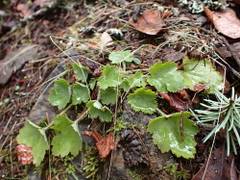
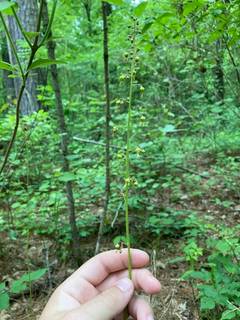
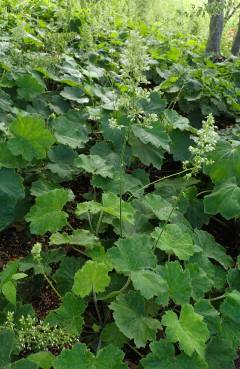
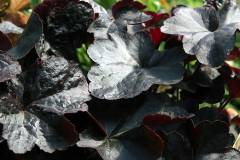
Heuchera cylindrica is a clump-forming perennial of dry rocky slopes, reaching 12-30 inches (30-75 cm) tall in flower with a basal mound of foliage 4-8 inches (10-20 cm) high and 8-12 inches (20-30 cm) wide. Leaves rounded to kidney-shaped, 1-3 inches (2.5-7.5 cm) wide, with 5-7 shallow rounded lobes, dark green and slightly glossy, semi-evergreen to evergreen depending on winter temperatures. Flowering scapes are stout and unbranched, bearing dense narrow cylindrical spikes 4-8 inches (10-20 cm) long of small cup-shaped cream to greenish-yellow flowers about 0.25 inch (6 mm) long. Bloom occurs from late May through July, with one main flush per crown. Spreads by short woody rhizomes; clumps reach 12-18 inches (30-45 cm) wide in 3-4 years and begin to hollow out by year 5. Foliage scorches above 90 degrees F (32 degrees C) in low-humidity sites without afternoon shade. Flower color tends toward green in cool springs and toward cream in warm summers.
Native Range
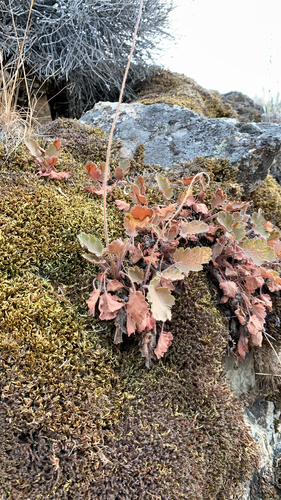
Native to dry meadows, sagebrush slopes, and rocky outcrops in western North America from southwestern Canada (British Columbia, Alberta) south through Washington, Oregon, Idaho, Montana, Wyoming, and northern California at elevations of 1,000-9,500 feet (300-2,900 m).Suggested Uses
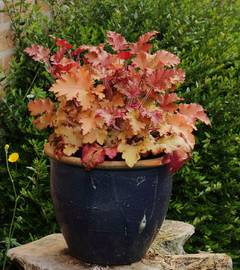
Used in dry-climate rock gardens, gravel gardens, and west-facing slopes at 12-15 inch (30-38 cm) spacing. Combines with native bunchgrasses such as Festuca idahoensis in restoration plantings on dry sites. Grows in containers of at least 2 gallons (7.5 L) with a free-draining cactus or rock garden mix; rots in standard potting mix that retains moisture.How to Identify
Appearance
Size & Dimensions
Height1' - 2'6"
Width/Spread8" - 1'6"
Bloom Information
Late May through July across most of its range. In zones 4-5 at higher elevations, bloom may extend into August. Individual spikes open from base to tip over 3-4 weeks, with full clump bloom lasting 5-6 weeks. Hot dry winds shorten individual flower life from 5 days to 2-3 days.
Detailed Descriptions
Flower Description
Cream to greenish-yellowFoliage Description
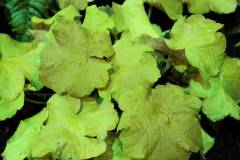
Dark green, slightly glossyGrowing Conditions
Sun Requirements
Requires 4-8 hours of direct sunlight daily
• Full Sun: 6+ hours of direct sunlight
• Partial Shade: 3-6 hours of direct sunlight
• Full Shade: Less than 3 hours of direct sunlight
Care & Maintenance
Care Guide
Establishes within one season in well-drained gritty soils with weekly water through the first summer. Mature plants tolerate 4-6 weeks without rain in zones 4-7 once roots reach 8-10 inches (20-25 cm) deep. Crown rot occurs in heavy clay soils that stay saturated in winter; raised beds or sloped sites prevent this. Crowns are typically top-dressed with 1-2 inches (2.5-5 cm) of pea gravel rather than wood chips to keep them dry. Crowns rise above the soil over time and are reset 1-2 inches (2.5-5 cm) deeper every 4-5 years. Foliar nematodes occur in damp shaded conditions but are uncommon in this dry-adapted species.Pruning
Spent flower stalks are cut at the base in August after seed has set or to prevent self-seeding. Tattered or winter-damaged leaves are removed at the base in early spring before new foliage emerges. Divide crowns every 4-5 years in early spring or September when the center of the clump opens up.Pruning Schedule
Prune: March & August
early springsummer
Container Growing
Suitable for container growing
Minimum container size: 2 gallons