1 / 10
© Noah How, some rights reserved (CC-BY) · iNaturalist
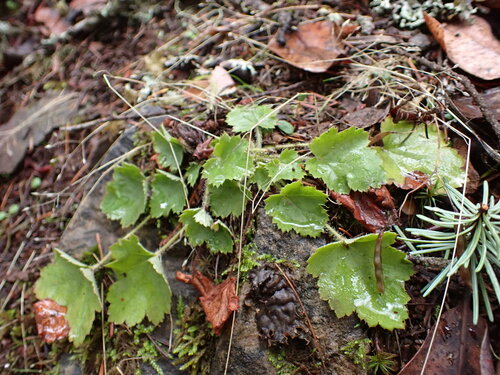
Heuchera micrantha
small-flowered alumroot
British Columbia south through Washington, Oregon to California; east to Idaho; moist rocky outcrops, cliff faces, stream banks, and shaded forest edges
Learn more
At a Glance
TypePerennial
HabitMounding
FoliageSemi-evergreen
Height12-30 inches (30-75 cm)
Width12-18 inches (30-45 cm)
Maturity3 years
Overview
Heuchera micrantha is small-flowered alumroot (crevice alumroot), a mounding semi-evergreen perennial growing 12-30 inches (30-75 cm) tall in flower (foliage 6-10 inches / 15-25 cm) and 12-18 inches (30-45 cm) wide. Tiny white to pinkish five-petaled flowers only 0.08-0.12 inch (2-3 mm) — micrantha = small-flowered — in loose airy panicles on wiry hairy stems 12-30 inches (30-75 cm) tall in May-July (6 weeks). The cloud-like haze of tiny flowers above the basal foliage is the characteristic flowering display. Rounded palmately lobed basal leaves with silvery mottling and prominent veining. In Saxifragaceae. Native to BC south through WA, OR, CA, east to ID. Found on moist rocky outcrops, on cliff faces, on stream banks, and at shaded forest edges. The parent species of many ornamental Heuchera cultivars including the famous 'Palace Purple' (1991 Perennial Plant of the Year) and the Bressingham Hybrids. Drought-tolerant once established — well-suited to dry shade. Deer-resistant. Non-toxic. Zones 4-9. Part shade to full shade. Growth rate is moderate.
Native Range
Native to British Columbia south through Washington and Oregon to California, east to Idaho. Found on moist rocky outcrops, on cliff faces, on stream banks, and at shaded forest edges. The parent species of many ornamental Heuchera cultivars including 'Palace Purple'.Suggested Uses
Grown in shaded mixed borders, woodland gardens, rock gardens, dry shade plantings, and containers of at least 2 gallons (7.5 L), spaced 12-18 inches (30-45 cm). Parent of 'Palace Purple'. Drought-tolerant once established. Non-toxic. Zones 4-9.How to Identify
Appearance
Size & Dimensions
Height1' - 2'6"
Width/Spread1' - 1'6"
Reaches mature size in approximately 3 years
Bloom Information
Late spring to mid summer (May-July). Tiny white to pinkish five-petaled flowers 0.08-0.12 inch (2-3 mm) in loose airy panicles on wiry stems 12-30 inches (30-75 cm) above the foliage. 6 weeks. Bee-pollinated.Detailed Descriptions
Flower Description
White to pinkish, tiny five-petaled flowers only 0.08-0.12 inch (2-3 mm) — micrantha = small-flowered; in loose airy panicles on wiry hairy stems 12-30 inches (30-75 cm) tall; the cloud-like haze of tiny flowers above the basal foliage is the characteristic flowering display; May-JulyFoliage Description
Medium green with light silvery mottling and prominent veining; rounded palmately lobed basal leaves 2-4 inches (5-10 cm) wide, with 5-9 shallow lobes and a cordate (heart-shaped) base; variably hairy; semi-evergreen — basal foliage persists through mild wintersGrowing Conditions
Sun Requirements
Requires 1-4 hours of direct sunlight daily
• Full Sun: 6+ hours of direct sunlight
• Partial Shade: 3-6 hours of direct sunlight
• Full Shade: Less than 3 hours of direct sunlight
Care & Maintenance
Care Guide
Part shade to full shade (1-4 hours). Well-drained loam, rocky, or sand pH 5.5-7.0. Drought-tolerant once established — dry shade tolerant. Cold-hardy (zone 4). Deer-resistant. Non-toxic. Zones 4-9.Pruning
Deadhead spent flower stems after bloom by cutting back to the basal rosette. Remove any winter-damaged foliage in early spring (February-March). Divide every 3-4 years to refresh the crown.Pruning Schedule
J
F
M
A
M
J
J
A
S
O
N
D
early spring
Maintenance Level
lowContainer Growing
✓ Suitable for container growing
Minimum container size: 2 gallons