Image 1 of 13
1 / 13
Plant Reference
Corydalis, Genus, scouleri, Species,
- Genus & species
Scouler's fumewort
Pacific Northwest of North America — British Columbia south through Washington and Oregon; moist coniferous forests, stream banks, and wet ravines
Overview
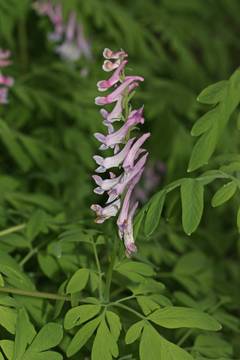
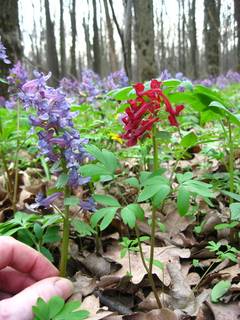
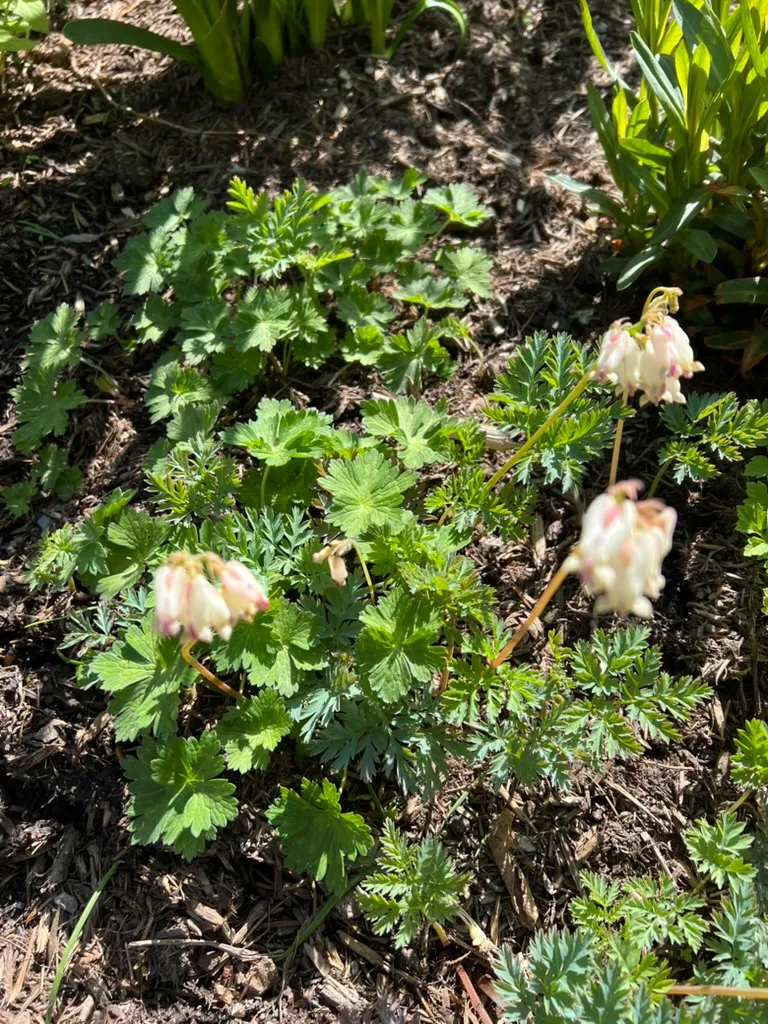
Corydalis scouleri is an upright deciduous perennial in the family Papaveraceae native to the Pacific Northwest of North America, reaching 24-48 inches (60-120 cm) tall and 18-36 inches (45-90 cm) wide — substantially larger than most other cultivated Corydalis species, which rarely exceed 18 inches (45 cm). Leaves are blue-green to medium green, bipinnately compound (twice-divided into leaflets and sub-leaflets), and 6-12 inches (15-30 cm) long, creating an airy ferny mound of foliage that carries the plant's ornamental interest through the flowering season. Rose-pink tubular flowers with purple tips and a curved spur 0.5 inch (1.3 cm) long open in dense terminal racemes 4-8 inches (10-20 cm) tall on upright flower stalks held above the foliage mound during May and June for approximately 4 weeks, and the spurred tubular flower shape is the characteristic form of the Corydalis genus across all species in the genus. The specific epithet honors John Scouler, a Scottish naturalist who collected extensively in the Pacific Northwest during the 1820s as a surgeon on the Hudson's Bay Company expedition, and the species has been in botanical cultivation since that period. The species is native to moist coniferous forests, stream banks, and wet ravines of the Pacific Northwest from British Columbia south through Washington and Oregon, where cool moist summer conditions under the coastal redwood, Douglas-fir, and hemlock canopy match its cultivation requirements. The central cultivation limitation is summer dormancy: in hot dry summer conditions the above-ground growth dies back to the ground by August and the plant remains dormant until the following spring, leaving a bare gap in the garden for 6-9 months of the year. In the maritime Pacific Northwest with cool moist summers and the high atmospheric humidity of the coastal rain shadow, the foliage often persists longer and may remain green through much of the summer, but gardens outside that climate range (especially hot-summer continental regions) see the foliage die back reliably by midsummer each year. Planting the species among ferns, Hosta, and other shade perennials that fill the vertical space after dormancy is the standard approach for managing the summer gap. The species spreads slowly by fleshy rhizomes to form colonies over time, and the rhizomatous spread is non-aggressive. The species is not drought-tolerant and needs consistently moist to wet soil. Deer avoid the foliage because Corydalis species carry isoquinoline alkaloids that deter browsing. Toxicity to humans and pets is not well documented for C. scouleri specifically, though other Corydalis species contain isoquinoline alkaloids that are toxic if ingested in quantity.
Native Range
Corydalis scouleri is native to the Pacific Northwest of North America, with a range extending from southern British Columbia through Washington and western Oregon. The species grows in moist coniferous forests, shaded stream banks, and wet ravines along the coastal mountain ranges and in the Cascades at low to mid elevations, where the canopy of coastal redwood, Douglas-fir, western hemlock, and western red cedar creates the cool moist shaded conditions that suit the species. The specific epithet honors John Scouler (1804-1871), a Scottish naturalist and physician who served as a surgeon on the Hudson's Bay Company expedition to the Pacific Northwest in 1824-1825 and collected extensively in the region during his posting.Suggested Uses
Planted in moist woodland gardens, rain gardens, stream-side plantings, and native plant gardens throughout the maritime Pacific Northwest and other cool moist maritime regions at 18-36 inch (45-90 cm) spacing in zones 5-9. The large size compared to other cultivated Corydalis species, the airy blue-green ferny foliage, and the rose-pink spring flower display give the species a role as a mid-border or back-of-border perennial in woodland plantings where the summer dormancy is compensated by companion plantings that fill the vertical space after the Corydalis has died back. Combined with Polystichum munitum (sword fern), Tiarella trifoliata, Asarum caudatum, and other Pacific Northwest native woodland companions in naturalistic plantings that carry the regional plant-community composition. Not suited to hot dry summer climates without irrigation where moisture stress accelerates dormancy and kills rhizomes over several years, sunny positions where the foliage scorches, gardens where the 6-9 month summer gap from dormancy is aesthetically unacceptable without adjacent companion plants filling the space, or landscapes with heavy deer or rabbit pressure where the foliage is browsed before it can establish.How to Identify
Appearance
Size & Dimensions
Height2' - 4'
Width/Spread1'6" - 3'
Colors
Bloom Information
Rose-pink tubular flowers with purple tips and a curved spur 0.5 inch (1.3 cm) long open in dense terminal racemes 4-8 inches (10-20 cm) tall during May and June in zones 5-9, lasting approximately 4 weeks. Flowers are bee-visited. The flower color is the most vivid among the cultivated Corydalis species grown in North American woodland gardens. Summer dormancy begins in July or August depending on climate — the foliage dies back to the ground in hot dry summer conditions and the plant remains dormant until the following spring, though in the cool moist maritime Pacific Northwest climate the foliage often persists through much of the summer.
Detailed Descriptions
Flower Description
rose-pink with purple tips; tubular flowers with a curved spur 0.5 inch (1.3 cm) long borne in dense terminal racemes 4-8 inches (10-20 cm) tall on upright stalks held above the ferny foliage moundFoliage Description
blue-green to medium green; bipinnately compound (twice-divided) ferny leaves 6-12 inches (15-30 cm) long with finely dissected leaflets that create an airy fern-like mound of foliage; turns yellow before dying back in summer dormancyGrowing Conditions
Sun Requirements
Requires 1-4 hours of direct sunlight daily
• Full Sun: 6+ hours of direct sunlight
• Partial Shade: 3-6 hours of direct sunlight
• Full Shade: Less than 3 hours of direct sunlight
Care & Maintenance
Care Guide
Plant in consistently moist to wet humus-rich soil with a pH of 5.5-7.0 in part shade to full shade (1-4 hours of direct sun). The species is not drought-tolerant and needs consistent soil moisture through the growing season — dry-summer conditions accelerate the onset of summer dormancy and stress the rhizomes. Water weekly in rainfall-deficit periods. In the maritime Pacific Northwest with cool moist summer conditions the foliage often persists through much of the summer, while in hot-summer continental regions the foliage dies back to the ground by July or August each year, leaving a bare gap in the garden for 6-9 months. Planting the species among companion plants that fill the vertical space after dormancy — ferns, Hosta cultivars, and other shade perennials that carry summer foliage when the Corydalis has died back — is the standard approach for managing the summer gap. Dead summer-dormant foliage is cut to the ground in late summer (August-September) once it has withered. The species spreads slowly by fleshy rhizomes to form colonies over time, and the spreading habit is non-aggressive enough that containment is rarely needed. Deer avoid the foliage because of the isoquinoline alkaloid content that is characteristic of the genus. Toxicity to humans and pets is not well documented for C. scouleri specifically, though caution is warranted because related Corydalis species contain toxic alkaloids.Pruning
Dead summer-dormant foliage is cut to the ground in late summer (August-September) once it has withered and browned, leaving the dormant rhizomes undisturbed in the soil for the following spring's emergence. No other pruning is needed through the growing season. Rhizome spread is slow and non-aggressive, and containment is rarely needed, though colonies that exceed the intended area can be thinned by digging out rhizome extensions along the colony margin in early spring before new growth emerges.Pruning Schedule
Prune: August–September
summer