Image 1 of 8
1 / 8
Plant Reference
Corydalis, Genus,
- Genus
fumewort
The genus has over 400 species distributed across the temperate Northern Hemisphere, with centers of diversity in the Himalaya and adjacent East Asia ({C. flexuosa} from China, {C. cashmeriana} from the Himalaya), continental Europe ({C. solida} from central Europe), the European Alps ({C. lutea}), and the Pacific Northwest of North America ({C. scouleri})
Overview
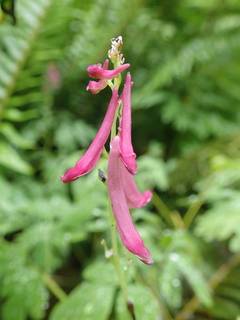
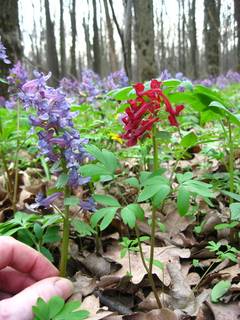
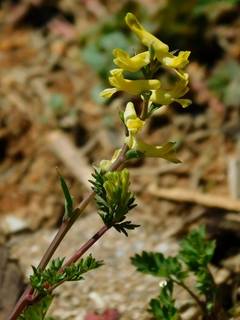
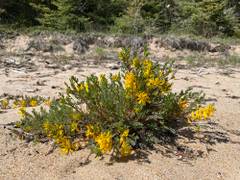
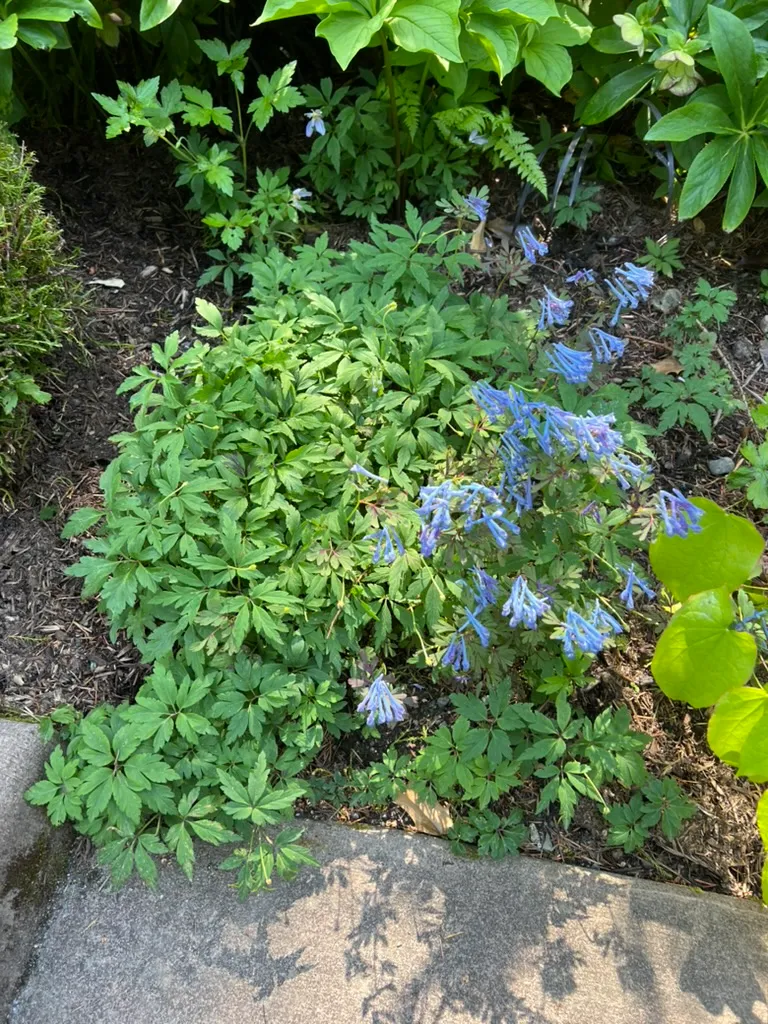
Corydalis spp. covers a genus of more than 400 mounding to upright perennial species in the family Papaveraceae distributed across the temperate Northern Hemisphere, with most cultivated garden species growing 6-36 inches (15-90 cm) tall and 8-24 inches (20-60 cm) wide. The genus is defined by two shared characters across all species: bipinnately compound (twice-divided) ferny foliage with delicate lacy leaflet dissection that gives the plants an airy fern-like texture, and tubular flowers with a backward-pointing curved spur 0.5-1 inch (1.3-2.5 cm) long borne in dense racemes held above the foliage. The genus name Corydalis comes from the Greek word for the crested lark, a reference to the spurred flower shape that resembles the crest of the bird. Flower color is the main way the commonly cultivated species are distinguished from each other: C. lutea (now reclassified as Pseudofumaria lutea, the yellow-flowered species from the European Alps) carries bright yellow flowers and blooms from May through October, C. flexuosa from western China carries electric-blue flowers in dense racemes above blue-green foliage and is the blue-flowered species grown in specialty woodland gardens, C. solida from central Europe carries purple flowers in early spring and is a widely grown spring-ephemeral, C. cashmeriana from the Himalaya carries deep blue flowers and is considered the trickiest species to cultivate outside its alpine habitat, and C. scouleri from the Pacific Northwest of North America carries rose-pink flowers and grows much larger than other species at 24-48 inches (60-120 cm) tall. The central cultivation limitation across most of the spring-blooming species is summer dormancy: C. flexuosa, C. solida, and the other spring ephemerals go dormant in hot dry summer conditions and die back to the ground by midsummer, leaving a bare gap in the garden until the following spring. The yellow-flowered C. lutea (Pseudofumaria lutea) is an exception and blooms continuously from May through October in most climates, self-sows freely into gravel, rock walls, and border edges, and persists through the whole growing season without dormancy — it is the easiest species to grow and the species normally found in garden-center offerings. Not drought-tolerant across the genus; most species need consistent moisture. All Corydalis species contain isoquinoline alkaloids and are toxic if ingested in quantity, producing nausea and central nervous system effects in humans and animals. Deer avoid the foliage because of the alkaloid content, and hummingbirds visit the spurred tubular flowers for nectar. The genus is popular in shade and woodland gardens because of the combination of ferny foliage and the spurred flower shapes in a wide range of colors across the cultivated species.
Native Range
Corydalis is a large Northern Hemisphere genus with over 400 species distributed across temperate Europe, Asia, and North America, and centers of species diversity in the Himalaya and adjacent East Asia where more than 200 species are recognized. Cultivated garden species come from several distinct regions: C. flexuosa and other blue-flowered species from western China and the eastern Himalaya, C. cashmeriana from the high Himalaya of Kashmir and Tibet, C. solida from central and eastern European woodlands, C. lutea (Pseudofumaria lutea) from the European Alps and Mediterranean mountains, and C. scouleri from the Pacific Northwest of North America. Each of the cultivated species carries the habitat preferences of its native region, and garden cultivation of a given species outside its climate range is generally unsuccessful — the Himalayan high-alpine species in particular are hard to establish in lowland gardens.Suggested Uses
Planted in shade gardens, woodland edges, rock walls and gravel gardens (C. lutea), raised beds and stone walls (C. lutea and C. ochroleuca thrive in these positions), and containers of 2 gallons (7.5 L) or larger at 8-24 inch (20-60 cm) spacing in zones 4-9. Each species fills a different garden role: C. flexuosa as a blue-flowered specialty shade perennial in moist woodland positions, C. lutea as a long-blooming self-sowing ground cover in dry shade and gravel, C. solida as a spring-ephemeral bulb-like plant interplanted with later-flowering perennials, C. scouleri as a large Pacific Northwest native in moist woodland plantings, and C. cashmeriana as a collector's specialty alpine requiring cool summer conditions. Combined with ferns, Hosta, Dicentra, Epimedium, and other shade perennials in woodland plantings where the spring bloom and the summer dormancy of the spring ephemerals coexist with later-flowering companion plants. Not suited to sunny dry positions for most species (except C. lutea), hot-summer climates for the Himalayan alpine species, gardens where the summer dormancy gap is aesthetically unacceptable without companion plants, or households with pets that investigate foliage — the isoquinoline alkaloid content is toxic if ingested in quantity.How to Identify
Appearance
Size & Dimensions
Height6" - 3'
Width/Spread8" - 2'
Colors
Foliage Colors
Fall Foliage Colors
Bloom Information
Tubular spurred flowers open in dense racemes from mid spring through midsummer in zones 4-9, with bloom timing varying by species. Spring ephemerals (C. solida, C. flexuosa, C. cashmeriana) bloom in April and May for approximately 4-6 weeks and then go dormant, while the yellow-flowered C. lutea (Pseudofumaria lutea) blooms continuously from May through October (up to 20+ weeks) without the summer dormancy that affects the spring ephemerals, and C. scouleri from the Pacific Northwest blooms in May and June for about 4 weeks. Flowers across the genus are bee- and hummingbird-visited — the spurred tubular shape accommodates both bee tongues and hummingbird bills for nectar access.
Detailed Descriptions
Flower Description
variable across the genus — yellow in C. lutea (now classified as Pseudofumaria lutea), blue in C. flexuosa and C. cashmeriana, purple in C. solida, white in C. ochroleuca (now Pseudofumaria alba), and rose-pink in C. scouleri; all species carry the same spurred tubular flower shape 0.5-1 inch (1.3-2.5 cm) long in dense terminal or axillary racemesFoliage Description
blue-green to gray-green to medium green depending on species; bipinnately compound (twice-divided) ferny foliage 2-6 inches (5-15 cm) long with delicate lacy leaflet dissection that gives the genus its airy fern-like foliage texture; many species turn yellow before summer or fall dormancyGrowing Conditions
Sun Requirements
Requires 2-6 hours of direct sunlight daily
• Full Sun: 6+ hours of direct sunlight
• Partial Shade: 3-6 hours of direct sunlight
• Full Shade: Less than 3 hours of direct sunlight
Care & Maintenance
Care Guide
Plant in well-drained to consistently moist humus-rich soil with a pH of 6.0-7.5 in part shade to full shade (2-6 hours of direct sun); soil moisture requirements vary by species, with C. flexuosa needing consistently moist soil and C. lutea tolerating drier conditions on rock walls and gravel paths. The species is not drought-tolerant across most of the genus. Many spring-flowering species — C. flexuosa, C. solida, and others — go dormant in hot dry summer conditions and die back to the ground by midsummer, leaving a bare gap in the garden until the following spring; companion plantings of ferns, Hosta, and other shade perennials that fill the vertical space after dormancy are the standard approach to manage the summer gap. The yellow-flowered C. lutea (Pseudofumaria lutea) is the exception and does not go dormant — it flowers continuously from May through October, self-sows into gravel and border edges, and persists through the whole growing season. All species contain isoquinoline alkaloids and are toxic if ingested in quantity, producing nausea and central nervous system effects in humans and animals. Deer avoid the foliage because of the alkaloid content. Dormant summer foliage is cut to the ground when it has withered (July-August). Hummingbirds visit the spurred flowers for nectar.Pruning
Dormant summer foliage on spring-flowering species is cut to the ground when it has withered (July-August), leaving the dormant rhizomes or tubers undisturbed in the soil for the following spring's emergence. The yellow-flowered C. lutea (Pseudofumaria lutea) and white-flowered C. ochroleuca self-sow freely into gravel, rock walls, and border edges — gardeners wanting to limit spread should remove seedlings as they emerge, while gardeners wanting to colonize a difficult dry site can allow the self-sowing to fill in naturally. No other pruning is needed across the genus.Pruning Schedule
Prune: July–August
summer
Container Growing
Suitable for container growing
Minimum container size: 2 gallons