Deer-Resistant Perennials: A Zone-by-Zone Planting Guide
Pets & Toxicity
Recorded toxicity for plants linked in this guide. An unknown status is not a safety assessment.
Toxic to pets: garden peony, hostas, Siberian irisDetailsHide
Lavandula angustifolia 'Phenomenal' — Toxicity
Non-toxicView Lavandula angustifolia 'Phenomenal' plant profile
— Image © PlantReference.org 2026
After twenty years of building perennial borders around wooded lots outside Boston, I can tell you the fastest way to lose a season of work is to plant a bed of hostas and daylilies at the edge of the trees. The deer find them the first night. Deer-resistant perennials are the plants that let you garden anyway—species with aromatic oils, fuzzy or leathery leaves, or bitter compounds that make a browsing deer move on to the neighbor's yard instead. This guide walks through why deer avoid certain plants, which perennials hold up best in your USDA zone, and how to arrange them so the whole border earns its keep.
Why Deer Eat Some Perennials and Avoid Others
Deer are browsers, not grazers. They sample constantly, and their choices come down to scent, texture, and taste. Understanding the four defensive traits that repel them is worth more than any single plant list, because it lets you evaluate anything at the nursery on your own.
The first trait is aromatic volatiles—the strong essential oils in plants like 🌿Lavandula angustifolia (lav-AN-dew-la an-gus-ti-FOH-lee-a), 🌿Salvia nemorosa, and 🌿Perovskia atriplicifolia. Those oils smell wonderful to us but overwhelming to a deer's sensitive nose, and they mask the scent of nearby plants a deer might otherwise eat. This is the single most dependable form of resistance in the perennial world.
The second is mechanical deterrence—fuzzy, woolly, or coarse textures that feel unpleasant in the mouth. Lamb's ear is the extreme example, but 🌿Rudbeckia fulgida 'Goldsturm' and 🌿Echinacea purpurea both carry bristly stems and leaves that deer dislike. The third is chemical toxicity: 🌿Paeonia lactiflora, bleeding heart, and astilbe contain bitter or mildly poisonous compounds that taste wrong on the first bite. The fourth is simply low nutritional value—ornamental grasses and ferns offer coarse, low-calorie foliage a deer will skip when anything better is available.
Here's the honest part, and I tell every client the same thing: no plant is deer-proof. A hungry deer in late winter, or a suburban herd that has lost its fear of people, will taste almost anything once. Resistance means a plant gets browsed last, not never. That distinction shapes every recommendation in this guide.

The Deer-Resistance Spectrum
I find it more useful to think in tiers than in a simple resistant-or-not list. Sorting perennials by how reliably deer skip them tells you where each plant belongs in the border—the toughest customers go on the perimeter, the tempting ones go in the protected interior.
The highly resistant tier is your front line: 🌿Perovskia atriplicifolia, 🌿Lavandula angustifolia, 🌿Salvia nemorosa, 🌿Nepeta racemosa (catmint), and bleeding heart. These almost never get touched once established. The moderately resistant tier—🌿Echinacea purpurea, 🌿Rudbeckia fulgida 'Goldsturm', 🌿Paeonia lactiflora, Sedum 'Autumn Joy', and yarrow—holds up well in most years but can be sampled under heavy pressure, especially the tender new spring growth.
Then there's the highly vulnerable tier, the plants deer treat as a salad bar: 🌿Hosta spp. of every kind, Hemerocallis (daylily) buds and foliage, tulips, and roses. You can still grow these, but only behind a barrier of resistant plants or a physical fence. I've watched a deer walk past a hundred coneflowers to reach one hosta.
Resistance Tier | Representative Perennials | Defensive Trait | Where to Plant |
|---|---|---|---|
Highly resistant | 🌿Perovskia atriplicifolia, 🌿Lavandula angustifolia, 🌿Salvia nemorosa, 🌿Nepeta racemosa | Aromatic oils | Perimeter / front line |
Moderately resistant | 🌿Echinacea purpurea, 🌿Rudbeckia fulgida 'Goldsturm', 🌿Paeonia lactiflora, Sedum 'Autumn Joy' | Fuzzy texture / bitter taste | Mid-border |
Highly vulnerable | 🌿Hosta spp., Hemerocallis, tulips, roses | None—preferred forage | Protected interior only |

Best Deer-Resistant Perennials by Zone
Deer resistance means nothing if the plant can't survive your winter or summer. The best deer-resistant perennial for Zone 3 Minnesota is a different animal from the best one for Zone 9 Georgia. Here's how the reliable performers sort out across the country's hardiness zones.
Cold Climates (Zones 3-4)
Up here, winter survival trumps every other consideration. The good news is that some of the most deer-resistant perennials are also the toughest. 🌿Paeonia lactiflora is legendary in Zone 3—it actually needs the deep cold to set buds, and its bitter foliage is left alone. 🌿Salvia nemorosa 'May Night' and 🌿Nepeta racemosa both overwinter reliably to Zone 3 and bloom for weeks. Siberian iris (🌿Iris sibirica) offers deer-resistant grassy foliage and handles wet spring soils that would rot other plants.
For these zones, mulch matters as much as plant choice. After the ground freezes, lay 2-3 inches (5-8 cm) of wood chips or evergreen boughs over the crowns to stop the freeze-thaw heaving that pushes plants out of the soil. If your beds sit in heavy ground, improving structure first pays off—see Poor Drainage in Raised Beds: Causes and Fixes for Waterlogged Soil for the same principles applied to any planting.
Cool to Temperate (Zones 5-6)
This is the widest sweet spot, and it's my home turf around Boston. Nearly every classic deer-resistant perennial thrives here. 🌿Lavandula angustifolia 'Phenomenal' is the lavender to plant east of the Rockies—it shrugs off humidity that kills English lavender, and its oils keep deer away all season. 🌿Perovskia atriplicifolia brings a haze of blue from midsummer into fall on stems deer never touch. 🌿Echinacea purpurea 'Magnus' and 🌿Rudbeckia fulgida 'Goldsturm' anchor the mid-border with fuzzy-stemmed, pollinator-friendly blooms.
Lavender's one demand is drainage. It evolved in fast-draining Mediterranean soils and rots in wet clay, so amend heavily with grit or plant on a raised mound. If you're testing and adjusting your soil, Raised Bed Soil pH Problems: Testing, Adjusting, and Maintaining Balance covers the process, since lavender also prefers a near-neutral pH.

Warm and Southern (Zones 7-8)
Heat and humidity are the stressors here, not cold. Aromatic Mediterranean perennials still perform, but drainage and airflow become critical. 🌿Perovskia atriplicifolia and 🌿Salvia nemorosa love the long warm season. 🌿Nepeta racemosa 'Walker's Low' blooms for months if you shear it back after the first flush. 🌿Echinacea purpurea is native to this range and handles the heat with ease, feeding pollinators from summer into fall.
Southern gardeners fighting deer in shade have a harder task, since many shade perennials are deer favorites. Ferns and 🌿Astilbe spp. (bitter and largely resistant) are your best bets under trees. For a tough dry-shade edge, Best Grass Seed for Shade Under Trees: 5 Species That Actually Work pairs well with a fern-and-astilbe underplanting.
Hot and Mediterranean (Zones 9-10)
In the Deep South and Southwest, a lack of winter chill limits some choices—peonies need low-chill varieties like 'Coral Sunset' to bloom at all. But the aromatic defenders are right at home. Lavender, 🌿Salvia nemorosa, and 🌿Perovskia atriplicifolia handle heat and drought beautifully, and Sedum 'Autumn Joy' stores water in succulent leaves that make it nearly indestructible. 🌿Rudbeckia fulgida 'Goldsturm' tolerates poor soils and blazing sun while deer leave its bristly foliage alone.
Zone Range | Top Deer-Resistant Picks | Key Growing Note |
|---|---|---|
3-4 (cold) | 🌿Paeonia lactiflora, 🌿Salvia nemorosa 'May Night', 🌿Iris sibirica | Mulch crowns after freeze to stop heaving |
5-6 (temperate) | 🌿Lavandula angustifolia 'Phenomenal', 🌿Perovskia atriplicifolia, 🌿Echinacea purpurea 'Magnus' | Sharp drainage for lavender is essential |
7-8 (warm) | 🌿Nepeta racemosa 'Walker's Low', 🌿Salvia nemorosa, 🌿Astilbe spp. | Prioritize airflow to limit humidity disease |
9-10 (hot) | Sedum 'Autumn Joy', 🌿Perovskia atriplicifolia, 🌿Rudbeckia fulgida 'Goldsturm' | Choose low-chill peonies; expect drought tolerance |
Designing a Deer-Resistant Border
Choosing the right plants is only half the job. How you arrange them decides whether the whole bed survives. The single most effective technique I use is the buffer strategy: plant your most pungent, highly resistant perennials on the perimeter of the bed, facing the direction deer approach from. A ring of 🌿Lavandula angustifolia and 🌿Perovskia atriplicifolia creates a wall of scent that masks the tender plants tucked behind it.
Layering by tier does the rest of the work. Put the aromatic front line at the edges, the moderately resistant coneflowers and black-eyed Susans in the middle, and reserve the protected interior—or a fully fenced pocket—for anything you love that deer also love. This is how I get clients their hostas and daylilies without feeding the herd.
Companion pairings sharpen the effect. Ringing a clump of daylilies with lavender or catmint measurably lowers browsing, because the deer can't smell the daylily buds through the oils. The same trick works with roses surrounded by 🌿Salvia nemorosa. Vertical placement helps too: raised beds and tall containers lift vulnerable plants out of easy reach. If you're building new beds for this, How to Build a Raised Garden Bed: Step-by-Step Construction Guide and Best Soil for Raised Beds: 6 Commercial Mixes Tested and Compared cover the construction and fill I recommend for a long-lived perennial planting, and The Complete Guide to Raised Bed Gardening for Beginners (2026) ties the whole approach together if you're new to it.

When Plants Alone Aren't Enough
In areas with severe deer pressure, resistant plants buy you time but not immunity. Rotating scent-based repellents every few weeks through spring—when new growth is tenderest and deer are hungriest—covers the gap. Repellents lose their edge if you use the same one all season, because deer habituate. And for a truly vulnerable collection, an 8-foot fence or a double row of shorter fencing is the only guarantee, since deer clear a single low fence with ease.
Establishing and Maintaining Deer-Resistant Perennials
A deer-resistant border is a long-term structure, and it rewards attention to the soil at planting time. Work 2-3 inches (5-8 cm) of compost into the bed before planting, and be especially generous with grit or coarse sand where lavender and Russian sage will go—wet feet kill more of these plants than deer ever will. Soil that stays waterlogged is a death sentence for Mediterranean perennials, so if your ground drains poorly, the fixes in Raised Bed Soil Settling and Compaction: Prevention and Solutions apply directly, and Best Soil Mix for Raised Beds: Creating the Perfect Growing Medium shows the gritty, free-draining blend these Mediterranean perennials want.
Mulch does double duty. A 3-4 inch (8-10 cm) layer conserves moisture and suppresses weeds, but keep it pulled back a few inches from every crown. Piling mulch against stems—the "mulch volcano"—traps moisture and rots the base of the plant, particularly on lavender and peonies. Feed lightly; these are lean-soil plants, and excess nitrogen produces floppy, over-lush growth that is both weaker and, ironically, more attractive to deer.
Division keeps the planting vigorous. Most of these perennials benefit from being lifted and split every three to five years, when the center of the clump starts to thin. 🌿Salvia nemorosa, 🌿Nepeta racemosa, and 🌿Echinacea purpurea divide easily in early spring; 🌿Paeonia lactiflora resents disturbance and should only be moved in fall, with each division carrying three to five eyes. Lavender is the exception—never divide it, since the woody base won't survive splitting. Propagate it from softwood cuttings instead.
Deadheading extends bloom on 🌿Salvia nemorosa and 🌿Nepeta racemosa, and shearing catmint by a third after its first flush brings a strong second wave. As the season closes, resist the urge to cut everything to the ground. The seed heads of 🌿Echinacea purpurea and 🌿Rudbeckia fulgida 'Goldsturm' feed goldfinches through winter, and standing stems shelter native bees—one of the quiet payoffs of a well-built perennial garden.
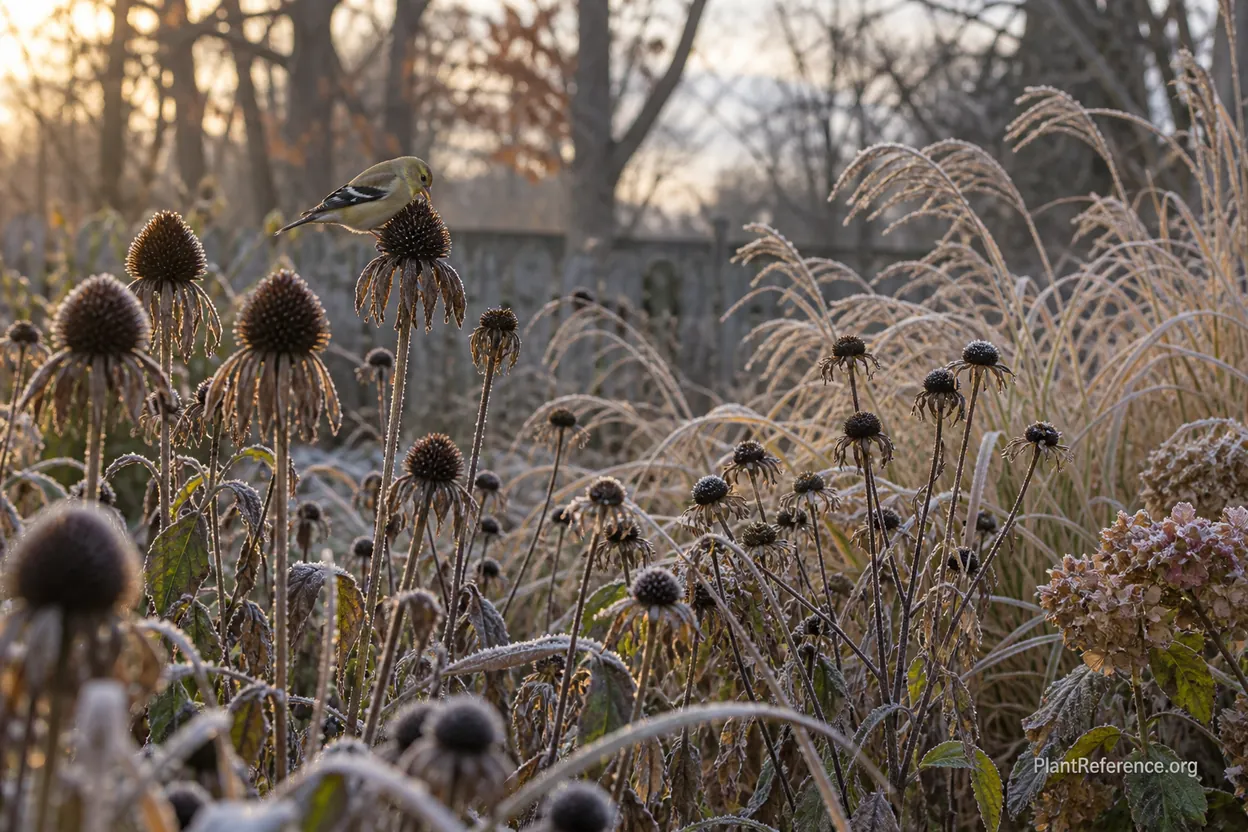
Build the border this way—right plants for your zone, aromatic species on the perimeter, sharp drainage, and light feeding—and you'll have a planting that gets better every year while the deer keep walking past it.
Frequently Asked Questions
Reading about plants and recognising them are different skills. These three build the second.
- Daily PlantIdentify the day’s mystery plant from a close-up photograph.
- Keyed OutWork a dichotomous key, lead by lead, to name a hidden specimen.
- Name That PlantName a specimen from botanical clues dealt hardest first.
Free to play, no account needed
Tagged with
Kevin is a landscape contractor in the Boston area who specializes in cold-climate perennial gardens and hardscaping. He studied landscape design and worked at a prominent nursery on the North Shore before starting his own design-build firm. Kevin's gardens are built to handle New England weather—freeze-thaw cycles, nor'easters, late springs, and heavy snow loads. He's particularly interested in native perennials and shrubs that provide four-season interest without constant maintenance. Kevin writes about cold-hardy plant selection, winter garden structure, and building landscapes that look good even in February.
