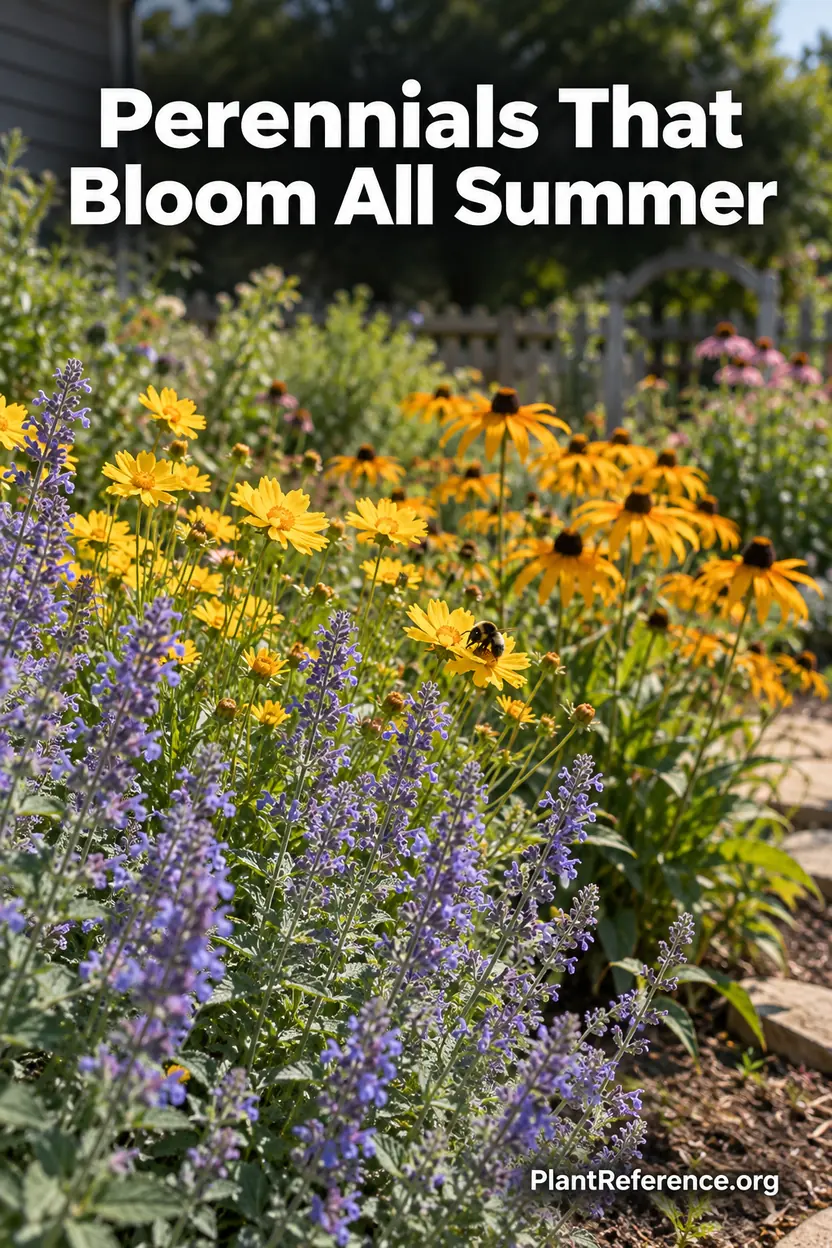
Best Perennials That Bloom All Summer for Zones 5 and 6
Pets & Toxicity
Recorded toxicity for plants linked in this guide. An unknown status is not a safety assessment.
Toxic to pets: Stella de Oro daylilyDetailsHide
Coreopsis verticillata 'Zagreb' — Toxicity
Non-toxicView Coreopsis verticillata 'Zagreb' plant profileHemerocallis × 'Stella de Oro' — Toxicity Warning
Toxic to petsView Hemerocallis × 'Stella de Oro' plant profilePerovskia atriplicifolia 'Little Spire' — Toxicity
Non-toxicView Perovskia atriplicifolia 'Little Spire' plant profile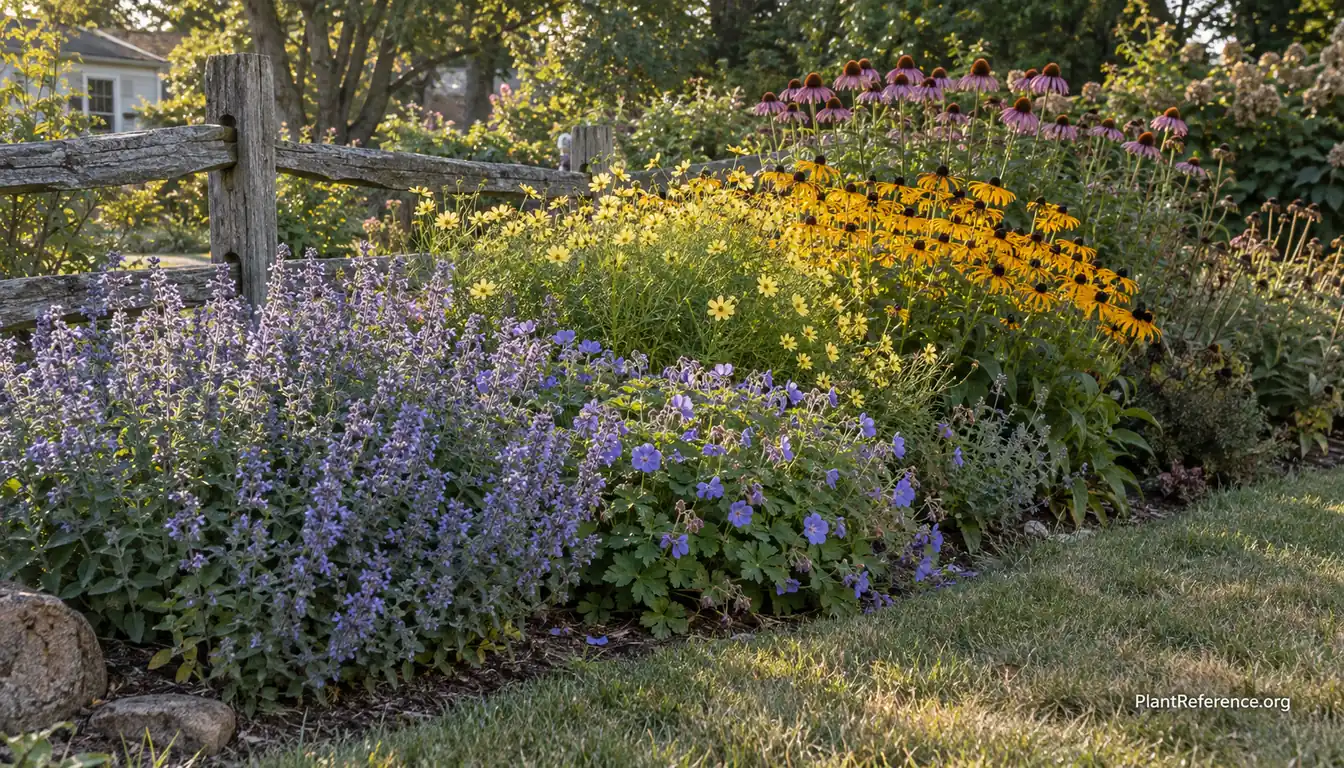
— Image © PlantReference.org 2026
In Milwaukee, I get about 150 frost-free days, and I want flowers in as many of them as possible. The best perennials that bloom all summer for Zones 5 and 6 aren't the flashiest plants at the garden center. They're the steady ones that survive a -20°F (-29°C) January and still flower from June until the first hard frost.
What "Blooms All Summer" Really Means in Zones 5 and 6
Let's be honest about the label. Almost no perennial flowers nonstop for 16 weeks without help. When a plant tag says "blooms all summer," it usually means one of three things.
True long bloomers flower continuously for 10+ weeks with little or no help
Rebloomers flower hard, pause, then flower again after shearing or deadheading
Long-season plants bloom 6-8 weeks but start late enough to carry August and September
A cold-climate border needs all three. Our springs start late and our falls end fast, so every plant has to earn its spot. Every pick below is hardy to at least Zone 5, and most go down to Zone 3 or 4.
If you want the bigger design picture, read Plan a Perennial Garden That Blooms Spring to Fall first. For a broader list that isn't limited to cold climates, see Perennials That Bloom All Summer: 12 Longest Bloomers.
Quick Comparison: 10 Long-Blooming Perennials
Perennial | Hardiness Zones | Bloom Window (Zones 5-6) | Height | Key Care Trick |
|---|---|---|---|---|
5-8 | June to frost | 18-24 in (45-60 cm) | Cut back by half in late July | |
Nepeta x faassenii 'Walker's Low' | 3-8 | Late May to September | 24-30 in (60-75 cm) | Shear by one-third after first flush |
3-9 | June to September | 12-18 in (30-45 cm) | Shear lightly in midsummer | |
3-9 | July to October | 24-30 in (60-75 cm) | Leave seed heads for birds | |
3-9 | June to September | 12-18 in (30-45 cm) | Remove spent scapes | |
Scabiosa columbaria 'Butterfly Blue' | 3-9 | June to October | 12-15 in (30-38 cm) | Deadhead weekly |
4-8 | Late May to August | 18-24 in (45-60 cm) | Cut spikes to rebloom | |
3-8 | July to September | 30-36 in (75-90 cm) | Deadhead early, then let seed | |
Leucanthemum x superbum 'Becky' | 4-9 | July to September | 36-40 in (90-100 cm) | Deadhead to side buds |
4-9 | July to October | 24-30 in (60-75 cm) | Cut back in spring, not fall |
The Longest Bloomers (10+ Weeks)
These four are the backbone of my own beds. If you only buy four plants this year, buy these.
1. 'Rozanne' Hardy Geranium
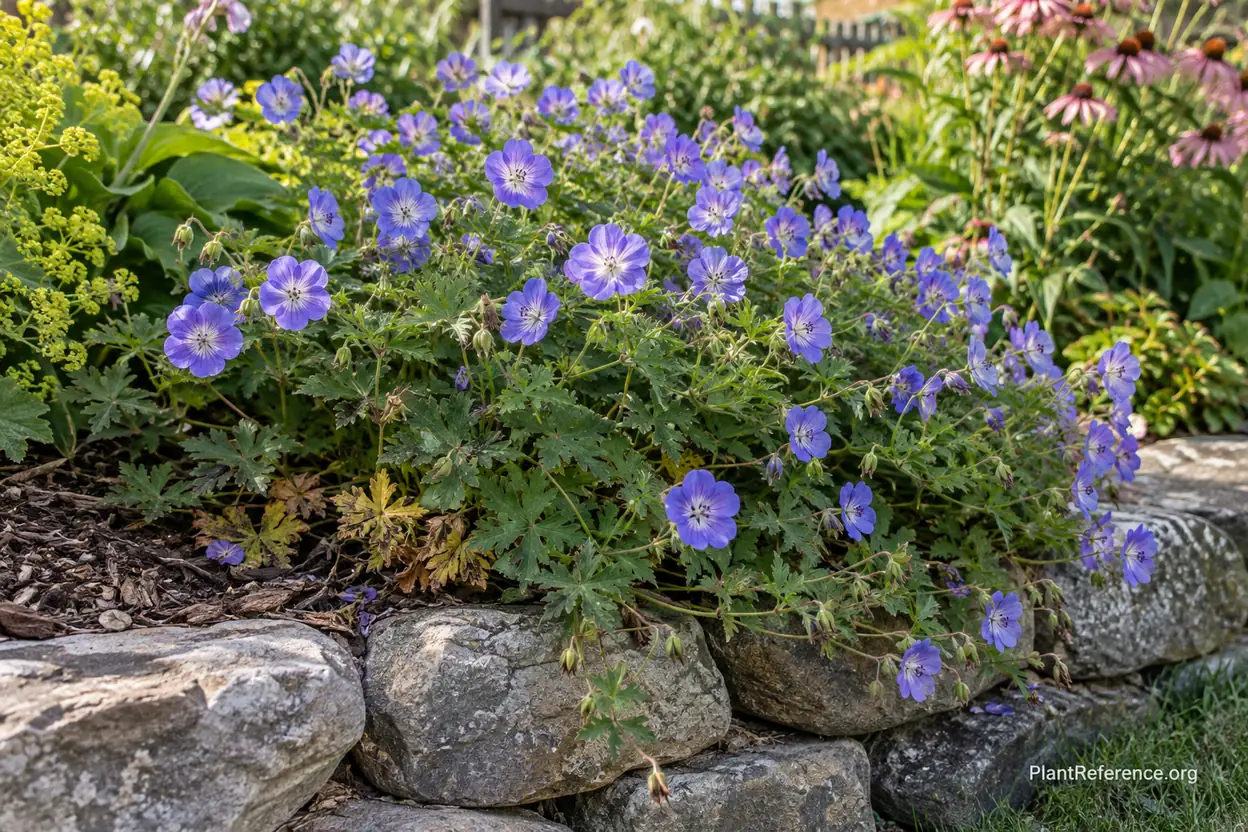
🌿Geranium 'Rozanne' (jer-AY-nee-um) is the single longest bloomer I grow. Violet-blue saucers open in early June and don't stop until a hard freeze. It sprawls 2-3 feet (60-90 cm) wide, weaving through neighbors instead of sitting in a lump.
It's rated to Zone 5, and in my Zone 5b garden it has come through every winter with a light leaf mulch. When it gets floppy in late July, cut it back by half. You'll have fresh flowers again within three weeks.
2. 'Walker's Low' Catmint
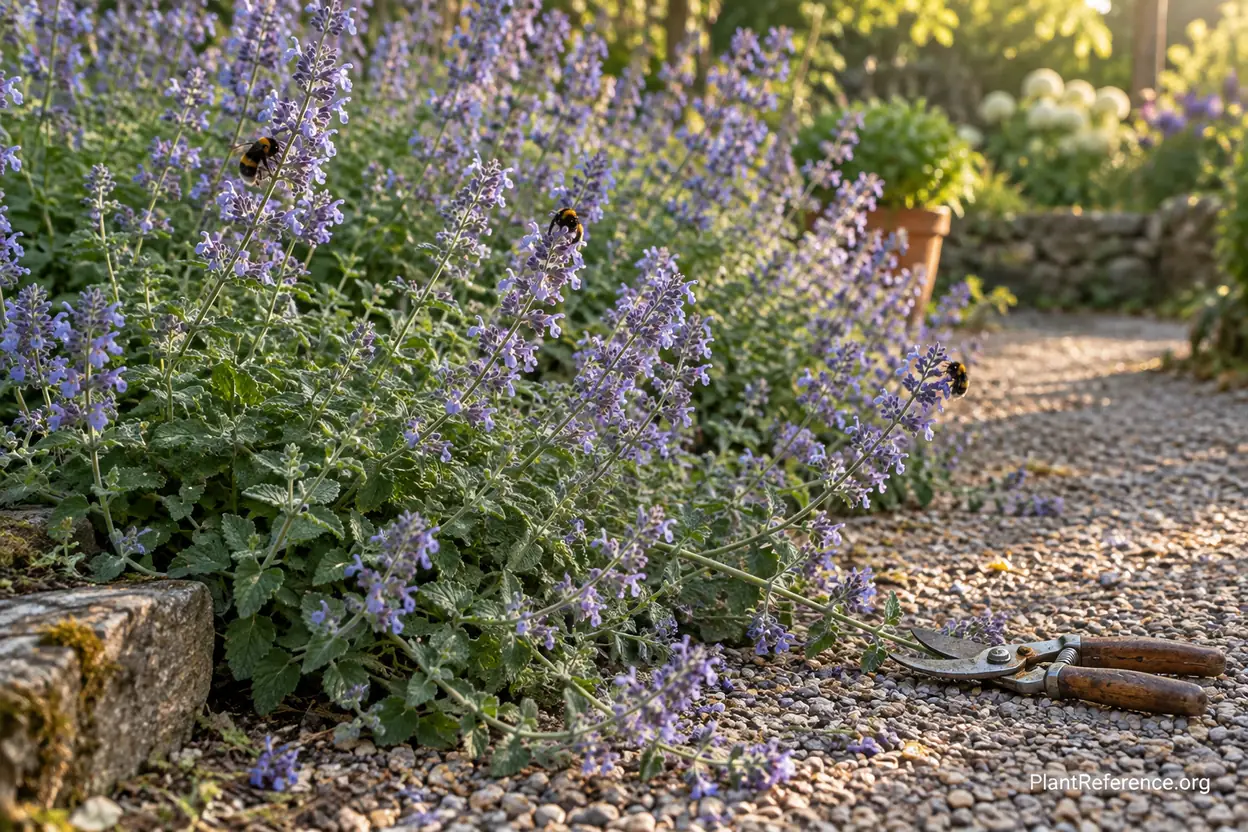
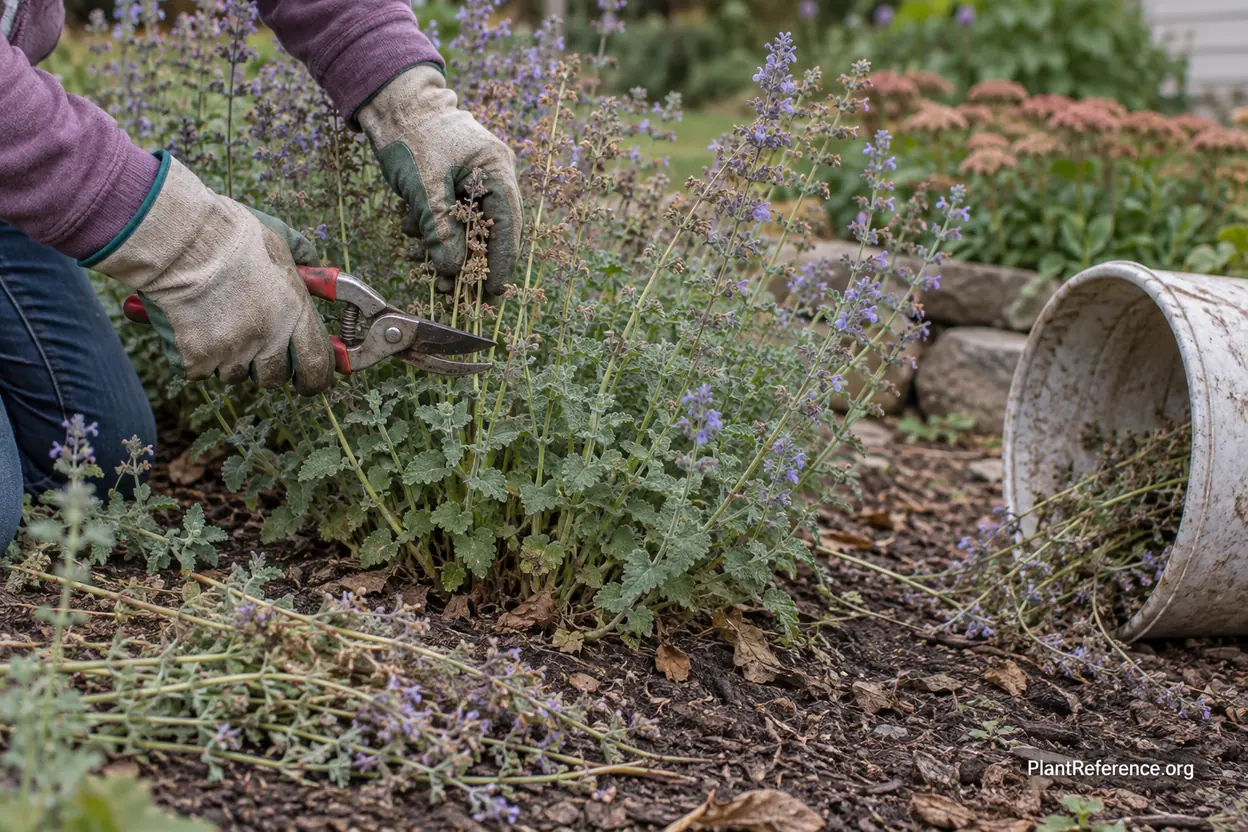
Nepeta x faassenii 'Walker's Low' (NEP-eh-tuh) covers itself in lavender-blue spikes from late May. Shear the whole plant back by one-third when the first flush fades, and it reblooms through September. Deer and rabbits leave it alone, and bees are all over it.
3. 'Zagreb' Threadleaf Coreopsis
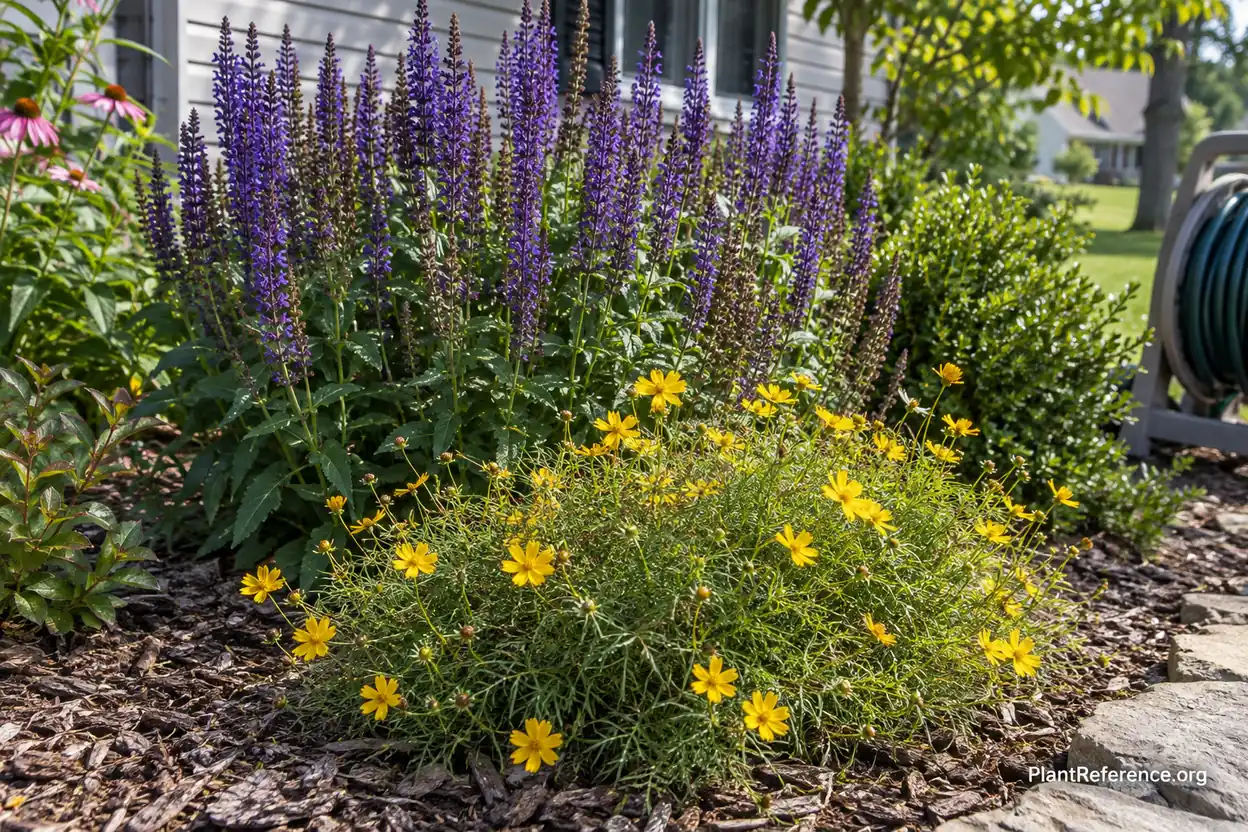
🌿Coreopsis verticillata 'Zagreb' (kor-ee-OP-sis) makes a fine-textured mound of golden-yellow daisies from June through September. It's tough, drought tolerant, and hardy to Zone 3. A light shearing in midsummer tidies spent flowers and triggers a new round. It spreads slowly by runners, which I count as a bonus.
4. 'Stella de Oro' Daylily
🌿Hemerocallis 'Stella de Oro' (hem-er-oh-KAL-iss) is the reblooming daylily that changed the landscape trade. Golden trumpets appear in June and repeat through September if you snap off spent scapes. Divide every 3-4 years to keep it flowering hard. See Why Your Daylilies Stopped Blooming (And How to Fix It) if yours slow down.
Strong Summer Performers (8-10 Weeks)
These six carry the heart of summer and push color into fall, when our borders need it most.
5. 'Goldsturm' Black-Eyed Susan
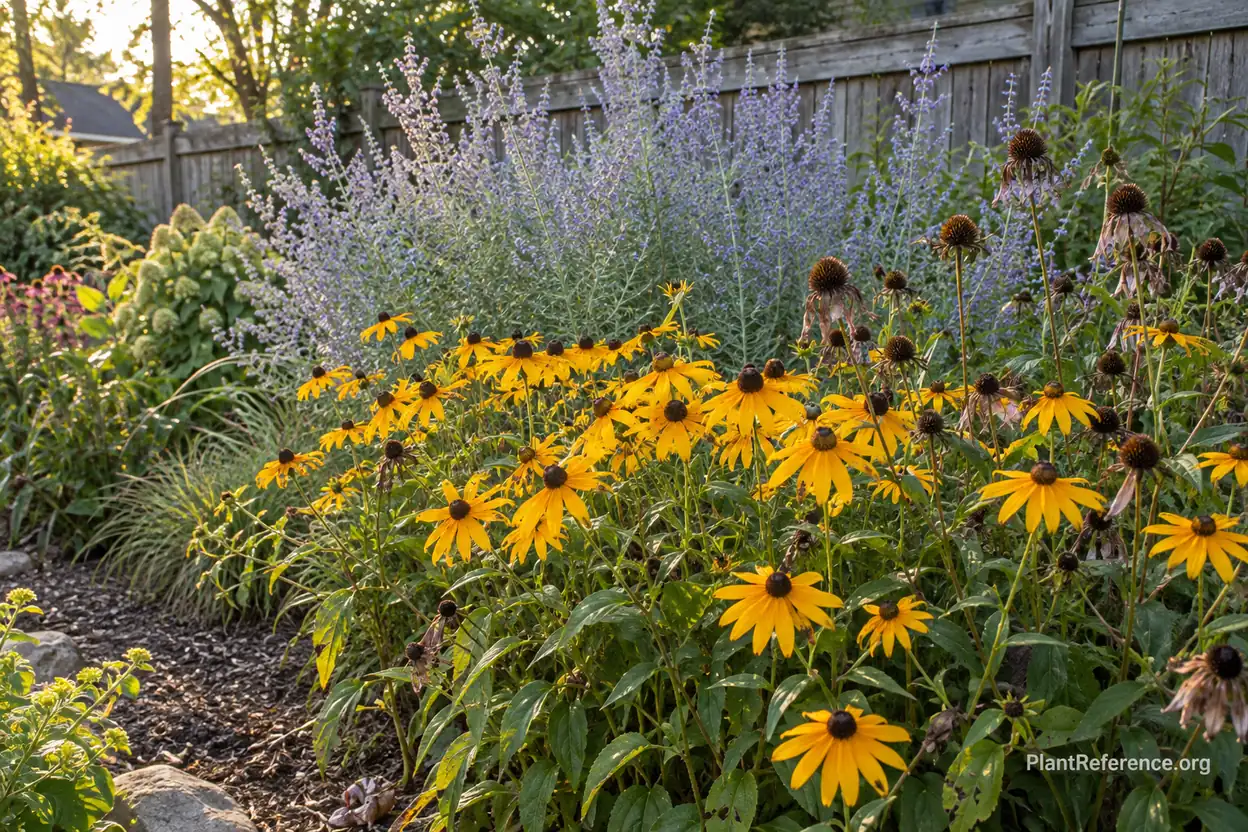
🌿Rudbeckia fulgida 'Goldsturm' (rood-BEK-ee-uh) starts in July and runs into October. It thrives in clay, tolerates drought, and deer don't like the fuzzy leaves. Leave the seed heads standing for goldfinches in winter.
6. 'Butterfly Blue' Pincushion Flower
Scabiosa columbaria 'Butterfly Blue' (skab-ee-OH-suh) is a compact plant with lavender-blue pincushions from June to October. It needs sharp drainage in Zone 5 — soggy winter soil kills it faster than cold. Deadhead weekly for the longest run.
7. 'May Night' Salvia
🌿Salvia nemorosa 'May Night' (SAL-vee-uh) opens deep violet spikes in late May. Cut the spent spikes back to fresh leaves and it reblooms through August. It pairs beautifully with catmint and 'Zagreb' coreopsis.
8. 'Magnus' Coneflower
🌿Echinacea purpurea 'Magnus' (ek-in-AY-shee-uh) flowers July through September on sturdy stems that rarely need staking. Stick with 'Magnus' and the straight species for longevity — many newer color hybrids fade out after a few Zone 5 winters. More on that in How to Grow Coneflowers (Echinacea) That Feed Pollinators.
9. 'Becky' Shasta Daisy
Leucanthemum x superbum 'Becky' (loo-KAN-thuh-mum) holds crisp white daisies on strong 3-foot (90 cm) stems from July to September. Cut spent flowers back to the next side bud and it keeps going. It needs good drainage to come back reliably in Zone 5.
10. 'Little Spire' Russian Sage
🌿Perovskia atriplicifolia 'Little Spire' (per-OFF-skee-uh) gives you a haze of lavender-blue from July until October. It's more compact than the species and won't flop. Leave the silver stems standing all winter and cut them back to 6 inches (15 cm) in spring when new buds show.
How to Keep Them Blooming From June to Frost
Picking the right plants is half the job. The other half is a pair of snips and a little discipline in July.
Shear catmint, salvia and 'Rozanne' by one-third to one-half right after the first flush fades
Deadhead scabiosa, Shasta daisy and daylily scapes weekly in peak season
Water deeply once a week, about 1 inch (2.5 cm), during dry spells — drought stress stops rebloom fast
Skip high-nitrogen fertilizer, which gives you leaves instead of flowers; a spring top-dressing of compost is enough
Divide daylilies, black-eyed Susans and Shasta daisies every 3-4 years to keep them vigorous
For division timing and technique, see How to Divide Perennials: A Species-by-Species Guide. For fall cleanup, When to Cut Back Perennials in Fall (And What to Leave) explains which seed heads to leave for birds.
Buying and Planting Advice for Cold Climates
In Zones 5 and 6, plant long-blooming summer perennials in spring, from mid-May through early June. That gives roots a full season before their first winter. Fall planting works for tough plants like daylilies and black-eyed Susans, but scabiosa, Russian sage and Shasta daisy are safer in spring. When to Plant Perennials: Season-by-Season Timing covers the full calendar.
Buy 1-gallon (4 L) plants over quart pots when you can. They bloom the first summer and have more root mass to get through a cold winter. Check that the tag lists your zone, not just "hardy perennial."
For layouts that combine these plants well, see Perennial Combinations That Look Good Together and Best Perennials for Pollinators: Bees & Butterflies.
Frequently Asked Questions
Reading about plants and recognising them are different skills. These three build the second.
- Daily PlantIdentify the day’s mystery plant from a close-up photograph.
- Keyed OutWork a dichotomous key, lead by lead, to name a hidden specimen.
- Name That PlantName a specimen from botanical clues dealt hardest first.
Free to play, no account needed
Tagged with
Pat has been gardening in Milwaukee for over thirty years, through every kind of Wisconsin weather. She worked as a school librarian and started gardening seriously when her kids were small—she wanted them to know where food came from. Now retired, she's a certified Master Gardener and runs the plant sale at her local garden club every spring. She specializes in cold-hardy perennials, native wildflower meadows, and the art of getting a vegetable garden producing in Wisconsin's short but intense growing season. Pat is practical and patient—she's seen enough Wisconsin winters to know that gardening here is a long game, and she writes with the steady confidence of someone who's been doing this a long time.