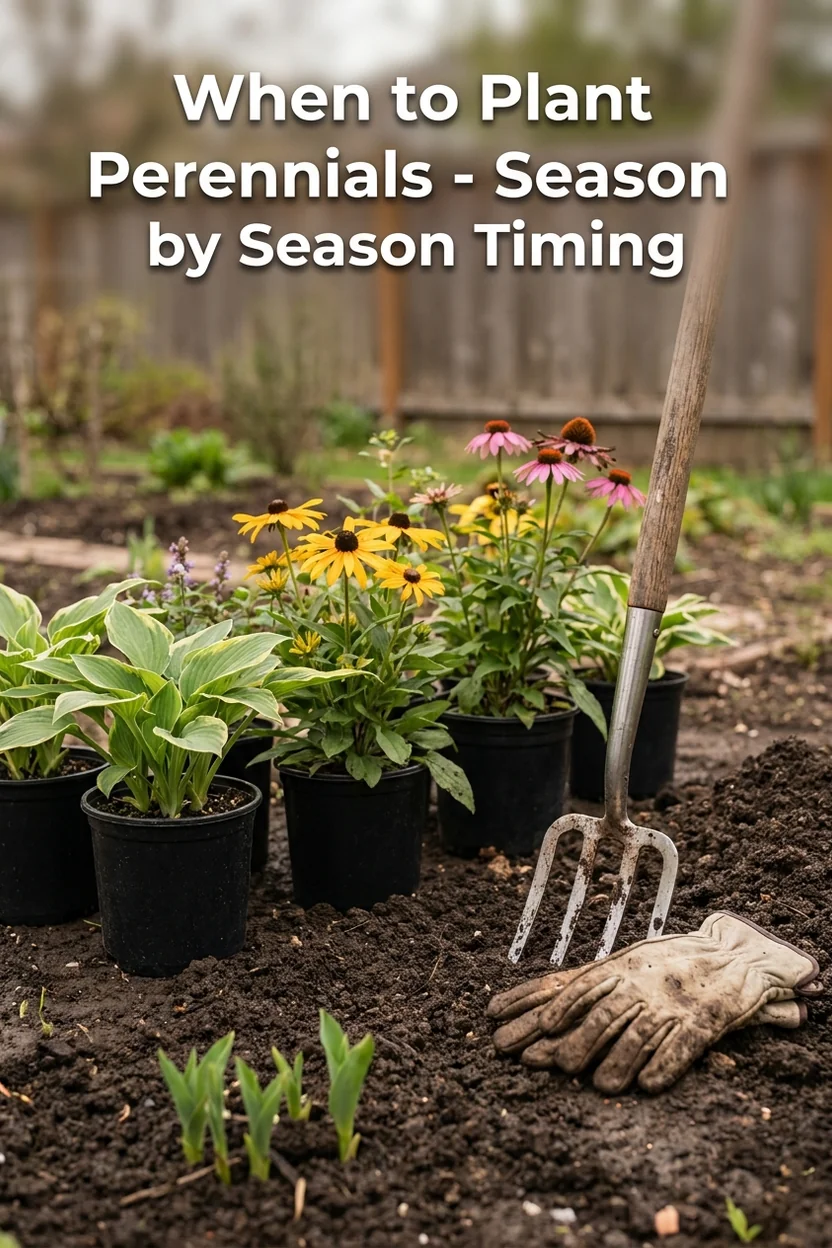
When to Plant Perennials: Season-by-Season Timing
Pets & Toxicity
Recorded toxicity for plants linked in this guide. An unknown status is not a safety assessment.
No linked plant is recorded as toxicDetailsHide
Perovskia atriplicifolia 'Little Spire' — Toxicity
Non-toxicView Perovskia atriplicifolia 'Little Spire' plant profile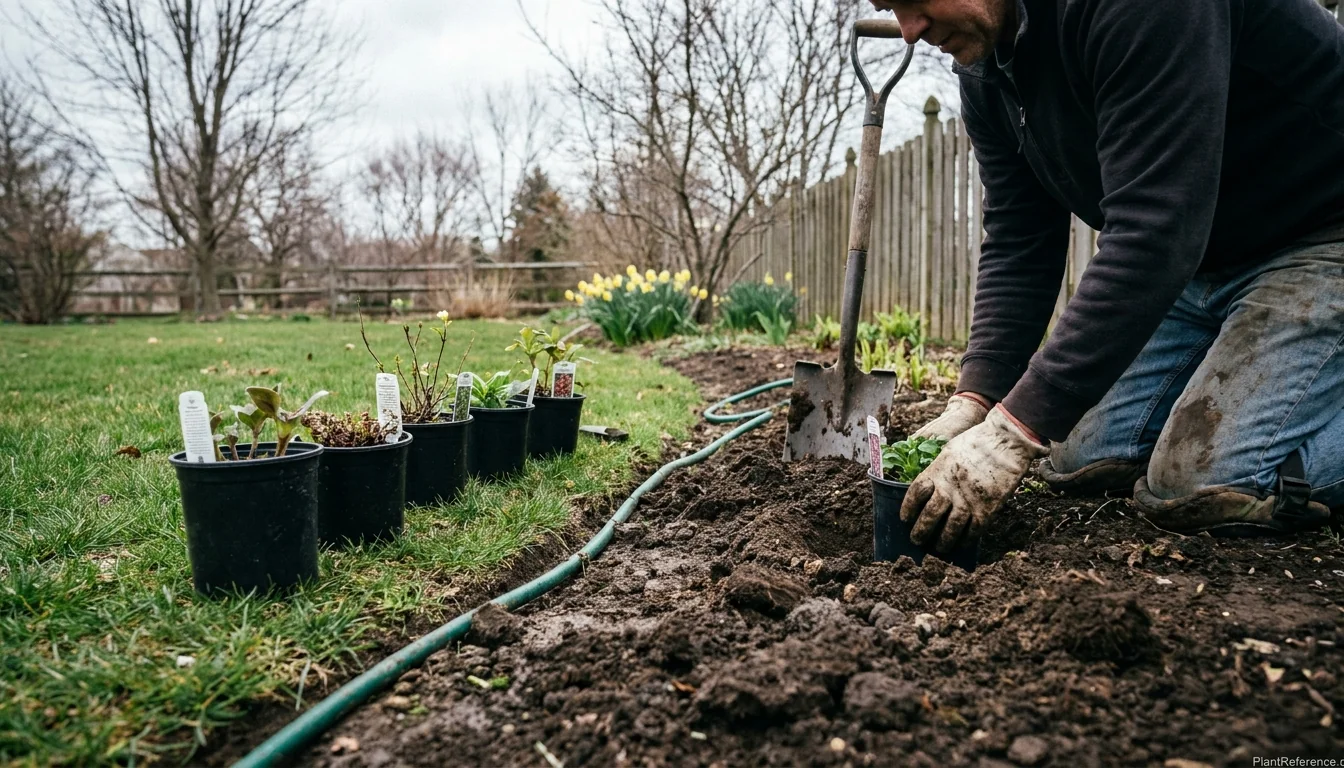
— Image © PlantReference.org 2026
I planted a lot of perennials over 28 years with the parks department, and the ones that failed almost never failed because of the plant. They failed because we put them in the ground at a point in the season when the roots had no chance to catch up before the weather turned. Knowing when to plant perennials matters more than what you paid for them.
Why Timing Decides Whether a Perennial Survives
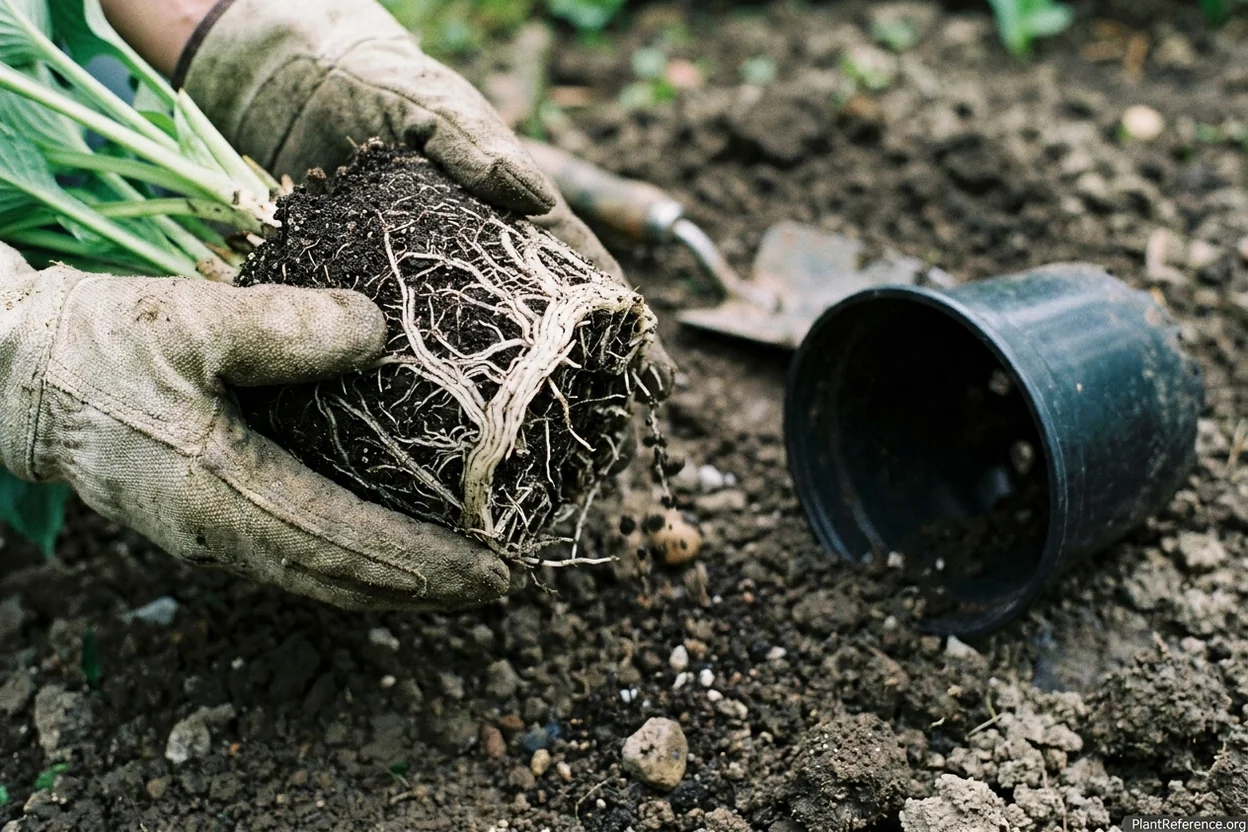
A perennial coming out of a nursery pot has a root ball shaped by that pot. Until those roots grow out into the surrounding soil, the plant is drawing water from a volume about the size of a coffee can while supporting a full canopy of leaves.
That gap between root capacity and leaf demand is the whole problem. Every planting window is really a question of how long the plant gets to close that gap before something stressful happens to it.
Spring planting gives roughly 8-10 weeks of mild weather before summer heat arrives
Fall planting gives 6-8 weeks of warm soil and cool air, the most efficient root-building conditions of the year
Summer planting gives no grace period at all, which is why it demands daily irrigation
Late fall planting leaves roots unanchored when frost heaving starts
Root growth continues in soil down to about 40°F (4°C), well after top growth has stopped. That is the fact that makes fall planting work, and it is the fact most people miss.
Spring Planting: The Safe Default
Spring is the window most people default to, and for good reason. Nurseries are fully stocked, soil is moist, and the plant has the entire season ahead of it to settle in.
Start once soil temperature at 4 inches (10 cm) depth holds at 45 to 50°F (7-10°C) for several consecutive days. In the Mid-Atlantic that usually falls between mid-March and mid-April. In Zone 4 it is closer to late April, and in Zone 8 it can be late February.
Spring is the better window for:
Summer and fall bloomers such as 🌿Echinacea purpurea 'Magnus', 🌿Rudbeckia fulgida 'Goldsturm', and 🌿Perovskia atriplicifolia 'Little Spire'
Bare-root stock, which ships dormant and must go in before it breaks bud
Ornamental grasses, which need warm soil and a full season of root growth
Any plant marginally hardy in your zone, which needs a whole season before facing winter
The cost of spring planting is water. A perennial planted in April is still establishing when the first July heat wave arrives, so plan on supplemental irrigation through the entire first summer. Skip that and you lose the plant, no matter how good the April planting was. Plan a Perennial Garden That Blooms Spring to Fall is worth reading before you buy, so you are not filling a bed on impulse.
Fall Planting: The Six-Week Rule
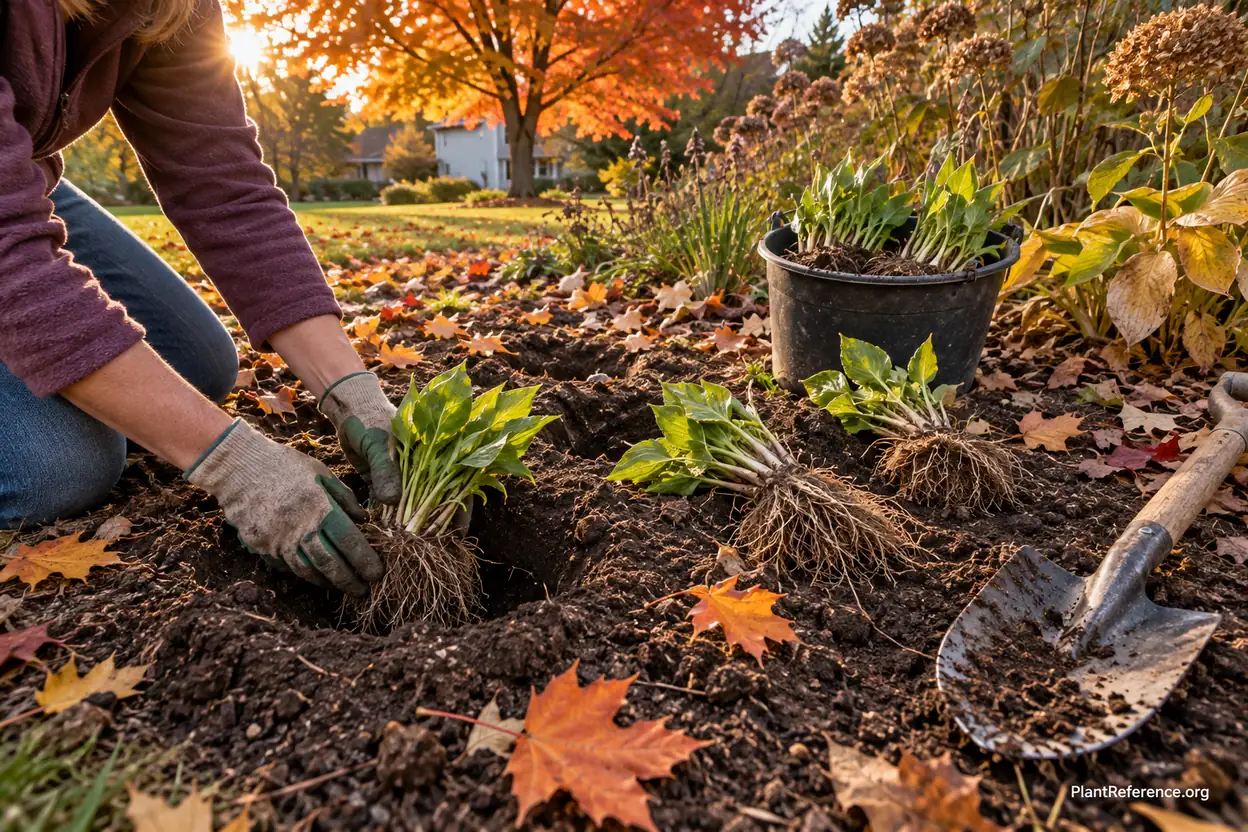
Fall is the better window, and most gardeners underuse it. Soil holds summer heat well into October while air temperatures drop, so the plant pushes roots without the burden of supporting new top growth or fighting transpiration loss.
The rule is simple: get perennials in the ground at least six weeks before your average first hard frost, meaning 28°F (-2°C), not a light frost. In the Mid-Atlantic that means finishing by early October. In Zone 4 the deadline is closer to mid-September. In Zone 8 you have until early November.
Fall is the better window for:
Spring bloomers such as peonies, bearded iris, and bleeding heart, which need the winter to set buds
Divisions taken from established clumps, since the parent plant is winding down
Container-grown stock bought on end-of-season clearance
Anything going into a bed you want blooming next year rather than the year after
Peonies in particular are a fall job, and depth is everything: the eyes go 1.5 to 2 inches (4-5 cm) below the soil surface. Any deeper and you get foliage without flowers, which is the single most common peony complaint I hear. How to Grow Peonies: Planting, Staking & 50-Year Blooms covers the planting depth in detail, and Why Your Peonies Won't Bloom: The 5 Most Common Causes covers what to do if yours are already in too deep.
After planting in fall, wait until the ground has actually frozen before mulching. Mulch applied to warm soil keeps it warm and encourages soft growth that will not survive. Applied after freeze-up, 2 to 3 inches (5-7.5 cm) of wood chips stabilizes soil temperature and stops the freeze-thaw cycle from heaving new crowns out of the ground.
Summer Planting: Possible, Not Preferable
Sometimes you buy a plant in July. It happens. Summer planting is not fatal, but it shifts all the risk onto your watering discipline.
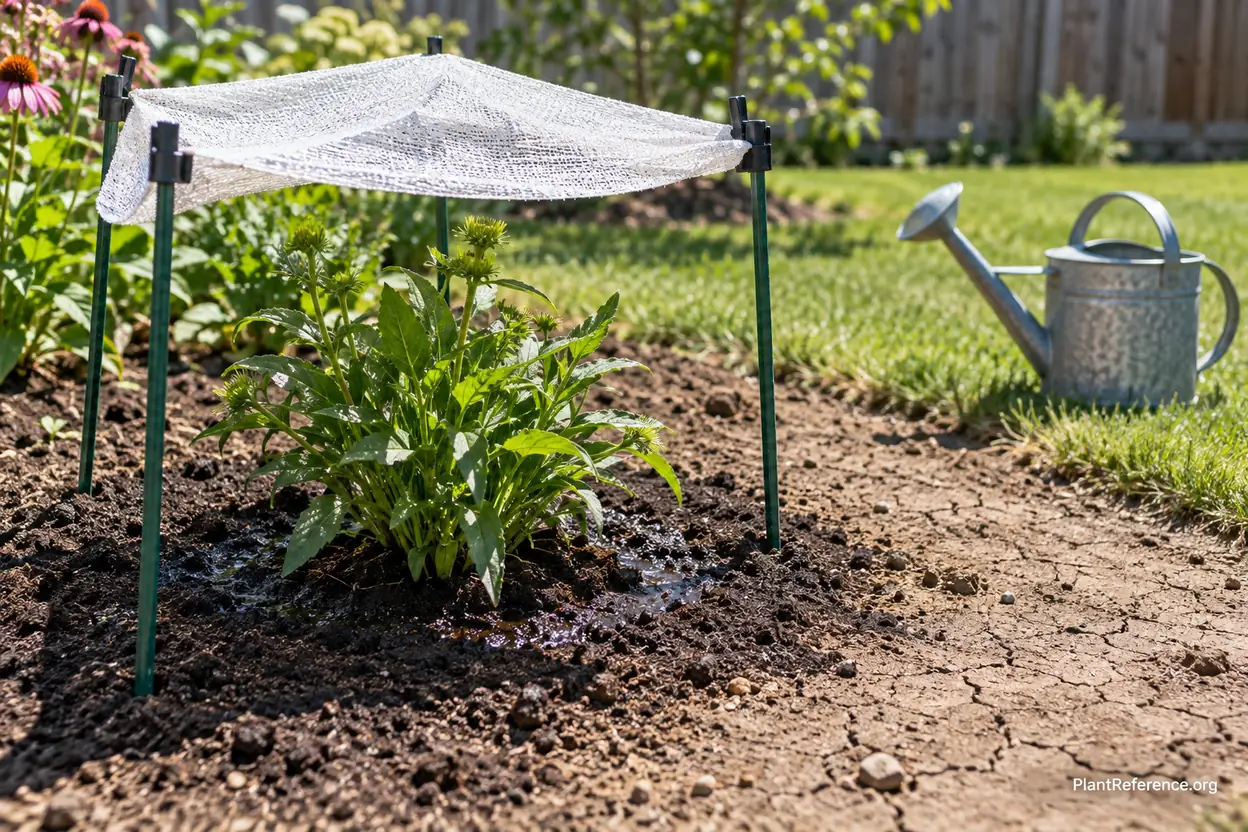
If you must plant in summer, do it in the evening rather than the morning so the plant gets a full cool night before facing sun. Shade the new planting for the first 7 to 10 days with a piece of shade cloth or even a lawn chair. Water daily for two weeks, then every other day for another two.
Skip summer planting entirely for anything with a reputation for transplant sensitivity, and never divide in summer. Division in heat asks a plant to rebuild roots at exactly the moment it has the least water available. How to Divide Perennials: A Species-by-Species Guide lays out the correct season for each genus.
Timing by Plant Form: Container, Bare-Root, and Division
The form the plant arrives in narrows the window further.
Season | Best Plant Forms | Soil Temp Target | Watch Out For |
|---|---|---|---|
Early spring | Bare-root, dormant divisions, container stock | 45-50°F (7-10°C) | Working wet soil into compaction |
Late spring | Container stock, tender perennials | 55-60°F (13-16°C) | First summer heat arriving too soon |
Summer | Container stock only, with irrigation | Any | Daily watering required for 2-4 weeks |
Early fall | Container stock, divisions, peonies, iris | 50-60°F (10-16°C) | Planting later than 6 weeks pre-frost |
Late fall | Nothing, except dormant bulbs | Below 45°F (7°C) | Frost heaving of unrooted crowns |
Container stock is the most forgiving because the root ball is intact. Bare-root stock is the least forgiving and belongs in early spring while it is still dormant, or in fall for peonies and bearded iris specifically. Divisions sit in between and follow a rule tied to bloom time: divide spring bloomers in late summer or early fall, and divide summer and fall bloomers in early spring. How to Divide Irises Without Killing Them covers the rhizome case, which behaves differently from clump-forming plants.
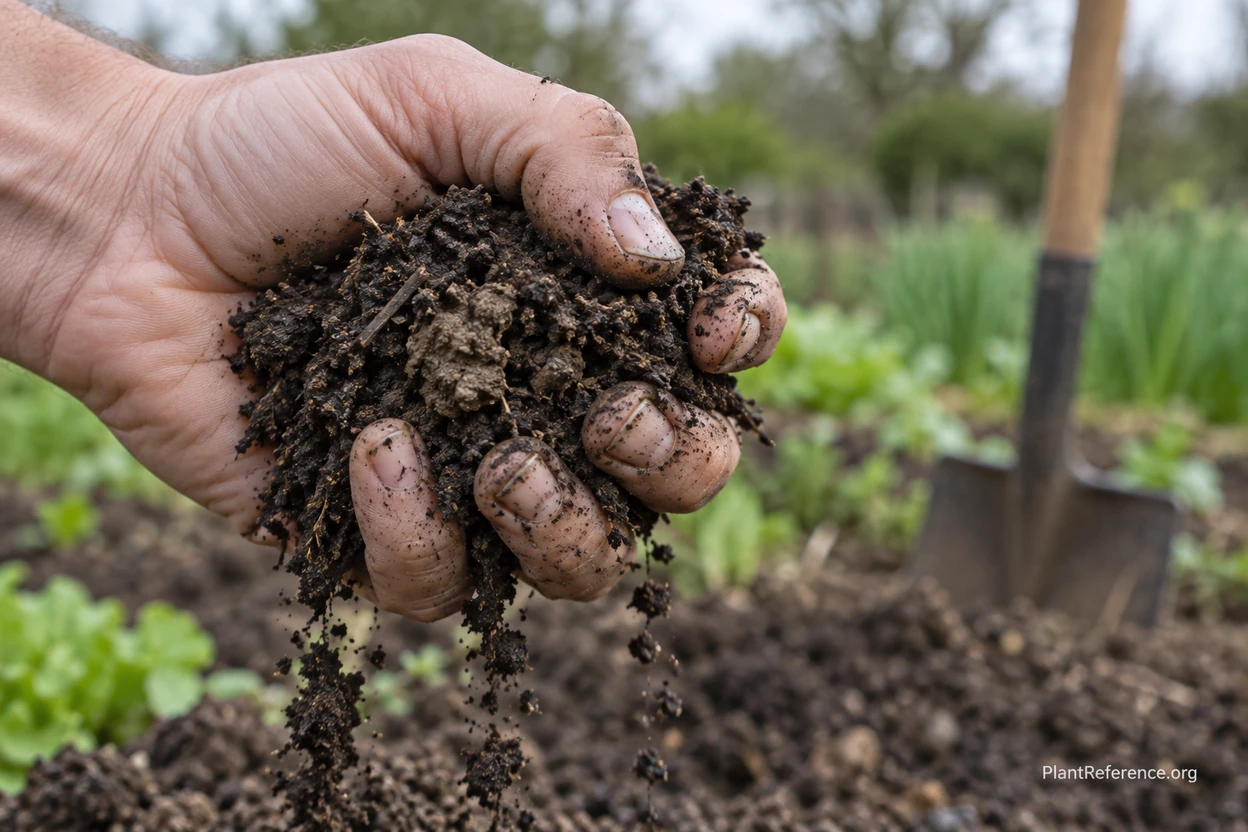
Whatever the form, do not work soil that is too wet. Squeeze a handful. If it holds together in a wet ball and smears when you press it, wait. Working saturated clay destroys soil structure for years, and no planting date is good enough to justify it.
Soil Temperature Beats the Calendar
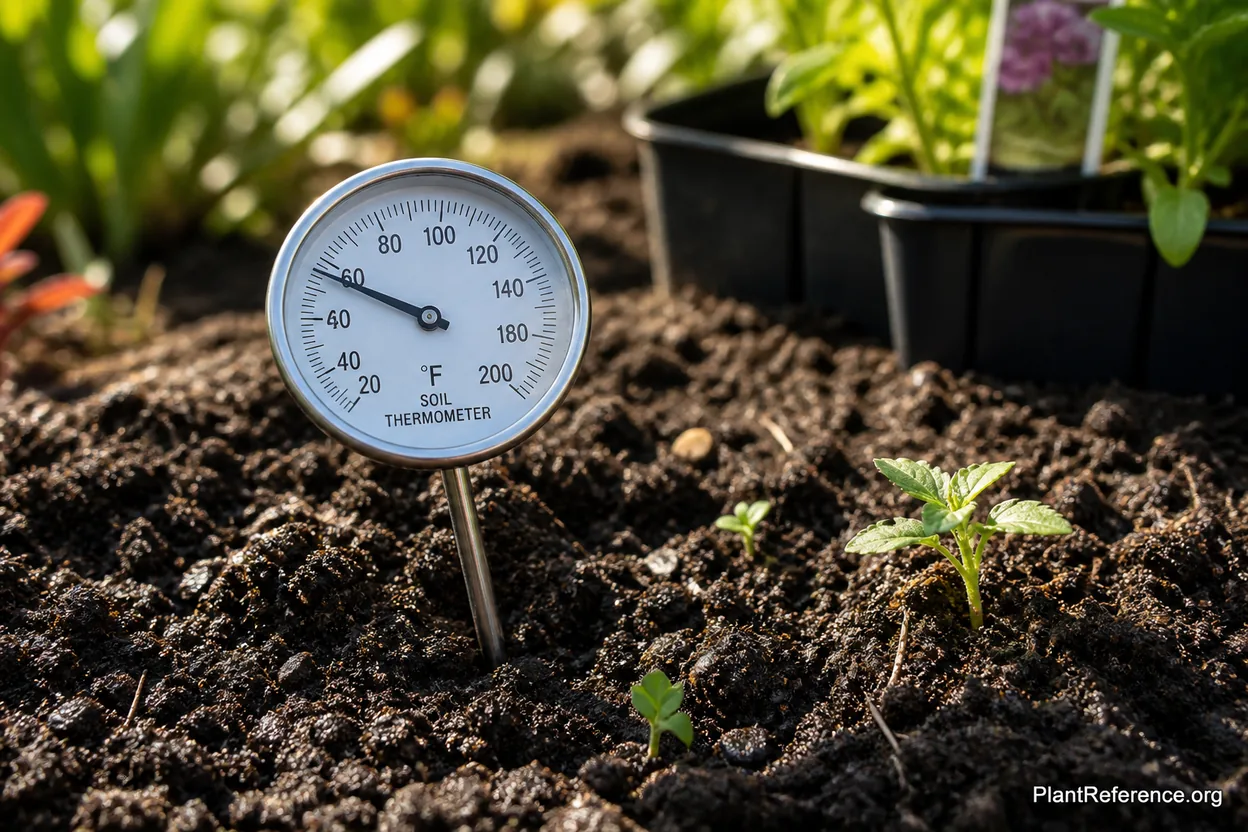
Calendar dates are averages, and averages do not plant anything. A $15 soil thermometer settles the question in about thirty seconds.
Push the probe to 4 inches (10 cm) and read it mid-morning, not at dawn and not in the afternoon sun. Take the reading three days running. If it holds above 45°F (7-8°C) in spring, you can plant most hardy perennials. In the Pacific Northwest, growers use a 40 to 45°F (4-7°C) soil threshold as the signal that the season has effectively begun, regardless of what the calendar says.
The same logic applies in reverse in fall. When soil at 4 inches drops below 45°F (7°C), root growth has effectively stopped and there is no point putting anything else in the ground.
Dig the hole twice as wide as the root ball but no deeper. Set the crown level with the surrounding grade, never below it. I have dug up thousands of failed plantings and the cause is nearly always the same thing: planted too deep, crown buried, slow decline over two seasons. Backfill with the native soil you took out, water it in to collapse air pockets, and mulch 2 inches (5 cm) back from the crown. Best Soil Mix for Raised Beds: Creating the Perfect Growing Medium covers the exception, which is a bed you are building from scratch.
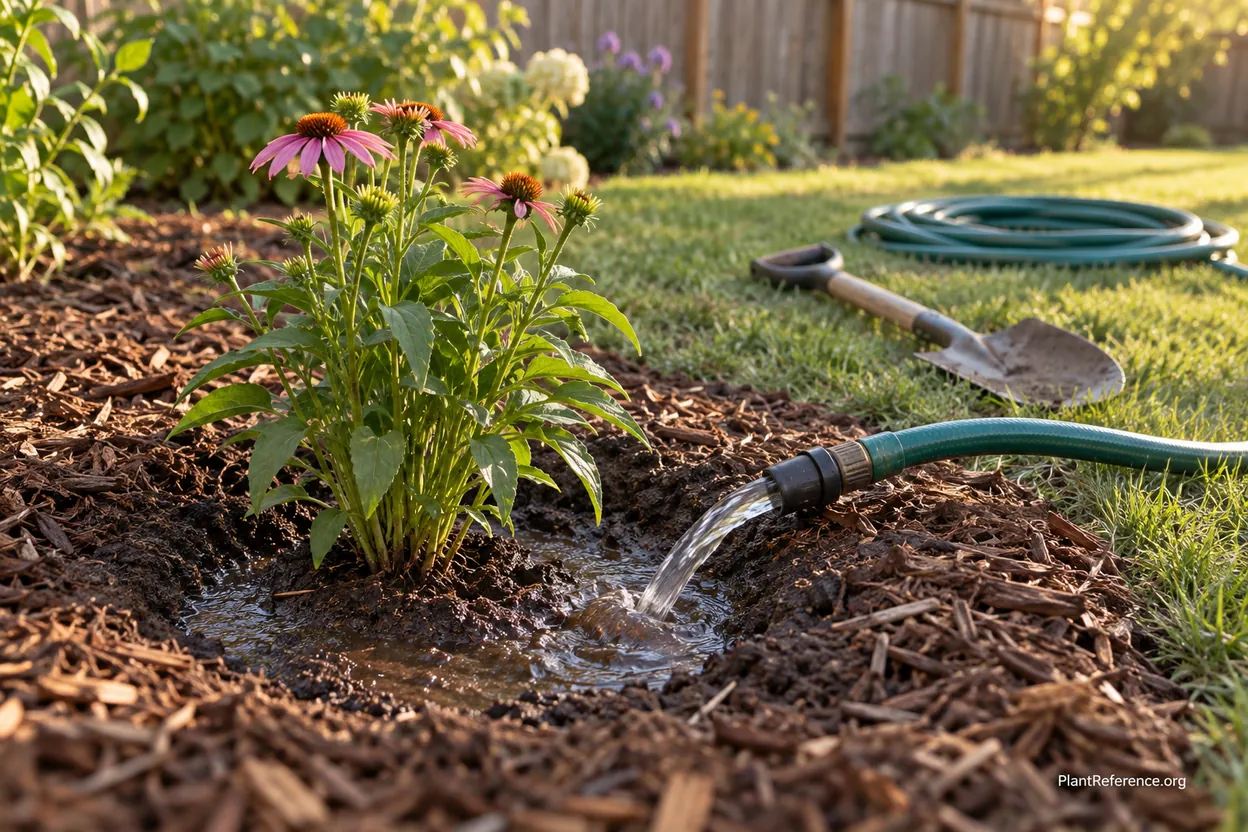
Water new plantings deeply once or twice a week rather than lightly every day. You want 1 inch (2.5 cm) per week soaking 12 to 18 inches (30-45 cm) down, which is what pulls roots out of the old pot shape and into the bed. Keep that up through the entire first season for spring plantings, and until the ground freezes for fall plantings. Best Low-Maintenance Perennials for Beginners: 10 Picks is a sensible starting list if you want plants that forgive an imperfect first year, and When to Cut Back Perennials in Fall (And What to Leave) covers what to do with them in November.
If you only take one thing from this: fall is the underrated window, and six weeks before hard frost is the deadline that decides it.
Frequently Asked Questions
Reading about plants and recognising them are different skills. These three build the second.
- Daily PlantIdentify the day’s mystery plant from a close-up photograph.
- Keyed OutWork a dichotomous key, lead by lead, to name a hidden specimen.
- Name That PlantName a specimen from botanical clues dealt hardest first.
Free to play, no account needed
Tagged with
Frank retired from the city parks department after 28 years, the last fifteen as a grounds supervisor overseeing park plantings and maintenance crews. He now spends his time volunteering at a local historic garden, maintaining his own half-acre property in the Roxborough neighborhood, and writing about landscape maintenance, seasonal timing, and the practical side of keeping plants healthy through Mid-Atlantic winters and humid summers. Frank knows what works at scale and what's a waste of time—he's planted thousands of trees and shrubs and watched plenty of them fail. His advice tends toward what's proven and durable rather than what's trendy.