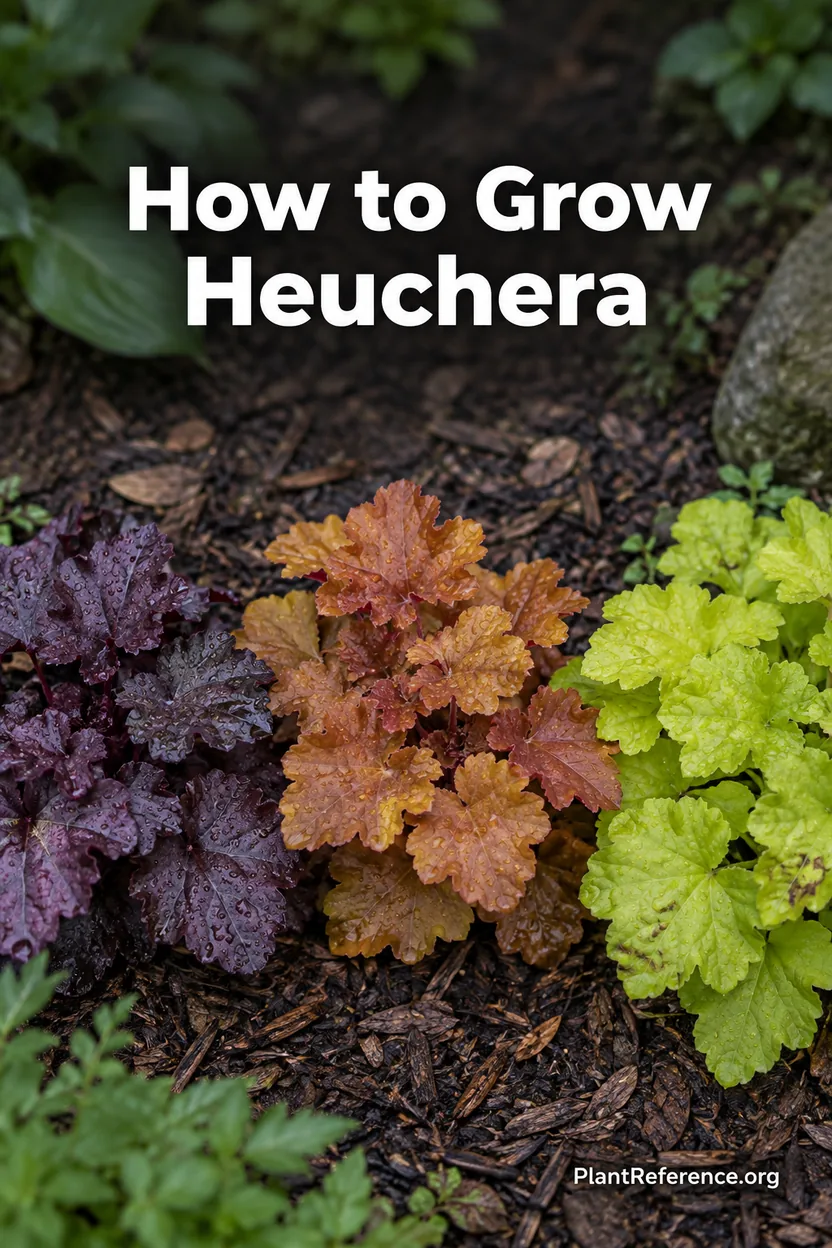
How to Grow Heuchera (Coral Bells) in Shade Gardens
Pets & Toxicity
Recorded toxicity for plants linked in this guide. An unknown status is not a safety assessment.
No linked plant is recorded as toxicDetailsHide
— Image © PlantReference.org 2026
Learning how to grow heuchera well comes down to two things: the right amount of light and soil that drains in winter. Get those right and coral bells will color the front of your shade border from April until the snow covers them. Get them wrong and you'll be replacing plants every spring.
Why Heuchera Earns a Place in Every Shade Garden
🌿Heuchera spp. (HEW-ker-uh), commonly called coral bells or alumroot, is a North American woodland native in the saxifrage family. The wild species are modest plants with green, lobed leaves and airy flower spikes. Thirty years of breeding changed all that. Today it's one of the top-selling perennials in the country, and it's sold almost entirely on its leaves.
I design gardens for four seasons, and that's exactly why heuchera shows up in nearly every shade plan I draw. Most cultivars are semi-evergreen in Zones 4-6 and fully evergreen further south. That means you get color in November and again in March, when hostas are nothing but a memory or a promise.
The color range is wide enough to build a whole border around:
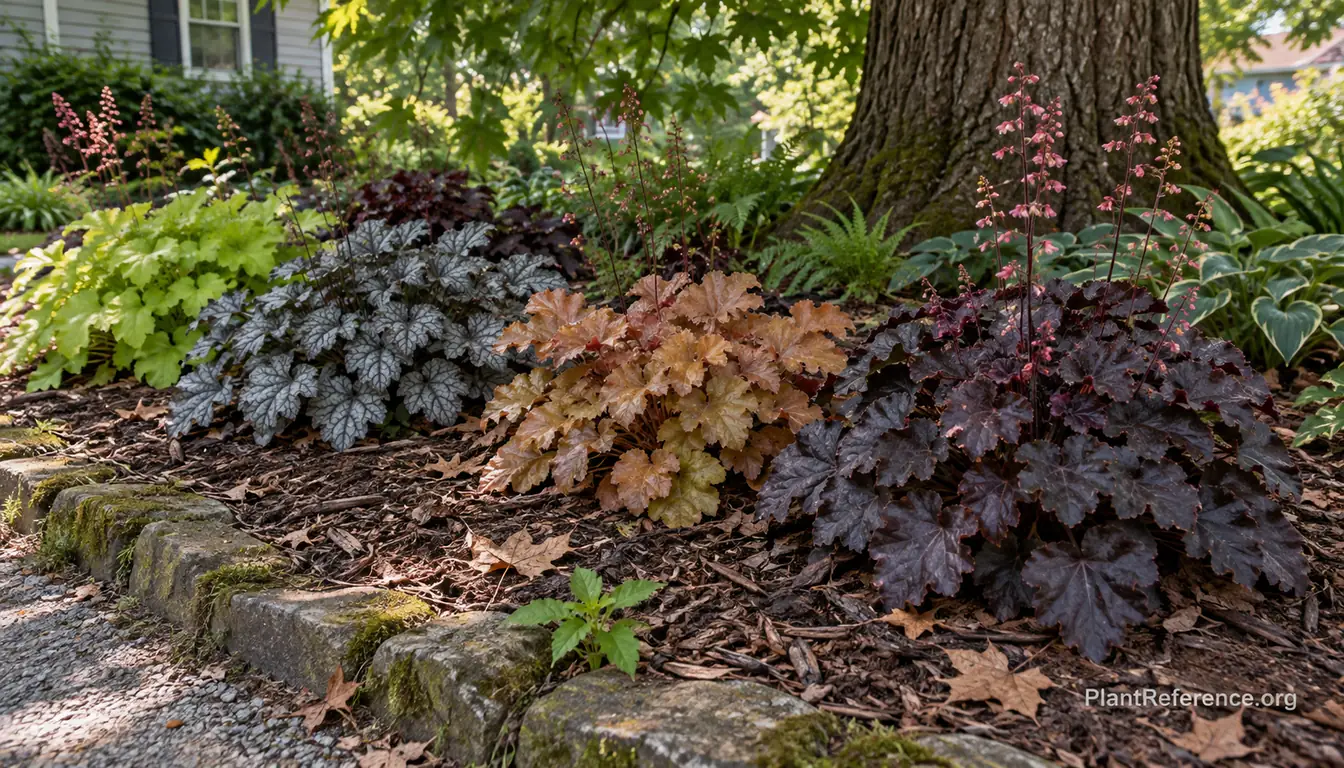
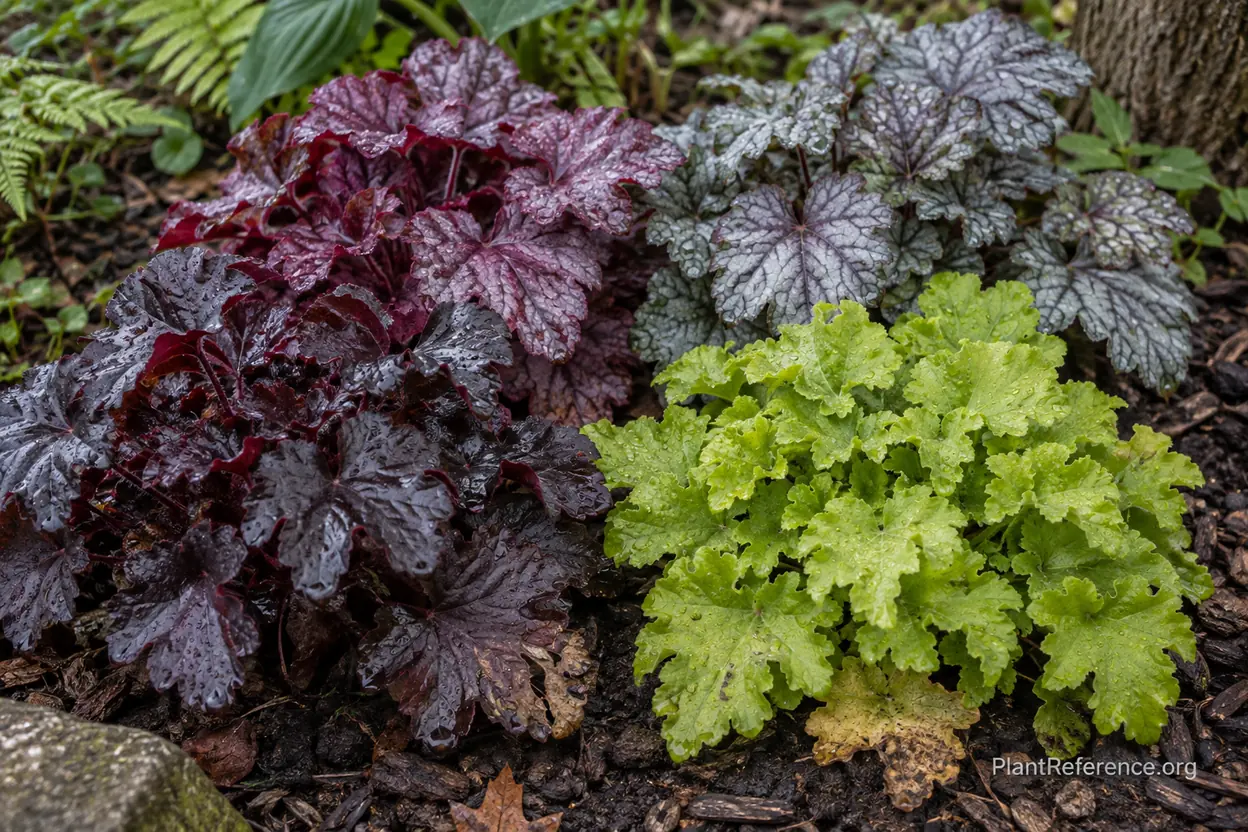
Near-black: Heuchera 'Obsidian' holds its glossy dark color all season
Deep purple: Heuchera 'Plum Pudding' has ruffled plum leaves with a silver sheen
Silver: Heuchera 'Silver Scrolls' shows silver leaves with dark veining
Chartreuse: Heuchera 'Lime Rickey' brightens deep shade with ruffled lime foliage
Peach and amber: 🌿Heuchera villosa 'Caramel' and Heuchera villosa 'Southern Comfort' bring warm tones and serious heat tolerance
For foliage pairings, heuchera and hostas are a classic match. See How to Grow Hostas: Varieties, Care & Pest Solutions and Perennial Combinations That Look Good Together for combinations that work.
Light and Site: Getting Placement Right
Heuchera wants 4-6 hours of filtered or morning light. Full, deep shade keeps it alive but dulls the color and makes plants leggy. Hot afternoon sun bleaches and scorches the leaves by July.
The foliage color tells you how much sun a plant can take. Dark purple and near-black cultivars handle the most light — in New England they'll tolerate a half day of sun if the soil stays moist. Lime, amber and peach cultivars have the least chlorophyll-masking pigment and scorch fastest, so keep them in bright shade.
Here's how I match cultivar to site:
Cultivar | Foliage | Light Tolerance | Heat Tolerance | Best Zones |
|---|---|---|---|---|
Heuchera 'Obsidian' | Glossy near-black | Part sun to shade | Moderate | 4-9 |
Heuchera 'Plum Pudding' | Plum, silver sheen | Part sun to shade | Moderate | 4-9 |
Heuchera 'Silver Scrolls' | Silver, dark veins | Part shade | Moderate | 4-9 |
Heuchera 'Lime Rickey' | Ruffled chartreuse | Bright shade only | Low | 4-9 |
Apricot to amber | Part shade | High | 4-9 | |
Heuchera villosa 'Southern Comfort' | Large peach-amber | Part shade | High | 4-9 |
If you're working with dry shade under mature trees, heuchera is one of the better performers once established. Read Best Perennials for Shade: 12 Species That Thrive for partners that share those conditions.
In hot, humid regions (Zone 7 and warmer), stick with cultivars bred from 🌿Heuchera villosa, a southeastern native species. The Primo series was also bred specifically for Zone 7-9 heat.
Soil, Planting Depth and Spacing
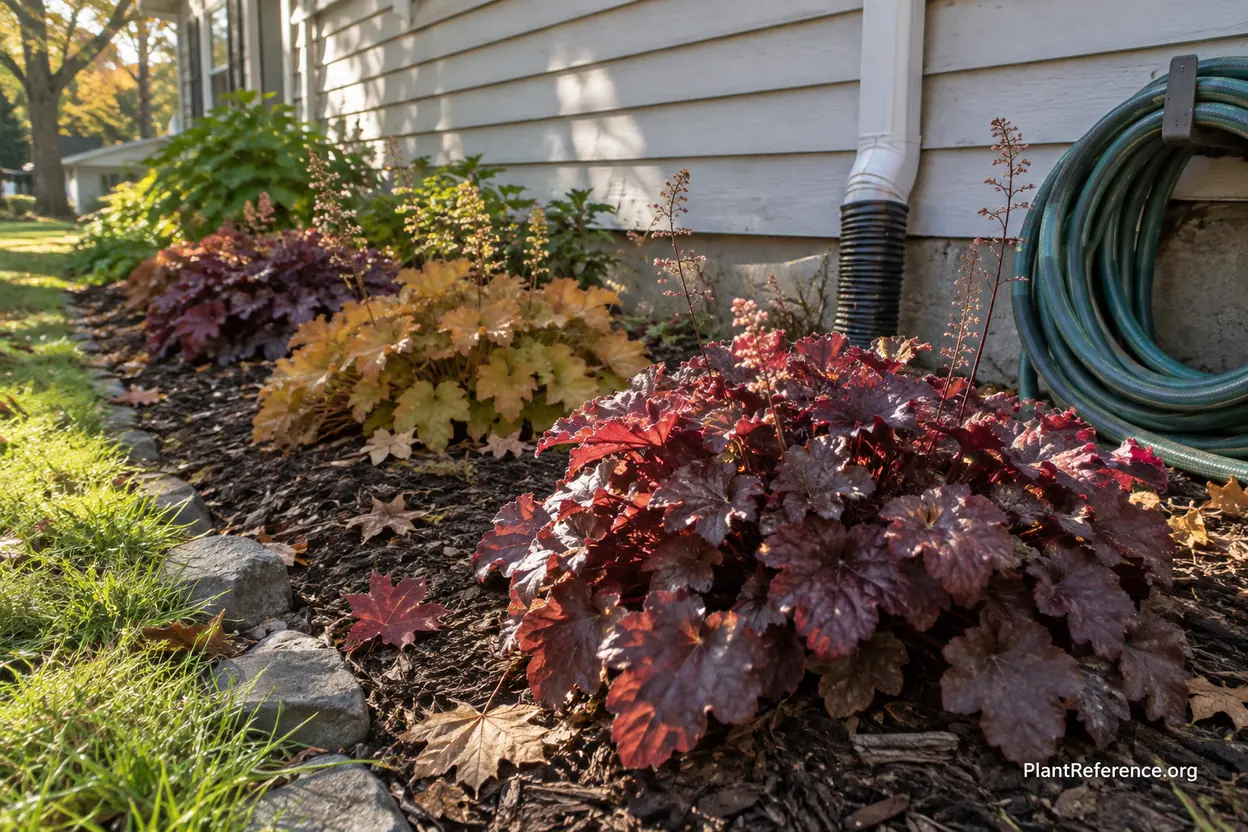
Heuchera evolved on rocky, humus-rich woodland slopes. It wants moisture in summer but sharp drainage year-round. Wet, heavy soil in winter is the single biggest killer of coral bells in the Northeast — not cold.
Aim for a pH between 6.0 and 7.0. Work 2-3 inches (5-8 cm) of compost into the top 8-10 inches (20-25 cm) of soil. If you're on heavy clay, add fine pine bark as well, or plant on a slight mound 3-4 inches (8-10 cm) above the grade.
Follow these planting steps:
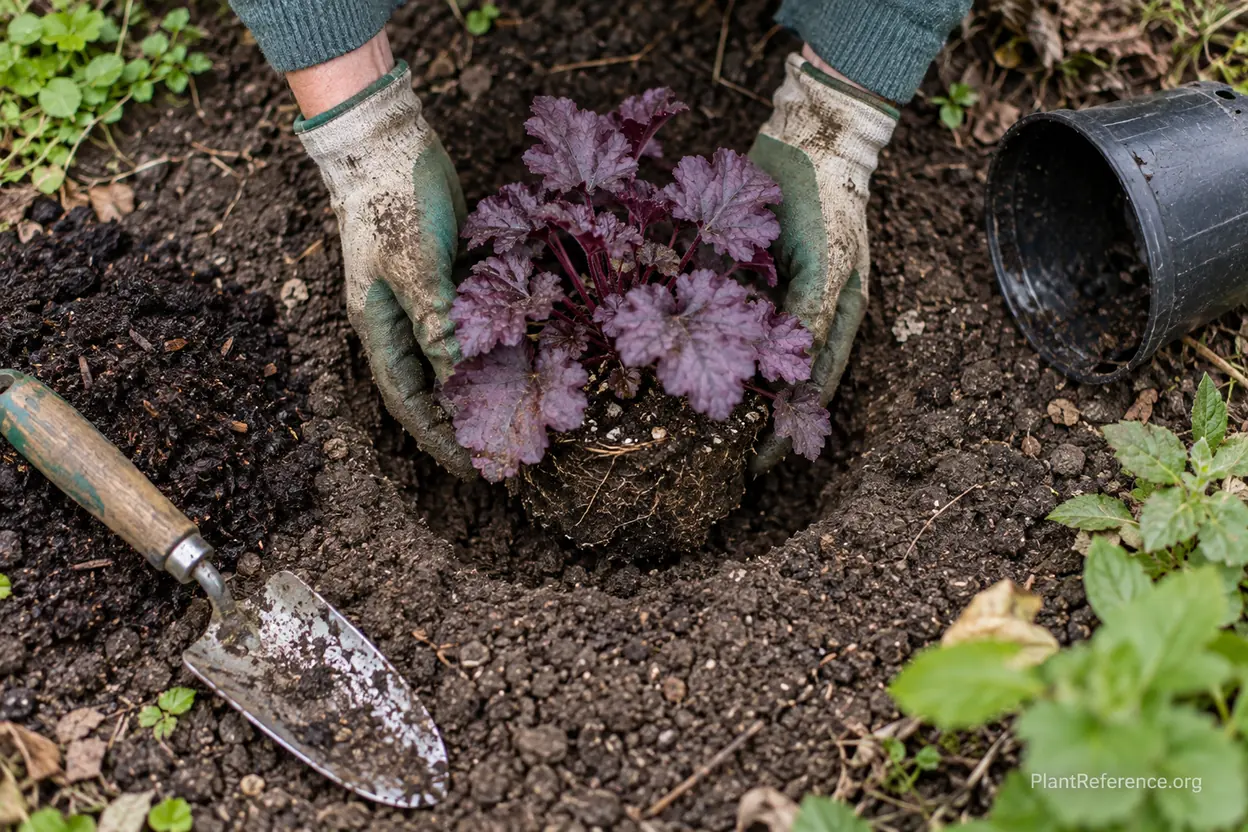
Dig a hole twice as wide as the pot and no deeper
Set the crown exactly level with the soil surface — never bury it
Backfill, firm gently, and water deeply to settle the soil
Space plants 12-18 inches (30-45 cm) apart, more for large cultivars like Heuchera villosa 'Southern Comfort'
Mulch 1-2 inches (2.5-5 cm) deep, keeping mulch off the crown
Spring and early fall are both good planting windows. For timing by region, check When to Plant Perennials: Season-by-Season Timing.
Watering, Feeding and Seasonal Care
Water new plants weekly through their first summer, giving about 1 inch (2.5 cm) each time. Established heuchera handles short dry spells, especially in shade, but the leaves brown at the edges if the soil dries out completely in a heat wave. Deep watering every 7-10 days in dry weather is plenty.
Feed lightly. A single spring application of a balanced slow-release fertilizer or a top-dressing of compost is all heuchera needs. Heavy nitrogen produces soft, floppy growth and weakens the crown.
Seasonal care is simple:
Spring: trim off tattered or winter-burned leaves once new growth appears
Summer: snip spent flower stalks at the base to keep the plant tidy
Fall: leave the foliage standing — it protects the crown through winter
Winter: in Zones 4-5, add 2-3 inches (5-8 cm) of shredded leaves after the ground freezes to reduce frost heaving
For the rest of your border, How to Prepare Perennial Gardens for Winter by Species and When to Cut Back Perennials in Fall (And What to Leave) cover what to cut and what to leave standing.
Fixing Crown Heaving and Dividing Heuchera
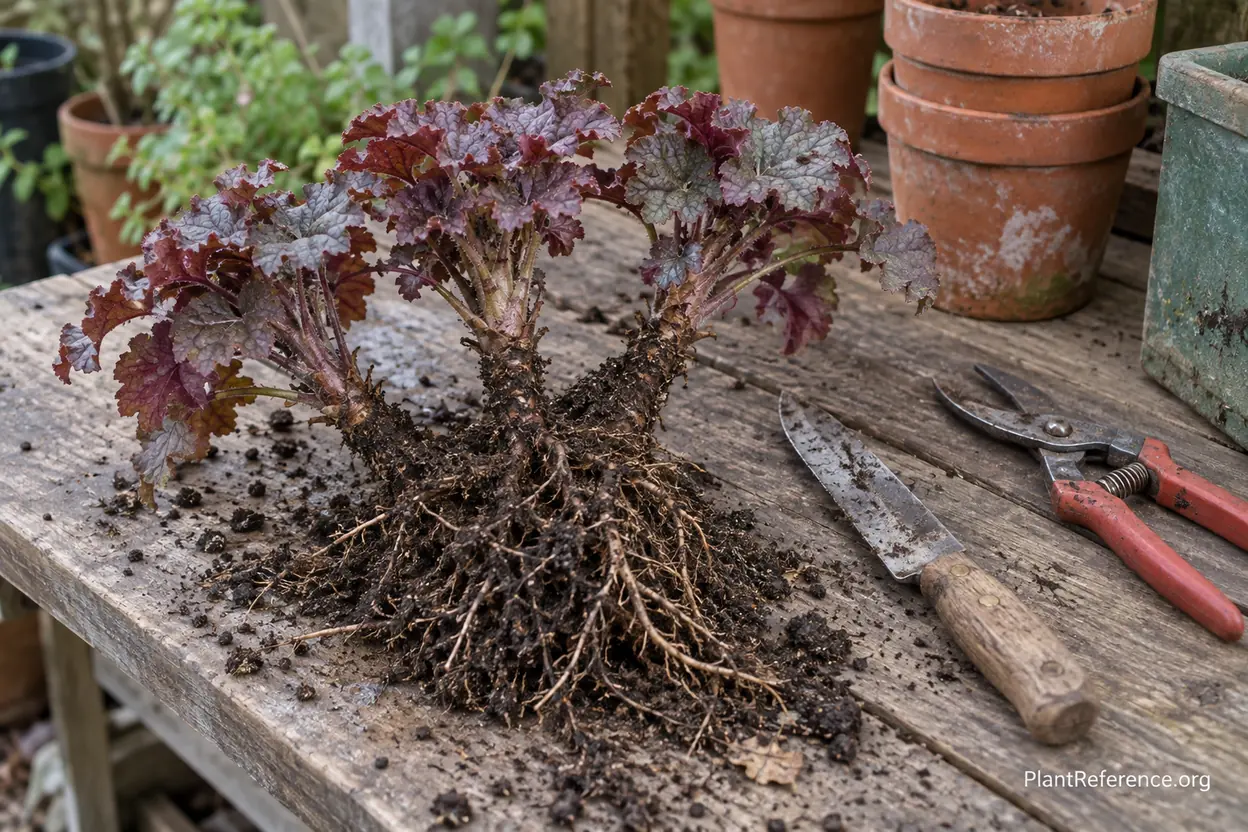
Every heuchera eventually does this. The crown grows upward each year, building a woody stem that lifts the rosette above the soil. After three or four years you'll see bare, woody stubs with leaves only at the top, and exposed roots that dry out in summer and freeze in winter.
The fix doubles as division. In early spring or early fall:
Dig the whole clump with a garden fork
Cut the woody base back to 1-2 inches (2.5-5 cm) below the leafy rosette
Separate the rosettes, keeping some roots on each piece
Replant each piece with the crown level with the soil
Water well and keep evenly moist for 3-4 weeks
Divisions without many roots still root readily if you bury the stem to just below the leaves. For tool recommendations and technique across species, see How to Divide Perennials: A Species-by-Species Guide and Best Tools for Dividing Perennials: Forks, Knives, Spades.
Troubleshooting Scorch, Rot and Vine Weevils
Most heuchera problems trace back to site, not disease. Here's how to read the symptoms.
Brown, crispy leaf edges mean too much sun, too little water, or both. Move the plant to brighter shade in fall or spring, and water deeply during heat.
Collapse with a mushy, dark crown is crown rot from wet soil or buried crowns. Plants rarely recover. Replant healthy rosettes higher, amend with bark fines, and don't replant in the same wet spot.
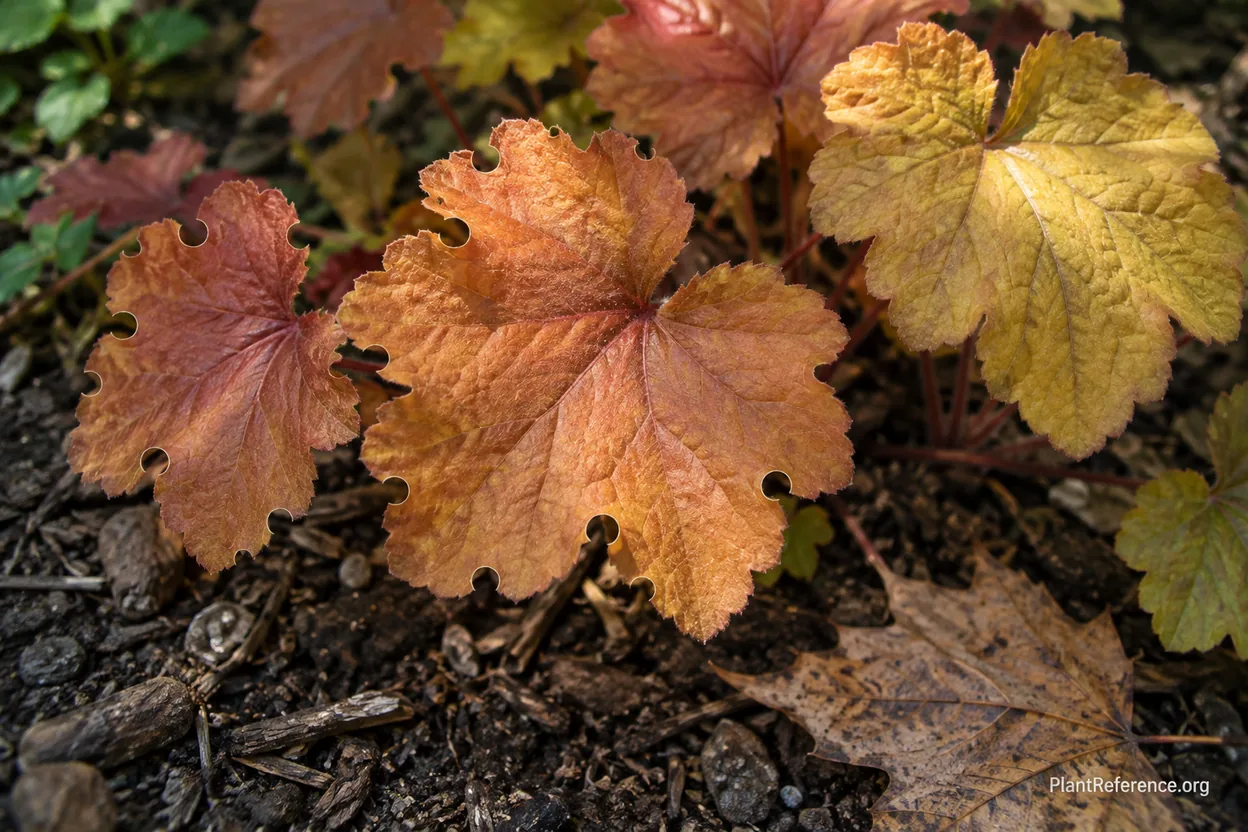
A plant that wobbles or lifts out with almost no roots usually means black vine weevil. The adult beetles notch leaf edges at night, and the C-shaped white larvae eat the roots in late summer through spring. Apply beneficial nematodes to moist soil in late summer when larvae are young. Heuchera in containers is especially vulnerable.
Orange pustules under the leaves are rust. Remove infected leaves, improve air circulation, and water at soil level instead of overhead.
Heuchera is moderately deer resistant — deer will sample it but rarely strip it. For more options, see Deer-Resistant Perennials: A Zone-by-Zone Planting Guide.
Frequently Asked Questions
Reading about plants and recognising them are different skills. These three build the second.
- Daily PlantIdentify the day’s mystery plant from a close-up photograph.
- Keyed OutWork a dichotomous key, lead by lead, to name a hidden specimen.
- Name That PlantName a specimen from botanical clues dealt hardest first.
Free to play, no account needed
Tagged with
Kevin is a landscape contractor in the Boston area who specializes in cold-climate perennial gardens and hardscaping. He studied landscape design and worked at a prominent nursery on the North Shore before starting his own design-build firm. Kevin's gardens are built to handle New England weather—freeze-thaw cycles, nor'easters, late springs, and heavy snow loads. He's particularly interested in native perennials and shrubs that provide four-season interest without constant maintenance. Kevin writes about cold-hardy plant selection, winter garden structure, and building landscapes that look good even in February.