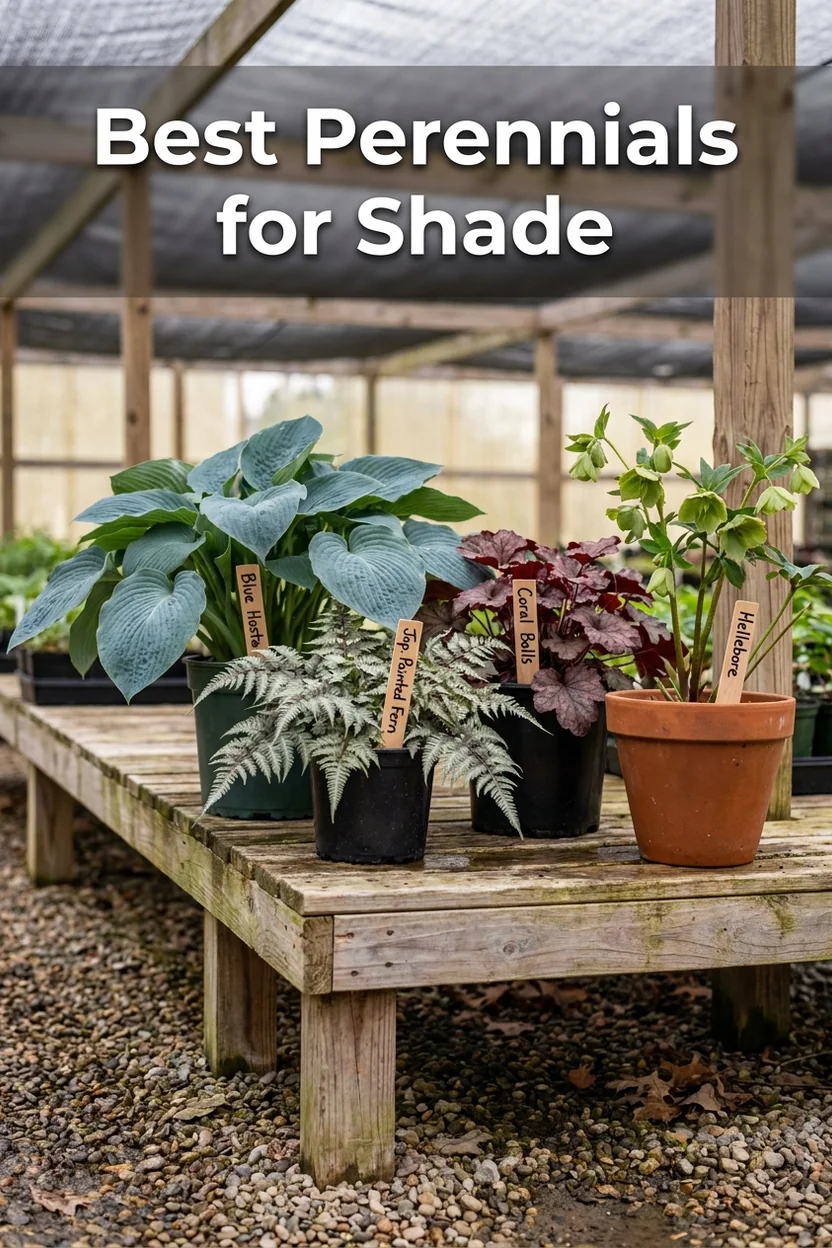
Best Perennials for Shade: 12 Species That Thrive
Pets & Toxicity
Recorded toxicity for plants linked in this guide. An unknown status is not a safety assessment.
Toxic to pets: lenten rose, variegated Solomon's sealDetailsHide
Heuchera villosa 'Autumn Bride' — Toxicity
Non-toxicView Heuchera villosa 'Autumn Bride' plant profileHelleborus orientalis — Toxicity Warning
Toxic to pets and humansView Helleborus orientalis plant profileBrunnera macrophylla 'Jack Frost' — Toxicity
Non-toxicView Brunnera macrophylla 'Jack Frost' plant profileLamprocapnos spectabilis 'Gold Heart' — Toxicity: Not assessed
All parts contain isoquinoline alkaloids that produce gastrointestinal and nervous-system symptoms if plant tissue is chewed or swallowed; contact with broken stems can cause skin irritation in sensitive individuals; siting matters for gardens with children or pets.View Lamprocapnos spectabilis 'Gold Heart' plant profilePolygonatum odoratum 'Variegatum' — Toxicity Warning
Toxic to pets and humansView Polygonatum odoratum 'Variegatum' plant profile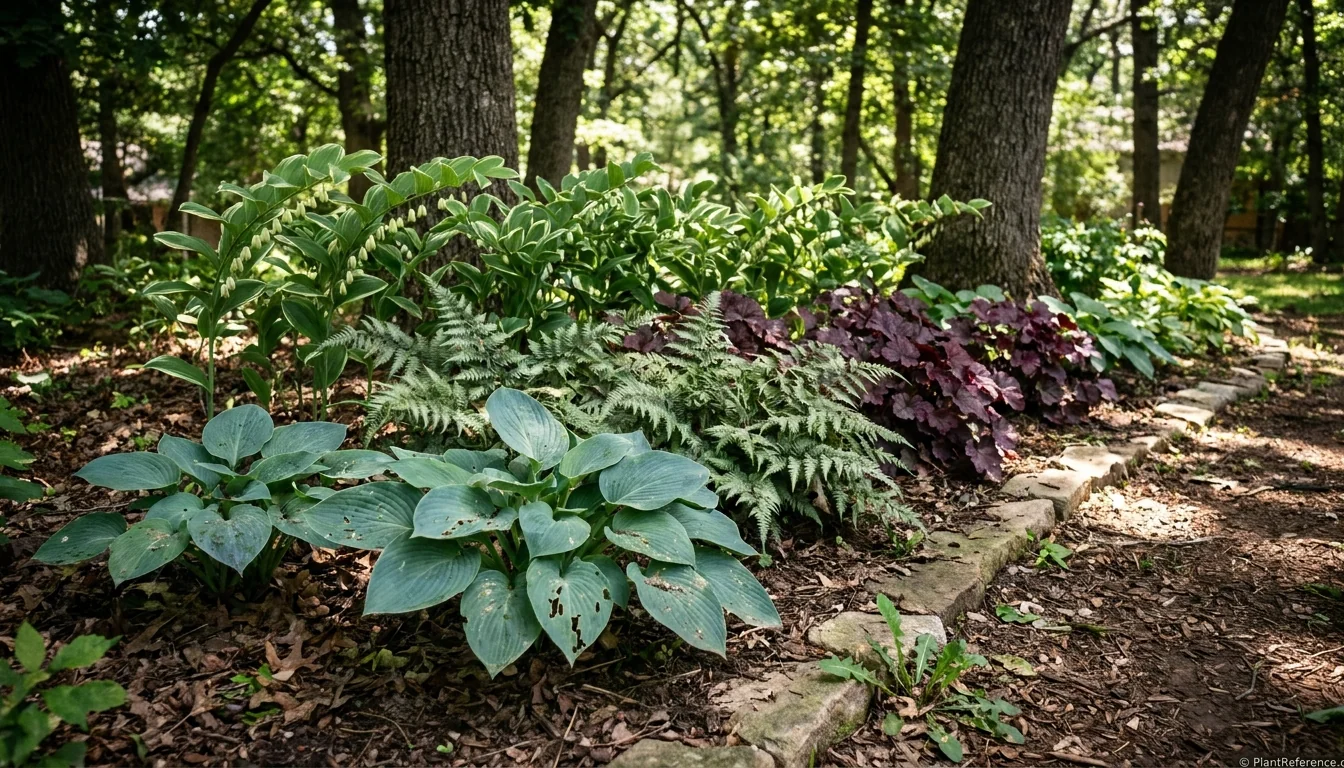
— Image © PlantReference.org 2026
Every spring somebody comes into the garden center and tells me nothing grows on the north side of their house. That is almost never true. What is usually true is that they tried the wrong twelve plants. The best perennials for shade are not simply sun perennials with lower expectations — they are a distinct group with different root systems, different leaf structures, and different needs.
How Much Shade Do You Actually Have?
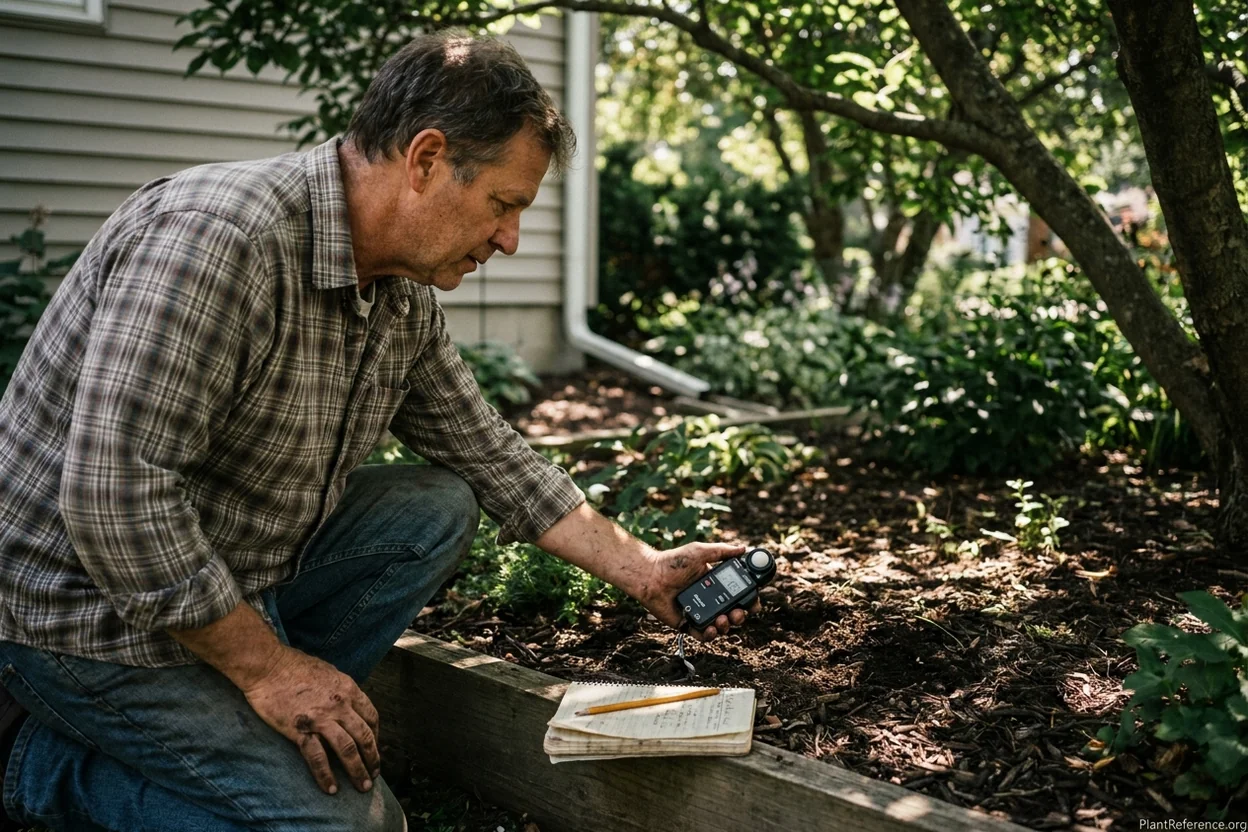
Before you buy anything, spend a Saturday counting. Go out at 9 a.m., noon, and 3 p.m. and write down whether the bed is in sun or shadow. Most people who tell me they have full shade actually have part shade, and that opens up twice as many options.
Part shade — 3 to 6 hours of direct sun, usually morning sun with afternoon shade
Dappled shade — filtered light all day through a high tree canopy
Full shade — under 3 hours of direct sun, mostly reflected or indirect light
Deep shade — north side of a building or under dense evergreens, essentially no direct sun
Moisture matters just as much. Dry shade under a mature maple is a completely different site from moist shade beside a downspout, and the plant lists barely overlap. Tree roots take the water before your perennials ever see it.
The 12 Best Perennials for Shade
These are the twelve I sell the most of and get the fewest complaints about. I have grown every one of them in Missouri clay, which is not a forgiving medium.
Plant | Botanical Name | Zones | Height | Best Shade Type |
|---|---|---|---|---|
Hosta | Hosta sieboldiana 'Elegans' | 3-9 | 24-30 in (60-75 cm) | Moist part to full shade |
Coral bells | 4-9 | 15-18 in (38-45 cm) | Part shade, good drainage | |
Astilbe | 4-8 | 12-15 in (30-38 cm) | Moist part shade | |
Lenten rose | 4-9 | 18-24 in (45-60 cm) | Dry to average full shade | |
Siberian bugloss | 3-8 | 12-15 in (30-38 cm) | Moist part to full shade | |
Japanese painted fern | 3-8 | 12-18 in (30-45 cm) | Moist full shade | |
Foamflower | 4-9 | 6-12 in (15-30 cm) | Moist woodland shade | |
Lungwort | Pulmonaria saccharata 'Mrs. Moon' | 3-8 | 9-12 in (23-30 cm) | Moist part to full shade |
Barrenwort | Epimedium x rubrum | 4-8 | 8-12 in (20-30 cm) | Dry shade under trees |
Bleeding heart | 3-9 | 24-36 in (60-90 cm) | Moist part shade | |
Solomon's seal | 3-8 | 18-24 in (45-60 cm) | Dry to moist full shade | |
Sedge | 5-9 | 12-15 in (30-38 cm) | Dry to average part shade |
Hosta sieboldiana 'Elegans' (HOS-tuh see-bold-ee-AY-nuh) is the plant I recommend more than any other, and the thick, corrugated blue leaves on this one resist slugs better than thin-leaved varieties do. Slugs are the only real complaint I hear about hostas — How to Get Rid of Slugs on Hostas: What Works handles that, and How to Grow Hostas: Varieties, Care & Pest Solutions covers the rest.
🌿Helleborus orientalis is the one I wish more people bought. It blooms in February here, holds evergreen foliage all winter, tolerates dry shade, and deer will not touch it. The only reason it does not sell better is that it looks unremarkable in a nursery pot in May.
Best Perennials for Dry Shade Under Trees
Dry shade is the hardest planting site most homeowners have. A mature maple or oak pulls hundreds of gallons of water a week, and its surface roots form a mat that new perennials cannot penetrate. The plants below succeed because they either go dormant when it gets dry or spread by rhizomes that run along the surface instead of digging down.
Epimedium x rubrum — the single toughest dry-shade perennial sold; slow to start, permanent once established
🌿Helleborus orientalis — deep taproot reaches below the tree root mat
🌿Polygonatum odoratum 'Variegatum' — rhizomes spread sideways under root competition
🌿Carex morrowii 'Ice Dance' — evergreen sedge that colonizes dry bare ground
Pulmonaria saccharata 'Mrs. Moon' — wilts dramatically in drought, recovers overnight after rain
Do not till under a tree. You will cut feeder roots and stress the tree far more than you help the perennials. Dig individual planting holes instead, add a shovel of compost per hole, and top the whole bed with 2 inches (5 cm) of leaf mulch. Water new plantings weekly for the entire first season — that first year is the whole game in dry shade.
Epimedium x rubrum deserves special mention. It sits and sulks for two seasons, and half my customers give up on it. The third year it takes off and never needs anything again. Buy the biggest pot you can find to shorten that wait.
Best Perennials for Moist or Woodland Shade
If your shade holds moisture — a north foundation bed, a low spot, anywhere a downspout drains — you have the easiest shade garden site there is. Nearly everything works, and the plants get noticeably larger than the tag promises.
🌿Astilbe chinensis 'Visions' — the most drought-tolerant astilbe, but still wants steady moisture
🌿Athyrium niponicum 'Pictum' — silver and burgundy fronds, the best foliage color in shade
🌿Brunnera macrophylla 'Jack Frost' — silver-veined leaves plus true-blue spring flowers
🌿Tiarella cordifolia — native groundcover that carpets bare woodland soil
🌿Lamprocapnos spectabilis 'Gold Heart' — chartreuse foliage that lights up a dark corner
🌿Astilbe chinensis 'Visions' is where people go wrong most often. Astilbe is not drought tolerant, and a dry August turns the foliage crisp brown at the edges permanently for that season. Plant it where it gets water, or do not plant it.
🌿Lamprocapnos spectabilis 'Gold Heart' goes fully dormant by midsummer, which surprises new gardeners every year. That is normal, not a failure. Pair it with a hosta or fern that fills the gap after it disappears — Perennial Combinations That Look Good Together has more pairings that solve this.
Designing With Foliage Instead of Flowers
Shade flowers are mostly a spring event. Hellebores, brunnera, bleeding heart and foamflower all bloom before the tree canopy closes, and by June the border is running on leaves alone. That is why foliage contrast carries a shade garden and flower color does not.
Work three variables against each other: leaf size, leaf color, and texture. A big blue Hosta sieboldiana 'Elegans' next to fine silver 🌿Athyrium niponicum 'Pictum' next to burgundy 🌿Heuchera villosa 'Autumn Bride' reads as a designed planting in July with not one flower in sight.
Repeat the same plant in groups of three or five rather than buying one of everything. A shade bed with twelve single specimens looks like a collection. The same twelve plants in three repeating groups looks like a garden. Plan a Perennial Garden That Blooms Spring to Fall applies the same logic across the whole season.
Deer pressure is worth planning around before you buy. Hostas are the most heavily browsed perennial I sell — Deer-Resistant Perennials: A Zone-by-Zone Planting Guide lists the shade species deer generally leave alone, hellebore and epimedium among them.
Buying Advice From the Nursery Floor
I will sell you whatever you want, but here is what I tell people who ask.
Buy hellebores and epimedium in the largest container available. Both are slow to establish, and a 1-gallon (3.8 L) pot puts you two full years ahead of a 4-inch (10 cm) plug. Everything else on this list transplants easily and divides readily, so start small and split the clumps in a few years instead — How to Divide Perennials: A Species-by-Species Guide covers the timing per species.
Plant in fall if you can. Soil is still warm, air is cool, and rainfall does most of the watering for you. Spring planting works too, but it commits you to a summer of hauling hoses.
Check drainage before you plant anything. Shade beds against a foundation frequently sit in compacted builder's fill, and that will kill more shade perennials than low light ever does — Poor Drainage in Raised Beds: Causes and Fixes for Waterlogged Soil covers the fixes. If the shade is coming from trees you are also thinking about removing, Winter Tree Identification: Bark, Buds & Branching is a useful way to work out what you actually have overhead first.
Skip heavy fertilizer. Shade perennials grow slowly by design, and pushing them with nitrogen produces floppy growth that flops harder in low light. An inch (2.5 cm) of compost each spring is genuinely all most of these need.
Frequently Asked Questions
Reading about plants and recognising them are different skills. These three build the second.
- Daily PlantIdentify the day’s mystery plant from a close-up photograph.
- Keyed OutWork a dichotomous key, lead by lead, to name a hidden specimen.
- Name That PlantName a specimen from botanical clues dealt hardest first.
Free to play, no account needed
Tagged with
Bill is a third-generation nurseryman who runs a small family garden center on the outskirts of Kansas City. His grandfather started the business in the 1960s, and Bill took over after working as an ag teacher for a decade. He knows the plants that work in the Kansas City area better than anyone—he's grown most of them himself and watched customers succeed or fail with the rest. Bill specializes in trees and shrubs for the Midwest, perennial borders that handle the region's hot summers and cold winters, and helping customers make sensible choices rather than impulse buys. He writes the way he talks to customers: patient, knowledgeable, and honest about what's worth the money and what isn't.