Image 1 of 5
1 / 5
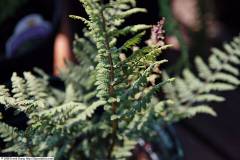
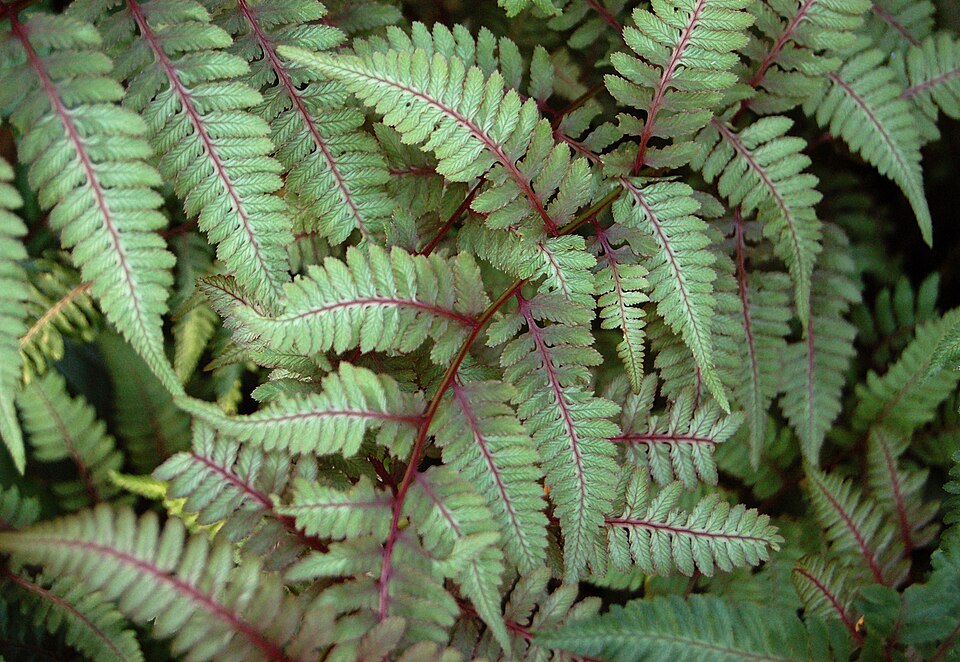
© Photo (c)2006 Derek Ramsey (Ram-Man), some rights reserved (CC-BY-SA) · Wikimedia Commons
Athyrium, Genus, niponicum, Species, 'Pictum', Cultivar,
- Genus & species
- Cultivar
Japanese painted fern
Japan, China, Korea, and the Russian Far East; moist woodland understory
Overview
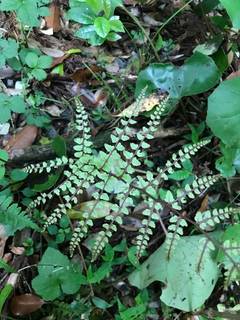
Athyrium niponicum 'Pictum' (Japanese painted fern) is a deciduous fern growing 12–18 inches (30–45 cm) tall and 18–24 inches (45–60 cm) wide. Triangular compound fronds 12–18 inches (30–45 cm) display a tricolor pattern: silver-gray blades with burgundy-purple midribs (rachis) and blue-green margins. Frond color is brightest in partial shade — deep shade reduces the silver and burgundy tones to a more uniform gray-green, and full sun can scorch the fronds. The species belongs to Athyriaceae. Pictum means painted, referring to the multicolored fronds. Deciduous: fronds die back in fall and new fiddleheads emerge in spring. Spreads slowly by short creeping rhizomes — not aggressive. Reproduces by spores on the frond undersides (sori), not by flowers or seeds. Crosses with A. filix-femina (lady fern) have produced hybrid cultivars including 'Ghost' (upright, 24–36 inches / 60–90 cm, silvery fronds) and 'Branford Beauty.' Native to Japan, China, Korea, and the Russian Far East in moist woodland understory. Consistent moisture is required — the fronds wilt and brown rapidly in drought, which is the principal cultural limitation. Non-toxic. Deer-resistant. Hardy in zones 3–8.
Native Range
Native to Japan, China, Korea, and the Russian Far East, growing in moist woodland understory at low to moderate elevations.Suggested Uses
Used in shade borders, woodland gardens, and in containers of at least 3 gallons (11 L), spaced 18–24 inches (45–60 cm). The tricolor silver-burgundy-green fronds supply color in shaded sites. Companion to hostas, bleeding hearts (Dicentra), and other shade perennials. Non-toxic. Deer-resistant. Zones 3–8.How to Identify
Appearance
Size & Dimensions
Height1' - 1'6"
Width/Spread1'6" - 2'
Reproduction
Reproduces by spores on the frond undersides (sori). The tricolor silver-burgundy-green fronds from spring through fall are the seasonal feature. Deciduous — fronds die back in fall.
Detailed Descriptions
Foliage Description
Silver-gray fronds with burgundy-purple midribs (rachis) and blue-green margins; triangular compound; 12-18 inches (30-45 cm); tricolor pattern brightest in partial shadeGrowing Conditions
Sun Requirements
Requires 1-3 hours of direct sunlight daily
• Full Sun: 6+ hours of direct sunlight
• Partial Shade: 3-6 hours of direct sunlight
• Full Shade: Less than 3 hours of direct sunlight
Care & Maintenance
Care Guide
Grows in partial shade to full shade with 1–3 hours of direct light; partial shade produces the brightest frond color. Soil pH 5.0–7.0 in well-drained loam or peat with consistent moisture. The fronds wilt and brown rapidly in drought — consistent moisture is the primary cultural requirement. Deep shade reduces the silver and burgundy tones, and full sun can scorch the fronds. Remove dead fronds in early spring (March) before new fiddleheads unfurl. Non-toxic. Deer-resistant. Suitable for zones 3–8.Pruning
Remove dead fronds in early spring (March) before new fiddleheads unfurl. No other pruning is needed. Divide congested clumps every 3–4 years in spring by separating the short creeping rhizomes.Pruning Schedule
Prune: March
early spring
Container Growing
Suitable for container growing
Minimum container size: 3 gallons