Athyrium, Genus, otophorum, Species,
- Genus & species
eared lady fern
Eastern Asia (Japan, China, Korea); moist deciduous forests and shaded mountain slopes at 1,000 to 6,000 feet (300-1,800 m) elevation
Overview
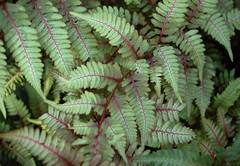
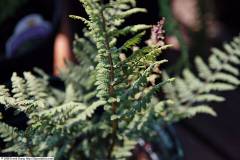
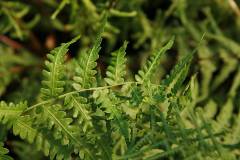
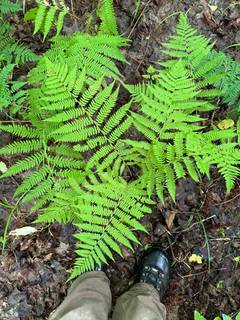
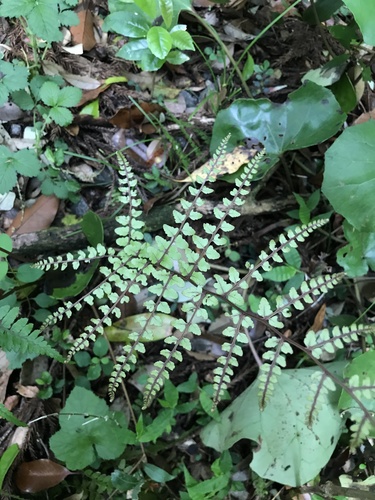
Athyrium otophorum is a deciduous to semi-evergreen fern forming a compact vase-shaped clump 18–24 inches (45–60 cm) tall and 18–24 inches (45–60 cm) wide. Fronds are bipinnate and 14–24 inches (36–60 cm) long, with gray-green to medium green pinnae held on a dark wine-red to burgundy rachis and stipe. New fronds emerge in spring with the most saturated color contrast, and a secondary flush of fresh fronds often appears in early fall. Small ear-shaped auricles (lobe projections) at the base of each pinna give the species its common name. Fronds arch outward from the central crown. Plants spread slowly by short, erect rhizomes at 2–4 inches (5–10 cm) per year, forming tight clumps rather than spreading colonies. In USDA zones 7–8 fronds persist as semi-evergreen through winter and become tattered by late winter; in colder zones fronds die back completely. Sori are elongate and covered by J-shaped indusia on the pinnule undersides, with spores maturing from mid-summer through early fall. Limitation: the wine-red rachis color fades toward dull green in deep shade, drought causes rapid frond desiccation and tip browning, and slugs feed on emerging croziers in spring.
Native Range
Native to eastern Asia, including Japan, China, and Korea, growing in moist deciduous forests and on shaded mountain slopes at elevations from 1,000 to 6,000 feet (300–1,800 m).Suggested Uses
Used in woodland gardens, shaded borders, and along paths at 18–24 inch (45–60 cm) spacing. Container culture is possible in pots of at least 3 gallons (11 L) in a humus-rich mix. The two-toned wine-red rachis and gray-green pinnae supply a color contrast without the metallic silver of A. niponicum var. pictum. Combines with green-foliaged shade perennials such as Hosta, Tiarella, and Polystichum where the rachis color stands against plain green foliage.How to Identify
Appearance
Size & Dimensions
Height1'6" - 2'
Width/Spread1'6" - 2'
Bloom Information
Ferns do not flower. Spores ripen in elongate sori covered by J-shaped indusia on the pinnule undersides from mid-summer through early fall. New fronds emerge as croziers in spring (April through May), and a secondary flush of fresh fronds bearing new sori often appears in early fall.
Detailed Descriptions
Foliage Description
gray-green to medium green pinnae with wine-red to burgundy rachis and stipe; bipinnate fronds 14-24 inches (36-60 cm) long with small ear-shaped auricles at the base of each pinnaGrowing Conditions
Sun Requirements
Requires 2-5 hours of direct sunlight daily
• Full Sun: 6+ hours of direct sunlight
• Partial Shade: 3-6 hours of direct sunlight
• Full Shade: Less than 3 hours of direct sunlight
Care & Maintenance
Care Guide
Site in partial shade with 2–5 hours of direct sun per day in humus-rich, consistently moist soil with a pH of 5.0–7.0. Bright filtered light or morning sun with afternoon shade produces the most saturated wine-red rachis color; deep shade reduces the color contrast. Soil moisture should remain consistent through the growing season; drought causes rapid frond desiccation and browning from the tips. A 2–3 inch (5–8 cm) leaf mold mulch retains moisture. In USDA zones 7–8 fronds are semi-evergreen and become tattered by late winter. Slugs feed on emerging croziers in spring. Hardy in USDA zones 5–9.Pruning
Cut browned, tattered, or winter-damaged fronds to the crown in late February or March before new croziers emerge. In mild climates, old semi-evergreen fronds can be removed at the same time. Damaged or broken fronds can be cut at any point in the growing season. Division of the tight clump requires a sharp knife to separate the erect rhizome; carry out division in spring every 4–5 years.Pruning Schedule
Prune: March
early spring
Container Growing
Suitable for container growing
Minimum container size: 3 gallons