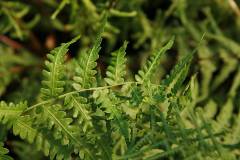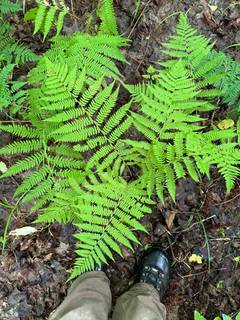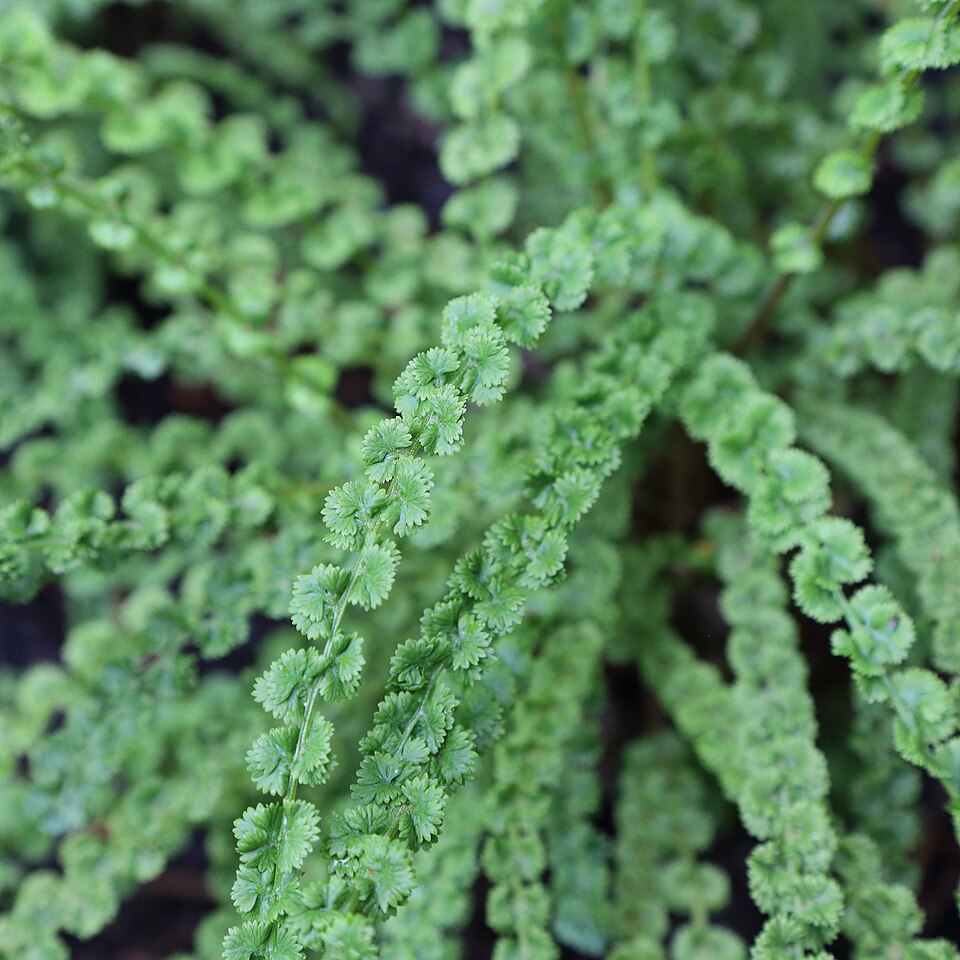
Athyrium, Genus, filix-femina, Species, 'Frizelliae', Cultivar,
- Genus & species
- Cultivar
tatting fern
Parent species {Athyrium filix-femina} native throughout the temperate and boreal Northern Hemisphere including Europe, Asia, and North America; the cultivar 'Frizelliae' was discovered in the wild in Ireland in 1857 by Mary Frizell
Overview
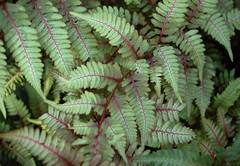
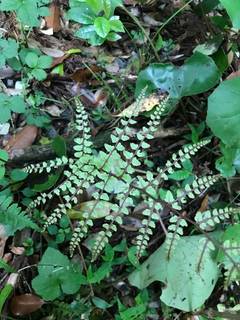
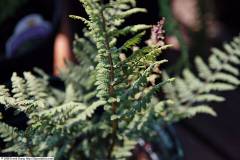
Athyrium filix-femina 'Frizelliae' is a deciduous fern cultivar in the family Athyriaceae, forming a compact vase-shaped clump and reaching 12-18 inches (30-45 cm) tall with a spread of 12-18 inches (30-45 cm). The cultivar carries a departure from typical fern frond structure: instead of the pinnate frond of the species, the pinnae are reduced to small rounded bead-like lobes arranged alternately along the rachis, and each frond resembles a chain or a piece of tatting lace. Fronds are 10-16 inches (25-40 cm) long and 0.5-1 inch (1.3-2.5 cm) wide — far narrower than the 3-6 inch (8-15 cm) wide fronds of the species type. The rachis is green to pale straw-colored. New fronds emerge in spring as tightly coiled croziers that unfurl to reveal the beaded pattern. The narrow fronds give the plant a lighter more open texture than the species. Sori develop on the undersides of the bead-like pinnae from mid-summer through fall. Some fronds occasionally produce normal pinnate segments at the frond tip, and this partial reversion is characteristic of the cultivar. Growth is slow and clumps expand by 2-4 inches (5-10 cm) per year. The narrow fronds are more brittle than those of the species type and break in heavy rain or foot traffic. The cultivar was discovered in the wild in Ireland in 1857 by Mary Frizell.
Native Range
The parent species Athyrium filix-femina is native throughout the temperate and boreal regions of the Northern Hemisphere, including Europe, Asia, and North America, where it grows in moist woodlands, stream banks, and shaded ravines from near sea level to 8,000 feet (2,400 m) elevation. The cultivar 'Frizelliae' was discovered in the wild in Ireland in 1857 by Mary Frizell and has been maintained in cultivation by division since that time.Suggested Uses
Planted in woodland gardens, shaded rock gardens, and sheltered borders at 12-18 inch (30-45 cm) spacing. The bead-like frond texture carries close-range detail that suits intimate garden settings, raised beds, and container plantings. Grown in containers of 3 gallons (11 L) or more in a humus-rich moisture-retentive mix. Combined with broader-leaved shade perennials such as Hosta and Brunnera macrophylla 'Jack Frost' for textural contrast in zones 3-8. Not suited to dry exposed sites, windy positions where the brittle fronds break, alkaline soils above pH 7.0, or areas with regular foot traffic.How to Identify
Appearance
Size & Dimensions
Height1' - 1'6"
Width/Spread1' - 1'6"
Bloom Information
As a fern, A. filix-femina 'Frizelliae' does not flower. Sori develop on the undersides of the bead-like pinnae from mid-summer through fall. Each sorus is covered by a J-shaped indusium characteristic of the genus Athyrium. Spores are released in late summer through early fall.
Detailed Descriptions
Foliage Description
medium green; narrow fronds 0.5-1 inch (1.3-2.5 cm) wide with bead-like rounded pinnae arranged alternately along a green to pale straw-colored rachisGrowing Conditions
Sun Requirements
Requires 1-4 hours of direct sunlight daily
• Full Sun: 6+ hours of direct sunlight
• Partial Shade: 3-6 hours of direct sunlight
• Full Shade: Less than 3 hours of direct sunlight
Care & Maintenance
Care Guide
Plant in humus-rich, consistently moist soil with a pH of 5.0-7.0 in part shade to full shade; tolerated soil types include loam and peat. The narrow fronds are more susceptible to desiccation than the broader fronds of the species, and consistent soil moisture is required. In dry conditions the bead-like pinnae shrivel before the rachis shows stress. The plant is sheltered from wind, which dries and breaks the brittle fronds. Slugs and snails feed on emerging croziers in spring. Clumps are divided every 4-5 years in spring if the center becomes crowded. Mulching with 2-3 inches (5-8 cm) of leaf mold or composted bark maintains soil moisture and mimics the native woodland floor.Pruning
Browned or broken fronds are removed at any time during the growing season by cutting at the base. All fronds are cut to ground level in late fall after frost or in early spring (March) before new croziers emerge. Division requires careful separation of the rhizome with a sharp knife; the compact clump is less easily divided than the species type.Pruning Schedule
Prune: March
early spring
Container Growing
Suitable for container growing
Minimum container size: 3 gallons