Tiarella, Genus, cordifolia, Species,
- Genus & species
foamflower
Eastern North America from Nova Scotia and southern Quebec south to Alabama and Georgia, west to Michigan and Minnesota
Overview
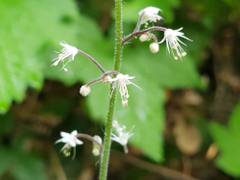
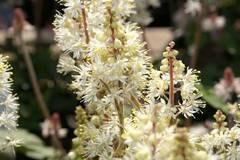
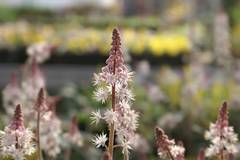
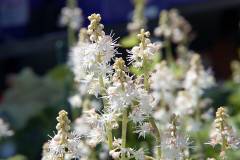
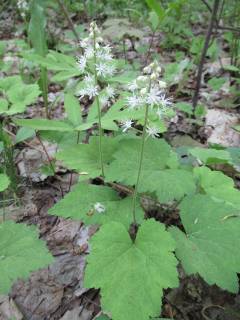
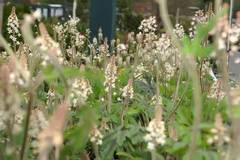
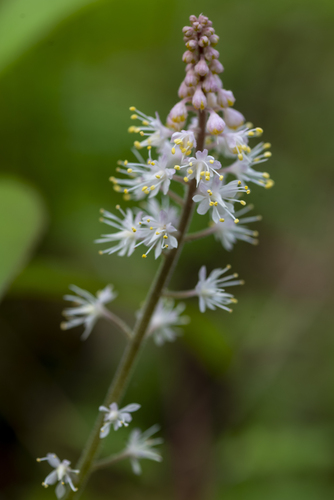
Tiarella cordifolia is a low woodland ground-cover perennial native to the moist deciduous forests of eastern North America, growing 6–12 inches (15–30 cm) tall and spreading 12–24 inches (30–60 cm) wide by aboveground stolons (runners). The genus name Tiarella translates as 'little tiara' and refers to the small crown-shaped seed capsules; the species epithet 'cordifolia' translates as 'heart-leaved'. Tiny white to pale-pink flowers are carried in narrow bottlebrush-like racemes 4–8 inches (10–20 cm) long held above the foliage in April and May, the dense flower clusters giving a foamy appearance that supplies the common name. Foliage is composed of heart-shaped, shallowly lobed semi-evergreen leaves 2–4 inches (5–10 cm) across in medium green, frequently marked with darker brown or purple bands along the central veins; leaves take on bronze-burgundy tints from late autumn through cool weather. The stolon-spreading growth habit forms a slowly expanding ground-cover colony rather than a discrete clump. Cultural needs are restrictive: cool, moist, humus-rich, slightly acidic shade is required, and foliage scorches and bloom shortens in temperatures above 80°F (27°C) or in drying soils. The species hybridizes with Heuchera to produce × Heucherella. Light sweet fragrance from the flowers. Slugs may damage the soft new foliage in spring; deer rarely browse the leaves.
Native Range
Tiarella cordifolia is native to the moist deciduous forests of eastern North America, with a range from Nova Scotia and southern Quebec south to Alabama and Georgia and west to Michigan and Minnesota. It grows in cool, shaded sites with humus-rich acidic soils, often along stream banks and on the lower slopes of wooded hillsides.Suggested Uses
Used as a native shade ground cover in woodland gardens, along shaded paths, on the cool side of buildings, in rain gardens with reliably moist soil, and in containers of 3 gallons (11 liters) or larger. Combines well with ferns such as Athyrium filix-femina and Polystichum acrostichoides, with hostas, and with Asarum canadense. Pairs with the related × Heucherella hybrids for varied shade-bed foliage texture.How to Identify
Appearance
Size & Dimensions
Height6" - 1'
Width/Spread1' - 2'
Bloom Information
Flowers from mid-April through mid-May for approximately 4 weeks across USDA zones 5–7; bloom shifts about 2 weeks earlier in zone 8 and later in zone 4. The narrow bottlebrush racemes open from the bottom up and carry a light sweet fragrance in still air.
Detailed Descriptions
Flower Description
White to pale pink, tiny, in narrow bottlebrush-like racemes 4-8 inches (10-20 cm) longFoliage Description
Medium green heart-shaped shallowly lobed leaves 2-4 inches (5-10 cm) across with darker brown or purple veining; bronze-burgundy tints in autumn and cool weatherGrowing Conditions
Sun Requirements
Requires 2-4 hours of direct sunlight daily
• Full Sun: 6+ hours of direct sunlight
• Partial Shade: 3-6 hours of direct sunlight
• Full Shade: Less than 3 hours of direct sunlight
Care & Maintenance
Care Guide
Plant in partial to full shade with 2–4 hours of filtered or dappled light; foliage scorches and bloom shortens in more than 4 hours of direct sun. Soil should be moist, humus-rich, and slightly acidic (pH 5.5–7.0), kept evenly moist throughout the growing season. Mulch 2 inches (5 cm) deep with leaf mold or composted bark to retain soil moisture and replicate the woodland duff layer. Water during dry spells; the plant declines if soil dries out for more than a few days. Slugs may damage soft new spring foliage and respond to iron-phosphate baits. The colony spreads by stolons and may need lifting and dividing every 4–5 years if the center thins.Pruning
Cut off spent flower racemes at the base of the stem after bloom finishes in late May or early June. Remove tattered or browned semi-evergreen leaves at the base in early March before new growth pushes. Lift and divide overgrown colonies in early fall.Pruning Schedule
Prune: March & May–June
early springlate spring
Container Growing
Suitable for container growing
Minimum container size: 3 gallons