Tiarella, Genus, trifoliata, Species,
- Genus & species
foamflower
Alaska south through British Columbia, Washington, Oregon, and into California; moist to wet coniferous forest understories, shaded stream banks, and moist forest floors
Overview
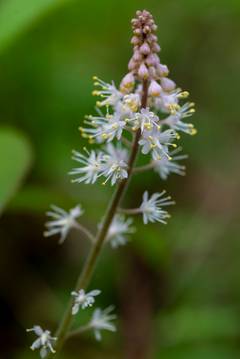
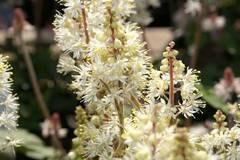
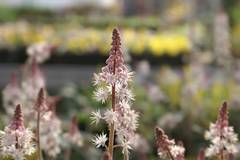
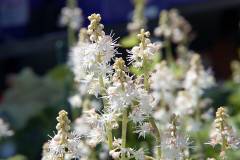
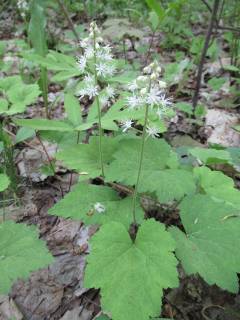
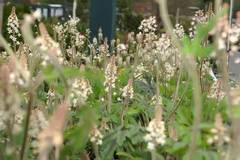
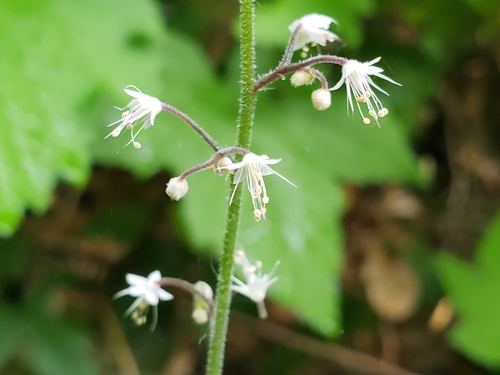
Tiarella trifoliata is a mounding semi-evergreen perennial reaching 8-16 inches (20-40 cm) tall and 12-18 inches (30-45 cm) wide. Long-petioled basal leaves form a low rosette; the species occurs in three recognized varieties (var. trifoliata with three separate leaflets, var. laciniata with deeply cut lacy leaves, var. unifoliata with simple palmately lobed leaves), all three of which occur in the Pacific Northwest. White to pale pink five-petaled thread-like flowers 0.2-0.3 inch (5-8 mm) appear in elongated airy panicles from May through July over 8 weeks; the cloud of small flowers gives a foam-like effect, the source of the common name. Spreads slowly by short rhizomes. The diagnostic fruit feature is a sugar-scoop capsule in which the two halves are markedly unequal in size — one much larger than the other — separating it from other Pacific Northwest Saxifragaceae when in fruit. Native to Alaska south through British Columbia, Washington, Oregon, and into California. Found in moist to wet coniferous forest understory, on shaded stream banks, and on moist forest floors. Eastern relatives (especially T. cordifolia) are the parent species of many garden hybrids and the Heuchera-Tiarella intergeneric crosses sold as ×Heucherella. Foliage remains green through mild winters and burns at the leaf margins in zone 3-4 cold. Non-toxic. Hardy in USDA zones 3-9.
Native Range
Native to North America from Alaska south through British Columbia, Washington, Oregon, and into California. Found in moist to wet coniferous forest understories, on shaded stream banks, and on moist forest floors at low to mid elevations.Suggested Uses
Used as a native ground cover in shaded woodland gardens, native plant gardens, moist mixed shade borders, and containers of at least 3 gallons (11 L), spaced 12-18 inches (30-45 cm). The sugar-scoop fruit capsule extends interest into late summer. Foliage burns at the leaf margins in hot dry sites.How to Identify
Appearance
Size & Dimensions
Height8" - 1'4"
Width/Spread1' - 1'6"
Bloom Information
White to pale pink five-petaled thread-like flowers 0.2-0.3 inch (5-8 mm) appear in elongated airy panicles from May through July over 8 weeks. Bee-pollinated. Plants in deep shade may flower 2-3 weeks later than those in dappled shade. The diagnostic sugar-scoop capsule with two unequal halves develops after petal drop.
Detailed Descriptions
Flower Description
White to pale pink, tiny five-petaled thread-like flowers 0.2-0.3 inch (5-8 mm) in elongated airy panicles; the cloud of tiny white flowers gives a foam-like effect — the source of the common name; May-July; the diagnostic fruit is a sugar-scoop capsule with two markedly unequal halves — one much larger than the other — separating the species from other Pacific Northwest SaxifragaceaeFoliage Description
Medium green long-petioled basal leaves; the species has three recognized varieties with different leaf forms — var. trifoliata has 3 separate leaflets (the typical form), var. laciniata has deeply cut lacy leaves, and var. unifoliata has simple palmately lobed leaves; tiarella = little tiara (referring to the small fruit shape); trifoliata = three-leaved; semi-evergreenGrowing Conditions
Sun Requirements
Tolerates up to 4 hours of direct sunlight daily
• Full Sun: 6+ hours of direct sunlight
• Partial Shade: 3-6 hours of direct sunlight
• Full Shade: Less than 3 hours of direct sunlight
Care & Maintenance
Care Guide
Grows in full shade to partial shade with 0-4 hours direct light. Requires moist humus-rich soil — loam, clay, silt, or peat — at pH 5.0-7.0. Hardy in USDA zones 3-9. Cool moist conifer forest understory conditions extend the foliage display through summer; foliage scorches at leaf margins in hot dry sites. Deer-resistant. Non-toxic.Pruning
No regular pruning required. Cut back winter-damaged foliage in March before new growth emerges. Divide every 4-5 years if the center of the clump declines.Pruning Schedule
Prune: March
early spring
Container Growing
Suitable for container growing
Minimum container size: 3 gallons