Tiarella, Genus, cordifolia, Species, 'Oakleaf', Cultivar,
- Genus & species
- Cultivar
oakleaf foamflower
Garden selection; species {Tiarella cordifolia} is native to eastern North America
Overview
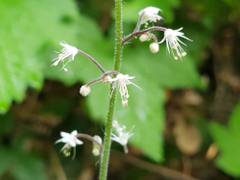
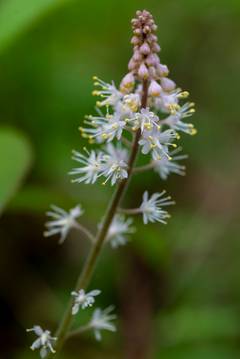
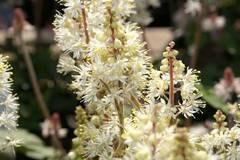
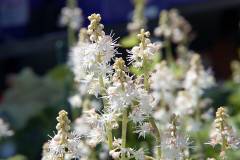
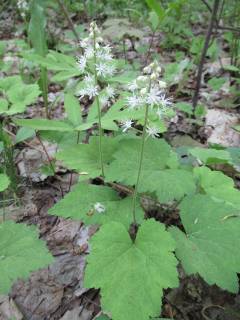
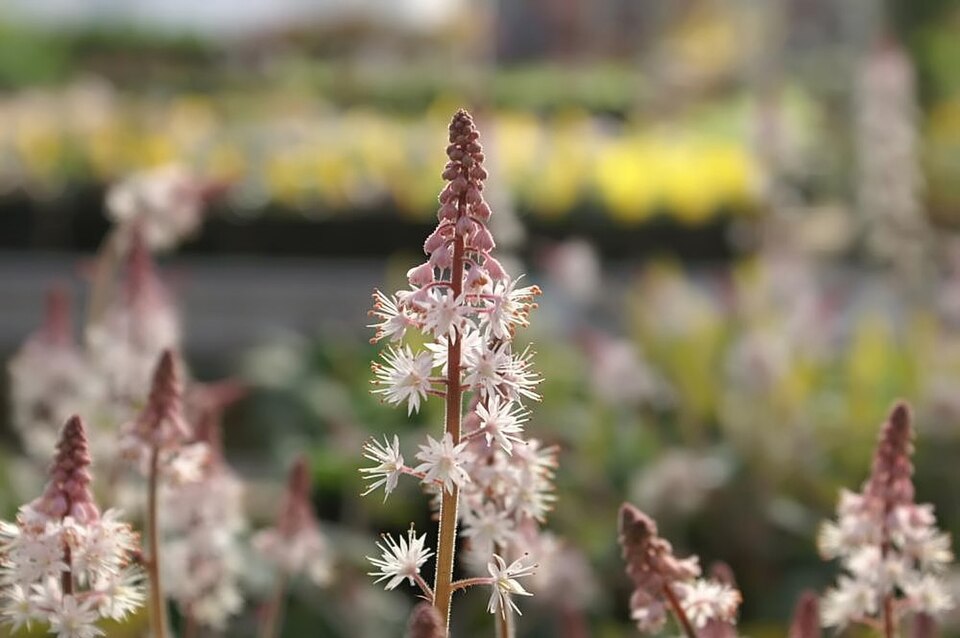
Tiarella cordifolia 'Oakleaf' is a clumping foamflower selected for deeply lobed foliage that mimics the silhouette of an oak leaf, growing 6–10 inches (15–25 cm) tall and 12–18 inches (30–45 cm) wide. The leaf form is the cultivar's defining trait: each leaf 3–5 inches (8–13 cm) across is cut into 5–7 pointed lobes that extend more than halfway to the central vein, in contrast to the shallowly lobed heart-shaped leaves typical of the species. Foliage is medium green with darker brown-purple central veining, taking on bronze-red tints from October through cool weather. White to pale-pink tiny flowers in narrow bottlebrush racemes 4–6 inches (10–15 cm) long appear in April and May for about 4 weeks. Habit is the second cultivar trait — T. cordifolia 'Oakleaf' forms a discrete clump rather than running by stolons like the species, so the colony stays where it is planted and does not spread into adjacent plantings. Cultural needs match the species: cool, moist, humus-rich, slightly acidic shade is required, and foliage scorches in temperatures above 80°F (27°C) or in drying soils. Light sweet fragrance from the flowers. Slugs may damage soft new spring foliage; deer rarely browse the leaves.
Native Range
The species Tiarella cordifolia is native to the moist deciduous forests of eastern North America, from Nova Scotia south to Alabama and west to Michigan. T. cordifolia 'Oakleaf' is a garden selection chosen for deeply oak-cut leaves and a non-stoloniferous clumping habit.Suggested Uses
Used in shade gardens, mixed shade borders, and containers of 3 gallons (11 liters) or larger where the spreading habit of stoloniferous foamflowers would crowd companion plants. The deeply lobed leaf shape adds foliage texture among hostas, ferns, and Heuchera. Combines with the related × Heucherella hybrids for varied shade-bed foliage.How to Identify
Appearance
Size & Dimensions
Height6" - 10"
Width/Spread1' - 1'6"
Bloom Information
Flowers from mid-April through mid-May for approximately 4 weeks across USDA zones 5–7; bloom shifts about 2 weeks earlier in zone 8 and later in zone 4. Narrow bottlebrush racemes 4–6 inches (10–15 cm) long carry tiny white-to-pale-pink flowers with a light sweet fragrance.
Detailed Descriptions
Flower Description
White to pale pink, tiny, in narrow bottlebrush racemes 4-6 inches (10-15 cm) longFoliage Description
Medium green deeply lobed leaves 3-5 inches (8-13 cm) across cut into 5-7 pointed oak-shaped lobes with darker brown-purple central veining; bronze-red tints in autumnGrowing Conditions
Sun Requirements
Requires 2-4 hours of direct sunlight daily
• Full Sun: 6+ hours of direct sunlight
• Partial Shade: 3-6 hours of direct sunlight
• Full Shade: Less than 3 hours of direct sunlight
Care & Maintenance
Care Guide
Plant in partial to full shade with 2–4 hours of filtered or dappled light; foliage scorches and bloom shortens in more than 4 hours of direct sun. Soil should be moist, humus-rich, and slightly acidic (pH 5.5–7.0), kept evenly moist throughout the growing season. Mulch 2 inches (5 cm) deep with leaf mold or composted bark to retain moisture. Water during dry spells; the plant declines if soil dries out for more than a few days. The clumping habit means no stolon trimming is required, but lift and divide every 4–5 years if the crown becomes overcrowded.Pruning
Cut spent flower racemes at the base of the stem after bloom finishes in late May or early June. Remove tattered or browned semi-evergreen leaves at the base in early March before new growth pushes. Lift and divide overgrown clumps in early fall.Pruning Schedule
Prune: March & May–June
early springlate spring
Container Growing
Suitable for container growing
Minimum container size: 3 gallons