Tiarella, Genus, spp., Multiple species,
- Genus
- Multiple species
foamflowers
Eastern North America, the Pacific Northwest, and eastern Asia
Overview
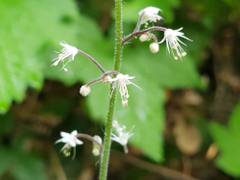
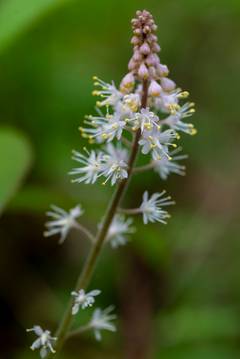
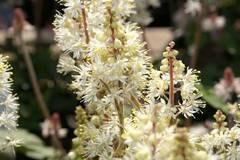
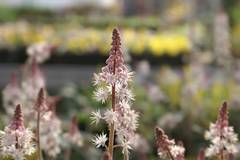
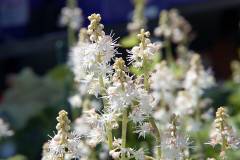
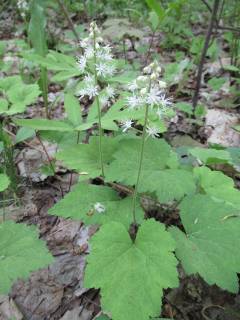
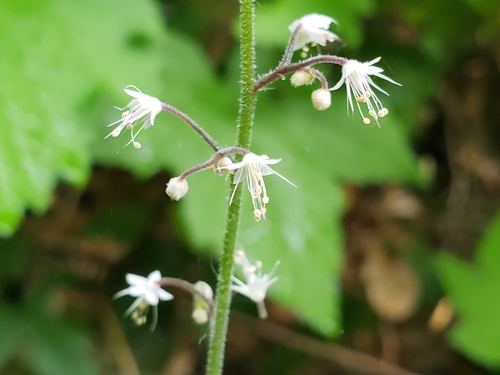
Tiarella is a small genus of woodland perennials in the family Saxifragaceae, with species native to eastern North America and eastern Asia. Plants form low rosettes of heart-shaped, lobed or maple-like leaves 2-4 inches (5-10 cm) long, frequently marked with dark veining or central blotches along the midribs. In spring the rosettes send up slender stalks 8-16 inches (20-40 cm) tall carrying narrow spikes of many tiny star-shaped flowers, white to pale pink, whose long stamens give each cluster a soft, foamy look and the genus its common name. The foliage is semi-evergreen in mild climates and often takes on bronze or reddish tints through winter. Some species, such as T. cordifolia, spread by surface runners to form a continuous groundcover, while others, such as T. wherryi, stay in tight clumps. The genus grows naturally on the floor of moist, shaded forests and along stream banks in humus-rich soil. Plants are hardy and low-growing but resent dry soil and full sun, scorching at the leaf margins when either is prolonged. Many garden hybrids have been raised by crossing Tiarella with the related genus Heuchera, though the pure species remain in cultivation for shaded gardens.
Native Range
Tiarella is native to the woodlands of eastern North America, the Pacific Northwest, and eastern Asia. T. cordifolia ranges through the eastern United States and Canada, while other species occur in China, Japan, and the mountains of western North America.Suggested Uses
Grown as a groundcover and edging in shade and woodland gardens, where running species knit together to cover bare soil beneath shrubs and trees. The marbled foliage and spring flower spikes suit shaded borders, stream banks, and the front of part-shade plantings. Foamflowers also combine with ferns, hostas, and Heuchera in woodland schemes.How to Identify
Appearance
Size & Dimensions
Height8" - 1'4"
Width/Spread1' - 2'
Bloom Information
Flowering occurs in mid to late spring, roughly April to June depending on climate. The slender spikes of foamy white to pink flowers last three to four weeks, and scattered later spikes sometimes appear into early summer. Bloom is heaviest in the cool, moist conditions of spring.
Detailed Descriptions
Flower Description
white to pale pinkFoliage Description
green, often marked dark purple-brownGrowing Conditions
Sun Requirements
Requires 2-6 hours of direct sunlight daily
• Full Sun: 6+ hours of direct sunlight
• Partial Shade: 3-6 hours of direct sunlight
• Full Shade: Less than 3 hours of direct sunlight
Care & Maintenance
Care Guide
Foamflowers grow in part shade to full shade in moist, humus-rich, well-drained soil, mirroring their woodland habitat. They tolerate full sun only where the soil stays reliably moist and summers are cool. Most species are hardy in USDA zones 4-9. The soil should stay evenly moist, as the shallow roots dry out quickly and the leaf margins scorch in drought. A spring mulch of leaf mold conserves moisture and feeds the soil. Running species can be divided in spring or autumn to expand a planting or to renew older clumps that have thinned at the center.Pruning
Remove spent flower spikes after bloom to tidy the rosettes, though this does not usually prompt heavy rebloom. Trim away winter-damaged or scorched leaves in early spring as fresh foliage emerges. Divide running species every few years to control spread and maintain dense cover.Container Growing
Suitable for container growing
Minimum container size: 1 gallons