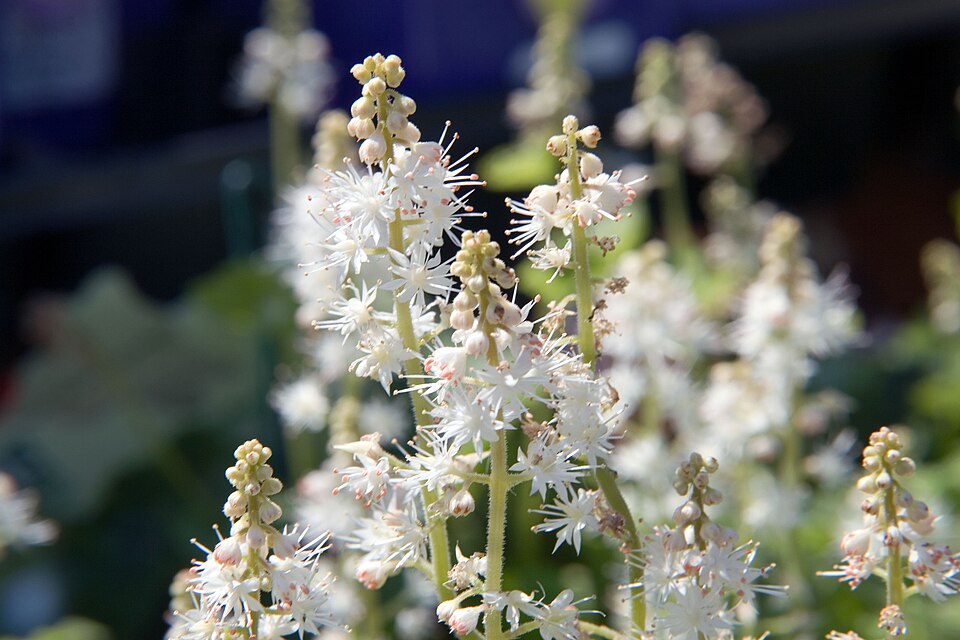
Tiarella, Genus, cordifolia, Species, 'Running Tapestry', Cultivar,
- Genus & species
- Cultivar
running tapestry foamflower
Garden selection; species {Tiarella cordifolia} is native to eastern North America
Overview
Tiarella cordifolia 'Running Tapestry' is a vigorously stoloniferous foamflower selected for both rapid spread and a patterned leaf marking, growing 6–10 inches (15–25 cm) tall and producing colonies 18–36 inches (45–90 cm) wide per plant within 2–3 growing seasons. The cultivar name describes its two defining traits: 'Running' refers to the long aboveground stolons that extend 6–10 inches (15–25 cm) per season — roughly twice the spread rate of the species — and 'Tapestry' refers to the dark maroon-red starburst marking radiating from the central vein on each green leaf. As stolons fill in, the repeated patterned leaves form a continuous patterned foliage carpet across the planting area. White-to-pink-tinged tiny flowers in narrow bottlebrush racemes 4–6 inches (10–15 cm) long appear in April and May for about 4 weeks. Foliage takes on bronze-red tints from October through cool weather. Cultural needs match the species: cool, moist, humus-rich, slightly acidic shade is required, and foliage scorches in temperatures above 80°F (27°C) or in drying soils. The vigorous spread that suits large shade plantings can crowd smaller companion perennials in tight beds. Light sweet fragrance from the flowers. Slugs may damage soft new spring foliage; deer rarely browse the leaves.
Native Range
The species Tiarella cordifolia is native to the moist deciduous forests of eastern North America, from Nova Scotia south to Alabama and west to Michigan. T. cordifolia 'Running Tapestry' is a garden selection chosen for vigorous stoloniferous spread and a patterned leaf marking.Suggested Uses
Used as a stoloniferous shade ground cover for filling large woodland areas, slopes under deciduous trees, and shaded paths where a continuous foliage carpet is wanted. Combines with ferns such as Athyrium filix-femina and Polystichum acrostichoides, with hostas, and with spring ephemerals such as Erythronium and Trillium that finish flowering before the foamflower carpet closes in. Less suited to small mixed beds where adjacent perennials would be overgrown.How to Identify
Appearance
Size & Dimensions
Height6" - 10"
Width/Spread1'6" - 3'
Bloom Information
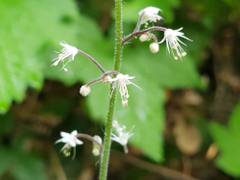
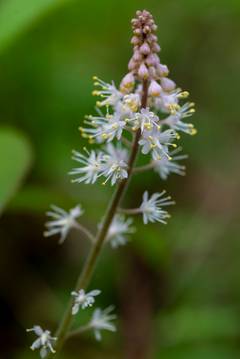
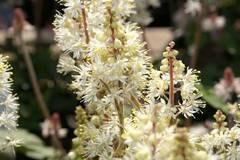
Flowers from mid-April through mid-May for approximately 4 weeks across USDA zones 5–7; bloom shifts about 2 weeks earlier in zone 8 and later in zone 4. Narrow bottlebrush racemes carry tiny white-to-pink-tinged flowers with a light sweet fragrance.
Detailed Descriptions
Flower Description
White to pink-tinged, tiny, in narrow bottlebrush racemes 4-6 inches (10-15 cm) longFoliage Description
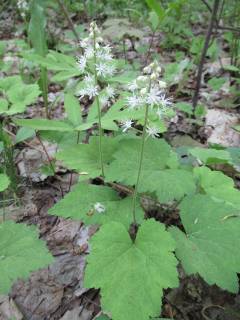
Green heart-shaped lobed leaves 2-4 inches (5-10 cm) across with a dark maroon-red starburst pattern radiating from the central vein; bronze-red tints in autumnGrowing Conditions
Sun Requirements
Requires 2-4 hours of direct sunlight daily
• Full Sun: 6+ hours of direct sunlight
• Partial Shade: 3-6 hours of direct sunlight
• Full Shade: Less than 3 hours of direct sunlight
Care & Maintenance
Care Guide
Plant in partial to full shade with 2–4 hours of filtered or dappled light; foliage scorches in more than 4 hours of direct sun. Soil should be moist, humus-rich, and slightly acidic (pH 5.5–7.0), kept evenly moist throughout the growing season. Mulch 2 inches (5 cm) deep with leaf mold or composted bark to retain moisture. Water during dry spells. Space plants 12–18 inches (30–45 cm) apart for ground-cover fill in 1–2 growing seasons. Trim or lift stolons that extend beyond the intended planting area in early spring before new growth pushes.Pruning
Cut spent flower racemes at the base of the stem after bloom finishes in late May or early June. Remove tattered or browned semi-evergreen leaves at the base in early March. Lift and replant outlying stolon-rooted plantlets to control colony spread.Pruning Schedule
Prune: March & May–June
early springlate spring
Container Growing
Suitable for container growing
Minimum container size: 3 gallons