Image 1 of 11
1 / 11
Species photo — your cultivar may vary
© dmitry tretjakov, some rights reserved (CC-BY-NC) · iNaturalist
Lamprocapnos, Genus, spectabilis, Species, 'Gold Heart', Cultivar,
- Genus & species
- Cultivar
Gold Heart Bleeding Heart
Species native to eastern Asia (Siberia, northern China, Korea, Japan; moist rocky woodland margins); cultivar discovered as a sport in the Netherlands
Overview
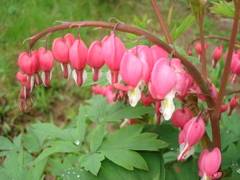
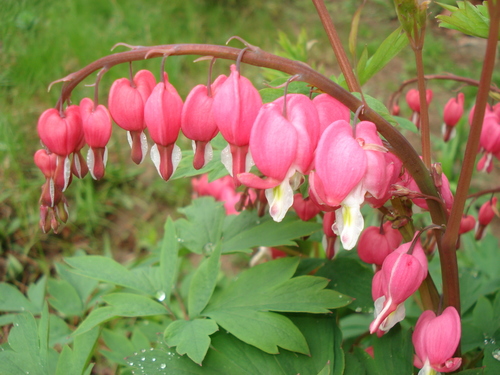
Lamprocapnos spectabilis 'Gold Heart' is an upright arching herbaceous perennial in the poppy family (Papaveraceae) reaching 24–36 inches (60–90 cm) tall with a spread of 24–36 inches (60–90 cm). The cultivar is separated from the species type by bright golden-yellow foliage — a strong departure from the medium-green foliage of the standard species. Leaves are ternately compound, deeply lobed, bright chartreuse-gold from emergence through summer — the gold color reads richest in spring and may fade toward lime-green in summer heat. Pendant heart-shaped flowers 1–1.5 inches (2.5–4 cm) long in rose-pink with white inner petals hang in arching racemes of 8–15 along one side of arching stems in April–June. The pink hearts against golden foliage produce a strong color contrast that reads from across a garden bed. Growth rate is moderate. The plant goes dormant by midsummer (July–August) — foliage yellows and collapses, leaving a bed gap that late-emerging companions fill. Hardy to zone 3. All parts contain isoquinoline alkaloids that produce gastrointestinal and nervous-system symptoms if plant tissue is chewed or swallowed, and contact with broken stems can cause skin irritation in sensitive individuals.
Native Range
The species Lamprocapnos spectabilis is native to eastern Asia (Siberia, northern China, Korea, Japan), where it occurs along moist rocky woodland margins. The cultivar 'Gold Heart' was discovered as a chance sport in the Netherlands and propagated for the golden foliage coloring.Suggested Uses
Grown in shade gardens, woodland borders, and cottage gardens at 24–30 inch (60–75 cm) spacing. The golden foliage brightens shaded bed positions from April emergence through early-summer dormancy onset. Interplanting with late-emerging perennials such as Hosta cultivars, Athyrium filix-femina (lady fern), and Anemone × hybrida covers the midsummer dormancy gap by providing foliage and flower interest as the bleeding heart collapses. Container culture works in 5 gallon (19 L) or larger pots with consistent moisture. The isoquinoline-alkaloid content in all plant parts means children-accessible garden areas merit siting consideration; positions behind other plantings or elevated above reach reduce contact and ingestion risk. Full-sun positions in hot climates, dry planting sites, and bed locations where the midsummer dormancy gap would be conspicuous are not suitable for this cultivar.How to Identify
Appearance
Size & Dimensions
Height2' - 3'
Width/Spread2' - 3'
Bloom Information
Pendant heart-shaped rose-pink flowers with white inner petals 1–1.5 inches (2.5–4 cm) long hang in arching racemes of 8–15 in April–June. Bloom duration is 4–6 weeks. The plant transitions to dormancy by July–August, when foliage yellows and collapses back to the crown.
Detailed Descriptions
Flower Description
Rose-pink with white inner petals; pendant heart-shaped 1-1.5 inches long in arching racemes of 8-15Foliage Description
Bright golden-yellow to chartreuse fading to lime-green in summer heat; ternately compound deeply lobedGrowing Conditions
Sun Requirements
Requires 3-6 hours of direct sunlight daily
• Full Sun: 6+ hours of direct sunlight
• Partial Shade: 3-6 hours of direct sunlight
• Full Shade: Less than 3 hours of direct sunlight
Care & Maintenance
Care Guide
Grows in partial shade in moist well-drained humus-rich soil at pH 5.5–7.0, tolerating loam. Hardy to zone 3. Partial shade holds the golden foliage color — full-sun positions in hot climates scorch the leaves and drive faster summer dormancy. Consistent moisture through the spring growing window extends both foliage and bloom. The midsummer dormancy is a reliable species trait; late-emerging companions (hostas, ferns, Anemone × hybrida) cover the dormant-period bed gap. Slugs can damage emerging growth in early spring. All parts contain isoquinoline alkaloids that produce gastrointestinal and nervous-system symptoms if plant tissue is chewed or swallowed, and broken stems can irritate skin in sensitive individuals.Pruning
Foliage is cut back after it yellows and collapses in midsummer (July–August). No other pruning is required. Cutting back prematurely while foliage is still green interrupts the plant energy-storage cycle and reduces next-year flowering; the gardener waits for the leaves to yellow on their own before cleanup.Pruning Schedule
Prune: July
summer
Container Growing
Suitable for container growing
Minimum container size: 5 gallons