Lamprocapnos, Genus, spp., Multiple species,
- Genus
- Multiple species
Cool-temperate eastern Asia (Siberia, northern China, Korea, Japan)
Overview
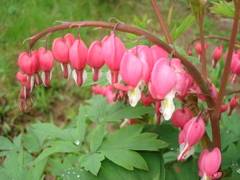
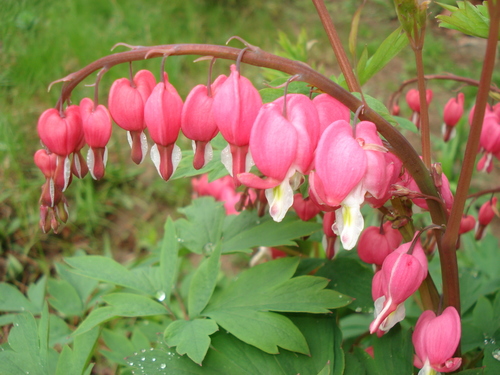
Lamprocapnos is a genus represented by the single species Lamprocapnos spectabilis, the common bleeding heart, a clump-forming perennial of the poppy family long known as Dicentra spectabilis. Plants grow 24-36 inches (60-90 cm) tall and about as wide, with soft, fleshy, pinkish stems and divided, blue-green, somewhat ferny leaves. In mid to late spring, arching flower stems hang a row of pendant, heart-shaped flowers 1-1.5 inches (2.5-4 cm) long, rose-pink with a protruding white inner petal, with a pure white form also grown. The display lasts several weeks before the plant typically dies back and goes dormant through summer, especially in warm or dry sites. Small seed pods follow the flowers. Lamprocapnos grows in cool, moist shade and is hardy and long-lived, but the summer dormancy leaves a gap in the planting, the brittle stems break easily, and the sap can irritate skin. It is native to cool-temperate eastern Asia.
Native Range
Lamprocapnos is native to cool-temperate eastern Asia, including parts of Siberia, northern China, Korea, and Japan, where L. spectabilis grows in moist woodland and on shaded, humus-rich slopes. It has been cultivated in gardens worldwide for well over a century.Suggested Uses
Lamprocapnos is used in shade and woodland gardens, cottage borders, and shaded foundation plantings, paired with hostas, ferns, and later perennials that cover its summer gap. Its arching flower stems suit the front and middle of cool, moist borders. Summer dormancy and brittle stems make it unsuited to hot, dry sites or high-traffic edges.How to Identify
Appearance
Size & Dimensions
Height2' - 3'
Width/Spread2' - 3'
Colors
Bloom Information
Flowering occurs in mid to late spring, mainly April to May, lasting four to six weeks. The arching stems open their hanging flowers in sequence from base to tip. In cool, moist conditions a light second flush can follow in autumn before dormancy.
Detailed Descriptions
Flower Description
rose-pink to whiteFoliage Description
blue-greenGrowing Conditions
Sun Requirements
Requires 2-6 hours of direct sunlight daily
• Full Sun: 6+ hours of direct sunlight
• Partial Shade: 3-6 hours of direct sunlight
• Full Shade: Less than 3 hours of direct sunlight
Care & Maintenance
Care Guide
Plants grow in part to full shade on cool, moist, humus-rich, free-draining soil. Steady moisture in spring supports strong growth and bloom, while hot, dry summers bring on early dormancy. The plant dies back after flowering in warm sites, so it is set among later perennials or ferns that fill the gap it leaves. L. spectabilis is very cold-hardy, surviving below -30F (-34C), but new spring shoots can be nipped by late frost. The brittle, fleshy stems break easily, so a sheltered spot away from heavy traffic suits it. The sap may irritate sensitive skin.Pruning
Yellowing foliage can be cut to the ground once the plant begins its summer dormancy. Spent flower stems can be removed to tidy the clump and limit seeding. No other routine pruning is needed, and the crown is left undisturbed, since plants are slow to recover from division and transplanting.Pruning Schedule
summer
Container Growing
Suitable for container growing
Minimum container size: 3 gallons