Polygonatum, Genus, odoratum, Species, 'Variegatum', Cultivar,
- Genus & species
- Cultivar
variegated Solomon's seal
Europe/temperate Asia (Britain to Japan; deciduous woodlands, hedgerows, shaded slopes; variegated cultivar)
Overview
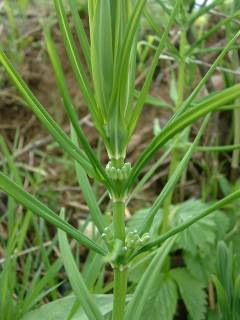
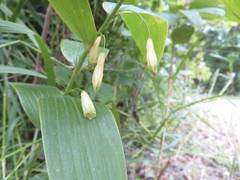
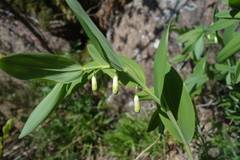
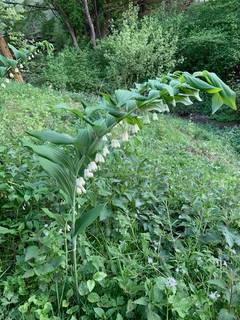
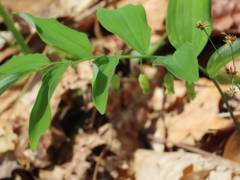
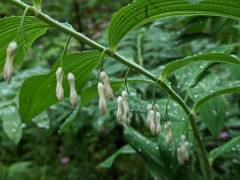
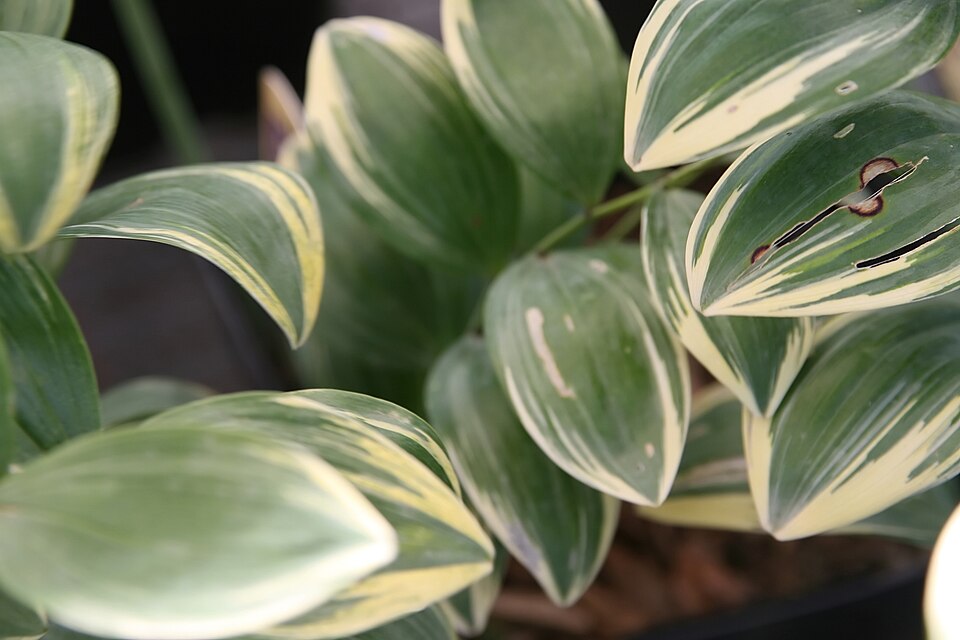
Polygonatum odoratum 'Variegatum' is a deciduous perennial reaching 18-24 inches (45-60 cm) tall with a spread of 12-18 inches (30-45 cm), spreading slowly by rhizomes. The arching, unbranched stems bear alternate, ovate to elliptic leaves 3-6 inches (8-15 cm) long arranged in two ranks, each leaf broadly edged in cream-white with a green center—the variegation is consistent and stable. Pendant, tubular white flowers 0.6-0.8 inch (15-20 mm) long, fragrant, appear in pairs from the leaf axils along the underside of the arching stems in April-May. Small blue-black berries follow in late summer. Growth rate is moderate, spreading slowly by rhizomes to form colonies. Hardy to zone 3. The arching variegated stems are the primary feature—each stem a graceful arc of cream-edged leaves with pendant white bells beneath.
Native Range
Polygonatum odoratum is native to Europe and temperate Asia—from Britain and Scandinavia east through Russia, China, and Japan—in deciduous woodlands, hedgerows, and shaded slopes. 'Variegatum' is a variegated cultivar.Suggested Uses
Planted in shade gardens, woodland borders, or under trees at 12-18 inch (30-45 cm) spacing. The arching variegated stems create a layered effect in shade. Fragrant flowers. Tolerates dry shade. Spreads slowly by rhizomes—may naturalize. Blue-black berries toxic. Solomon's seal sawfly may defoliate. Not suitable for full sun or wet sites.How to Identify
Appearance
Size & Dimensions
Height1'6" - 2'
Width/Spread1' - 1'6"
Bloom Information
Pendant tubular white fragrant flowers 0.6-0.8 inch (15-20 mm) long, in pairs from leaf axils along the underside of arching stems, April-May. Bloom duration 2-3 weeks. Small blue-black berries follow in late summer.
Detailed Descriptions
Flower Description
White; pendant tubular fragrant 0.6-0.8 inch; in pairs from leaf axils; Apr-May; blue-black berries followFoliage Description
Green center with cream-white margins; alternate ovate to elliptic 3-6 inches on arching stems; variegation stableGrowing Conditions
Sun Requirements
Requires 2-4 hours of direct sunlight daily
• Full Sun: 6+ hours of direct sunlight
• Partial Shade: 3-6 hours of direct sunlight
• Full Shade: Less than 3 hours of direct sunlight
Care & Maintenance
Care Guide
Plant in partial to full shade in moist, humus-rich, well-drained soil (pH 5.5-7.0). Hardy to zone 3. Tolerates dry shade once established. Spreads slowly by rhizomes. Solomon's seal sawfly larvae can defoliate plants in early summer—damage is cosmetic and plants recover.Pruning
Cut back spent stems to ground after frost in autumn. No other pruning needed. The arching form is natural.Pruning Schedule
Prune: October–November
fall
Container Growing
Suitable for container growing
Minimum container size: 3 gallons