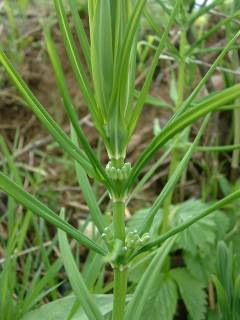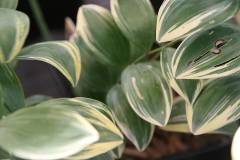
Polygonatum, Genus, biflorum, Species,
- Genus & species
solomons seal
Eastern and central North America — from New England south to Florida and west to Texas; deciduous woodlands and moist shaded slopes
Overview
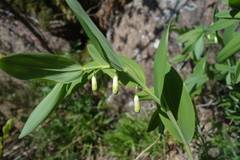
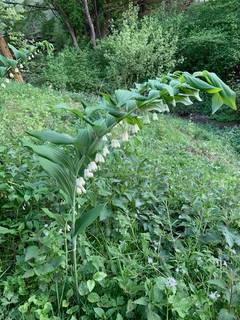
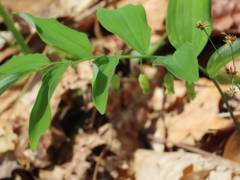
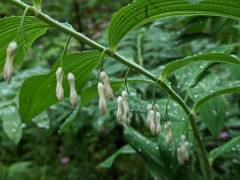
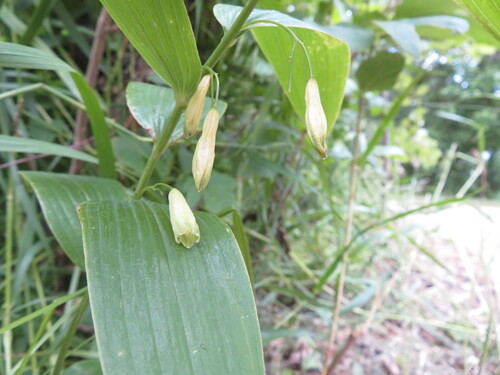
Polygonatum biflorum is Solomon's seal (smooth Solomon's seal), an upright perennial with gracefully arching unbranched stems growing 24-36 inches (60-90 cm) tall and spreading 24-36 inches (60-90 cm) wide by rhizomes. Medium green ovate alternate leaves 2-6 inches (5-15 cm) long arranged along the arching stems — smooth on both surfaces (glabrous). Small greenish-white to cream bell-shaped flowers 0.5-0.75 inch (1.3-2 cm) dangling in pairs from the leaf axils beneath the stems. In Asparagaceae (reclassified from Liliaceae). The common name refers to the round scars on the rhizome left by previous years' stems — the scars resemble wax seals. Native to eastern and central North America — deciduous woodlands and moist shaded slopes. Spreads by rhizomes to form loose woodland colonies over time. The flowers are small and face downward — the display relies on the architectural arching stem form rather than flower color. Dark blue-black berries 0.25 inch (6 mm) form in late summer — toxic if ingested. Solomon's seal sawfly (Phymatoceros aterrimus) can defoliate plants — the primary pest. Yellow to gold fall foliage. Deer-resistant. Drought-tolerant once established. Toxic to pets and humans (berries and rhizome). Zones 3-9. Part shade to full shade. Growth rate is moderate.
Native Range
Native to eastern and central North America — from New England south to Florida and west to Texas. Found in deciduous woodlands and moist shaded slopes.Suggested Uses
Grown in woodland gardens, shade borders, and containers of at least 7 gallons (26 L). Native to North America. Shade ground cover — forms colonies by rhizomes. Deer-resistant. Berries and rhizome toxic. Zones 3-9.How to Identify
Appearance
Size & Dimensions
Height2' - 3'
Width/Spread2' - 3'
Bloom Information
Late spring (May-June). Greenish-white to cream bell-shaped flowers 0.5-0.75 inch (1.3-2 cm) dangling in pairs beneath the arching stems. 3 weeks of bloom. Bee-pollinated. Dark blue-black berries follow in late summer (toxic).
Detailed Descriptions
Flower Description
Greenish-white to cream, small bell-shaped, 0.5-0.75 inch (1.3-2 cm) long, dangling in pairs (sometimes 1-3) from the leaf axils beneath the arching stemsFoliage Description
Medium green, ovate, alternate, 2-6 inches (5-15 cm) long, arranged along gracefully arching unbranched stems; smooth on both surfaces (glabrous — the 'smooth' in the common name)Growing Conditions
Sun Requirements
Requires 2-4 hours of direct sunlight daily
• Full Sun: 6+ hours of direct sunlight
• Partial Shade: 3-6 hours of direct sunlight
• Full Shade: Less than 3 hours of direct sunlight
Care & Maintenance
Care Guide
Part shade to full shade (2-4 hours). Rich moist humus soil pH 5.5-7.0. Spreads by rhizomes — forms loose colonies. Solomon's seal sawfly can defoliate — handpick larvae. Berries and rhizome toxic if ingested. Cut stems to ground after frost. Deer-resistant. Zones 3-9.Pruning
Cut all stems to ground level after the first hard frost when foliage yellows and collapses (November). No other pruning needed. Divide rhizomes in early spring if colonies become too dense.Pruning Schedule
Prune: November
fall
Container Growing
Suitable for container growing
Minimum container size: 7 gallons