Image 1 of 17
1 / 17
Plant Reference
Polygonatum, Genus,
- Genus
Solomon's seal
Temperate Northern Hemisphere — the genus Polygonatum contains approximately 70 species distributed across North America, Europe, and Asia, with different species native to the woodland understory of each continental region; {P. biflorum} is the native species across eastern and central North America, {P. odoratum} is the native species across much of Europe and temperate Asia, and several additional species are native to China, Japan, Korea, and the Himalayas
Overview
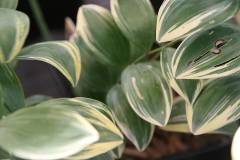
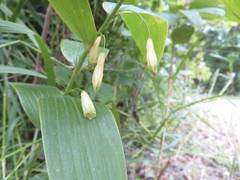
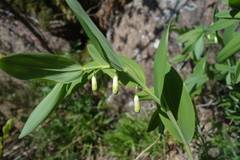
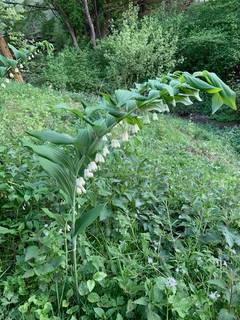
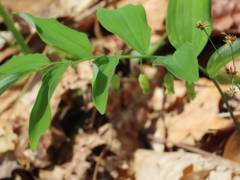
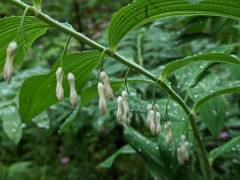
Polygonatum is a genus of approximately 70 species of rhizomatous woodland herbaceous perennials in the family Asparagaceae, native to the temperate woodland understory of North America, Europe, and Asia. Plants grow 18-48 inches (45-120 cm) tall and 18-24 inches (45-60 cm) wide per stem and form expanding colonies over time through rhizomatous spread. The defining character of the genus is the arching unbranched stem architecture: each stem rises upright from the underground rhizome and then curves gracefully outward and downward as it grows, carrying alternate oval to lance-shaped parallel-veined leaves along its length and suspending pendant white to greenish-white tubular bell-shaped flowers 0.5-0.75 inch (12-18 mm) long in pairs or small clusters from each leaf axil along the underside of the arching stem. The flowering habit separates Polygonatum (true Solomon's seal) from the similar-looking Maianthemum racemosum (false Solomon's seal, formerly Smilacina racemosa), which carries its flowers in a terminal plume at the tip of the stem rather than suspended along the leaf axils — this axillary-versus-terminal flower position is the primary field identifier for separating the two genera, and a gardener familiar with one can identify the other by the flower position alone. The common name 'Solomon's seal' and the genus name Polygonatum (meaning 'many-kneed' in Greek) both refer to the thick horizontal underground rhizome: the rhizome is jointed with swollen nodes where each year's stem arose from the previous growth, and each old stem position leaves a circular scar on the top of the rhizome that resembles the impression of a wax seal — the scars are said to resemble the seal of King Solomon from Judeo-Christian tradition, giving rise to the common name. Several species and hybrids are commonly cultivated: P. odoratum (fragrant Solomon's seal, 18-24 inches / 45-60 cm tall, lightly fragrant flowers, native to Europe and temperate Asia, with the variegated cultivar 'Variegatum' carrying cream-white-edged leaves that brighten shaded plantings and that received the Royal Horticultural Society Award of Garden Merit), P. biflorum (smooth Solomon's seal, 12-36 inches / 30-90 cm tall, native to eastern and central North America), P. × hybridum (garden Solomon's seal, 36-48 inches / 90-120 cm tall, a European hybrid that carries the tallest stems in the cultivated genus), and P. humile (dwarf Solomon's seal, 6-12 inches / 15-30 cm tall, a compact Asian species for small shade gardens). Blue-black berries 0.3 inch (8 mm) across develop after flowering and hang where the flowers had been through the second half of summer and into fall. The species spreads by rhizomes to form expanding colonies over several years, with a typical rate of expansion of 6-12 inches per year under favorable conditions — fast enough to fill a shaded corner over time without being aggressive like Petasites or Imperata. All parts of the plant contain cardiac glycosides and saponins that cause vomiting, diarrhea, and at sufficient dose cardiac effects in humans, dogs, cats, and livestock if ingested — the toxicity is the reason deer reliably avoid the foliage and the species is reliably deer-resistant in gardens with heavy browsing pressure. The young shoots of some species have been eaten as a cooked asparagus-like spring vegetable in traditional Asian cuisine, with traditional preparation methods reducing the glycoside content, but the raw plant is not safe for casual consumption.
Native Range
Polygonatum is a genus of approximately 70 species distributed across the temperate Northern Hemisphere, with different species native to the woodland understory of North America, Europe, and Asia. In North America, P. biflorum (smooth Solomon's seal) is the native species across the eastern and central woodlands from southern Ontario and Quebec south to Florida and Texas and west to the Great Plains, growing in moist deciduous forest understory, river bottomlands, and shaded ravines. In Europe, P. odoratum (fragrant Solomon's seal) and P. multiflorum (common Solomon's seal) are native across temperate woodlands from the British Isles east to Russia. In Asia, multiple species are native to China, Japan, Korea, the Himalayas, and Southeast Asian mountain regions, with P. cirrhifolium, P. kingianum, P. odoratum, and several others widely distributed. P. × hybridum (garden Solomon's seal) is a European hybrid between P. odoratum and P. multiflorum that is not found in the wild and that has been selected for its taller stems and larger flowers compared to either parent species. The P. biflorum native range includes most of the area east of the Mississippi River and makes the species a regionally appropriate shade perennial for eastern North American native plant gardens, while European gardeners commonly cultivate the native P. odoratum and P. × hybridum as regionally appropriate selections.Suggested Uses
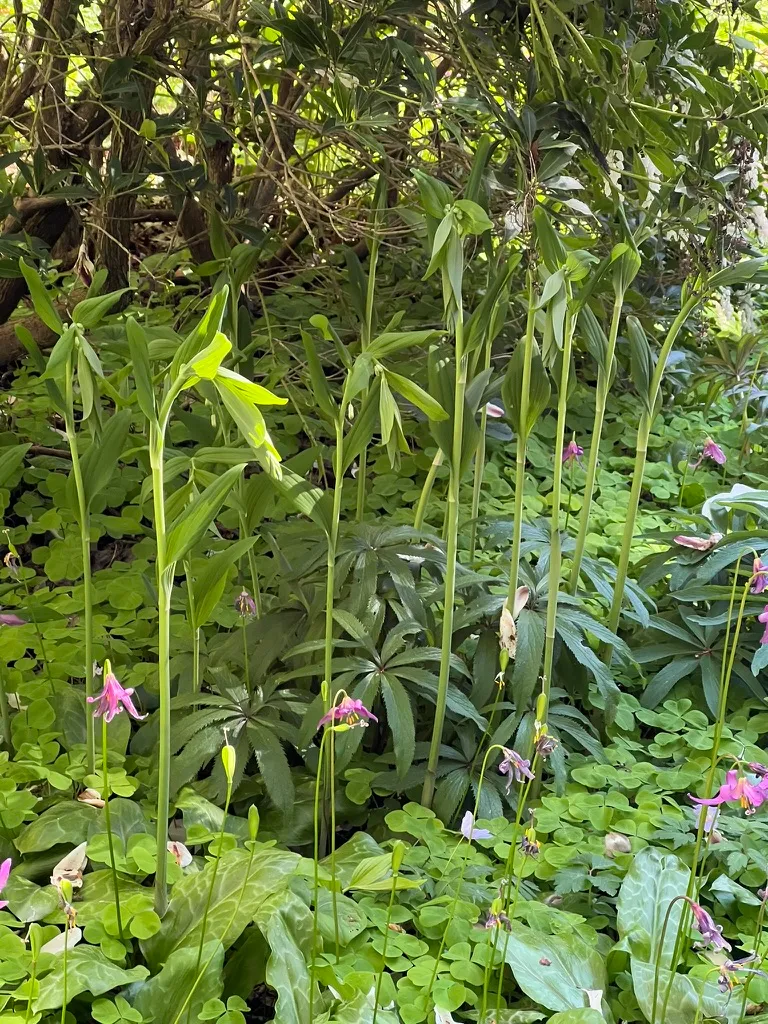
Planted in woodland gardens, shaded perennial borders, native plant gardens (especially for the North American P. biflorum), dry shade plantings under deciduous trees, Japanese-style shade gardens, and containers of 5 gallons (19 L) or larger in zones 3-8, spaced 18-24 inches (45-60 cm) for initial planting. The gracefully arching unbranched stems with their horizontal sweep and the pendant pairs of white bell-shaped flowers give the genus a central role in shade-border design where the architectural form of the stems contributes to the layered visual structure of a woodland planting — placing Solomon's seal at the back or middle of a shade border allows the arching stems to sweep forward over lower-growing companions such as Hosta, ferns, and Epimedium, producing the layered effect that is the traditional goal of woodland border design. The variegated P. odoratum 'Variegatum' brightens shaded positions where green-foliaged plants lack visual interest. Combined with Hosta, Astilbe, Epimedium, Tiarella, Pulmonaria, ferns, and woodland-native ephemerals in shaded plantings where the shared cultural requirements align and the arching stem form complements the lower mounding habits of the companion plants. Solomon's seal is reliably deer-resistant in gardens with heavy deer browsing pressure because of the cardiac glycoside content of the foliage. Not suited to sunny dry positions where the foliage scorches and the arching form fails to develop, wet poorly drained sites where crown rot develops, households where the toxic berries and foliage pose an ingestion risk to young children or curious pets, or formal plantings where the informal woodland character of the genus conflicts with controlled design.How to Identify
Appearance
Size & Dimensions
Height1'6" - 4'
Width/Spread1'6" - 2'
Bloom Information
White to greenish-white tubular bell-shaped pendant flowers 0.5-0.75 inch (12-18 mm) long hang in pairs or small clusters from the leaf axils along the underside of the gracefully arching stems during April and May in zones 3-8, lasting approximately 3 weeks. Flowers are lightly fragrant in P. odoratum and several Asian species with a sweet delicate scent that is most noticeable at close range, while P. biflorum and P. × hybridum are essentially scentless. Bees, flies, and occasionally hummingbirds visit the flowers during daylight hours. After pollination the flowers develop into blue-black berries 0.3 inch (8 mm) across that hang where the flowers had been and persist through the second half of summer and into fall, drawing some bird attention as the berries ripen (the berries are toxic to humans despite being eaten by some birds). The spring flower display is secondary to the architectural form of the arching stems as the plant's primary garden contribution — the gracefully curving lines of the stems carry the garden value across the full growing season while the flower event is a brief spring accent.
Detailed Descriptions
Flower Description
white to greenish-white; tubular bell-shaped pendant flowers 0.5-0.75 inch (12-18 mm) long hanging in pairs or small clusters from the leaf axils along the underside of the arching stems during mid to late spring; lightly fragrant in some species including P. odoratumFoliage Description
medium to dark green; oval to lance-shaped alternate leaves arranged along gracefully arching unbranched stems, with parallel veins and smooth margins; the cultivar 'Variegatum' of P. odoratum carries cream-white-edged leaves that brighten shaded plantings; fall foliage turns clear yellow before the stems collapse at the first hard frostGrowing Conditions
Sun Requirements
Requires 1-4 hours of direct sunlight daily
• Full Sun: 6+ hours of direct sunlight
• Partial Shade: 3-6 hours of direct sunlight
• Full Shade: Less than 3 hours of direct sunlight
Care & Maintenance
Care Guide
Plant in humus-rich well-drained loam with a pH of 5.5-7.0 in partial shade to full shade (1-4 hours of direct sun); the genus is intolerant of dry sunny positions and is suited to shaded woodland border settings, under deciduous trees, and other traditional shade-perennial plantings. Consistent soil moisture through the growing season is needed for the species to develop its full height and the gracefully arching stem form — drought-stressed plants produce shorter and less graceful stems. Plants spread by rhizomes to form expanding colonies over several years, with a typical rate of expansion of 6-12 inches per year under favorable conditions. The rhizomatous spread is slow enough to be manageable in mixed shade plantings and is not aggressive like Petasites or Imperata. All parts of the plant contain cardiac glycosides and saponins that cause vomiting, diarrhea, and at sufficient dose cardiac effects in humans, dogs, cats, and livestock if ingested, and the toxicity is the reason deer reliably avoid the foliage — the genus is reliably deer-resistant in gardens with heavy deer browsing pressure. Separated from the visually similar but taxonomically distinct Maianthemum racemosum (false Solomon's seal) by the axillary flower position versus the terminal flower plume of Maianthemum, and gardeners shopping for the plant benefit from knowing which genus they are selecting. The variegated cultivar P. odoratum 'Variegatum' received the Royal Horticultural Society Award of Garden Merit for its garden performance and is the variegated cultivated selection most frequently encountered in commercial nursery sales. No routine pest or disease problems affect the genus in garden cultivation.Pruning
Dead stems are cut to the ground in late fall (November) after the first hard frost collapses the foliage, clearing the planting for winter dormancy. No pruning is needed during the growing season — the gracefully arching stems are the plant's central ornamental feature and any cutting or shortening during active growth destroys the form. Rhizome containment is done by digging unwanted stems and their attached rhizome sections at the colony edge during spring or early fall, because the slow lateral rhizome spread is easily controlled by periodic edge removal and the expanding colony does not overrun neighbors at the rate that more aggressive rhizomatous perennials achieve. Division and transplanting of the rhizome is done in early spring or early fall when the plant is dormant or nearly so, and each divided section should carry at least one bud and several inches of rhizome for successful reestablishment.Pruning Schedule
Prune: November
fall
Container Growing
Suitable for container growing
Minimum container size: 5 gallons