Image 1 of 5
1 / 5
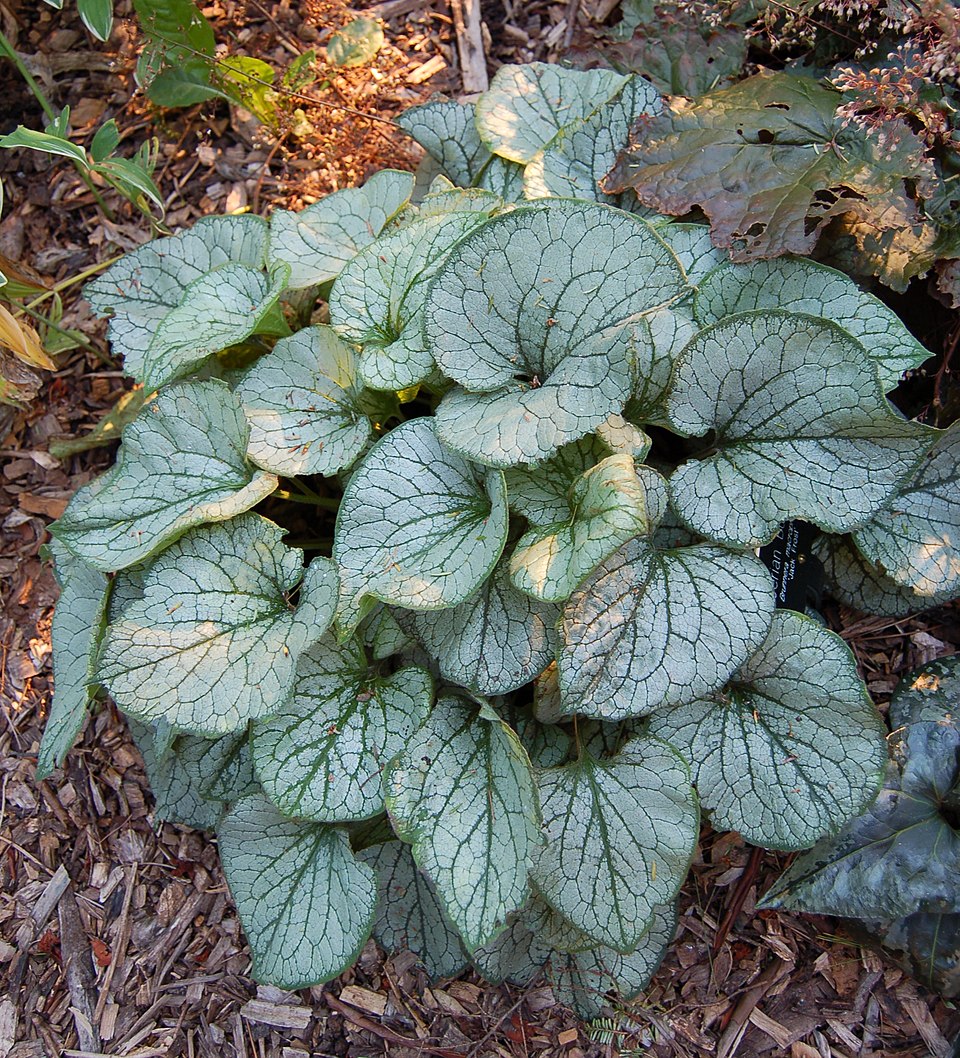
© Photo (c)2006 Derek Ramsey (Ram-Man), some rights reserved (CC-BY-SA) · Wikimedia Commons
Brunnera, Genus, macrophylla, Species, 'Jack Frost', Cultivar,
- Genus & species
- Cultivar
jack frost heartleaf brunnera
Species native to the Caucasus region — western Georgia, northeastern Turkey, and adjacent areas — in moist woodland understory and shaded mountain slopes; cultivar 'Jack Frost' selected in cultivation and named Perennial Plant of the Year in 2012
Overview
Brunnera macrophylla 'Jack Frost' is Jack Frost heartleaf brunnera (silver-leaved bugloss), a mounding deciduous perennial in the borage family Boraginaceae growing 12-18 inches (30-45 cm) tall and 18-24 inches (45-60 cm) wide. The cultivar was named Perennial Plant of the Year in 2012 by the Perennial Plant Association and has become a foundation shade-garden foliage plant since its introduction. Heart-shaped (cordate) leaves 4-8 inches (10-20 cm) across are heavily overlaid with bright silver across the entire upper leaf surface, with only the network of green veins and a narrow green margin remaining visible — the silver overlay creates a frosted mirror-like reflective surface that holds from spring leaf emergence through fall senescence and is the cultivar's primary ornamental character separating it from the plain green-leaved species type. The species epithet macrophylla is from Greek macro (large) and phyllon (leaf) and records the large leaf size relative to the small flowers. Bright clear blue five-petaled flowers 0.25 inch (6 mm) across — in the same floral structure as forget-me-not (Myosotis, a closely related genus in the same family Boraginaceae) — are carried in airy branching panicles 8-12 inches (20-30 cm) above the silver foliage in mid-spring (April through May) across a 5-week bloom. The species is native to the Caucasus region (western Georgia, northeastern Turkey, and adjacent areas), growing in moist woodland understory and on shaded mountain slopes with consistent moisture from forest-canopy drip and snow-melt runoff. Limitation: the cultivar's silver-leaved foliage is sensitive to dry soil and direct sun exposure — leaves scorch and develop brown crisp edges under summer drought or under more than 4 hours of direct sun per day in the warmer parts of the zone 3-8 range — and the moisture sensitivity is the primary cultural limitation. The cultivar calls for consistent moisture in part shade to full shade (0-4 hours of direct sun) to maintain the silver foliage in clean unblemished condition through the growing season. Deer-resistant and rabbit-resistant. Non-toxic.
Native Range
Species native to the Caucasus region — western Georgia, northeastern Turkey, and adjacent areas — in moist woodland understory and shaded mountain slopes with consistent moisture from forest-canopy drip and snow-melt runoff. The cultivar 'Jack Frost' was selected in cultivation and named Perennial Plant of the Year in 2012 by the Perennial Plant Association. The species epithet macrophylla is from Greek macro (large) and phyllon (leaf).Suggested Uses
Used as a silver-foliaged shade-garden accent in mixed perennial borders, in woodland understory plantings under deciduous canopy trees, as a ground-plane foliage contrast against green-leaved shade companions such as hostas, ferns, and heucheras, as a spring-flowering perennial with blue forget-me-not-like flowers above the silver foliage, and in containers of at least 2 gallons (7.5 L) at 18-24 inch (45-60 cm) spacing between plants in USDA zones 3 through 8. The silver-overlaid heart-shaped foliage that holds from spring through fall, the bright blue forget-me-not-like spring flowers, the shade tolerance for positions under deciduous canopy, the deer and rabbit resistance, and the non-toxic character combine to make 'Jack Frost' a foundation silver-foliaged shade perennial for moist woodland-edge and border-front design. Dry-soil and full-sun positions are unsuitable because of the moisture-driven leaf scorch. Hot-afternoon-exposure positions in the warmer parts of the hardiness range call for supplemental irrigation to maintain the silver foliage in clean condition.How to Identify
Appearance
Size & Dimensions
Height1' - 1'6"
Width/Spread1'6" - 2'
Bloom Information
Mid-spring (April through May) across a 5-week bloom period. Bright clear blue five-petaled forget-me-not-like flowers 0.25 inch (6 mm) across in airy branching panicles 8-12 inches (20-30 cm) above the silver foliage. The bright blue flower color against the silver foliage below is the cultivar's combined spring ornamental display. Small bees work the flowers for nectar across the bloom period.
Detailed Descriptions
Flower Description
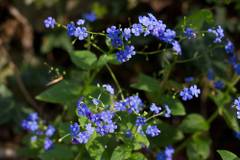
bright clear blue five-petaled flowers 0.25 inch (6 mm) across in the same floral structure as forget-me-not (Myosotis, a closely related genus in the same family Boraginaceae), carried in airy branching panicles 8-12 inches (20-30 cm) above the foliage in mid-spring (April through May) across a 5-week bloom period; the bright blue flower color against the silver foliage below is the cultivar's combined spring ornamental displayFoliage Description
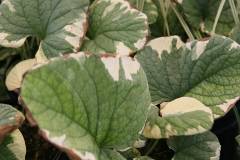
heart-shaped (cordate) leaves 4-8 inches (10-20 cm) across, heavily overlaid with bright silver across the entire upper leaf surface with only the network of green veins and a narrow green margin remaining visible — the silver overlay creates a frosted mirror-like reflective surface that holds from spring leaf emergence through fall senescence and is the cultivar's primary ornamental character; the species epithet macrophylla is from Greek macro (large) and phyllon (leaf) and records the large leaf size relative to the small flowers; deciduous — foliage dies back to the ground in late fall and regrows from the basal crown in springGrowing Conditions
Sun Requirements
Tolerates up to 4 hours of direct sunlight daily
• Full Sun: 6+ hours of direct sunlight
• Partial Shade: 3-6 hours of direct sunlight
• Full Shade: Less than 3 hours of direct sunlight
Care & Maintenance
Care Guide
Site in part shade to full shade with 0-4 hours of direct sun per day in moist loam or peat-enriched soil with a pH of 5.5-7.0. Consistent moisture is the primary cultural requirement — leaves scorch and develop brown crisp edges under summer drought or under more than 4 hours of direct sun per day in the warmer parts of the zone 3-8 range. The foliage stays clean and silver through the growing season in adequate shade and with adequate moisture, and the moisture-sensitivity management is the practical trade-off for the silver foliage display. Scorched or tattered leaves are removed individually through the growing season as needed, and the entire crown is cut back to ground level in late winter (February or March) before the new spring growth emerges. The species has no significant pest or disease concerns in cultivation beyond the moisture-driven leaf scorch. Deer-resistant and rabbit-resistant. Non-toxic. Hardy in USDA zones 3-8.Pruning
The entire crown is cut back to ground level in late winter or early spring (February or March) before the new spring growth emerges from the basal crown — the cut-back removes the previous year's spent foliage and allows the fresh silver new leaves to emerge without being crowded by old growth. Scorched or tattered individual leaves are removed through the growing season as needed to keep the foliage display clean. Spent flower panicles are cut back after the bloom finishes in May if the seedheads are not wanted.Pruning Schedule
Prune: February–March
early spring
Container Growing
Suitable for container growing
Minimum container size: 2 gallons