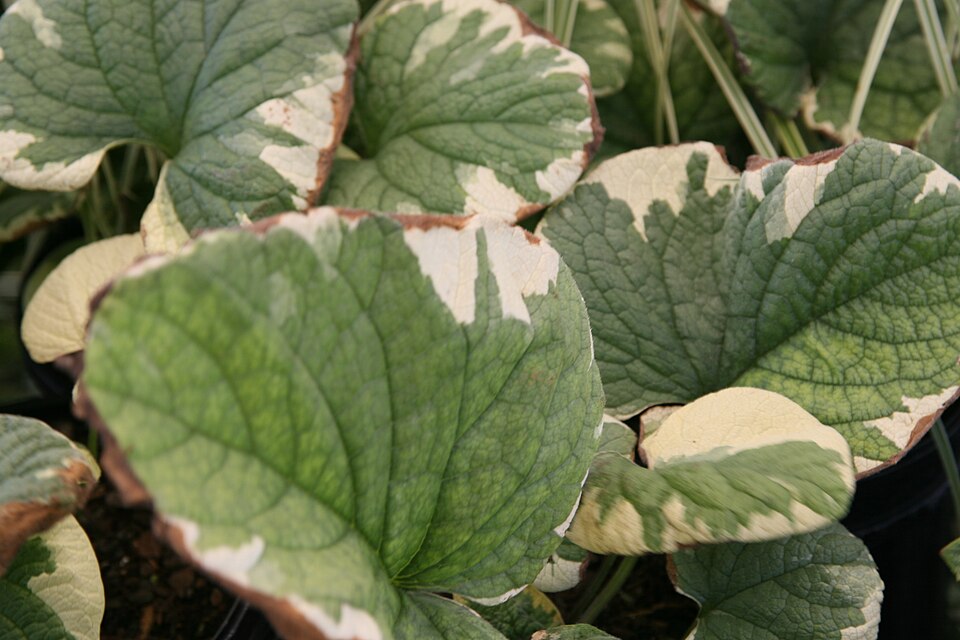
Brunnera, Genus, macrophylla, Species, 'Dawson's White', Cultivar,
- Genus & species
- Cultivar
Dawson's white brunnera
Species native to the Caucasus and northwestern Turkey; cultivar selected in England
Overview
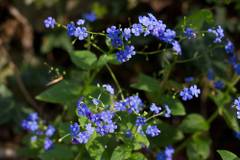
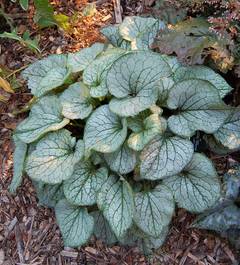
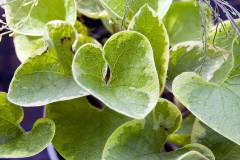
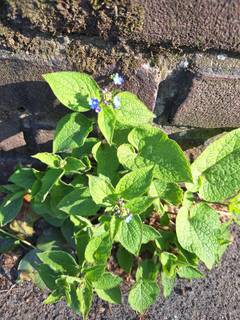
Brunnera macrophylla 'Dawson's White' is a clump-forming herbaceous perennial reaching 12–18 inches (30–45 cm) tall with a spread of 18–24 inches (45–60 cm). This cultivar is distinguished by its bold foliage variegation: large, heart-shaped leaves 4–6 inches (10–15 cm) wide have a dark green center with a broad, irregular creamy-white margin that occupies roughly half the leaf surface. The variegation is most vivid in spring and may develop some browning at the white margins in hot or dry conditions. Basal leaves are long-petioled; stem leaves are smaller and less prominently variegated. Sprays of small, sky-blue flowers 0.2–0.3 inch (5–8 mm) across appear on wiry, branching stems in April–May, resembling forget-me-nots (Myosotis). The plant spreads slowly by short rhizomes. Growth rate is moderate; clumps reach full size in 2–3 years. The extensive white leaf margins reduce chlorophyll area, making this cultivar less vigorous than the green-leaved species type and more sensitive to sun and drought. Leaf scorch is common in direct afternoon sun or dry soils. Slugs feed on the foliage.
Native Range
The species Brunnera macrophylla is native to the Caucasus region and northwestern Turkey. It occurs in moist, shaded woodland margins and stream banks. 'Dawson's White' was selected from a garden population, likely in England.Suggested Uses
Planted in shaded borders, woodland gardens, and along north-facing foundations at 18–24 inch (45–60 cm) spacing. The bold white-and-green foliage brightens shaded areas. Functions as an underplanting beneath deciduous trees and tall shrubs. Pairs with dark-foliaged shade companions such as Heuchera and Ophiopogon for contrast. Grows in containers of at least 3 gallons (11 L). Avoid hot, dry, or exposed sites.How to Identify
Appearance
Size & Dimensions
Height1' - 1'6"
Width/Spread1'6" - 2'
Bloom Information
Sprays of sky-blue flowers appear on wiry, branching stems 12–18 inches (30–45 cm) tall in April–May. Individual flowers are 0.2–0.3 inch (5–8 mm) across, five-petaled, resembling forget-me-nots. Bloom duration is 3–4 weeks. Flowers appear before the foliage is fully expanded. No significant reblooming.
Detailed Descriptions
Foliage Description
Dark green center with broad creamy-white marginGrowing Conditions
Sun Requirements
Requires 2-4 hours of direct sunlight daily
• Full Sun: 6+ hours of direct sunlight
• Partial Shade: 3-6 hours of direct sunlight
• Full Shade: Less than 3 hours of direct sunlight
Care & Maintenance
Care Guide
Plant in moist, humus-rich, well-drained soil in partial to full shade. The extensive white variegation makes this cultivar more sensitive to sun and drought than the species type; direct afternoon sun causes browning at the white leaf margins. Consistent moisture is essential throughout the growing season. Mulch with 2–3 inches (5–8 cm) of organic material to retain soil moisture. Remove any all-green reverted shoots promptly, as they outcompete the variegated growth. Slugs and snails are the primary pest; manage with barriers or baits. Crown rot may occur in waterlogged winter soils.Pruning
Cut back any scorched or tattered foliage in midsummer; a flush of fresh leaves typically follows if moisture is adequate. Remove spent flower stems after blooming. Remove all-green reverted shoots at the base when noticed. Cut the entire plant to the ground in late fall or early spring before new growth emerges.Pruning Schedule
Prune: March & July
summerearly spring
Container Growing
Suitable for container growing
Minimum container size: 3 gallons