Brunnera, Genus, macrophylla, Species, 'Hadspen Cream', Cultivar,
- Genus & species
- Cultivar
Hadspen cream brunnera
Species native to the Caucasus and northwestern Turkey; cultivar selected in Somerset, England
Overview
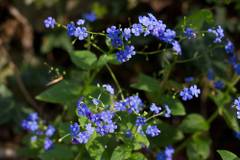
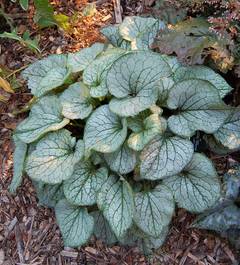
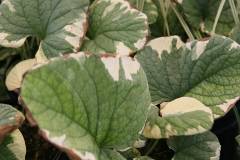
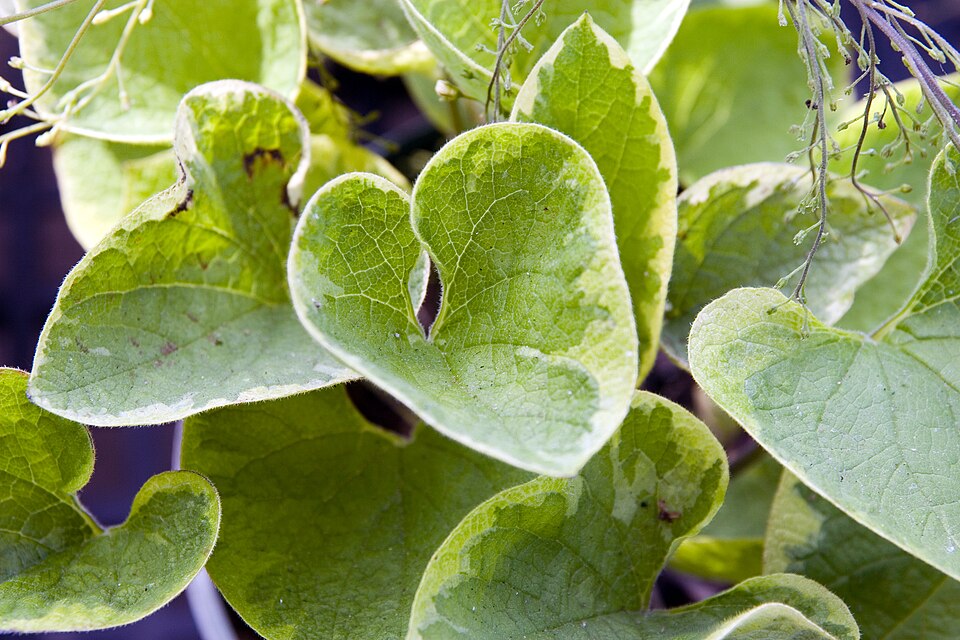
Brunnera macrophylla 'Hadspen Cream' is a clump-forming herbaceous perennial reaching 12–18 inches (30–45 cm) tall with a spread of 18–24 inches (45–60 cm). Leaves are heart-shaped, 4–6 inches (10–15 cm) wide, with an irregular cream to pale yellow margin 3–8 mm wide around a dark green center. The cream margin occupies a smaller proportion of the leaf surface than in 'Dawson's White', where the cream band covers roughly half the leaf. Spring foliage shows the most saturated variegation; the cream margins may brown at the edges in hot or dry conditions by midsummer, though browning is less extensive than on 'Dawson's White'. Sprays of sky-blue flowers 0.2–0.3 inch (5–8 mm) across appear on wiry, branching stems in April–May, resembling forget-me-nots (Myosotis). Plants spread slowly by short rhizomes; clumps reach full size in 2–3 years. 'Hadspen Cream' tolerates more sun than 'Dawson's White' because of the larger area of green leaf tissue, but still performs in partial to full shade. Slugs feed on the foliage and can perforate leaves.
Native Range
The species Brunnera macrophylla is native to the Caucasus region and northwestern Turkey, where it occurs in moist, shaded woodland margins and stream banks. 'Hadspen Cream' was selected at Hadspen House garden in Somerset, England.Suggested Uses
Used in shaded borders, woodland gardens, and along shaded paths at 18–24 inch (45–60 cm) spacing. Grows as an underplanting beneath deciduous trees and as a groundcover in shade, and in containers of at least 3 gallons (11 L). Hot, dry, or fully exposed sites cause margin browning and reduced vigor.How to Identify
Appearance
Size & Dimensions
Height1' - 1'6"
Width/Spread1'6" - 2'
Bloom Information
Sprays of sky-blue flowers appear on wiry, branching stems 12–18 inches (30–45 cm) tall in April–May. Individual flowers are 0.2–0.3 inch (5–8 mm) across with five petals. Bloom duration is 3–4 weeks. Flowers open as the foliage is expanding; there is no significant rebloom.
Detailed Descriptions
Foliage Description
Dark green center with narrow cream to pale yellow marginGrowing Conditions
Sun Requirements
Requires 2-5 hours of direct sunlight daily
• Full Sun: 6+ hours of direct sunlight
• Partial Shade: 3-6 hours of direct sunlight
• Full Shade: Less than 3 hours of direct sunlight
Care & Maintenance
Care Guide
Plant in moist, humus-rich, well-drained soil in partial to full shade. Tolerates more sun than 'Dawson's White' but still performs with afternoon shade protection in zones 6–8. Consistent moisture maintains the cleanest-looking foliage; drought causes margin browning and reduced vigor. Mulch with 2–3 inches (5–8 cm) of organic material to conserve moisture. All-green reverted shoots should be cut out at the base as they appear. Slugs and snails are the principal pests, and crown rot may develop in waterlogged winter soils.Pruning
Cut back scorched or tattered foliage in midsummer; fresh leaves typically follow if moisture is adequate. Remove spent flower stems after blooming. Any all-green reverted shoots are cut at the base. Cut the entire plant to the ground in late fall or early spring before new growth emerges.Pruning Schedule
Prune: March & July
summerearly spring
Container Growing
Suitable for container growing
Minimum container size: 3 gallons