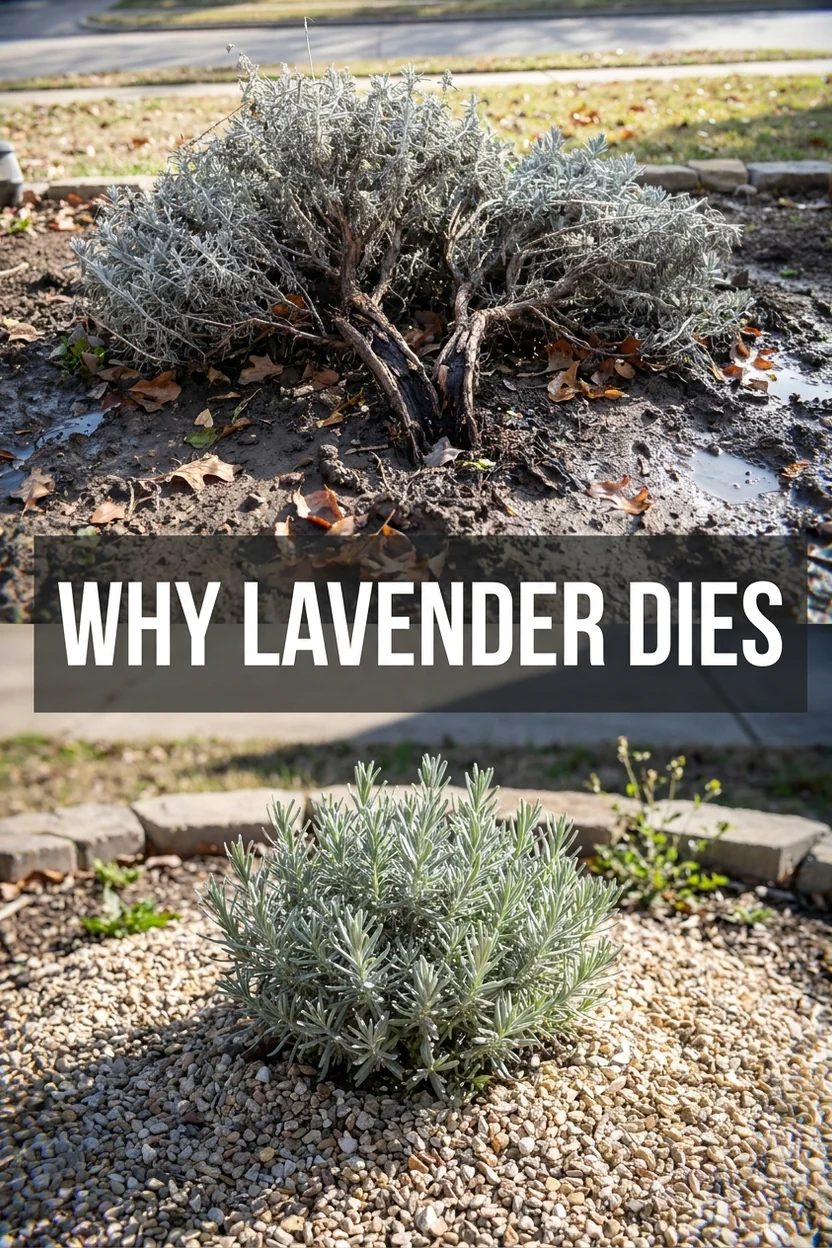
Why Your Lavender Died and How to Prevent It Next Time
Pets & Toxicity
Recorded toxicity for plants linked in this guide. An unknown status is not a safety assessment.
Toxic to pets: Phenomenal LavenderDetailsHide
Lavandula angustifolia 'Munstead' — Toxicity
Non-toxicView Lavandula angustifolia 'Munstead' plant profileLavandula angustifolia 'Hidcote' — Toxicity
Non-toxicView Lavandula angustifolia 'Hidcote' plant profileLavandula x intermedia 'Phenomenal' — Toxicity Warning
Toxic to petsView Lavandula x intermedia 'Phenomenal' plant profile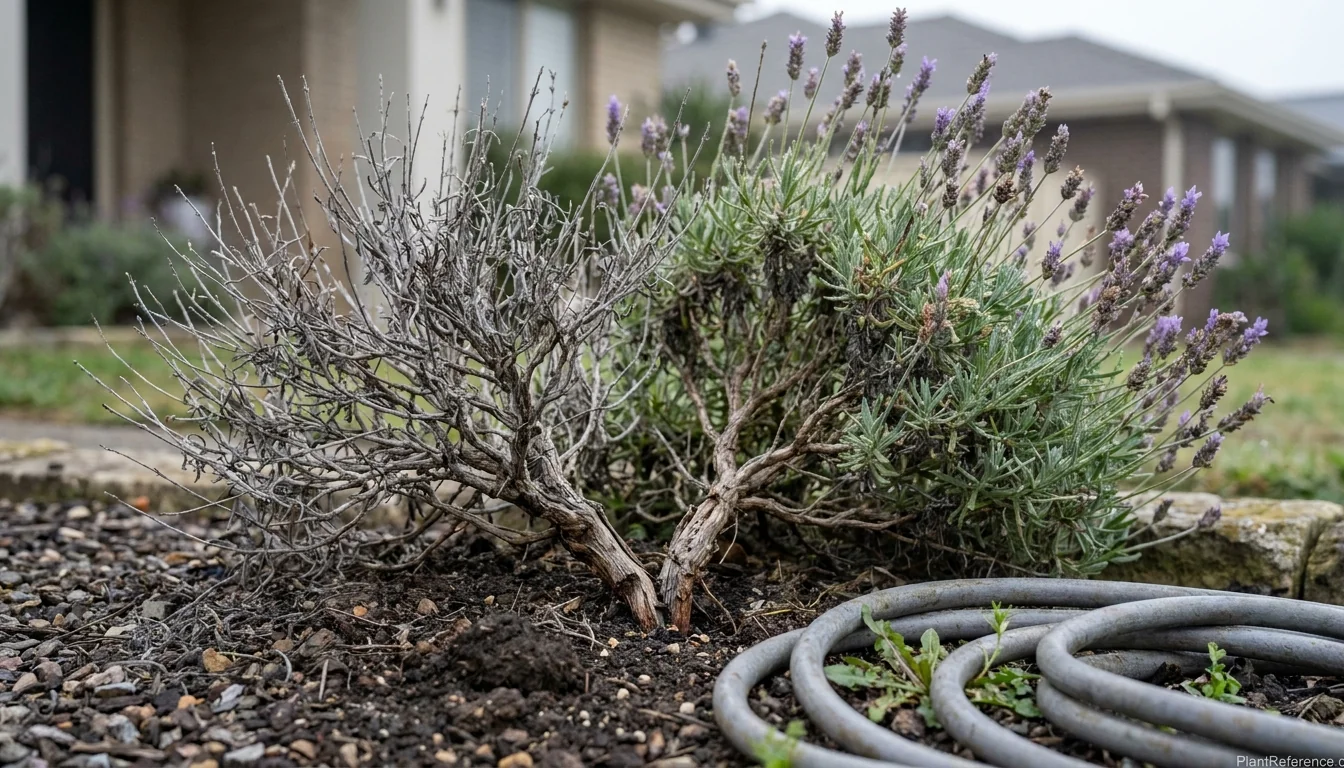
— Image © PlantReference.org 2026
Every spring I get the same call: a client's lavender looked perfect in October and came out of winter as a grey skeleton. They want to know what they did wrong, and they usually blame the cold. If you're wondering why your lavender is dying, the honest answer is that the plant almost certainly drowned before it ever froze.
Lavender Dies From Wet Feet, Not Cold
🌿Lavandula angustifolia (lav-AN-dew-lah an-gus-tih-FOH-lee-ah) evolved on dry limestone slopes around the Mediterranean, where the soil drains within minutes of a downpour. That single fact explains nearly every lavender failure I've dug up.
English lavender is genuinely hardy to USDA Zone 5, and some selections hold in Zone 4 with snow cover. Cold alone does not kill it. What kills it is the freeze-thaw cycle acting on waterlogged soil — the crown sits in a slurry that freezes solid, thaws, refreezes, and shreds the root tissue. By March the roots are mush and the top growth has nothing left to draw on.
The plant looks fine in late autumn, then fails to leaf out in spring
Grey, brittle stems snap cleanly instead of bending
Scratching the bark near the base reveals brown tissue, not green
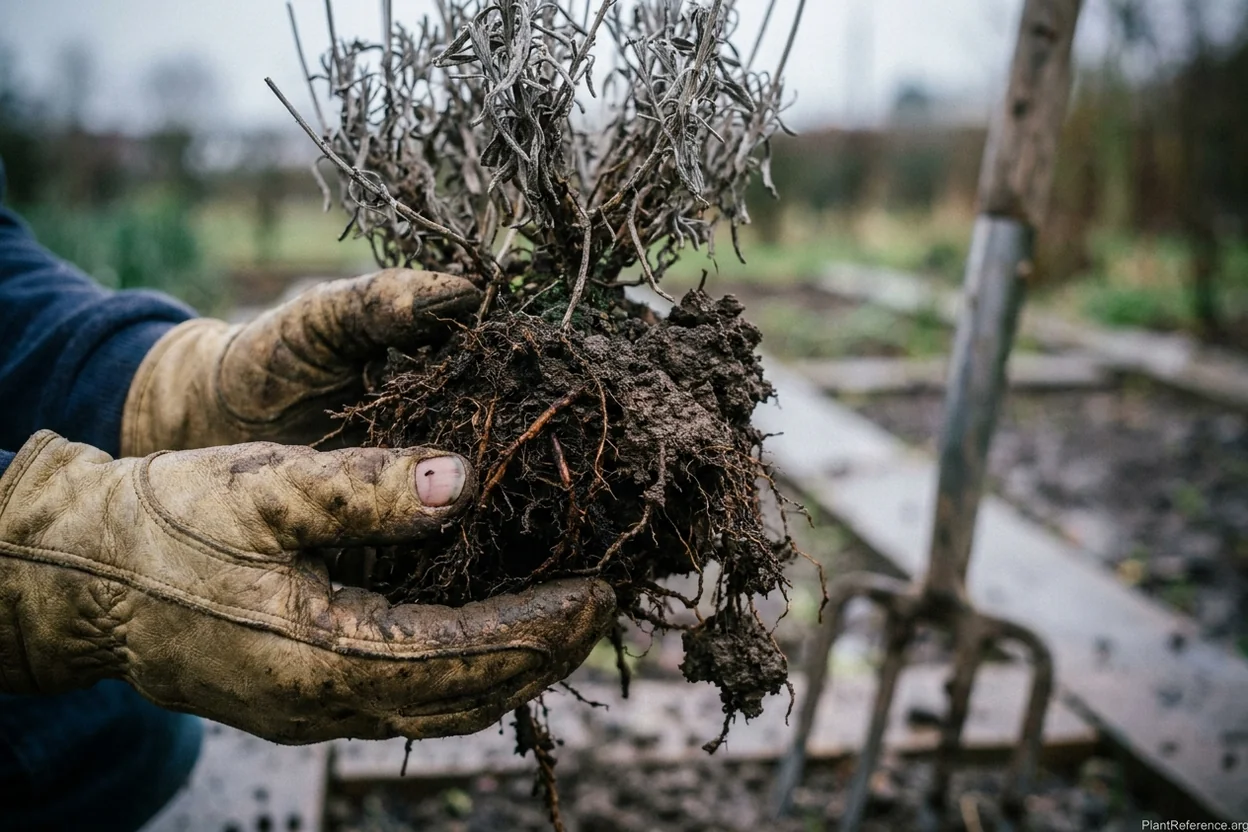
The base feels loose in the soil and lifts with almost no resistance
That last symptom is the giveaway. A healthy lavender is anchored. One that wobbles free has already lost its root system to rot, and no amount of spring feeding brings it back.
Diagnose What Actually Killed Yours
Before replanting, work out which mistake you made. Most gardens I visit have made two or three at once. This is the same diagnostic logic I use for Why Your Daylilies Stopped Blooming (And How to Fix It) — read the symptom backwards to the cause.
Symptom | Likely Cause | Fix Before Replanting |
|---|---|---|
Loose crown, brown roots, dead in spring | Winter waterlogging | Raise the planting site 12 in (30 cm) |
Lush green growth, few flowers, floppy stems | Too much nitrogen or compost | Remove enriched soil, do not feed |
Blackened lower stems, mould at soil line | Organic mulch held against crown | Switch to gravel or coarse grit |
Slow decline over two or three seasons | Soil pH below 6.0 | Lime to pH 6.7 to 7.3 |
Woody centre split open, few new shoots | Never pruned, or pruned too hard | Prune yearly into green wood only |
Dead only on the north or downhill side | Standing water on that side | Regrade or move the plant |
Compost is the one that surprises people. Gardeners who succeed with vegetables reach for the same rich amendments here, and lavender responds by producing soft, sappy growth that neither flowers well nor hardens off before frost. Rich soil is a liability. If you've read Nutrient Deficiencies in Raised Beds: Visual Diagnosis and Treatment, forget most of it — lavender wants a lean, hungry site.
Heavy clay is the other repeat offender. Clay holds water long after the surface looks dry, which is exactly the scenario described in Poor Drainage in Raised Beds: Causes and Fixes for Waterlogged Soil. A moisture meter probe pushed 8 inches (20 cm) down three days after rain will tell you more than any amount of guessing.
Build the Site Before You Buy the Plant
This is where the job is actually won. Buying a replacement before fixing the drainage is throwing money at the same hole in the ground.
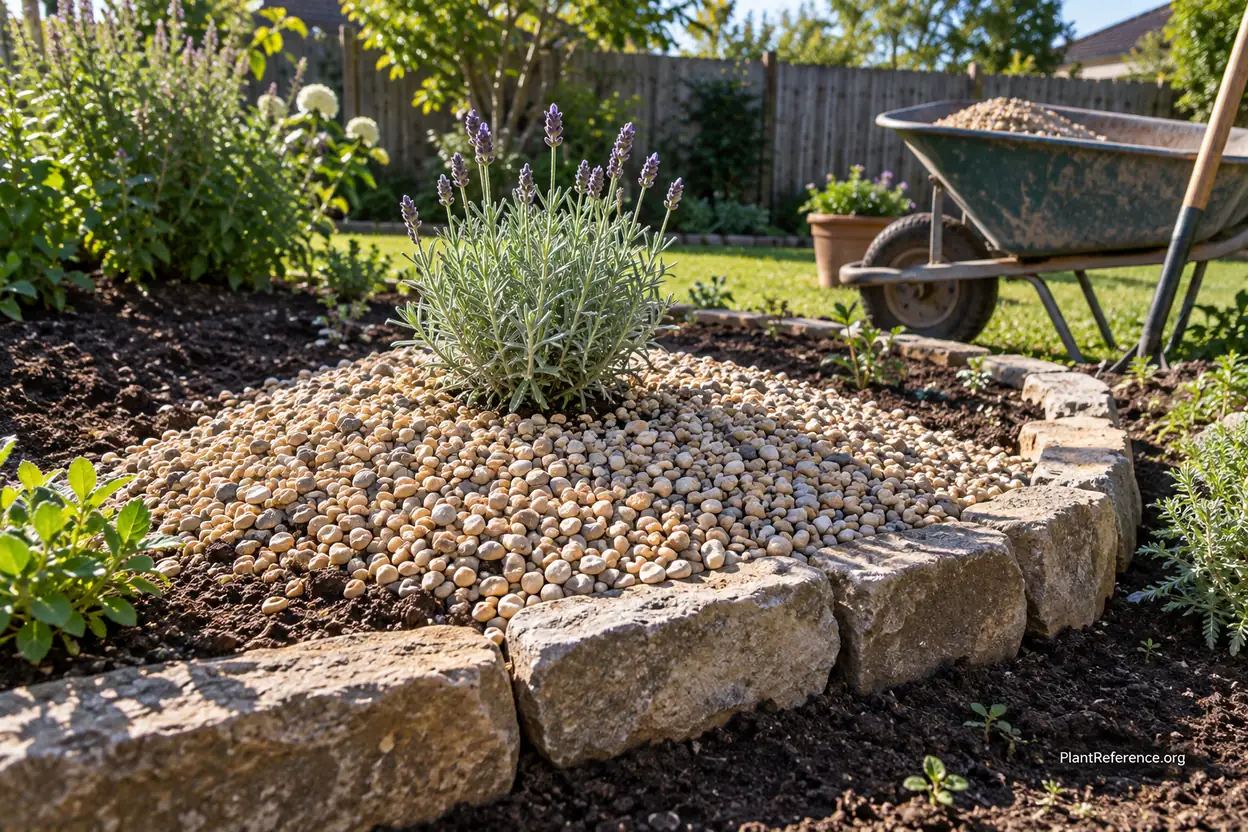
Mound the planting area 12 to 18 inches (30 to 45 cm) above the surrounding grade. Not a rim of soil around the plant — an actual raised crown of ground that sheds water away from the roots on every side. On heavy clay I'll build a low stone-edged berm, and the technique in How to Build a Raised Garden Bed: Step-by-Step Construction Guide adapts well if you want defined edges.
Mix native soil 50/50 with coarse sand or 3/8-inch (10 mm) crushed stone
Skip peat, leaf mould, and compost entirely in the planting mix
Set the crown 1 inch (2.5 cm) proud of the finished soil surface
Top-dress with 2 inches (5 cm) of pea gravel or crushed oyster shell
Leave a 3-inch (8 cm) gravel-free collar right at the stem
Builder's sand is not a substitute for coarse sand or grit. Fine sand mixed into clay makes something close to concrete. If you only have fine sand available, use crushed stone instead — the angular particles hold open pore space that water actually moves through.
Test the pH before you plant, not after. Lavender wants 6.7 to 7.3, and most gardens in high-rainfall regions sit well below that. Agricultural lime works but moves slowly — apply it a full season ahead if you can. The testing approach in Raised Bed Soil pH Problems: Testing, Adjusting, and Maintaining Balance applies directly here.
Sun matters almost as much as drainage. Six hours minimum, eight is better, and afternoon sun beats morning sun because it dries the foliage faster. A lavender in dappled shade will limp along for two years and then rot in a wet spring.
Choose a Cultivar That Survives Your Winter
Not all lavender is equally tough. Spanish lavender, 🌿Lavandula stoechas, is beautiful and reliably killed by any real winter north of Zone 8. Gardeners buy it in flower at the garden centre, plant it in Zone 6, and blame themselves the following April.
Cultivar | Hardiness | Mature Size | Notes |
|---|---|---|---|
Zone 5-9 | 18 in (45 cm) | Compact, early, most forgiving | |
Zone 5-9 | 20 in (50 cm) | Deepest purple, tidy habit | |
Lavandula angustifolia 'Sweet Romance' | Zone 5-9 | 14 in (35 cm) | Reblooms into autumn |
Zone 5-9 | 30 in (75 cm) | Best wet-winter tolerance | |
Lavandula x intermedia 'Grosso' | Zone 6-9 | 30 in (75 cm) | Long stems, strongest scent |
Zone 8-10 | 24 in (60 cm) | Treat as an annual in cold zones |
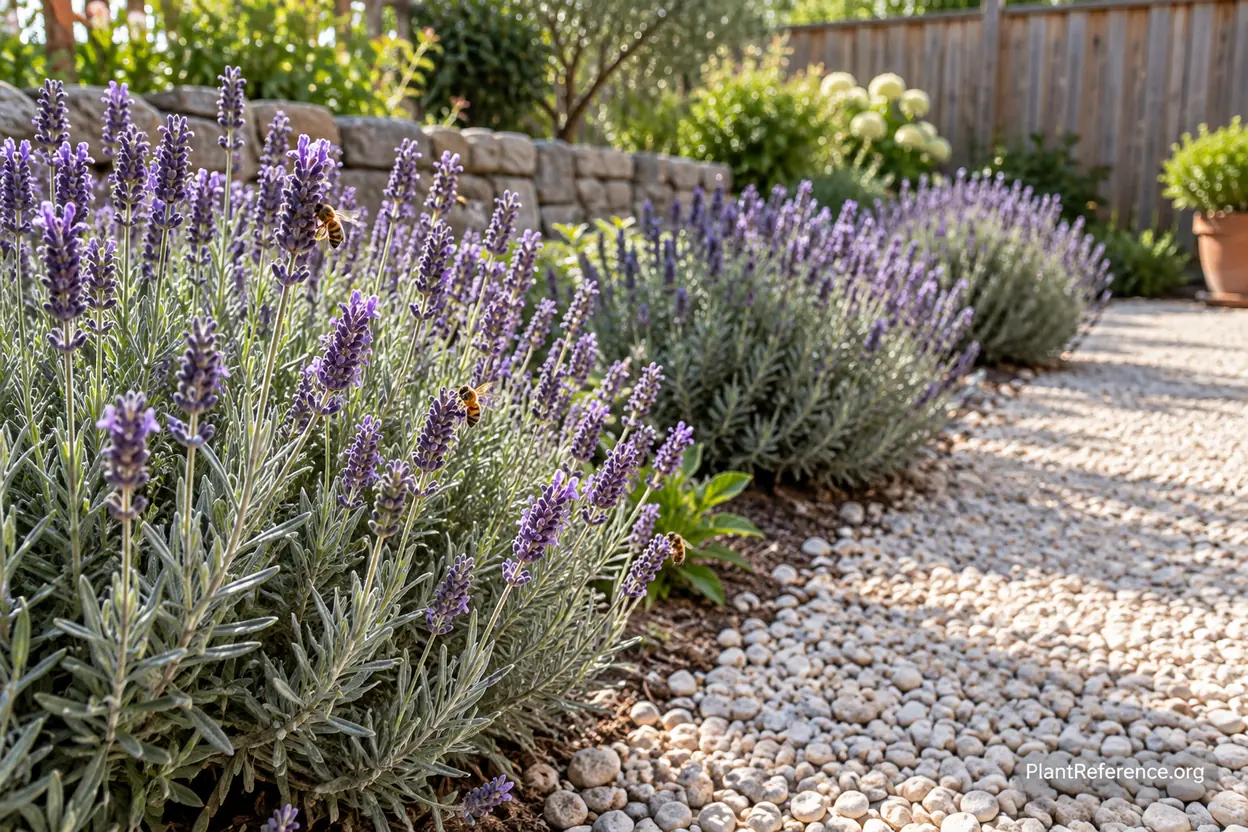
If you have clay, humidity, or a history of dead lavender, start with 🌿Lavandula × intermedia 'Phenomenal'. It was selected specifically for tolerance of humid summers and wet winters, and it is the one I plant on sites I'm not confident about. 🌿Lavandula angustifolia 'Munstead' is the safest of the English types and the one I'd give a first-time grower.
Buy in spring, not autumn. A spring-planted lavender has a full season to root into the mound before its first winter. Autumn planting in Zone 5 or 6 is a coin flip, and the same seasonal logic runs through Plan a Perennial Garden That Blooms Spring to Fall.
Prune It Right or Watch It Split Apart
An unpruned lavender turns into a woody, hollow ring within four or five years. The centre dies out, the outer stems flop outward, and snow load finishes the job by splitting the base wide open — which then collects water and rots.
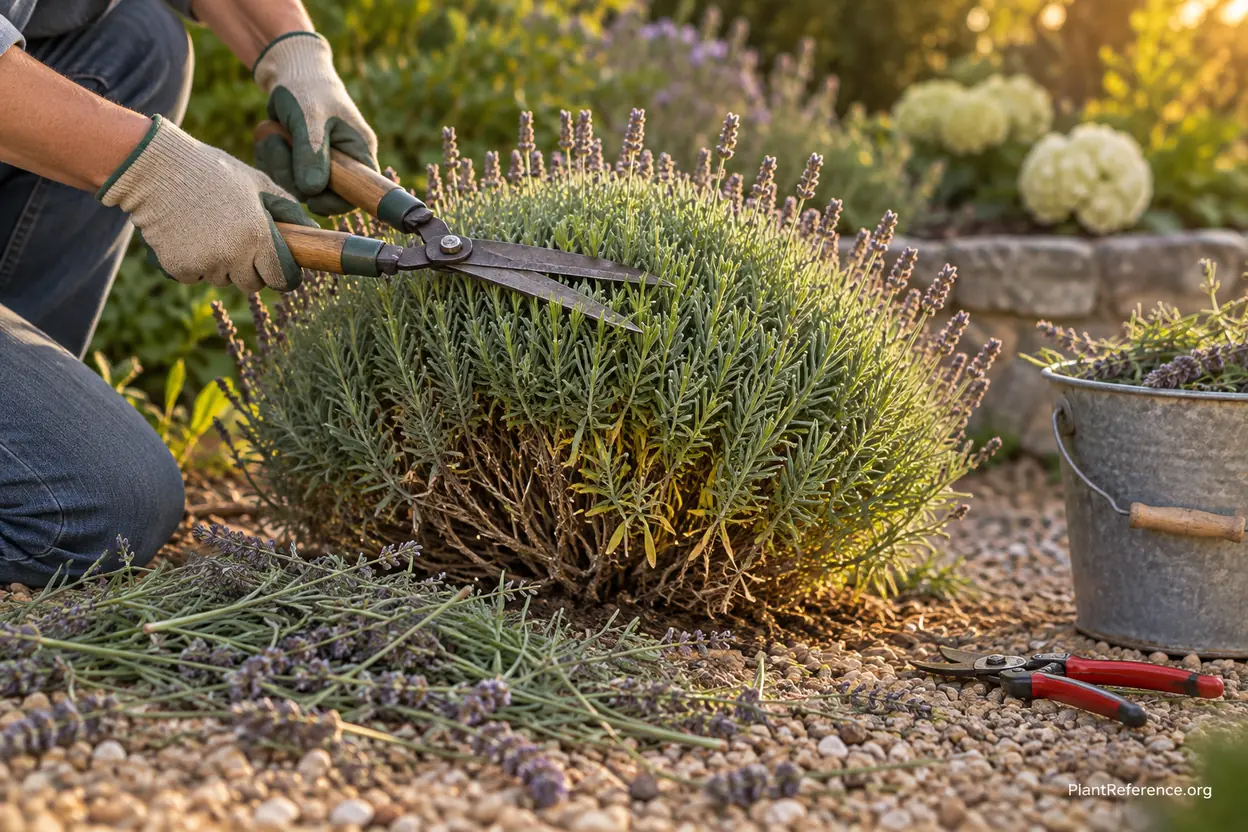
Prune once a year, in late summer right after the main flush of flowers fades. Take off about a third of the plant, cutting back to just above the point where you can still see green growth or dormant buds on the stem.
Never cut into bare grey wood — it does not resprout
Shape the plant into a rounded dome so snow slides off
Skip pruning entirely on plants set out this season
Deadhead spent spikes through summer to encourage rebloom
Use clean, sharp shears and wipe the blades between plants
Autumn pruning is a common and expensive mistake. Cuts made in October don't callus before frost, and open wounds on a woody perennial heading into a New England winter are an invitation to rot. The same timing principle governs How to Prune Roses: When and How to Prune Every Type of Rose.
Lavender also cannot be divided. The woody base will not survive being split, which sets it apart from nearly everything else in the border — see How to Divide Perennials: A Species-by-Species Guide for the species that do respond to division. To propagate lavender, take 3 to 4 inch (8 to 10 cm) softwood tip cuttings from non-flowering shoots in early summer.
Winter Care That Actually Helps
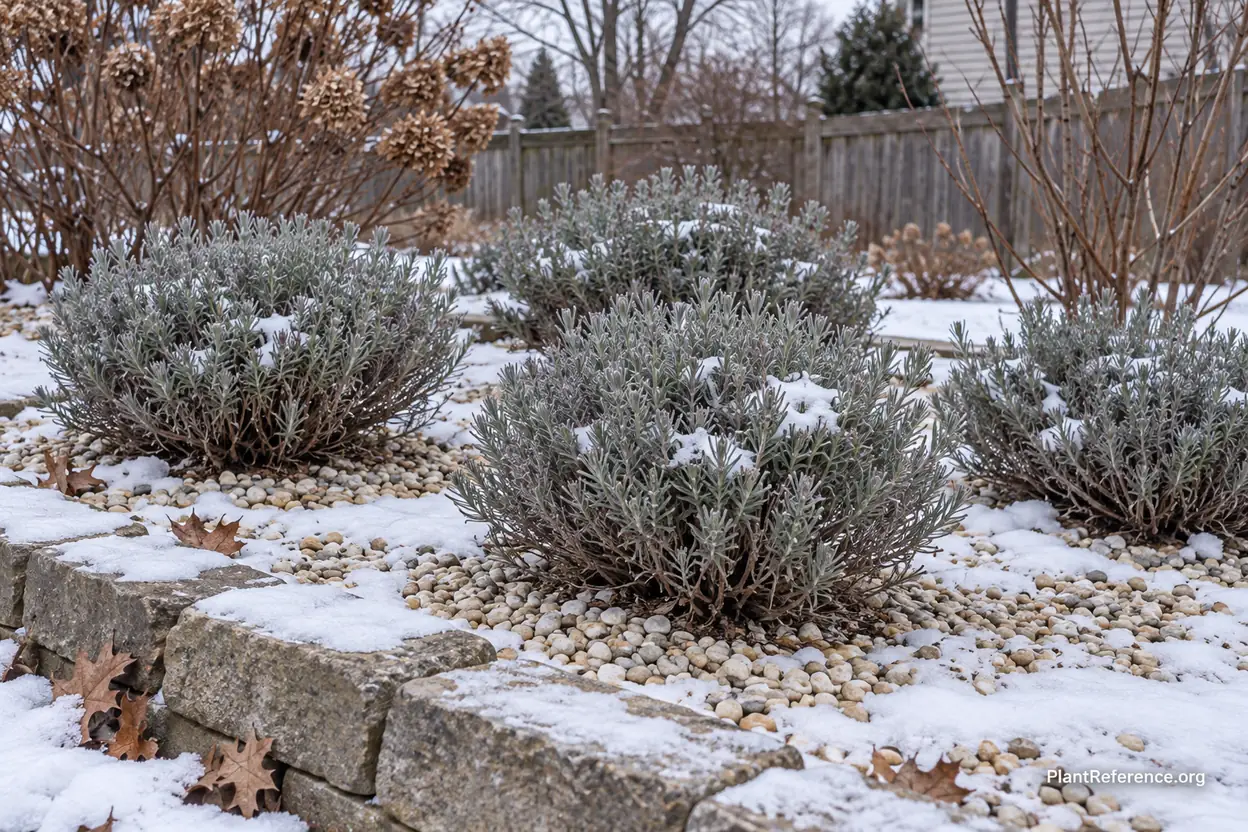
Most winter protection advice for perennials is actively harmful to lavender. Bark mulch, straw, shredded leaves, and compost all hold moisture against the crown for months. That is the exact condition you are trying to avoid.
Do not mulch with any organic material at any time of year
Pull fallen leaves off the crown in late autumn and again in early spring
Stop watering established plants entirely from September onward
Skip the last feeding of the season — soft growth won't harden off
In Zone 5, a loose evergreen bough laid over the plant sheds snow without trapping wet
Container-grown lavender needs the opposite treatment. Pots freeze through completely, and the roots have nowhere to go, so move containers against a sheltered wall or into an unheated garage once the plant is dormant. Water once a month, barely — just enough to keep the roots from desiccating.
Snow is a friend, not an enemy. A steady snow cover insulates the crown at a stable temperature and, critically, keeps rain off. The dangerous winters here are the mild, wet, snowless ones, not the cold ones. That is the whole lesson in a sentence: it isn't the cold, it's the water. Fix the drainage, and lavender becomes one of the most reliable plants in the garden — deer walk right past it, as noted in Deer-Resistant Perennials: A Zone-by-Zone Planting Guide, and a well-sited plant will hold its shape for a decade.
If you're still fighting saturated ground across the whole bed, work through Too Much Water in Raised Beds: Signs and Solutions for Overwatering and Raised Bed Soil Settling and Compaction: Prevention and Solutions before you spend another dollar on plants. And if you're building the site from scratch, the gritty, low-fertility mixes compared in Best Soil for Raised Beds: 6 Commercial Mixes Tested and Compared give you a sensible starting point to cut with crushed stone.
Frequently Asked Questions
Reading about plants and recognising them are different skills. These three build the second.
- Daily PlantIdentify the day’s mystery plant from a close-up photograph.
- Keyed OutWork a dichotomous key, lead by lead, to name a hidden specimen.
- Name That PlantName a specimen from botanical clues dealt hardest first.
Free to play, no account needed
Tagged with
Kevin is a landscape contractor in the Boston area who specializes in cold-climate perennial gardens and hardscaping. He studied landscape design and worked at a prominent nursery on the North Shore before starting his own design-build firm. Kevin's gardens are built to handle New England weather—freeze-thaw cycles, nor'easters, late springs, and heavy snow loads. He's particularly interested in native perennials and shrubs that provide four-season interest without constant maintenance. Kevin writes about cold-hardy plant selection, winter garden structure, and building landscapes that look good even in February.