Image 1 of 3
1 / 3
Plant Reference
Lavandula, Genus, stoechas, Species,
- Genus & species
Spanish lavender
Mediterranean region — southern France, Spain, Portugal, Italy, Greece, Turkey, northern Africa, Canary Islands, and Madeira; dry rocky slopes, maquis, and sandy coastal areas
Overview
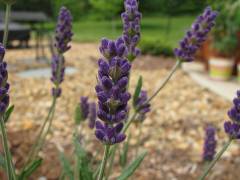
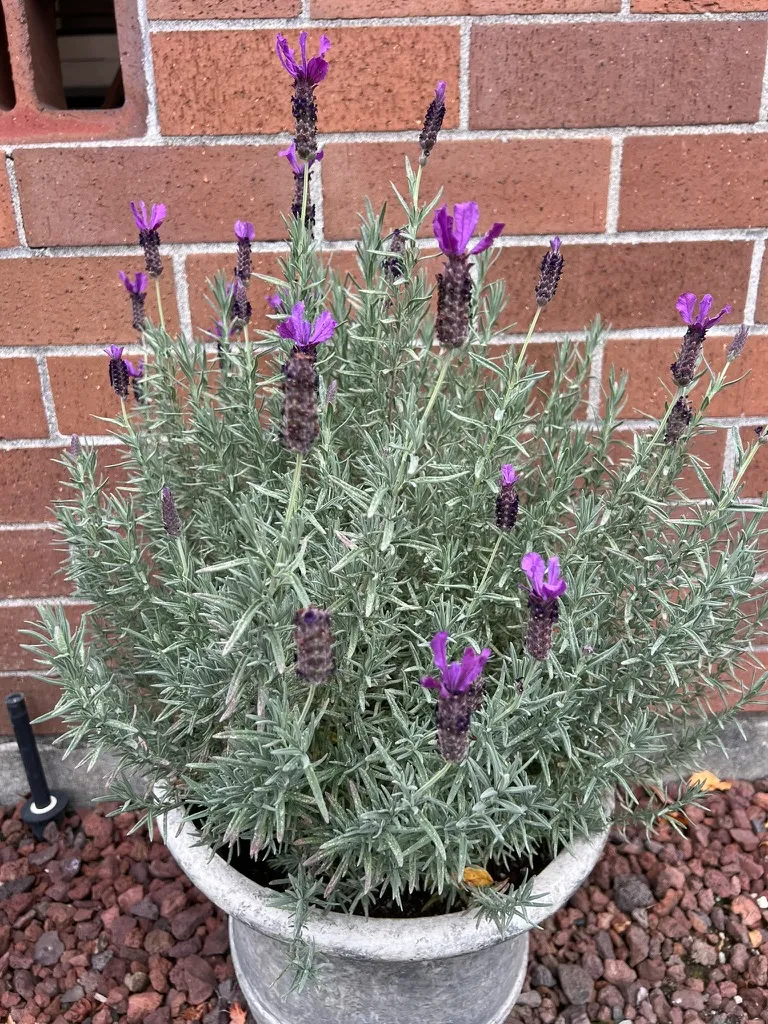
Lavandula stoechas is Spanish lavender (butterfly lavender), a mounding evergreen shrub growing 18-36 inches (45-90 cm) tall and 18-36 inches (45-90 cm) wide. Dark purple compact flower heads 1-1.5 inches (2.5-4 cm) topped by conspicuous upright sterile bracts ('rabbit ears') 1-2 inches (2.5-5 cm) in purple, pink, or white from April through July (8 weeks). Gray-green aromatic narrow leaves 1-1.5 inches (2.5-4 cm). In Lamiaceae. Stoechas = from the Stoechades Islands. The topped sterile bracts distinguish L. stoechas from L. angustifolia (unbracted spikes). Blooms earlier and longer than L. angustifolia. Less cold-hardy — zone 7 (vs. zone 5 for angustifolia). This reduced cold hardiness is the primary climatic limitation. Root rot in wet winter soil. Not culinary (camphor-rosemary scent). Invasive in parts of Australia. Drought-tolerant. Deer-resistant. Non-toxic. Zones 7-10. Full sun. Growth rate is moderate.
Native Range
Native to the Mediterranean region — southern France, Spain, Portugal, Italy, Greece, Turkey, northern Africa, Canary Islands, and Madeira. Found on dry rocky slopes, maquis, and sandy coastal areas.Suggested Uses
Grown in Mediterranean-climate gardens, borders, and in containers of at least 3 gallons (11 L), spaced 18-36 inches (45-90 cm). Topped flower heads. Earlier blooming than English lavender. Sharp drainage. Non-toxic. Zones 7-10.How to Identify
Appearance
Size & Dimensions
Height1'6" - 3'
Width/Spread1'6" - 3'
Bloom Information
Spring to midsummer (April-July). Dark purple compact flower heads 1-1.5 inches (2.5-4 cm) topped by flag-like sterile bracts 1-2 inches (2.5-5 cm). Moderately fragrant (camphor-rosemary). 8 weeks. Bee- and butterfly-visited. Deadhead for continuous bloom.
Detailed Descriptions
Flower Description
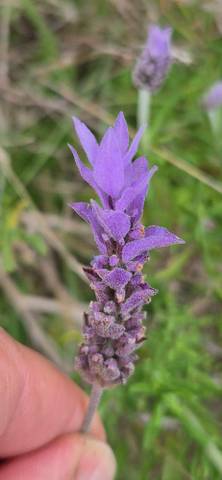
Dark purple compact flower heads 1-1.5 inches (2.5-4 cm) topped by conspicuous upright sterile bracts (flag-like 'rabbit ears') 1-2 inches (2.5-5 cm) in purple, pink, or white (cultivar-dependent); the topped bracts are the distinguishing feature of L. stoechas; April-JulyFoliage Description
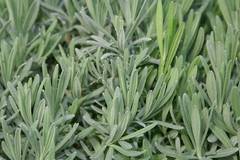
Gray-green, narrow, 1-1.5 inches (2.5-4 cm), with dense short hairs; aromatic (camphor-rosemary scent — different from the sweet floral scent of L. angustifolia); evergreen year-roundGrowing Conditions
Sun Requirements
Requires 6-10 hours of direct sunlight daily
• Full Sun: 6+ hours of direct sunlight
• Partial Shade: 3-6 hours of direct sunlight
• Full Shade: Less than 3 hours of direct sunlight
Care & Maintenance
Care Guide
Full sun (6-10 hours). Well-drained sandy, chalky, or rocky soil pH 6.0-8.0. Sharp drainage critical — root rot in wet winter soil. Drought-tolerant. Deadhead spent flower heads for continuous bloom. Prune back by one-third in early spring (April). Not culinary. Deer-resistant. Non-toxic. Zones 7-10.Pruning
Prune back by one-third in early spring (April) before new growth. Cut into green wood — never into old bare wood (no regeneration). Deadhead spent flower heads throughout the season for continuous bloom.Pruning Schedule
Prune: April
early spring
Container Growing
Suitable for container growing
Minimum container size: 3 gallons