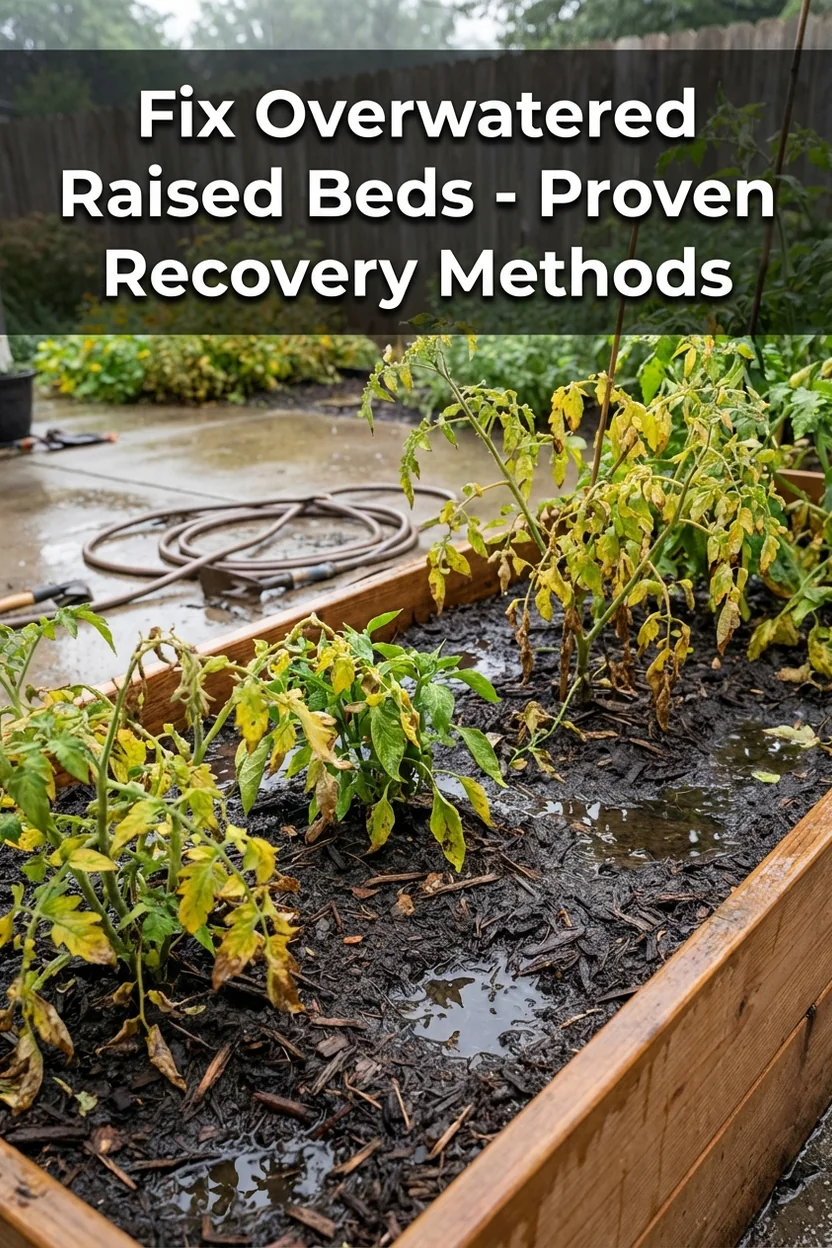
Too Much Water in Raised Beds: Signs and Solutions for Overwatering
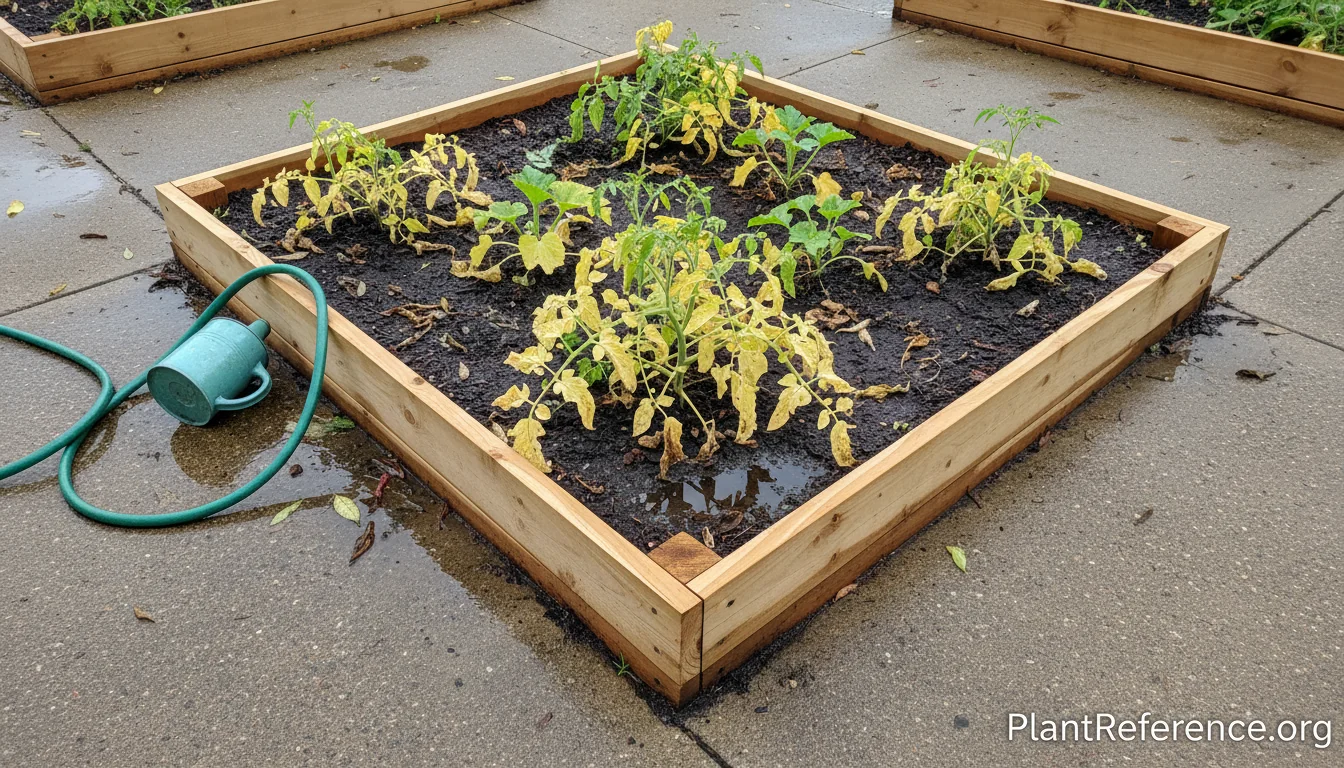
— Image © Plant Reference 2026
Let's be honest—your raised bed plants are drowning, not thriving. Overwatering raised bed gardens kills more plants than drought, even though most gardeners think elevated beds automatically prevent water problems. The truth is, you can absolutely waterlog a raised bed through excessive irrigation, poor drainage, or simply misunderstanding your plants' water needs.
Here's the reality: those yellowing leaves and wilting plants aren't asking for more water—they're begging you to stop. Most gardeners see drooping leaves and immediately reach for the hose, creating a deadly cycle that destroys root systems and invites disease.
Recognizing Overwatering in Raised Beds
Overwatering raised bed symptoms are often mistaken for other problems, leading to more watering and worse damage. The most telling sign is plants that wilt despite having wet soil. Stick your finger 2-3 inches (5-8 cm) deep into the soil around struggling plants. If it's consistently moist or soggy, you're dealing with too much water.
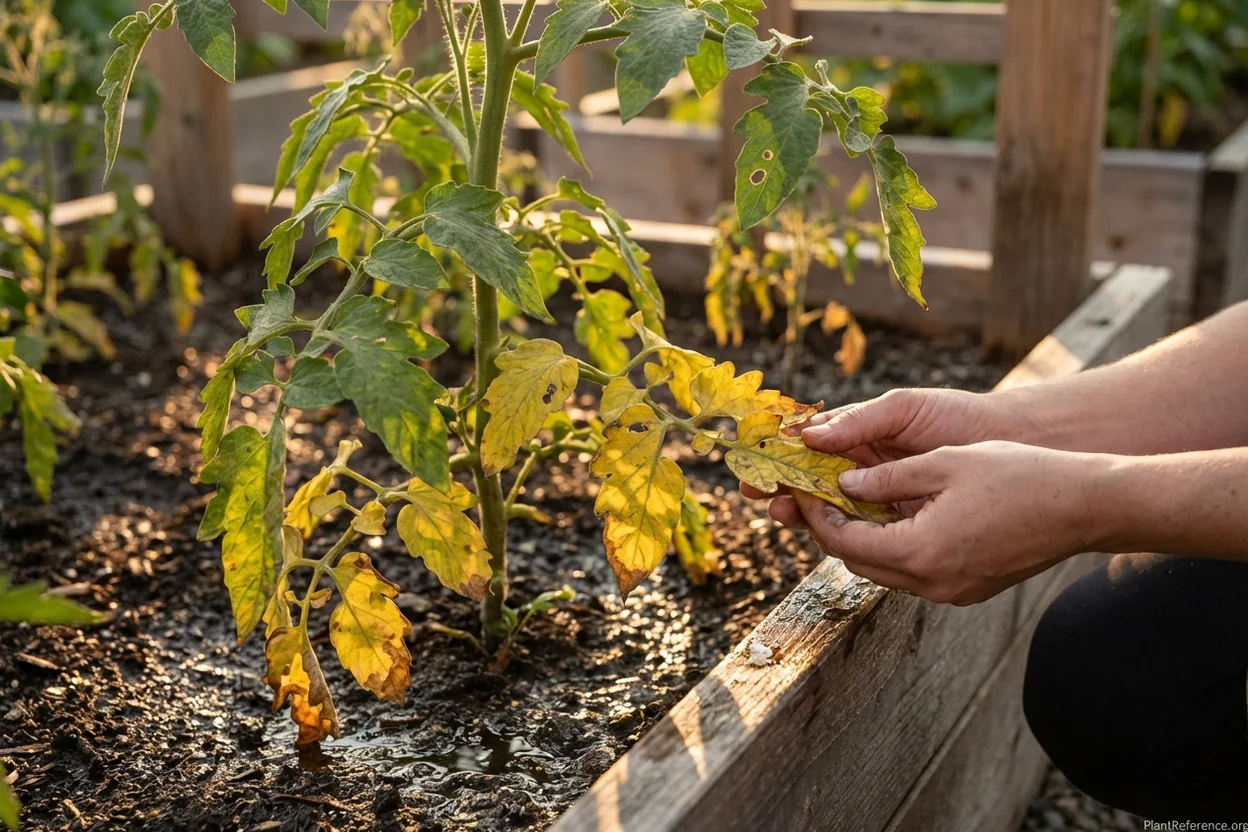
Yellowing leaves start at the bottom of plants and work upward. Unlike nutrient deficiencies, overwatering causes entire leaves to turn yellow uniformly, often with brown crispy edges. The yellowing happens quickly—within days of excessive watering—and spreads rapidly if conditions don't improve.
Fungal growth appears as white, gray, or black fuzzy growth on soil surface, stems, or leaves. Overwatered soil creates the perfect environment for damping-off disease, powdery mildew, and root rot. You'll also notice a sour, musty smell from the soil—healthy soil smells earthy and fresh.
Why Raised Beds Can Still Be Overwatered
Many gardeners assume raised beds automatically drain well, but several factors can create waterlogged conditions. Poor soil composition is the biggest culprit. If your raised bed soil contains too much clay, peat moss, or fine organic matter, it holds water like a sponge regardless of elevation.
Compacted soil prevents proper drainage even in raised beds. Walking on beds, working wet soil, or using heavy clay-based mixes creates hard layers that trap water. Over time, organic matter breaks down and settles, reducing pore space needed for drainage.
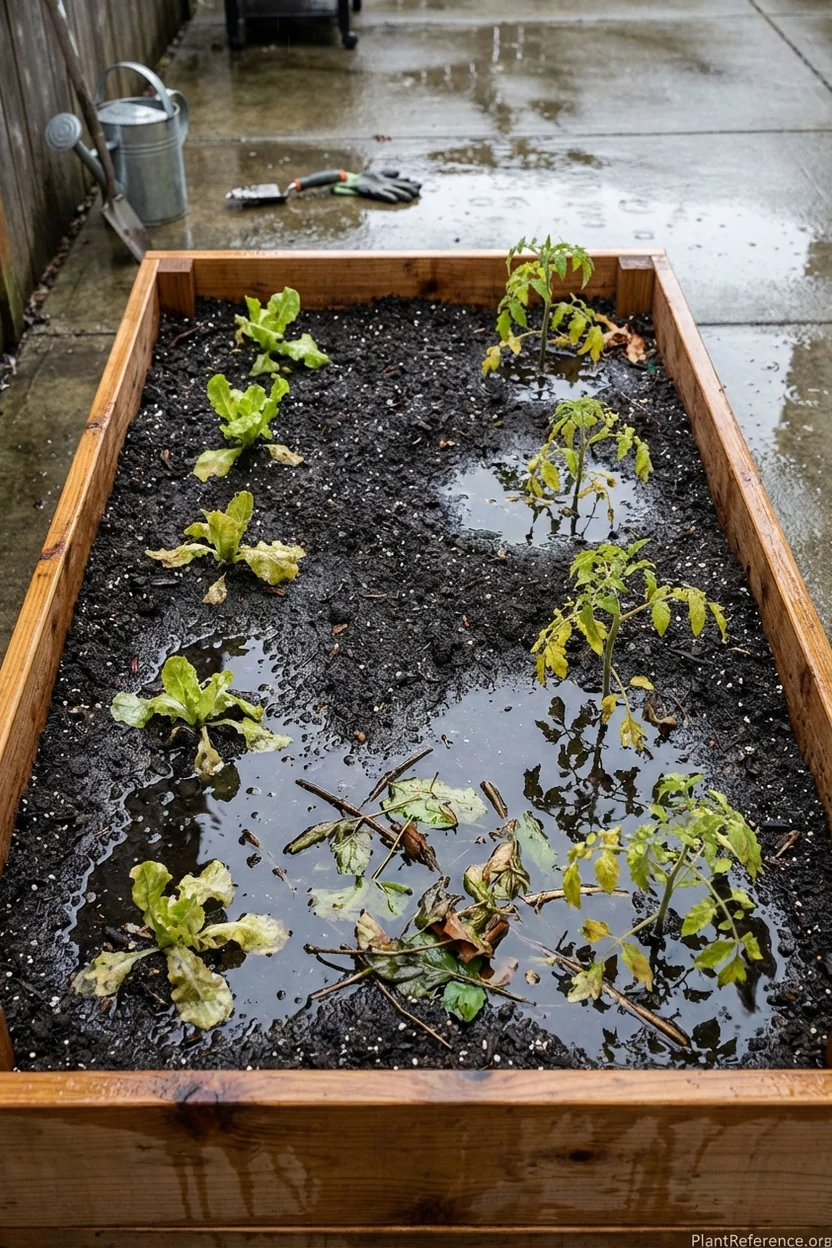
Excessive rainfall combined with continued irrigation overwhelms even well-designed beds. Many gardeners maintain regular watering schedules regardless of natural precipitation, essentially doubling water input during rainy periods.
Blocked drainage can occur when beds are placed on concrete, compacted soil, or when landscape fabric becomes clogged with fine particles over time. Even a 12-inch (30 cm) raised bed needs proper drainage underneath.
Immediate Signs Your Raised Bed Is Too Wet
Wilting despite moisture is the clearest early warning sign. Plants wilt when roots can't function properly—either from lack of water or too much water. When soil is consistently wet but plants droop during afternoon heat, overwatering is likely the cause.
Soil that stays wet 24-48 hours after watering indicates poor drainage or excessive water application. Properly draining raised bed soil should feel moist but not soggy within 6-12 hours of watering.
Water pools on soil surface for more than 30 minutes after watering
Soil feels spongy or soggy when squeezed in your hand
Plants wilt during hot afternoons despite wet soil
Leaves turn yellow starting from bottom of plant working upward
White, gray, or green mold appears on soil surface
Sour or musty odor coming from soil
Slugs and snails become more prevalent around beds
Seeds rot before germinating or seedlings collapse suddenly
Long-Term Symptoms of Chronic Overwatering
Root rot develops when roots sit in waterlogged soil for extended periods. Affected plants show stunted growth, yellowing leaves, and eventual collapse. If you carefully dig up struggling plants, healthy roots should be white or cream-colored. Black, brown, or mushy roots indicate rot damage.
Nutrient deficiency symptoms appear paradoxically in overwatered beds. Waterlogged soil prevents roots from absorbing nutrients properly, leading to yellowing (nitrogen deficiency) or purple/red discoloration (phosphorus deficiency) despite adequate fertilization.
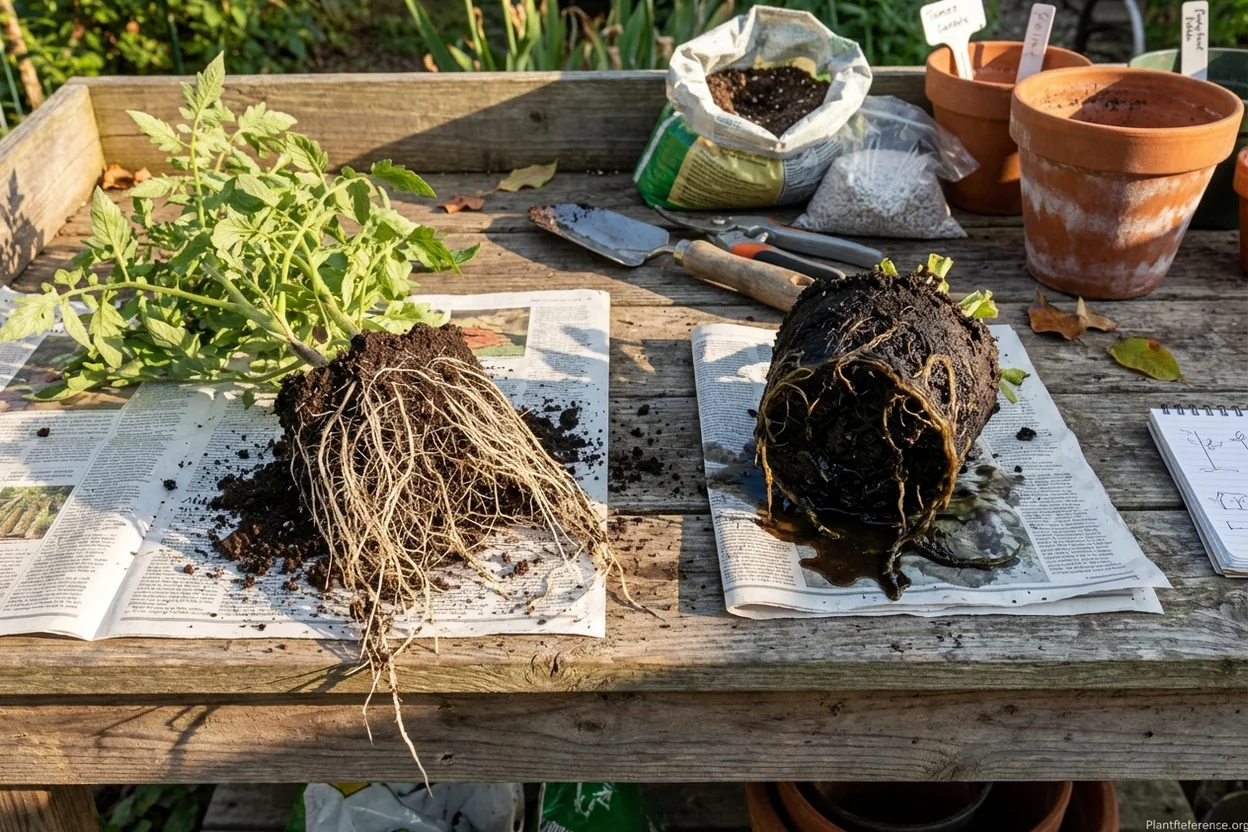
Slow growth and reduced yields result from compromised root systems. Plants may survive but produce significantly fewer fruits or vegetables. Overwatered tomatoes often develop fewer flower clusters and smaller fruits.
Increased pest problems follow overwatering. Slugs, snails, and fungal gnats thrive in moist conditions. Weakened plants also become more susceptible to aphids and other pests that target stressed vegetation.
Emergency Fixes for Waterlogged Raised Beds
Stop watering immediately when you recognize overwatering symptoms. This sounds obvious, but many gardeners continue watering thinking they need to "flush out" problems. Your plants need time to recover, not more water.
Improve surface drainage by creating shallow channels from the center of beds to edges, allowing standing water to flow out. Use a hand cultivator to create these temporary drainage paths without disturbing root systems extensively.
Increase air circulation around plants by removing lower leaves touching soil and spacing plants further apart if possible. Better airflow helps soil dry faster and reduces fungal disease pressure.
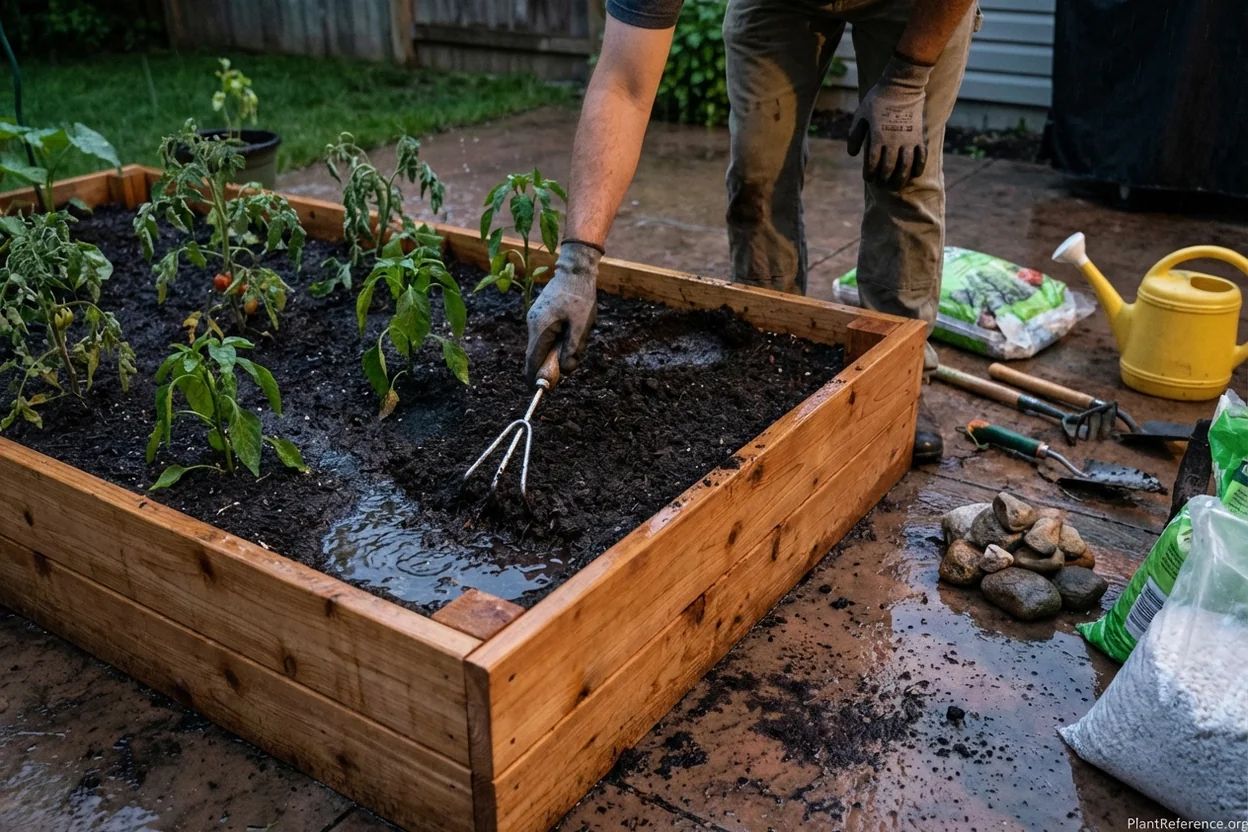
Add drainage amendments to severely waterlogged beds by working coarse materials into the top 4-6 inches (10-15 cm) of soil. Perlite, coarse sand, or small gravel improve drainage without major soil reconstruction.
Remove affected plants if root rot is severe. Plants with completely black, mushy root systems rarely recover. Remove them to prevent spreading fungal diseases to healthy plants nearby.
Improving Drainage in Existing Beds
Soil amendments provide long-term drainage improvement. Work coarse materials into existing soil rather than replacing entire bed contents. Add 20-30% perlite, coarse sand, or aged bark chips to heavy soils.
Raised bed soil recipe for improved drainage: 40% quality topsoil, 30% compost, 20% coarse drainage material (perlite or bark chips), and 10% coarse sand. This mixture drains well while retaining appropriate moisture levels.
→ XLUX Soil Moisture Meter T10 ($8-12) - Essential for monitoring water levels
Professional-grade meter tests soil moisture, pH, and light levels without batteries. 7-inch (18 cm) probe reaches deep into raised bed soil to measure root zone conditions accurately. Large easy-read display shows moisture levels from 1-10 scale. Dual-probe design prevents damage to plant roots while providing precise readings. Essential tool for preventing overwatering by testing soil before each irrigation cycle. Durable construction withstands outdoor use and frequent soil insertion.
Drainage layers can be added to existing beds by creating trenches along bed perimeters and filling with gravel or coarse sand. This creates pathways for excess water to escape bed interiors.
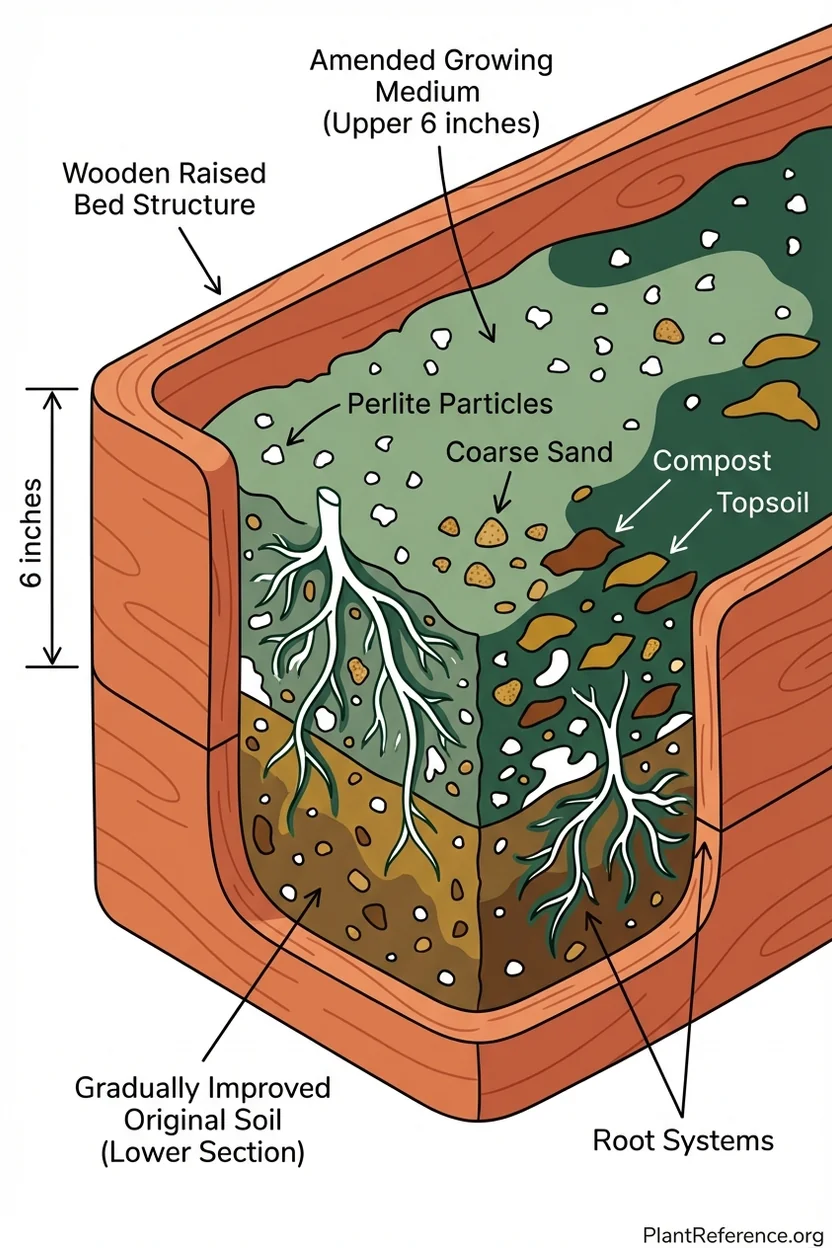
French drain systems work for beds with persistent drainage problems. Dig trenches 12 inches (30 cm) deep along bed edges, fill with gravel, and cover with landscape fabric before replacing soil.
Proper Watering Techniques for Raised Beds
Deep, infrequent watering works better than daily shallow watering for most vegetables. Water 2-3 times per week, applying enough water to penetrate 6-8 inches (15-20 cm) deep into soil.
Morning watering allows plants to absorb moisture before afternoon heat and gives soil time to drain by evening. Avoid evening watering, which keeps soil wet overnight and promotes fungal diseases.
Water at soil level rather than overhead spraying. Drip irrigation, soaker hoses, or hand watering at plant bases reduces water on leaves while delivering moisture directly to root zones.
Check soil moisture 2-3 inches deep before watering
Water deeply until moisture reaches 6-8 inches into soil
Allow top inch of soil to dry between watering sessions
Adjust watering frequency based on rainfall and temperature
Use mulch to maintain consistent soil moisture levels
Install rain gauges to track natural precipitation
Group plants with similar water needs together
→ Rain Bird Drip Irrigation Garden Kit ($40-50) - Prevents overwatering through controlled delivery
Complete drip irrigation system designed specifically for raised beds up to 4x8 feet (1.2x2.4 meters). Includes 35 feet of emitter tubing, pressure regulator, filter, and all necessary fittings for immediate installation. Delivers precise water amounts directly to plant root zones while preventing overwatering through consistent slow-drip application. Easy installation requires no special tools or plumbing knowledge. Expandable system connects multiple beds. Reduces water usage by up to 50% compared to hand watering while maintaining optimal soil moisture levels.
Product link unavailable
Monitoring Soil Moisture Levels
Soil moisture meters take guesswork out of watering decisions. Digital meters provide accurate readings at various soil depths, helping you understand moisture patterns throughout your bed profile.
The finger test remains reliable for experienced gardeners. Insert your index finger 2-3 inches (5-8 cm) into soil near plant bases. Soil should feel slightly moist but not wet or soggy.
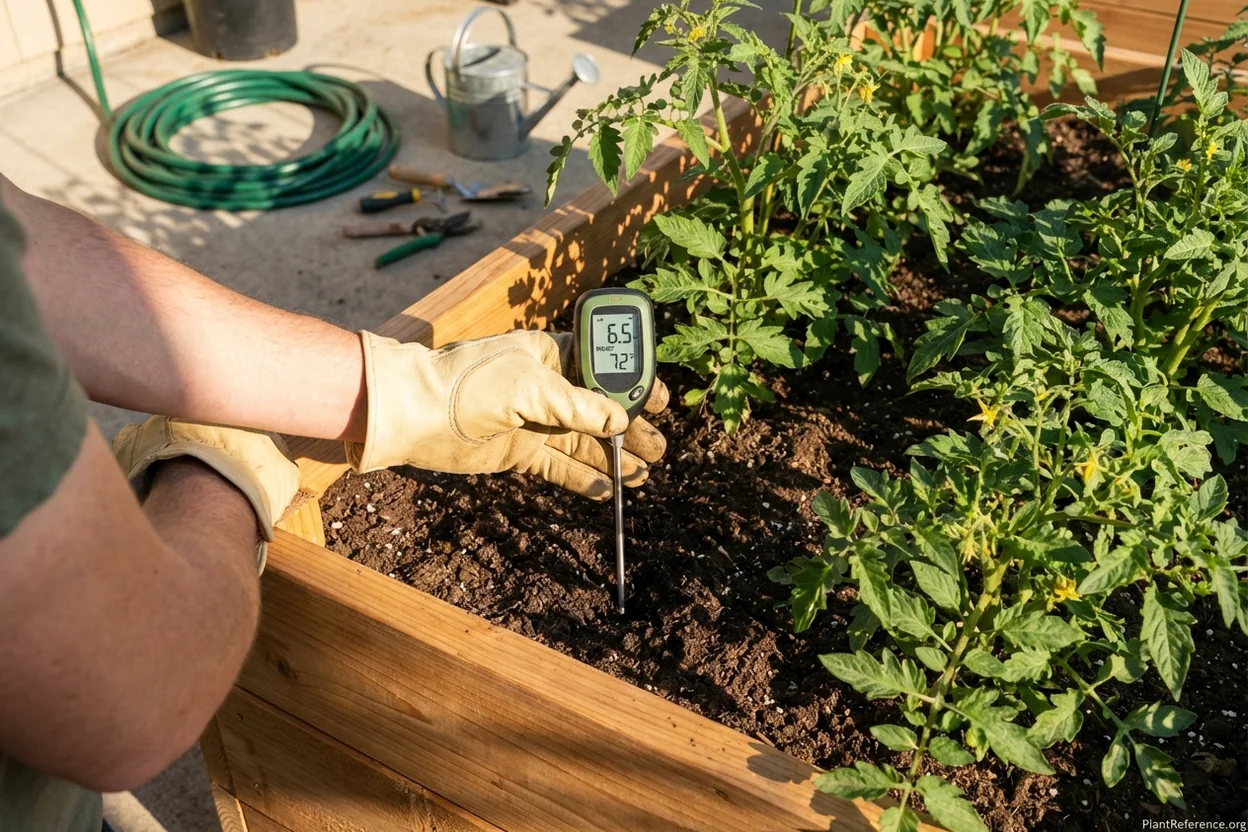
Visual cues help determine watering needs without tools. Soil surface should appear dry, but scratch down 1 inch (2.5 cm) and you should find moisture. If surface soil cracks or pulls away from bed sides, immediate watering is needed.
Plant behavior provides daily moisture feedback. Slight wilting during hot afternoons is normal, but plants should recover by evening. If plants remain wilted after sunset despite adequate moisture, investigate other problems like pests or disease.
→ Sonkir 3-in-1 Soil Moisture pH Light Meter ($10-15) - Comprehensive soil monitoring
Advanced soil testing meter combines moisture, pH, and light measurement in single tool. 8-inch (20 cm) aluminum probe reaches deep into raised bed root zones for accurate readings. No batteries required—scientific probe design generates readings through soil conductivity. Moisture scale 1-10 helps prevent both overwatering and underwatering. pH range 3.5-9.0 ensures optimal growing conditions for vegetables. Light meter guides proper bed placement for sun-loving crops. Durable construction withstands frequent outdoor use and soil insertion.
Seasonal adjustments are crucial for preventing overwatering. Spring beds need less water as plants establish. Summer requires more frequent watering but deeper applications. Fall watering should decrease as temperatures drop and growth slows.
Rain tracking prevents accidental overwatering during wet periods. Install simple rain gauges or use weather apps to monitor natural precipitation. Reduce irrigation frequency during rainy weeks.
→ AcuRite Digital Rain Gauge ($15-20) - Track natural precipitation
Accurate digital rain measurement system tracks precipitation to prevent overwatering raised beds. Self-emptying collector holds up to 12 inches of rainfall with 0.01-inch precision readings. Large LCD display shows current rainfall, daily totals, and weekly accumulation data. Weather-resistant construction withstands outdoor conditions year-round. Easy-mount design attaches to fence posts or garden stakes. Historical data helps establish proper irrigation schedules based on natural rainfall patterns. Essential tool for maintaining optimal soil moisture without overwatering during rainy periods.
Product link unavailable
Remember: overwatering raised bed gardens is easier than you think, but recovery is possible with quick action and improved practices. Focus on soil drainage, proper watering techniques, and consistent moisture monitoring to keep your raised bed plants healthy and productive.
Frequently Asked Questions
Reading about plants and recognising them are different skills. These three build the second.
- Daily PlantIdentify the day’s mystery plant from a close-up photograph.
- Keyed OutWork a dichotomous key, lead by lead, to name a hidden specimen.
- Name That PlantName a specimen from botanical clues dealt hardest first.
Free to play, no account needed
Mike's been designing residential landscapes in the Seattle area, with a particular focus on Pacific Northwest natives and sustainable practices. He's a Washington State Master Gardener and worked in construction before landscaping, which gives him a practical edge when it comes to building raised beds and hardscaping projects. He runs a small side business propagating and selling unusual perennials at farmers markets on weekends. His property serves as a testing ground for low-maintenance, wildlife-friendly garden designs. Mike's philosophy: if it requires weekly maintenance, it's not sustainable.