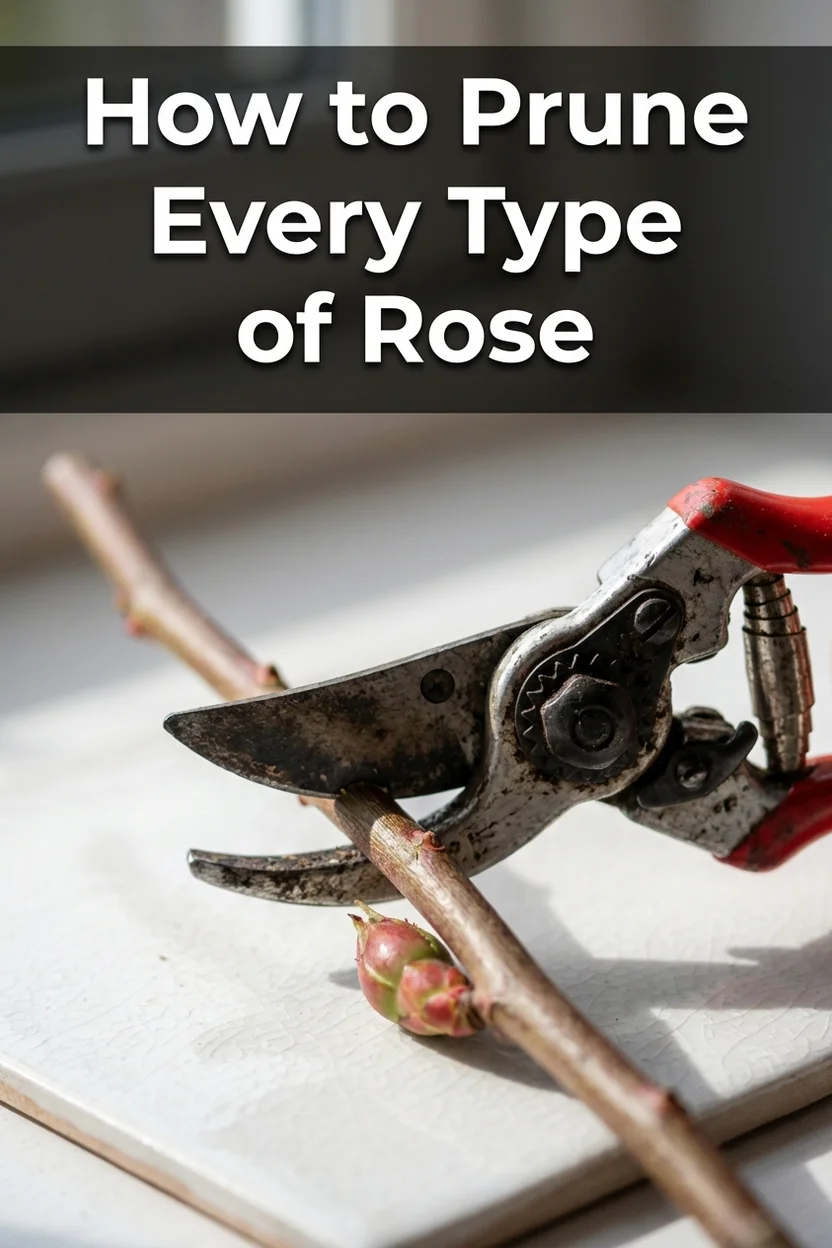
How to Prune Roses: When and How to Prune Every Type of Rose
Pets & Toxicity
Recorded toxicity for plants linked in this guide. An unknown status is not a safety assessment.
No linked plant is recorded as toxic (1 linked plant checked)DetailsHide
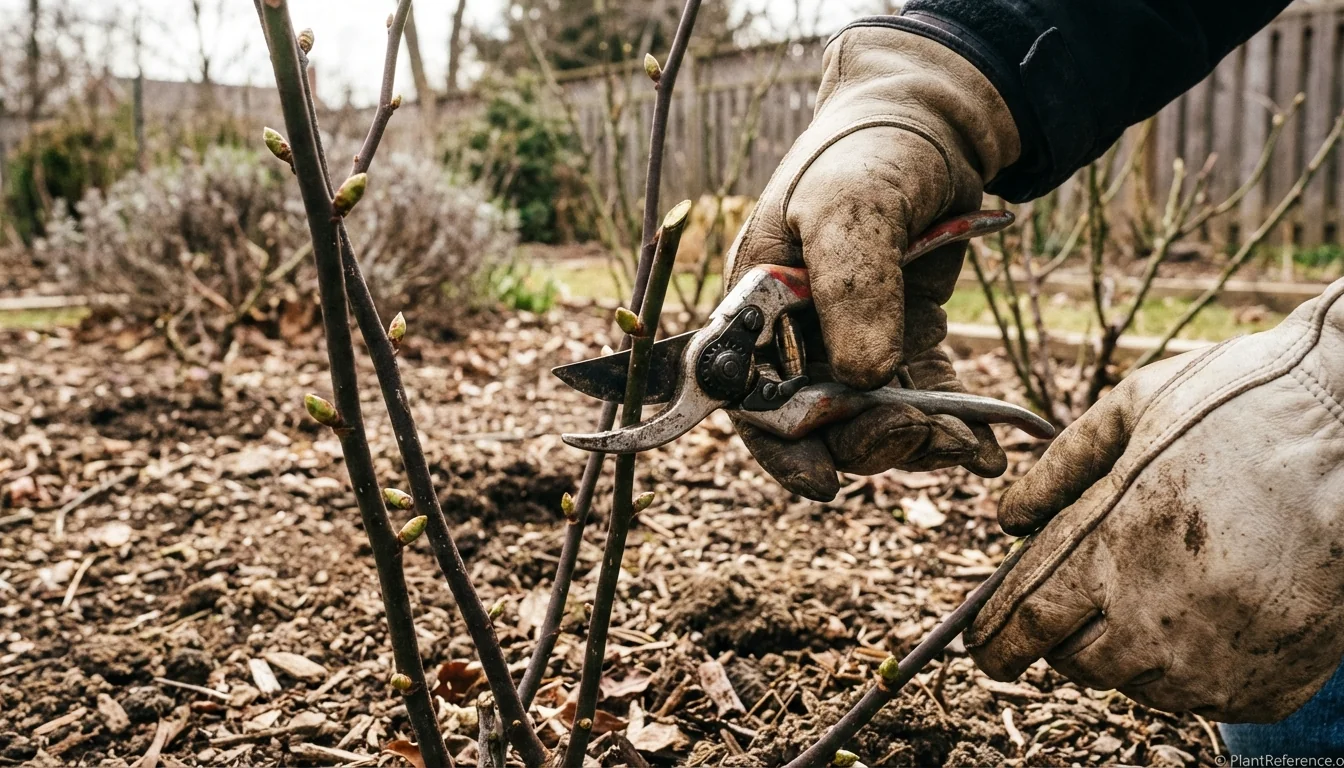
— Image © Plant Reference 2026
The most common mistake: applying one technique to every rose. A hybrid tea needs surgical precision. A Knock Out needs hedge shears and 10 minutes. A climber needs patience. The technique for perfect hybrid tea blooms will destroy a climber's production for two years. The Complete Guide to Growing Knockout Roses: Care, Pruning, and Problem Solving
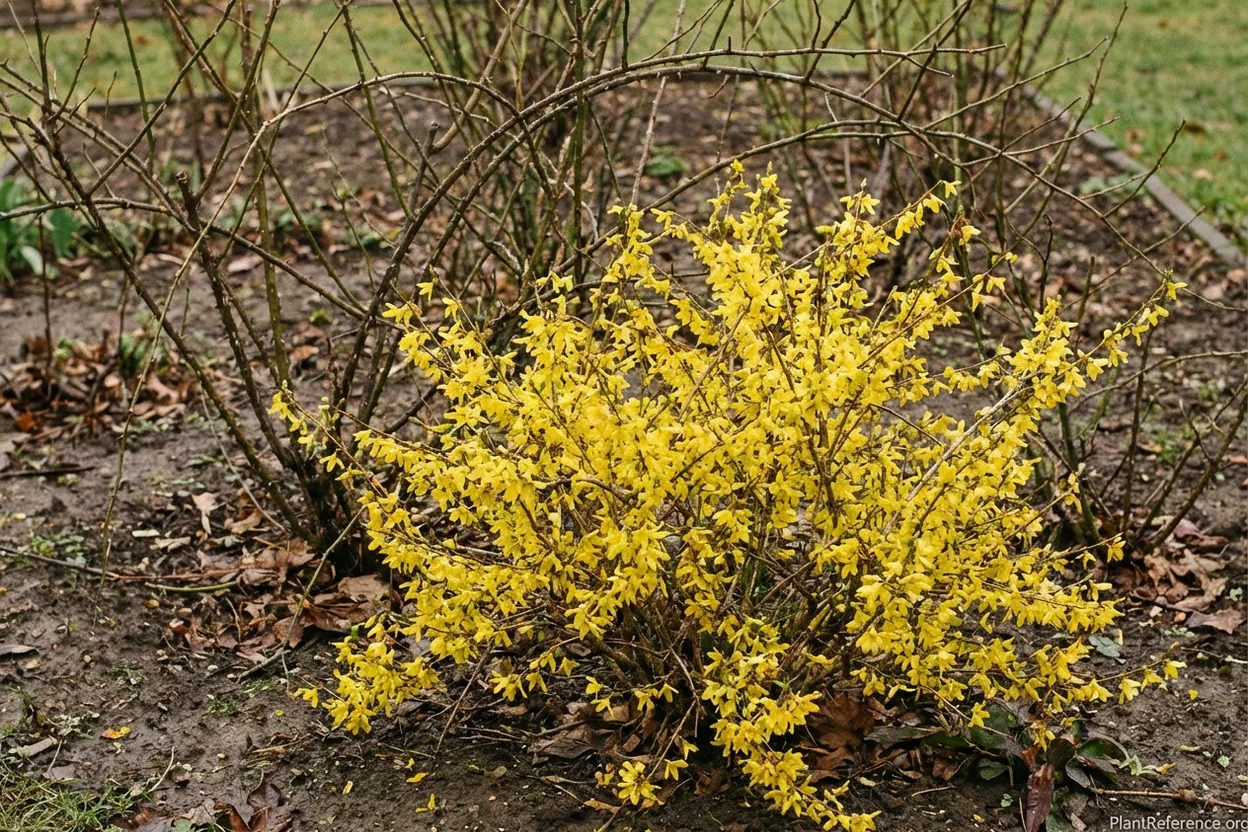
When to Prune: The Forsythia Rule
When forsythia blooms — the moment roses emerge from dormancy but before significant new growth.
Zones 8-10: January-February. Zones 6-7: March. Zones 4-5: April, sometimes early May. Wait for consistent bud swell.
Once-Blooming Exception
Old garden roses, species roses, ramblers — flower on old wood. Spring pruning removes buds. Prune AFTER flowering in early summer. Rose Disease Guide: Identification, Prevention, and Treatment for Every Common Problem
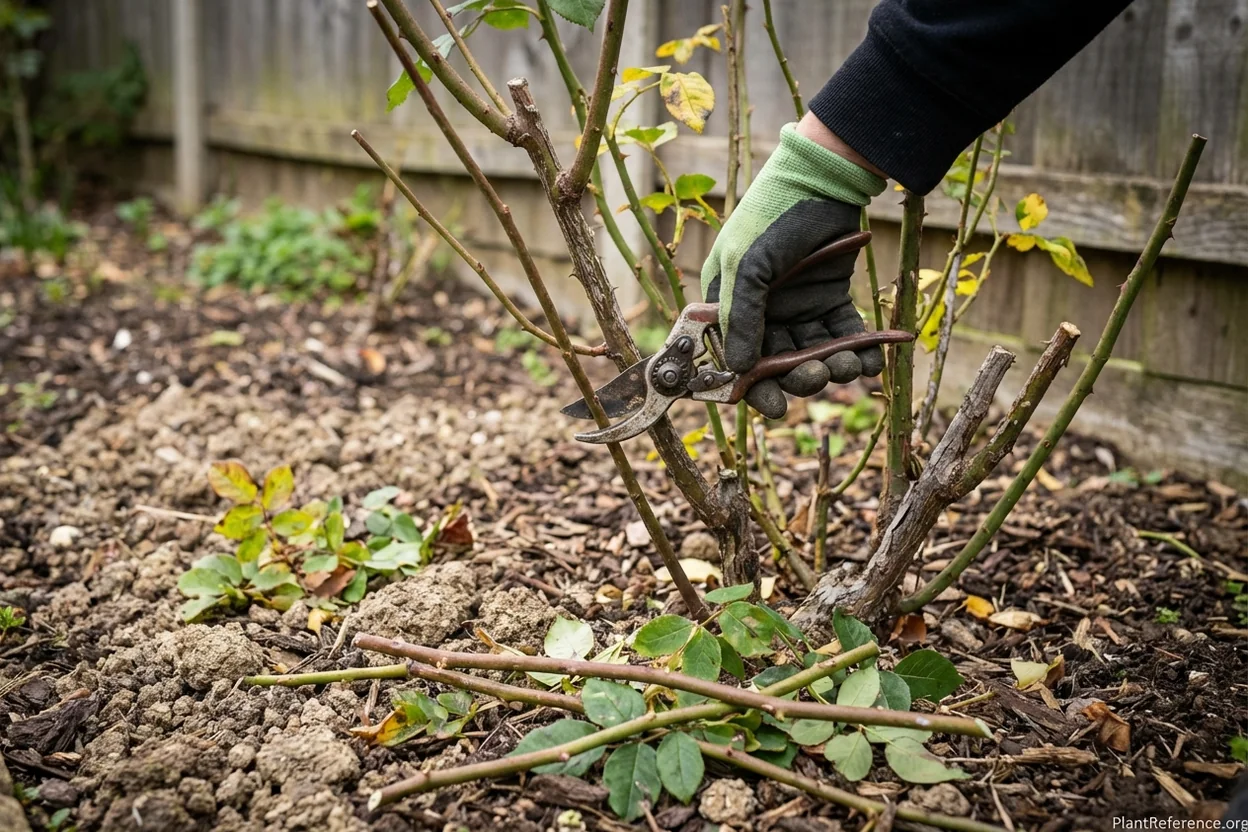
The Universal Steps (Every Rose, Every Time)
Step 1: Remove dead wood. Cut to base or healthy green tissue. Brown pith = keep cutting.
Step 2: Remove diseased canes. Cut 1 inch below affected area. Sterilize pruners between cuts.
Step 3: Remove crossing and rubbing canes. Remove the weaker of two crossing canes.
Step 4: Remove anything thinner than a pencil. Thin growth cannot support blooms.
Now apply type-specific pruning. How to Grow Roses: The Beginner's Complete Guide
Hybrid Tea and Grandiflora Pruning
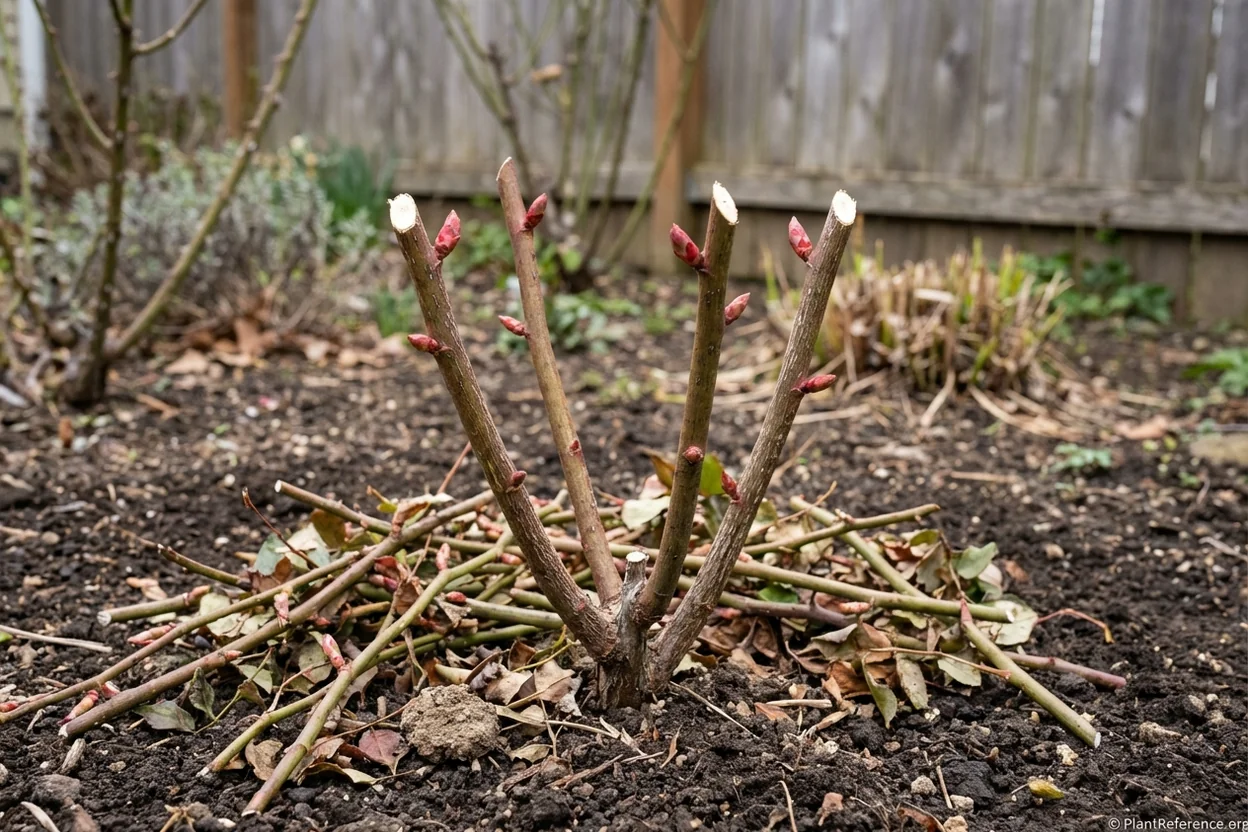
Best flowers on strong new growth from short canes. Select 3-5 strongest canes, remove everything else. Cut to 12-18 inches (30-45 cm) at 45-degree angle above outward-facing bud. Creates open vase shape. Grandifloras: same technique, 18-24 inches. Why Your Roses Are Not Blooming (And the 6 Most Common Causes)
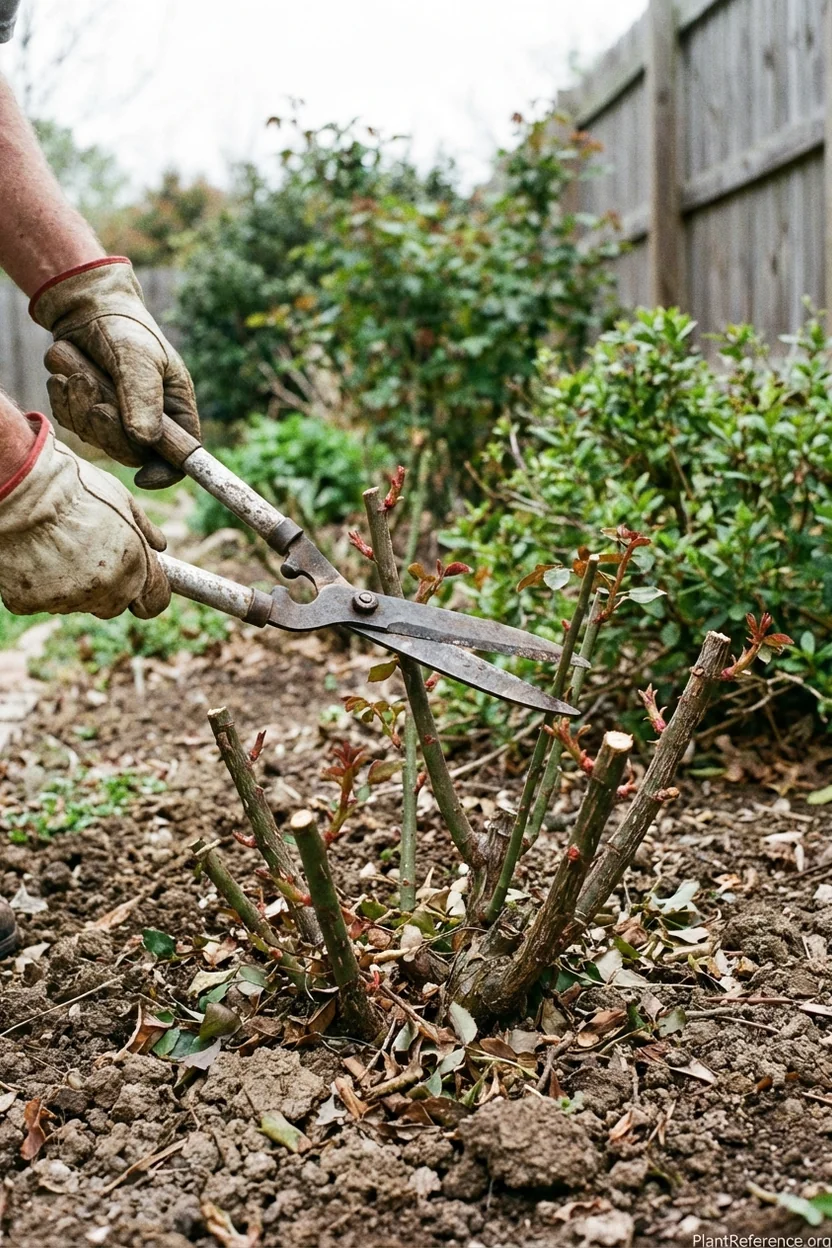
Knock Out and Landscape Rose Pruning
When new red shoots emerge, hedge shears to 12 inches. No precision required. Plant triples in size by summer. Every 3-5 years, cut 1/3 of oldest canes to ground. Self-cleaning — no deadheading required. The Complete Guide to Growing Knockout Roses: Care, Pruning, and Problem Solving
Floribunda Pruning
Moderate pruning. Retain 5-8 canes, cut to 18-24 inches. Same cut technique as hybrid teas but taller and more canes. Bushier plant with abundant cluster blooms.
David Austin and English Rose Pruning
Reduce previous season's growth by 1/3 to 1/2. Remove weak and crossing growth. More forgiving than hybrid teas — shape and balance matter more than exact bud placement. For climber-trained Austins, maintain framework and prune laterals to 2-3 buds. Best David Austin Roses: 10 Varieties for Fragrance, Form, and Reliability
Climbing Rose Pruning
Do Not Prune for 2-3 Years
Young climbers need time to produce main canes. Pruning forces restart.
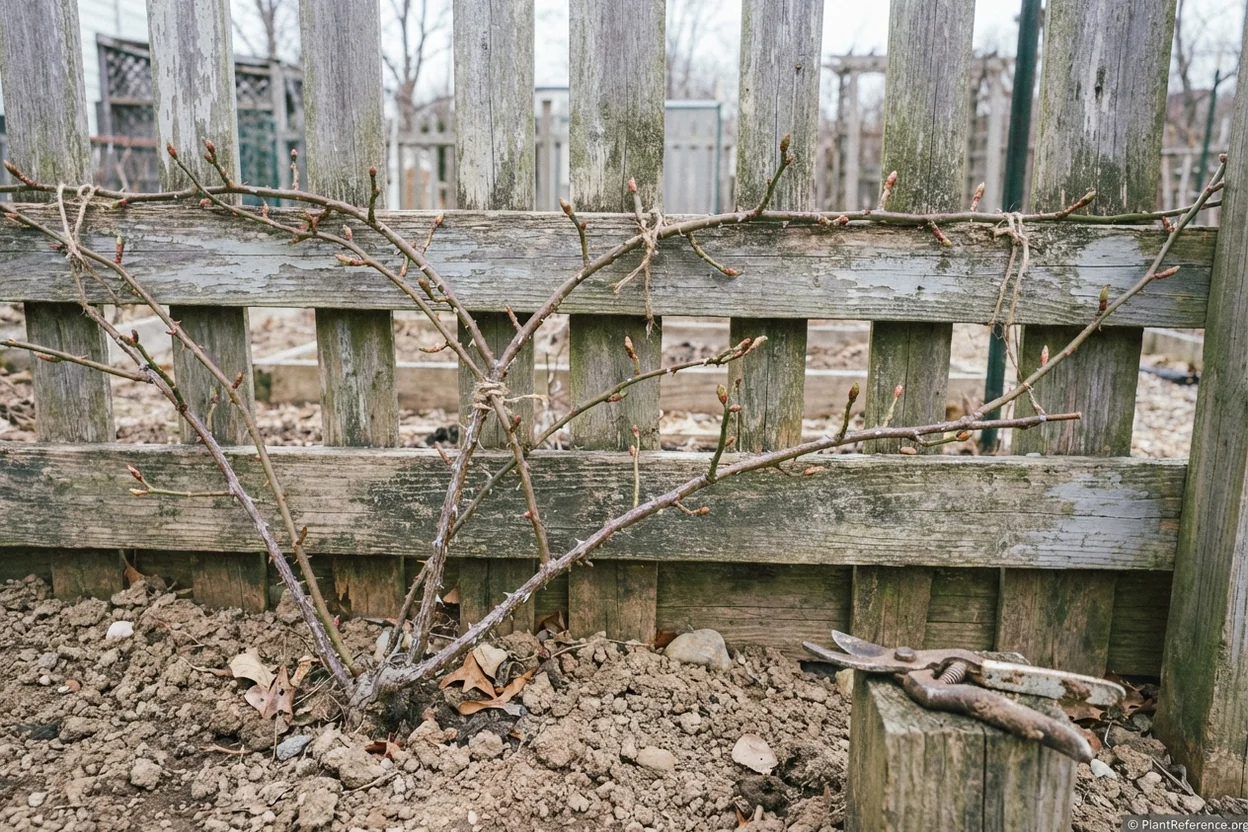
Train Horizontally, Prune Laterals
Horizontal canes produce flowering laterals along entire length. Vertical canes bloom only at tip. Each spring, prune laterals to 2-3 buds. Every 2-3 years, remove one oldest main cane and replace. The Complete Guide to Climbing Roses: Planting, Training, and Pruning
Rugosa and Shrub Rose Pruning
🌿Rosa rugosa needs the least pruning. Four universal steps, then leave alone. Every few years remove 1-2 oldest canes. Do not shear. Do not deadhead if you want hips. How to Winterize Roses: A Zone-by-Zone Protection Guide
Rose Type | When | How Hard | Canes | Key Technique |
|---|---|---|---|---|
Hybrid Tea | Forsythia blooms | 12-18 in | 3-5 | 45-degree, outward bud |
Grandiflora | Forsythia blooms | 18-24 in | 3-5 | Same, taller |
Floribunda | Forsythia blooms | 18-24 in | 5-8 | Fuller, more canes |
Knock Out | Red shoots appear | To 12 in | All | Hedge shears |
David Austin | Forsythia blooms | Reduce 1/3-1/2 | Framework | Balanced shape |
Climbing (repeat) | Late winter | Laterals: 2-3 buds | 4-6 main | Train horizontal |
Climbing (once) | After flowering | Laterals only | 4-6 main | Prune AFTER bloom |
Rugosa | Late winter | Dead/old only | Most | Minimal |
Deadheading for Continuous Bloom
Cut spent flowers to first 5-leaflet leaf below the bloom. A 3-leaflet leaf produces weaker shoots.
Stop 6 weeks before first frost. Zones 4-5: early September. Zones 6-7: late September. Zones 8-10: mid-October. Final flowers form hips signaling dormancy. How to Deadhead Roses: The Technique That Doubles Your Blooms
PlantReference's rose pruning tool identifies your type and generates exact technique, timing, and zone-specific instructions. When and How to Fertilize Roses: The Season-by-Season Feeding Schedule
Frequently Asked Questions
Reading about plants and recognising them are different skills. These three build the second.
- Daily PlantIdentify the day’s mystery plant from a close-up photograph.
- Keyed OutWork a dichotomous key, lead by lead, to name a hidden specimen.
- Name That PlantName a specimen from botanical clues dealt hardest first.
Free to play, no account needed
Tagged with
Aisha manages a small tropical nursery on the east side of Houston, specializing in plants that can handle the Gulf Coast's humidity, heat, and unpredictable flooding. She studied horticulture in college and worked at a wholesale grower before opening her own operation. Growing up, her parents kept a kitchen garden with okra, bitter gourd, and curry leaf plants—a tradition she's continued. Houston's subtropical climate lets her grow things most of the country can't, but it also means dealing with fungal issues, standing water, and summers where it's too hot for even tomatoes. Aisha writes about tropical and subtropical plant care, humidity management, and working with heavy clay soils.