Image 1 of 25
1 / 25
Plant Reference
Rosa, Genus, rugosa, Species,
- Genus & species
rugosa rose
Northeast Asia — Japan, Korea, northern China, and the Russian Far East; coastal sand dunes, rocky shores, and seaside bluffs in its native range; the species is classified as invasive on parts of the Atlantic and Pacific coasts of North America and along coastal dunes in northwestern Europe
Overview
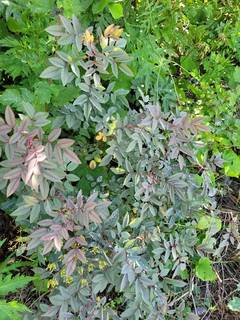
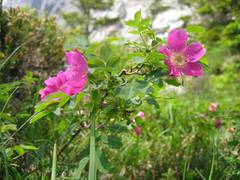
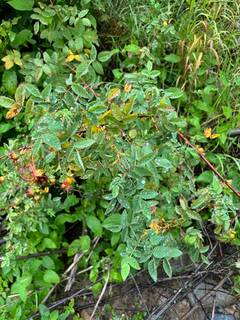
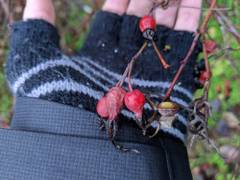
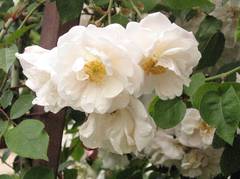
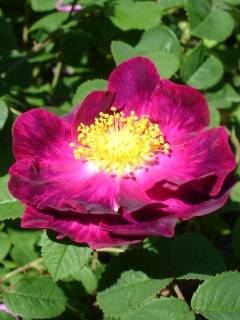
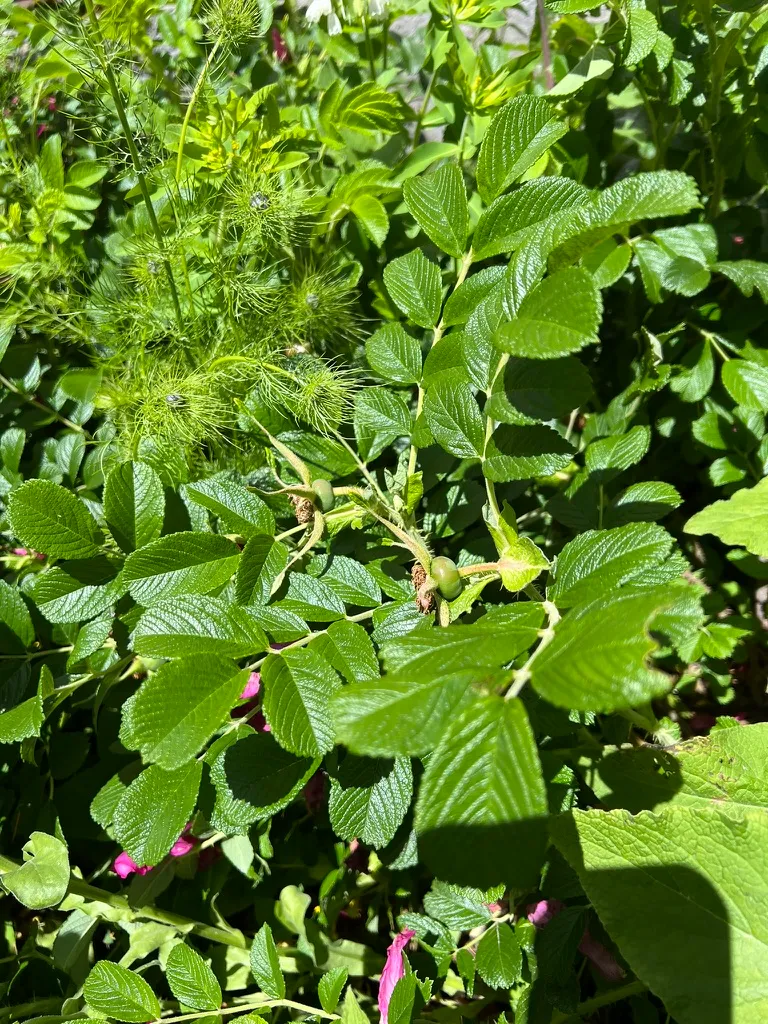
Rosa rugosa is a mounding deciduous shrub in the family Rosaceae reaching 4-6 feet (1.2-1.8 m) tall and wide with densely prickly stems bearing thousands of straight slender prickles along their length — the dense prickle coverage is the most handling-relevant feature of the species and separates it immediately from nearly thornless roses like Rosa glauca. Leaves are pinnately compound with 5-9 dark green leaflets each 1-2 inches (2.5-5 cm) long, and the leaf surface is deeply wrinkled with a corrugated rugose texture that gives the species its specific epithet and serves as the main foliar identification character. Magenta-pink to purple-pink single 5-petaled flowers 2.5-3.5 inches (6-9 cm) across open repeatedly from June through September across approximately 14 weeks of bloom, and the flowers carry a strong traditional damask rose fragrance that is the basis for rose-hip tea and rose-petal preserves in coastal European and Asian cuisines. A pure white form (f. alba) exists as well. Large round-flattened orange-red hips 0.75-1 inch (2-2.5 cm) across develop after bloom and ripen simultaneously with continued flower production later in the season — the combined flower-and-hip display on the same plant during late summer is diagnostic for the species and does not occur on most other commonly cultivated roses. Hips are high in vitamin C and are used for tea, jelly, and syrup in traditional cuisines across the native range and in coastal European kitchens. The species is native to coastal sand dunes, rocky shores, and seaside bluffs of northeast Asia (Japan, Korea, northern China, and the Russian Far East), where it tolerates salt spray, sandy soil, wind, and harsh coastal exposure that most other cultivated roses cannot survive. Outside of its native range the species has naturalized extensively on coastal dunes along the Atlantic coast of North America from Newfoundland to Virginia and parts of the Pacific Northwest, as well as along coastal dunes in northwestern Europe including Denmark, Germany, the Netherlands, and the United Kingdom, where it is classified as invasive because the spreading root-sucker thickets displace native dune vegetation and alter coastal dune ecology. Spread is primarily by root suckers that form dense impenetrable thickets, combined with some seed dispersal by shorebirds eating the fleshy hips. The species is inherently resistant to black spot, powdery mildew, and the other fungal diseases that plague hybrid teas, and carries no significant disease problems in cultivation. Deer generally avoid the densely prickly stems.
Native Range
Rosa rugosa is native to northeast Asia, with a range covering coastal Japan, Korea, northern China, and the Russian Far East. The species grows on coastal sand dunes, rocky shores, and seaside bluffs where it tolerates salt spray, sandy soil, wind, and harsh coastal exposure. Outside of its native range the species has been planted widely since the 19th century for hedging, dune stabilization, and rose-hip production, and it has naturalized on coastal dunes along the Atlantic coast of North America from Newfoundland to Virginia, parts of the Pacific Northwest, and northwestern European coasts including Denmark, Germany, the Netherlands, and the United Kingdom, where it is classified as invasive for displacing native dune vegetation.Suggested Uses
Planted as a coastal hedge, dune stabilization planting, windbreak, barrier planting, and wildlife habitat shrub at 4-6 foot (1.2-1.8 m) spacing in zones 2-9. Salt tolerance, sand tolerance, drought tolerance, and extreme cold hardiness make the species the standard rose for seaside gardens, beachfront properties, and cold-climate landscapes where most cultivated roses fail. Edible hips high in vitamin C carry value for home preserving, traditional rose-hip tea production, and rose-hip syrup. Combined with Panicum virgatum, Schizachyrium scoparium, Baptisia australis, and other drought-tolerant prairie and coastal companions in naturalistic plantings where the spreading habit is welcome. Not suited to coastal positions in jurisdictions on the Atlantic or Pacific coasts of North America or along northwestern European coasts where the species is regulated as invasive, small formal gardens where the root-sucker thicket spread cannot be accommodated, positions adjacent to walkways and seating areas where the densely prickly stems create injury risk, or landscapes where repeat bloom on a single upright plant is wanted without spreading suckers.How to Identify
Appearance
Size & Dimensions
Height4' - 6'
Width/Spread4' - 6'
Bloom Information
Magenta-pink to purple-pink single 5-petaled flowers 2.5-3.5 inches (6-9 cm) across open repeatedly from June through September in zones 2-9, carrying approximately 14 weeks of bloom. Flowers are strongly fragrant with a traditional damask rose scent and are bee- and butterfly-pollinated. Large round-flattened orange-red hips 0.75-1 inch (2-2.5 cm) across develop after the first flush of bloom and ripen through late summer, with the plant carrying flowers and ripe hips simultaneously during August and September — an uncommon trait among cultivated roses and the source of the traditional harvest-and-bloom overlap that makes the species valuable for hip production. A pure white form (f. alba) occurs as well.
Detailed Descriptions
Flower Description
magenta-pink to purple-pink; single 5-petaled flowers 2.5-3.5 inches (6-9 cm) across; a white form (f. alba) exists as well; strongly fragrant with a traditional damask rose scentFoliage Description
dark green; pinnately compound with 5-9 leaflets each 1-2 inches (2.5-5 cm) long; deeply wrinkled (rugose) leaf surface gives the species its specific epithet; turns yellow to orange before dropping in fallGrowing Conditions
Sun Requirements
Requires 6-12 hours of direct sunlight daily
• Full Sun: 6+ hours of direct sunlight
• Partial Shade: 3-6 hours of direct sunlight
• Full Shade: Less than 3 hours of direct sunlight
Care & Maintenance
Care Guide
Plant in well-drained soil with a pH of 5.5-8.0 in full sun (6+ hours); tolerated soil types include loam, sandy beach sand, and clay. The species tolerates salt spray, sandy soil, wind, drought, and harsh coastal exposure that most other cultivated roses cannot survive, and it is the standard rose choice for seaside hedges and dune-side plantings where salt injury would kill other roses. Water weekly through the first 1-2 growing seasons; established plants are very drought-tolerant. The species is inherently resistant to black spot, powdery mildew, and the fungal diseases that affect hybrid teas, and carries no significant disease problems in cultivation. Root-sucker spread forms dense thickets over time, and the spreading habit is the central cultivation limitation: the species is classified as invasive on parts of the Atlantic and Pacific coasts of North America and along coastal dunes in northwestern Europe because root-sucker thickets displace native dune vegetation and alter coastal ecology. Local invasive-species regulations govern whether the species is legal to plant in coastal positions in these regions, and inland plantings outside of coastal areas carry lower ecological risk. The densely prickly stems cause puncture wounds on handling, and stout gardening gloves and long sleeves are the standard work clothing for pruning and weeding around established plants. Pruning is done in late winter (February through March).Pruning
Pruning is done in late winter (February through March) before new growth begins. One-third of the oldest canes are removed at ground level annually for renewal, which keeps the plant carrying a mix of cane ages and maintains vigorous flowering. Dead and damaged canes are removed at any time. Root suckers emerging outside the intended footprint of the plant are cut at ground level or dug out to the root, and persistent sucker removal is needed in small landscapes where the spreading thicket habit would overrun nearby plantings. Overgrown or neglected specimens can be renovated by cutting all canes to 6 inches (15 cm) above ground in late winter, and the plant regrows vigorously from the roots within a single growing season. The densely prickly stems cause puncture wounds on handling, and stout gardening gloves and long sleeves are the standard work clothing for the task.Pruning Schedule
Prune: February–March
early spring