Rosa, Genus, pisocarpa, Species,
- Genus & species
clustered wild rose
British Columbia south through Washington and Oregon to California; moist forest edges, stream banks, wetland margins, and open shrublands
Overview
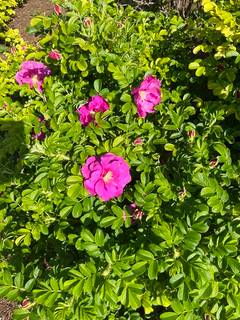
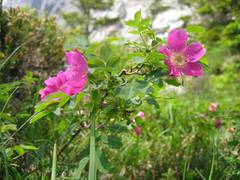
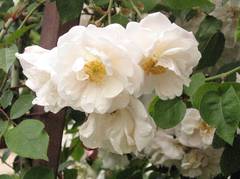
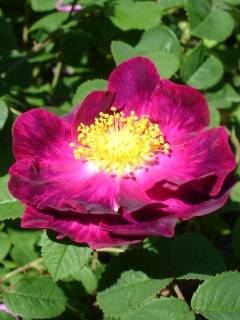
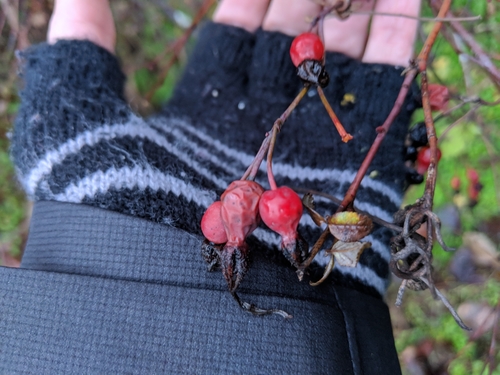
Rosa pisocarpa is clustered wild rose (swamp rose), an upright deciduous shrub growing 3-7 feet (90-210 cm) tall and 3-6 feet (90-180 cm) wide. Medium to light pink fragrant five-petaled flowers 0.75-1.5 inches (2-4 cm) in clusters (corymbs) of 3-20 (the source of the common name 'clustered wild rose') in June-July (5 weeks). Very small pea-sized red hip clusters 0.3-0.5 inch (8-13 mm) (pisocarpa = pea-fruited — the smallest hips of any native PNW rose) with persistent sepals follow and persist through winter. Pinnately compound leaves with 5-7 leaflets and singly serrated margins; scattered straight prickles on canes (no stout paired infrastipular prickles). In Rosaceae. Native to BC south through WA, OR, CA. Found at moist forest edges, on stream banks, at wetland margins, and in open shrublands — a moist habitat specialist. Distinguishes from R. nutkana (paired infrastipular prickles, larger solitary flowers, larger hips, drought-tolerant) and R. gymnocarpa (solitary flowers, bald hips, deep shade tolerant). Hips edible but small. Non-toxic. Zones 4-9. Part sun to full sun. Growth rate is moderate.
Native Range
Native to British Columbia south through Washington and Oregon to California. Found at moist forest edges, on stream banks, at wetland margins, and in open shrublands. A moist habitat specialist.Suggested Uses
Grown as a native rose in moist mixed borders, riparian buffer plantings, wetland edges, and wildlife gardens, spaced 3-6 feet (90-180 cm). Clustered flowers. Smallest native PNW rose hips. Moist habitat. Non-toxic. Zones 4-9.How to Identify
Appearance
Size & Dimensions
Height3' - 7'
Width/Spread3' - 6'
Bloom Information
Early to mid summer (June-July). Medium to light pink fragrant five-petaled flowers 0.75-1.5 inches (2-4 cm) in clusters (corymbs) of 3-20. 5 weeks. Bee- and butterfly-visited. Very small pea-sized red hip clusters with persistent sepals follow and persist through winter.
Detailed Descriptions
Flower Description
Medium to light pink, fragrant, five-petaled flowers 0.75-1.5 inches (2-4 cm) — held in CLUSTERS (corymbs) of 3-20 flowers (the source of the common name 'clustered wild rose'); June-July; followed by very small pea-sized red hips 0.3-0.5 inch (8-13 mm) — the smallest hips of any native PNW rose (pisocarpa = pea-fruited) — in clusters with persistent sepals, persisting into winterFoliage Description
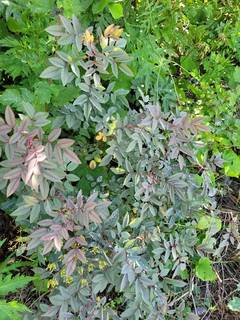
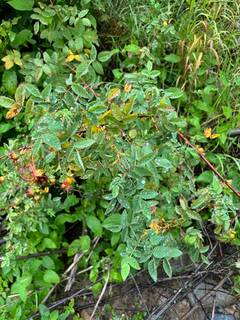
Medium green; pinnately compound with 5-7 oval leaflets, each 0.5-1.5 inches (13-38 mm), with singly serrated margins; scattered straight prickles on the canes — no stout paired infrastipular prickles (which distinguishes from R. nutkana); turns yellow to orange in fall; moist habitat specialistGrowing Conditions
Sun Requirements
Requires 3-10 hours of direct sunlight daily
• Full Sun: 6+ hours of direct sunlight
• Partial Shade: 3-6 hours of direct sunlight
• Full Shade: Less than 3 hours of direct sunlight
Care & Maintenance
Care Guide
Part sun to full sun (3-10 hours). Moist clay, loam, or silt pH 5.5-7.5. Moist habitat specialist — not drought-tolerant. Cold-hardy (zone 4). Non-toxic. Zones 4-9.Pruning
Prune in early spring (February-March) to remove damaged or oldest canes. Tolerates renovation pruning. The natural multi-stem arching form is the typical goal.Pruning Schedule
Prune: February–March
early spring