Rosa, Genus, nutkana, Species,
- Genus & species
nootka rose
Alaska south through British Columbia, Washington, and Oregon to California; east across Canada; forest edges, meadows, stream banks, and open shrublands. Type specimen from Nootka Sound (Vancouver Island, BC)
Overview
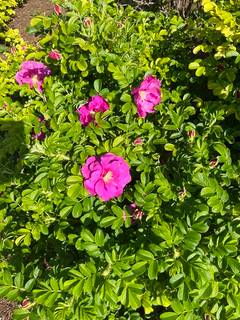
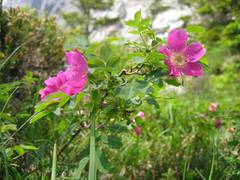
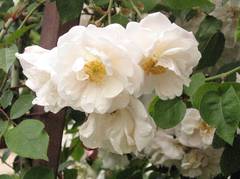
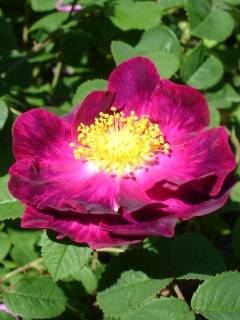
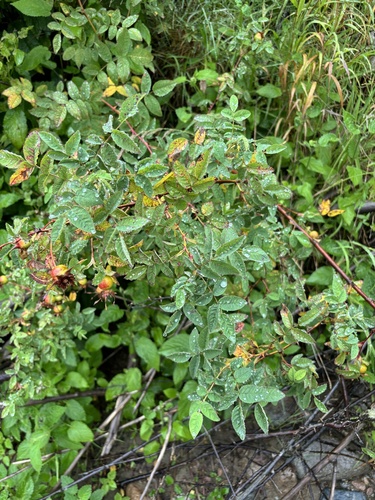
Rosa nutkana is Nootka rose (wild rose), an upright suckering deciduous shrub growing 3-10 feet (90-300 cm) tall and 4-8 feet (1.2-2.4 m) wide; spreads by root sprouts. Deep to medium pink fragrant solitary five-petaled flowers 1.5-3 inches (4-7.5 cm) — the largest flowers of any native PNW rose — in May-July (6 weeks). Large round red to purple-red hips 0.5-1 inch (13-25 mm) with persistent sepals follow in August-September and persist through winter. Pinnately compound leaves with 5-9 oval leaflets; the diagnostic feature is paired stout curved infrastipular prickles at each node. In Rosaceae. Nutkana = of Nootka Sound (Vancouver Island, BC). Native to Alaska south through BC, WA, OR, CA, east across Canada. Found at forest edges, in meadows, on stream banks, and in open shrublands. Spreads aggressively by root sprouts — well-suited to large native plantings and erosion control, but allow space. Drought-tolerant once established. Hips edible (high in vitamin C). Important winter food for waxwings and robins. Non-toxic. Zones 3-9. Part sun to full sun. Growth rate is moderate to fast.
Native Range
Native to Alaska south through British Columbia, Washington, and Oregon to California, east across Canada. Found at forest edges, in meadows, on stream banks, and in open shrublands. The type specimen was collected at Nootka Sound on the west coast of Vancouver Island, British Columbia.Suggested Uses
Grown as a native rose in large mixed borders, hedgerows, wildlife gardens, riparian buffer plantings, and erosion control sites where suckering is welcome, spaced 4-8+ feet (1.2-2.4+ m). Largest native PNW rose flowers. Aggressive root-sucker spreader. Non-toxic. Zones 3-9.How to Identify
Appearance
Size & Dimensions
Height3' - 10'
Width/Spread4' - 8'
Bloom Information
Late spring to mid summer (May-July). Deep to medium pink fragrant solitary five-petaled flowers 1.5-3 inches (4-7.5 cm) — the largest of native PNW roses. 6 weeks. Bee- and butterfly-visited. Large round red-purple hips with persistent sepals follow in August-September and persist through winter.
Detailed Descriptions
Flower Description
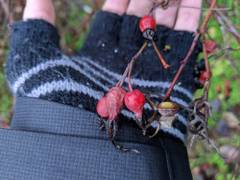
Deep to medium pink, fragrant, large solitary five-petaled flowers 1.5-3 inches (4-7.5 cm) — the largest flowers of any native Pacific Northwest rose; May-July; followed by large round red to purple-red hips 0.5-1 inch (13-25 mm) in August-September with persistent sepals (the opposite of R. gymnocarpa); hips persist on the canes through winter for waxwings and robinsFoliage Description
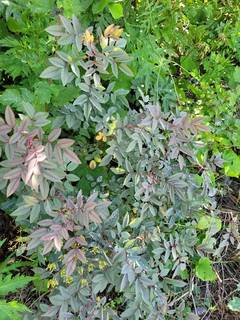
Medium to dark green; pinnately compound with 5-9 oval leaflets, each 0.5-2 inches (13-50 mm); stout arching canes carry paired stout curved infrastipular prickles at each node — one pair directly below each leaf — diagnostic; turns yellow to orange to red in fallGrowing Conditions
Sun Requirements
Requires 3-10 hours of direct sunlight daily
• Full Sun: 6+ hours of direct sunlight
• Partial Shade: 3-6 hours of direct sunlight
• Full Shade: Less than 3 hours of direct sunlight
Care & Maintenance
Care Guide
Part sun to full sun (3-10 hours). Tolerates clay, sand, rocky, or loam pH 5.5-7.5. Drought-tolerant once established. Cold-hardy (zone 3). Spreads aggressively by root sprouts — allow space or contain. Edible hips. Non-toxic. Zones 3-9.Pruning
Prune in early spring (February-March) to remove damaged or oldest canes. Tolerates renovation pruning. Manage suckering by removing root sprouts where unwanted.Pruning Schedule
Prune: February–March
early spring