Rosa, Genus, 'Alain Blanchard', Cultivar,
- Genus
- Cultivar
Alain Blanchard rose
Hybrid of garden origin; bred by Vibert in France circa 1839 as a Gallica hybrid; the Gallica class traces parentage to {R. gallica}, native to central and southern Europe
Overview
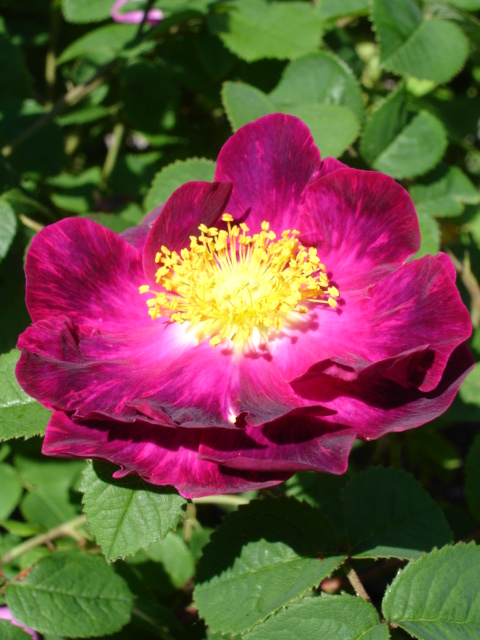
Rosa 'Alain Blanchard' is a deciduous shrub rose reaching 3-5 feet (0.9-1.5 m) tall with a spread of 3-4 feet (0.9-1.2 m) and a compact, bushy, upright-to-arching habit. A Gallica hybrid bred by Vibert in France circa 1839, the cultivar carries semi-double flowers 2.5-3 inches (6-8 cm) wide in deep crimson to dark maroon-purple with prominent golden stamens visible at the center. The dark color is marbled and spotted with lighter crimson flecks, creating a mottled pattern that sets this cultivar apart from solid-color dark Gallicas such as 'Cardinal de Richelieu'. Flowers appear in a single flush in June with strong old-rose fragrance; bloom duration is 3-4 weeks and no repeat bloom follows. Medium green leaves 2-3 inches (5-8 cm) long carry a slightly rough texture. Growth rate is moderate. Hardy to USDA zone 4. The Gallica class traces its parentage to R. gallica, native to central and southern Europe, and is one of the older continuously cultivated rose groups in Western horticulture. Nearly thornless canes and a compact habit are typical of the class, and this cultivar carries both traits. May produce root suckers in favorable soil — a behavior typical of Gallica roses.
Native Range
Rosa 'Alain Blanchard' is a Gallica hybrid of garden origin, bred by Vibert in France circa 1839. The Gallica class derives from R. gallica, native to central and southern Europe.Suggested Uses
Used in mixed borders, cottage gardens, and heritage rose collections in zones 4-9 at 3-4 foot (0.9-1.2 m) spacing. The 1839 introduction date and Gallica class suit heritage-rose plantings that reconstruct pre-1900 European garden styles, where modern repeat-blooming cultivars would be historically out of place. The mottled dark-crimson flower pattern pairs with solid pale-pink companion roses such as 'Adelaide Hoodless' for contrast. Single-flush bloom in June only rules out the cultivar where continuous summer color is wanted; pair with later-blooming perennials to extend garden interest past June. Root-sucker production in loose soil rules out tight formal-border positions where spread cannot be tolerated.How to Identify
Appearance
Size & Dimensions
Height3' - 5'
Width/Spread3' - 4'
Bloom Information
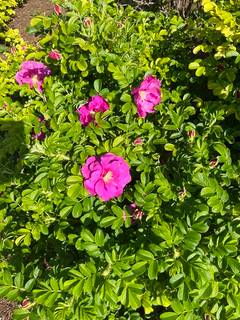
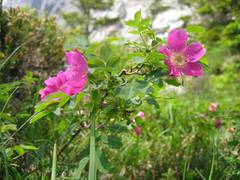
Semi-double dark crimson to maroon-purple flowers 2.5-3 inches (6-8 cm) wide with a mottled and spotted pattern and prominent golden stamens, June. Single flush — no repeat bloom follows. Bloom duration is 3-4 weeks. Strong old-rose fragrance.
Detailed Descriptions
Flower Description
Deep crimson to dark maroon-purple semi-double flowers 2.5-3 inches (6-8 cm) wide with a mottled and spotted pattern and prominent golden stamens at the center; JuneFoliage Description
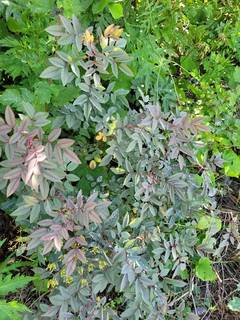
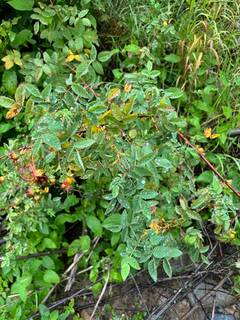
Medium green slightly rough-textured leaves 2-3 inches (5-8 cm) long; pinnately compound with 5-7 leaflets; deciduousGrowing Conditions
Sun Requirements
Requires 6-10 hours of direct sunlight daily
• Full Sun: 6+ hours of direct sunlight
• Partial Shade: 3-6 hours of direct sunlight
• Full Shade: Less than 3 hours of direct sunlight
Care & Maintenance
Care Guide
Grows in full sun in well-drained, fertile soil at pH 6.0-7.0. Hardy to USDA zone 4. Nearly thornless canes make handling easy during pruning and training. May produce root suckers from the base in loose soil, which is typical of Gallica roses and can be removed with a spade if the colony is spreading beyond the planting area. Moderate disease resistance; blackspot may appear in humid summers but the plant recovers as new foliage develops. Once-blooming, so annual pruning runs after bloom rather than before.Pruning
Prune after flowering in July. Remove one-third of the oldest canes at the base. Tip back the remaining canes lightly to shape. Remove any root suckers that have spread beyond the planting area. Avoid late-winter or spring pruning on this once-blooming cultivar — flower buds form on old wood and are removed by dormant-season cuts.Pruning Schedule
Prune: July
summer
Container Growing
Suitable for container growing
Minimum container size: 5 gallons