Rosa, Genus, spinosissima, Species, 'Falkland', Cultivar,
- Genus & species
- Cultivar
scots rose 'Falkland'
Europe and western Asia (parent species)
Overview
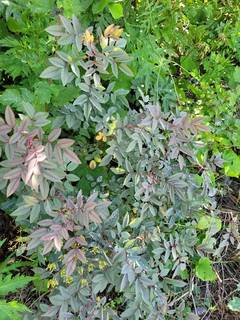
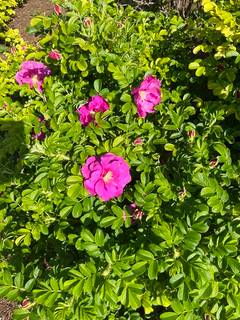
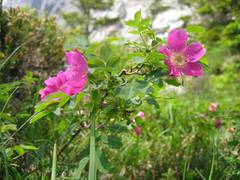
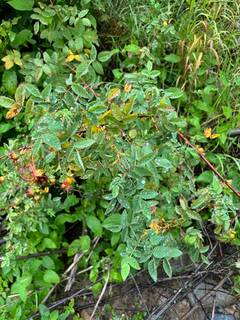
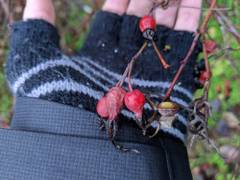
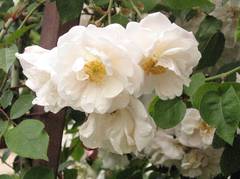
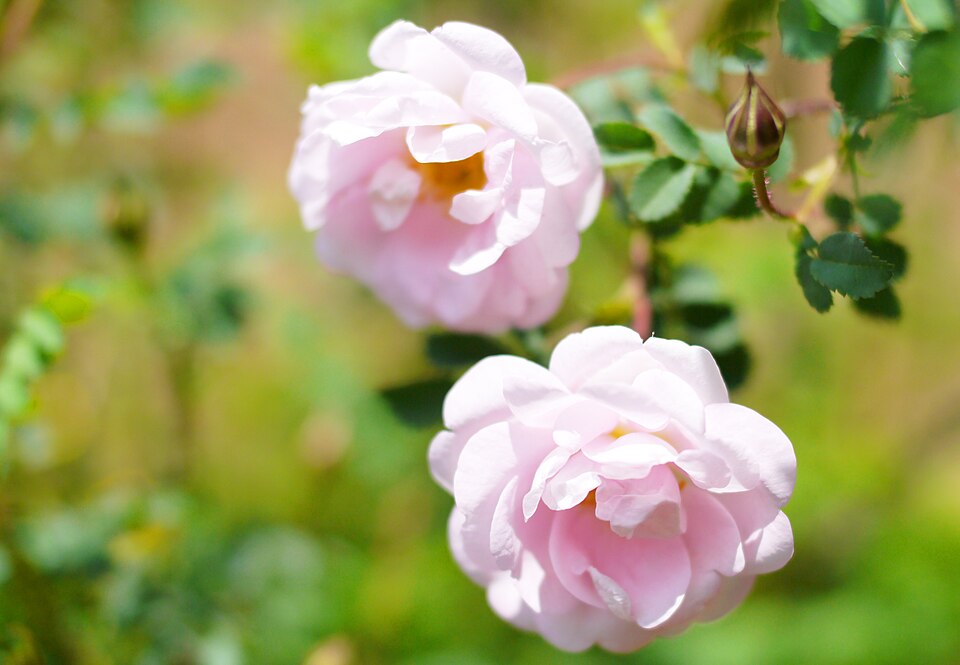
Rosa spinosissima 'Falkland' is a deciduous suckering shrub rose belonging to the Scots or burnet rose group, derived from Rosa spinosissima. It forms a dense, twiggy, upright thicket 3–4 feet (90–120 cm) tall and wide, spreading by suckers to form colonies over time. The stems are densely covered in slender straight prickles and bristles, and the small pinnate leaves carry 7–11 rounded, ferny leaflets 0.3–0.6 inch (0.8–1.5 cm) long that turn dull purple to bronze in autumn. In late spring and early summer the shrub bears semi-double cupped flowers about 1.5–2 inches (4–5 cm) across, soft lilac-pink fading to blush and near-white, with a sweet scent. Flowering is a single early flush rather than a repeating bloom. Small round blackish-maroon hips follow in late summer. The cultivar is very cold tolerant and grows on poor sandy and chalky soils, but it suckers freely and can spread beyond its allotted space, and its dense prickles make handling difficult. Black spot is uncommon on burnet roses, though rust can occur.
Native Range
Rosa spinosissima 'Falkland' is a cultivated selection of the burnet rose, Rosa spinosissima, which is native across Europe and western Asia, where it grows on coastal dunes, heaths, and dry calcareous grassland. The cultivar is an old Scots rose raised in cultivation and does not occur in the wild.Suggested Uses
Rosa spinosissima 'Falkland' is grown in cottage and wild gardens, on dry banks, and in coastal or sandy sites where its suckering habit stabilises the ground. It works as an informal low hedge or thicket. The early scented flowers and dark autumn hips suit naturalistic plantings.How to Identify
Appearance
Size & Dimensions
Height3' - 4'
Width/Spread3' - 4'
Bloom Information
Flowering is a single early flush in late spring to early summer, around May to June in the Northern Hemisphere, lasting roughly 3–4 weeks. The shrub does not repeat-bloom. Small, rounded, dark maroon to black hips develop from late summer. Autumn brings dull purple to bronze leaf colour before leaf fall.
Detailed Descriptions
Flower Description
Lilac-pink fading to blush whiteFoliage Description
Dark green, bronze-purple in autumnGrowing Conditions
Sun Requirements
Requires 6-12 hours of direct sunlight daily
• Full Sun: 6+ hours of direct sunlight
• Partial Shade: 3-6 hours of direct sunlight
• Full Shade: Less than 3 hours of direct sunlight
Care & Maintenance
Care Guide
Grow Rosa spinosissima 'Falkland' in full sun in well-drained soil; it accepts poor, sandy, and chalky ground and dry conditions once established. The shrub is very cold tolerant and withstands exposed and coastal sites. Because it spreads by underground suckers, it is given room or confined where colony-forming growth is unwanted. Little feeding is needed, and the burnet roses are generally healthy, with low black spot pressure. Water during the first season and in extended drought on light soils. The plant flowers on older wood, so heavy annual pruning is not required.Pruning
Rosa spinosissima 'Falkland' flowers on the previous year's wood and needs little pruning beyond removing dead, weak, or crowded stems after the early-summer bloom. Suckers are dug out to limit spread where a contained shrub is wanted. Old colonies are thinned by cutting some of the oldest stems to the base in winter.Pruning Schedule
Prune: June–July
summer