Rosa, Genus, 'Marchesa Boccella', Cultivar,
- Genus
- Cultivar
Marchesa Boccella rose
Hybrid of garden origin (bred by Desprez in France in 1842; classified as a Hybrid Perpetual or Portland rose; runs the most reliably repeat-blooming old garden roses in commercial cultivation; carries quartered pink flowers with a button eye and strong damask fragrance; the cultivar also appears in commercial trade under the alternative name 'Jacques Cartier')
Overview
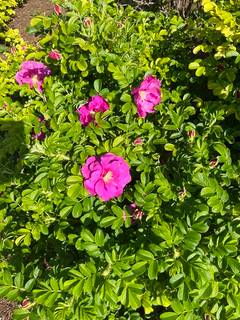
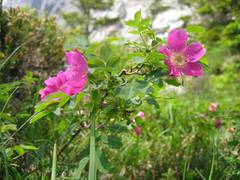
Rosa 'Marchesa Boccella' (also listed in commercial trade as 'Jacques Cartier') is a deciduous shrub rose reaching 3–5 feet (0.9–1.5 m) tall with a spread of 2–3 feet (0.6–0.9 m) and a compact upright bushy habit. The cultivar runs the most reliably repeat-blooming old garden roses in commercial cultivation. A Hybrid Perpetual or Portland rose bred by Desprez in France in 1842, the cultivar opens large very double deeply quartered flowers 3–4 inches (8–10 cm) wide in clear medium pink with a slightly paler reverse on each petal—the tightly packed petals create the traditional quartered old-rose form with a button eye at the center of each fully open flower. Bloom runs June through frost across the full growing season, which separates the cultivar from many old garden roses that bloom only once in early summer. Medium green slightly rough-textured leaves carry moderate disease resistance through the season. Growth rate runs moderate. Hardy to zone 5. The cultivar carries a strong old-rose and damask fragrance. The combination of compact mature size, reliable repeat bloom across the full growing season, and strong fragrance places the cultivar with the most garden-worthy old roses available in the commercial trade for mixed border positions.
Native Range
Rosa 'Marchesa Boccella' is a hybrid of garden origin bred by Desprez in France in 1842. The cultivar belongs to the Hybrid Perpetual or Portland rose class, both of which were 19th-century French breeding traditions that targeted repeat-blooming character in old-rose form before the Hybrid Tea era replaced both classes in the late 19th century commercial trade.Suggested Uses
Planted in mixed borders, cottage gardens, or heritage rose collections at 2–3 foot (0.6–0.9 m) spacing in zone-5-and-warmer gardens. The cultivar runs the most reliable repeat-blooming old garden rose in the collection, which carries the bloom contribution from June through frost across roughly 20 weeks of the growing season. Quartered clear pink flowers with a button eye carry the traditional old-rose flower form. Strong damask fragrance supplies the secondary garden contribution beyond the visual flower display. Compact 3-to-5-foot mature stature suits the cultivar to small-scale border positions. Container cultivation requires a minimum 5-gallon pot. Moderate disease resistance may benefit from preventive fungicide treatment in humid regional climates. Persistently wet sites and persistently dry sites are poor fits for the cultivar.How to Identify
Appearance
Size & Dimensions
Height3' - 5'
Width/Spread2' - 3'
Bloom Information
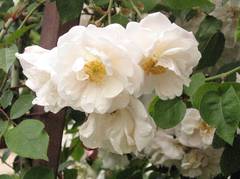
Large very double deeply quartered flowers 3–4 inches (8–10 cm) wide open in clear medium pink with a paler reverse on each petal and a button eye at the center, from June through frost across the full growing season. The cultivar runs the most reliably repeat-blooming old garden roses in commercial cultivation, which extends the bloom window well beyond the once-flowering character of most pre-1900 rose cultivars. A strong old-rose and damask fragrance carries through the bloom window.
Detailed Descriptions
Flower Description
Clear medium pink with a paler reverse on each petal; very double tightly packed quartered form 3-4 inches wide carrying a button eye at the center; June through frost; carries a strong old-rose and damask fragranceFoliage Description
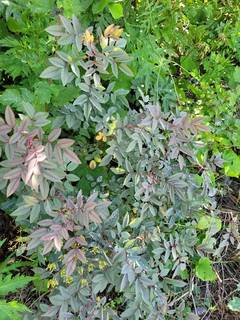
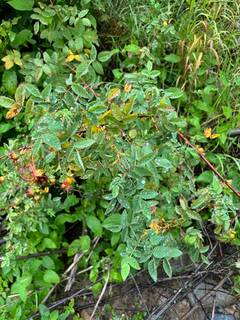
Medium green; slightly rough leaf surface texture; carries moderate disease resistance through the growing season; deciduousGrowing Conditions
Sun Requirements
Requires 6-10 hours of direct sunlight daily
• Full Sun: 6+ hours of direct sunlight
• Partial Shade: 3-6 hours of direct sunlight
• Full Shade: Less than 3 hours of direct sunlight
Care & Maintenance
Care Guide
Full sun in well-drained fertile soil (pH 6.0–7.0) matches the cultivar's cultivation needs. Hardy to zone 5 (−20°F / −29°C). The compact mature stature suits the cultivar to small border positions where larger Hybrid Perpetuals cannot fit their mature scale. Deadheading runs important for continuous repeat bloom because spent-flower removal directs energy into fresh bud production rather than hip development. Disease resistance runs moderate, which means humid regional climates may produce blackspot pressure that benefits from preventive fungicide application or from a regional positioning with good air movement. Regular feeding through the growing season supports the long bloom window.Pruning
Pruning runs in late winter to early spring. Plants are cut back by approximately one-third of their mature stature, with the oldest canes removed entirely at the base of the plant to direct energy into the younger productive wood. The compact mature habit needs minimal shaping intervention beyond the annual reduction cut. Deadheading runs through the growing season to maintain continuous repeat bloom.Pruning Schedule
Prune: February–March
early spring
Container Growing
Suitable for container growing
Minimum container size: 5 gallons