Rosa, Genus, multiflora, Species,
- Genus & species
multiflora rose
Overview
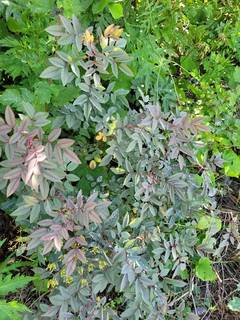
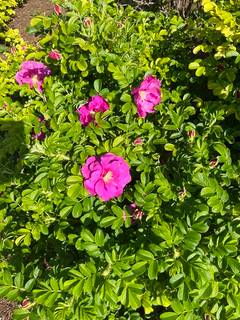
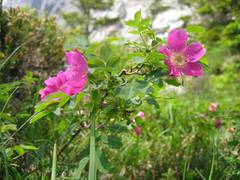
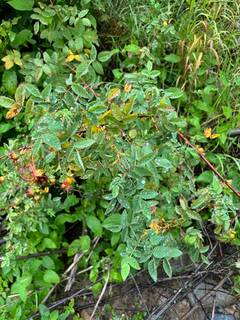
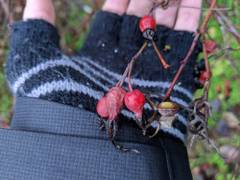
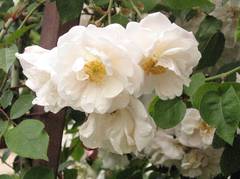
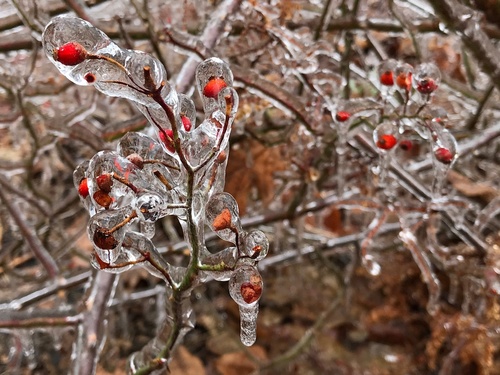
Rosa multiflora is a vigorous, arching deciduous shrub in the rose family, growing 6-15 feet (1.8-4.5 m) tall and often wider, with long, recurved canes that root where the tips touch the ground. The stems carry stout, curved thorns and pinnately compound leaves of five to eleven toothed leaflets, each 0.4-1.5 inches (1-4 cm) long; a comb-like fringe along the leaf stipules separates this species from most other roses. In late spring and early summer it bears broad clusters of many small, fragrant white to pale pink flowers 0.5-1 inch (1.3-2.5 cm) across, each with five petals. These are followed by small, firm red hips 0.2-0.3 inch (5-8 mm) wide that persist into winter and are eaten by birds, which spread the seed widely. The shrub spreads by seed and by tip-rooting canes, forming dense, impenetrable thickets in pastures, old fields, forest edges, and roadsides. It tolerates a wide range of soils and light from full sun to partial shade. In North America it is listed as a noxious or invasive weed across much of the East and Midwest, where it displaces native vegetation. A single plant can produce many thousands of seeds in a season.
Native Range
Rosa multiflora is native to eastern Asia, including Japan, Korea, and eastern China. It was widely introduced to North America for hedging, erosion control, and rootstock, and has since naturalized and become invasive across much of the eastern and central United States.Suggested Uses
Rosa multiflora was formerly planted for hedging, livestock barriers, erosion control, and as a grafting rootstock for cultivated roses. Because it is now regulated as invasive across much of its naturalized range, deliberate planting has largely ended. It persists in old hedgerows, pastures, and field edges where it was once established or has spread.How to Identify
Appearance
Size & Dimensions
Height6' - 15'
Width/Spread6' - 12'
Bloom Information
Flowering occurs in late spring and early summer, roughly May to June, over a few weeks. The fragrant white to pale pink flowers open in large branched clusters and draw many bees and other insects. Flowering is followed by small red hips that ripen in late summer and hold through winter.
Detailed Descriptions
Flower Description
white to pale pinkFoliage Description
greenGrowing Conditions
Sun Requirements
Requires 4-10 hours of direct sunlight daily
• Full Sun: 6+ hours of direct sunlight
• Partial Shade: 3-6 hours of direct sunlight
• Full Shade: Less than 3 hours of direct sunlight
Care & Maintenance
Care Guide
Rosa multiflora grows in full sun to partial shade in almost any soil and tolerates wet and dry ground once established. It needs no care and spreads aggressively by seed and by canes that root at their tips, forming thickets that enlarge year to year. Cutting or mowing the canes prompts dense regrowth unless the root crown is removed. Birds spread the seed widely, so new plants appear far from existing thickets. The arching, thorny canes make established stands hard to clear by hand. Repeated cutting combined with root removal over several seasons is usually needed to reduce a stand.Pruning
Cutting canes to the ground controls top growth for a season but prompts vigorous regrowth from the root crown. Removing or grubbing out the crown is required to stop resprouting. Repeated cutting over several years gradually weakens established plants.Pruning Schedule
Prune: February–March
winterearly spring