Rosa, Genus, gallica, Species, var., Variety, officinalis, Variety,
- Genus & species
- Variety
apothecary's rose
Central and southern Europe to western Asia
Overview
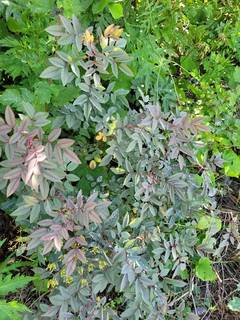
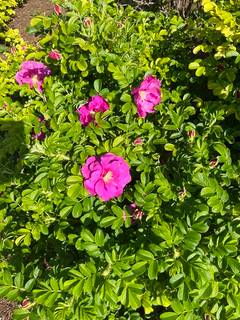
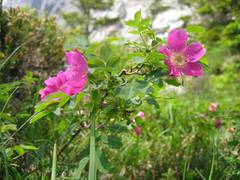
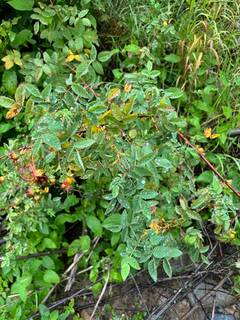
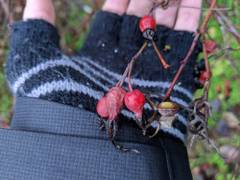
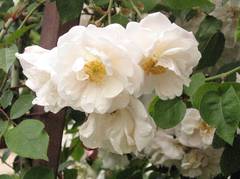
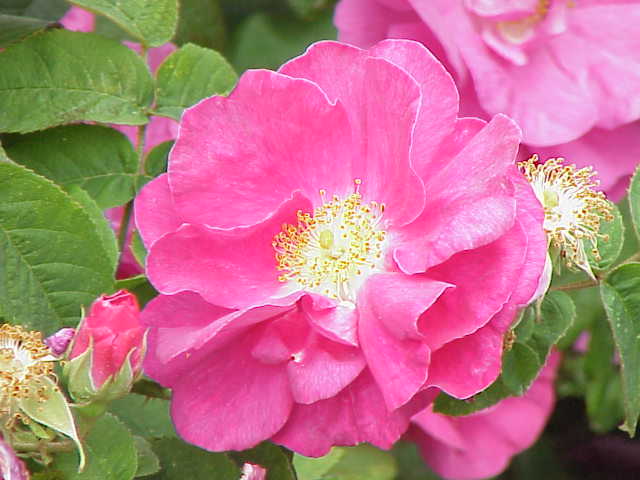
Rosa gallica var. officinalis is the apothecary's rose, a suckering deciduous shrub 3-4 ft (90-120 cm) tall and about as wide, spreading by underground runners into dense low thickets. The stems carry mixed small prickles and stiff bristles rather than the broad hooked thorns of modern roses. Pinnate leaves bear three to five leathery leaflets 1-2.4 in (2.5-6 cm) long, dark green and rough above, paler and softly downy beneath. Flowers open 2.5-3.5 in (6-9 cm) across in deep pink to light crimson, semi-double with roughly twelve to twenty petals held loosely around a prominent boss of golden stamens. Bloom comes once in early summer on wood from the previous year, and the scent is strong and carrying; the petals keep their fragrance after drying, the basis of the plant's long use in medicine and perfumery. Rounded brick-red hips follow in late summer. Grown at Provins in France from the medieval period and known in England as the red rose of Lancaster, it is among the oldest roses still in gardens. Suckers spread beyond the planted crown, and the foliage is prone to blackspot and mildew where air is humid and still. Hardy in zones 4-8.
Native Range
A long-cultivated selection of Rosa gallica, whose wild range runs from central and southern Europe east through the Balkans to Turkey and the Caucasus. The variety has been grown in European gardens since at least the medieval period, especially around Provins in northern France.Suggested Uses
Grown in heritage, cottage, and physic gardens, mixed shrub borders, and informal hedges, spaced 3-4 ft (90-120 cm) apart. The suckering habit suits naturalized and wildlife plantings, where the open centers feed bees and the hips feed birds. Petals are harvested for potpourri, conserves, and rose preparations, the old apothecary use behind the plant's name.How to Identify
Appearance
Size & Dimensions
Height3' - 4'
Width/Spread3' - 4'
Bloom Information
Flowers open once in early summer, usually June into early July, with the display packed into three to four weeks. Individual blooms last two to three days. There is no repeat flush; the hips color from late summer and hold into winter. Bees work the open centers.
Detailed Descriptions
Flower Description
Deep pink to light crimson, semi-double with roughly twelve to twenty petals around a prominent boss of golden stamens, 2.5-3.5 in (6-9 cm) acrossFoliage Description
Dark green, rough above, paler and softly downy beneath; three to five leathery leaflets 1-2.4 in (2.5-6 cm) longGrowing Conditions
Sun Requirements
Requires 6-10 hours of direct sunlight daily
• Full Sun: 6+ hours of direct sunlight
• Partial Shade: 3-6 hours of direct sunlight
• Full Shade: Less than 3 hours of direct sunlight
Care & Maintenance
Care Guide
Grow in full sun to light shade, flowering most freely at 6 or more hours of direct sun. It takes most soils from sand to clay loam so long as drainage is free, across a pH range of 5.5-7.5, including shallow chalk. Established plants are drought tolerant for a rose and want water only through long dry spells. One spring feed of balanced rose fertilizer is enough, since rich feeding brings soft growth and fewer blooms. The variety spreads by root suckers, so runners are cut back each year in tight borders, or the shrub is left on its own roots to colonize. Blackspot, powdery mildew, aphids, and rose rosette disease can affect plants in crowded or humid sites.Pruning
Prune right after flowering in midsummer, since bloom forms on the previous year's wood and winter or spring pruning removes the coming display. Clear dead, damaged, and crossing stems, shorten flowered side shoots by about a third, and take one or two of the oldest canes to the base to renew the shrub. Sever suckers below ground to hold the spread, and leave late-summer growth so hips can form.Pruning Schedule
Prune: June–July
summer