Image 1 of 19
1 / 19
Plant Reference
Rosa, Genus, glauca, Species,
- Genus & species
redleaf rose
Central and southern Europe from the Pyrenees through the Alps to the Balkans and Caucasus; mountain meadows and rocky slopes at mid-elevations
Overview
Rosa glauca is an upright to arching deciduous shrub in the family Rosaceae reaching 5-8 feet (1.5-2.4 m) tall and 4-6 feet (1.2-1.8 m) wide with reddish-purple nearly thornless stems that arch gracefully as the plant matures. Foliage is the primary ornamental feature of the species: leaves are pinnately compound with 5-9 leaflets each 1-2 inches (2.5-5 cm) long and carry a blue-gray to purple-mauve color created by a glaucous waxy bloom on the leaf surface, and the foliage color intensifies in full sun and is deepest on new growth. No other commonly cultivated rose species carries this foliage color, and the species is grown almost entirely for the foliage rather than for the brief flowers. Small single pink 5-petaled flowers 1.5 inches (4 cm) across with a white center open in small clusters during June for about 2 weeks — the brief bloom is secondary to the foliage display and is followed by abundant dark red oval hips 0.5 inch (1.3 cm) long that persist on the arching stems well into winter and are eaten by finches, waxwings, and other birds. The species is native to the mountains of central and southern Europe from the Pyrenees through the Alps to the Balkans and Caucasus, where it grows in mountain meadows, rocky slopes, and forest margins at mid-elevations. It is extremely cold-hardy, tolerating zones 2-8 reliably, and carries no significant disease problems — the species is resistant to black spot and powdery mildew that affect hybrid teas and most other cultivated rose classes, and the low disease pressure makes it a low-maintenance alternative in gardens where rose disease management is otherwise a recurring burden. The species was formerly classified as Rosa rubrifolia, and some older nursery catalogs and reference works still use the older name. Self-seeding is the main cultivation concern — seedlings emerge near the parent plant and in adjacent beds, though the rate of spread is much lower than for aggressive invasive rose species and volunteer seedlings are easily removed. Deer generally browse the foliage less than on other rose species, though not completely.
Native Range
Rosa glauca is native to the mountains of central and southern Europe, with a range extending from the Pyrenees through the French, Swiss, and Italian Alps to the Balkans and Caucasus. The species grows in mountain meadows, open rocky slopes, and forest margins at mid to high elevations where summer temperatures are cool and winters are cold, and it tolerates zone 2 winter conditions that most European species roses cannot survive. The species has been in European cultivation since at least the 19th century and was formerly classified as Rosa rubrifolia (an older name still seen in nursery catalogs and older reference works).Suggested Uses
Planted in mixed borders, informal hedges, cottage gardens, and wildlife gardens at 4-6 foot (1.2-1.8 m) spacing in zones 2-8. The blue-gray to purple glaucous foliage is the design feature and contrasts strongly with green-foliaged companions, dark-foliaged shrubs, and silver-leaved perennials in mixed plantings — combinations with Sedum 'Autumn Joy', Perovskia atriplicifolia, and Artemisia species carry the color through the growing season. The persistent dark red hips extend the season into winter for both ornamental display and bird forage. Extreme cold hardiness to zone 2 makes the species a rare rose choice for zone 2-3 gardens where virtually no other cultivated rose survives. Not suited to landscapes where repeat bloom is the primary ornamental goal because the bloom period is brief, small formal gardens where the arching habit conflicts with the design intent, or sites where self-seeding spread into adjacent natural areas is a concern.How to Identify
Appearance
Size & Dimensions
Height5' - 8'
Width/Spread4' - 6'
Bloom Information
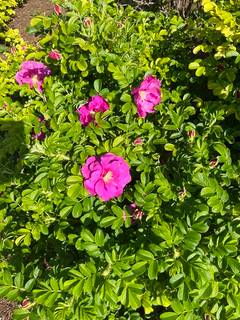
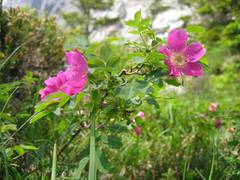
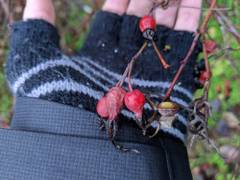
Single pink 5-petaled flowers 1.5 inches (4 cm) across with a white center open in small clusters during June in zones 2-8, lasting approximately 2 weeks. The bloom period is brief compared to repeat-blooming modern rose classes and the flowers do not recur later in the season. Flowers are bee-visited and fragrance-free. Abundant dark red oval hips 0.5 inch (1.3 cm) long develop after bloom and ripen through late summer, persisting on the arching stems well into winter and carrying the principal late-season ornamental interest of the species along with the glaucous foliage.
Detailed Descriptions
Flower Description
pink with a white center; single 5-petaled flowers 1.5 inches (4 cm) across in small clusters; brief bloom followed by abundant dark red hipsFoliage Description
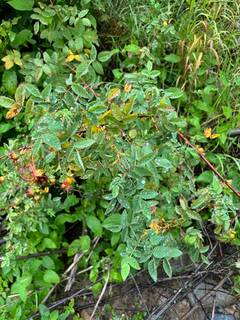
blue-gray to purple-mauve with a glaucous (waxy) bloom; pinnately compound with 5-9 leaflets each 1-2 inches (2.5-5 cm) long; the foliage color intensifies in full sun and on new growth; turns yellow before dropping in fallGrowing Conditions
Sun Requirements
Requires 4-8 hours of direct sunlight daily
• Full Sun: 6+ hours of direct sunlight
• Partial Shade: 3-6 hours of direct sunlight
• Full Shade: Less than 3 hours of direct sunlight
Care & Maintenance
Care Guide
Plant in well-drained soil with a pH of 5.5-7.5 in full sun to partial shade (4-8 hours); tolerated soil types include loam and clay. Full sun produces the most intense blue-gray to purple foliage color, and shaded positions produce greener less pigmented foliage. Water weekly through the first 1-2 growing seasons; established plants are drought-tolerant and need no supplemental irrigation in most climates. The species has no significant disease problems and is resistant to the black spot and powdery mildew that affect most cultivated rose classes, and there is no need for the weekly monitoring and fungicide spray programs that hybrid teas demand. Self-seeding produces volunteer seedlings near the parent plant and in adjacent beds, and removal of unwanted seedlings as they appear is the only routine maintenance task. Extreme cold hardiness to zone 2 makes the species suitable for northern-tier and Canadian gardens where most other roses fail to survive winter. Deer browse foliage and new growth less than on other rose species, though browse damage can still occur where deer pressure is heavy. Pruning is done in early spring (March) and consists of renewal pruning rather than the hard cutback appropriate for hybrid teas.Pruning
Pruning is done in early spring (March) before new growth begins. One-third of the oldest canes are removed at ground level annually for renewal, which keeps the plant carrying a mix of stem ages and maintains the graceful arching habit that older canes lose when they become woody and upright. Dead and damaged canes are removed at any time. The arching habit and reddish-purple stems develop naturally without corrective pruning and heavy cutback would destroy the form that makes the species valuable in the garden. Volunteer self-sown seedlings around the parent plant are removed at their point of origin during the same pruning visit.Pruning Schedule
Prune: March
early spring