Rosa, Genus, rubiginosa, Species,
- Genus & species
Sweet-brier
Overview
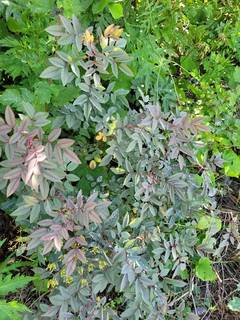
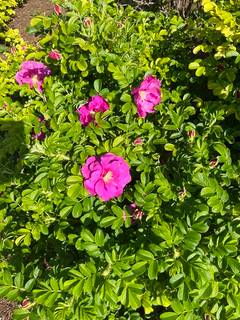
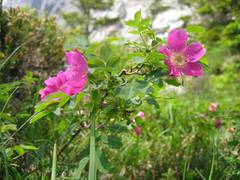
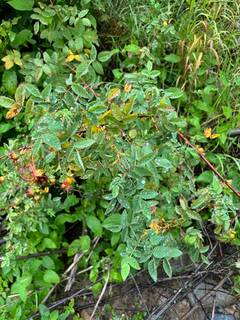
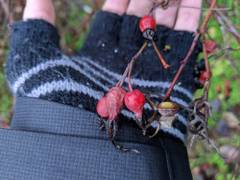
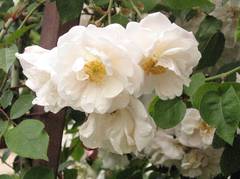
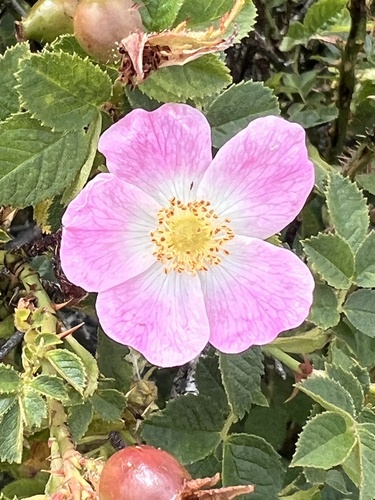
Rosa rubiginosa is a deciduous, suckering shrub rose that forms a dense, arching thicket 2-3 m (6.5-10 ft) tall and as wide, armed with stout hooked prickles and smaller bristles. The pinnate leaves carry five to seven rounded leaflets covered beneath with sticky glands that release a scent of green apples, strongest in warm, damp air. Single flowers 2.5-4 cm (1-1.6 in) across open in early summer, each with five clear pink petals around a centre of yellow stamens, lightly fragrant and followed by oval red hips 1-2 cm (0.4-0.8 in) long. The hips persist into winter and feed birds. Arching canes root where they touch the ground and seedlings spring up from bird-sown hips, so the shrub builds dense stands that have become invasive in parts of North America, New Zealand, and Australia. The hooked prickles make it a barrier hedge but also hard to weed out once established. It grows on poor, dry, chalky soils that defeat many shrubs.
Native Range
Rosa rubiginosa is native to Europe and western Asia, growing in hedgerows, scrub, downland, and on chalky banks. It has naturalized widely and is listed as an invasive weed in parts of North America, southern Africa, New Zealand, and Australia.Suggested Uses
Grown as a thorny boundary or stock-proof hedge, in wildlife and conservation plantings, and in large mixed shrub borders. The scented foliage, flowers, and hips suit cottage and naturalistic gardens. Its spread and sharp prickles make it unsuited to small or high-traffic spaces.How to Identify
Appearance
Size & Dimensions
Height6'6" - 10'
Width/Spread6'6" - 10'
Bloom Information
Flowers open in June and early July (early to midsummer) over about three to four weeks, later than many shrub roses. Each single pink bloom lasts a few days, and bees work the open stamens. The flush is followed by red hips that colour from late summer.
Detailed Descriptions
Flower Description
clear pink with yellow stamensFoliage Description
mid-greenGrowing Conditions
Sun Requirements
Requires 6-12 hours of direct sunlight daily
• Full Sun: 6+ hours of direct sunlight
• Partial Shade: 3-6 hours of direct sunlight
• Full Shade: Less than 3 hours of direct sunlight
Care & Maintenance
Care Guide
Rosa rubiginosa grows in full sun on well-drained soil and tolerates poor, dry, and chalky ground. It withstands wind, coastal exposure, and drought once its deep roots establish. Soil pH from about 6.0 to 8.0 suits it. The shrub needs little water or feeding and grows strongly without attention, which is why it can spread beyond a planting. It is propagated from seed, which needs cold stratification, or from hardwood cuttings and rooted suckers. Black spot and rust can mark the leaves but rarely check a vigorous plant.Pruning
Old and crowded stems are thinned out in late winter to keep the centre open. Hedges are cut back after flowering, which sacrifices some hips, or trimmed in winter to keep the autumn display. Suckers and rooted canes are removed to limit spread.Pruning Schedule
Prune: February
winter