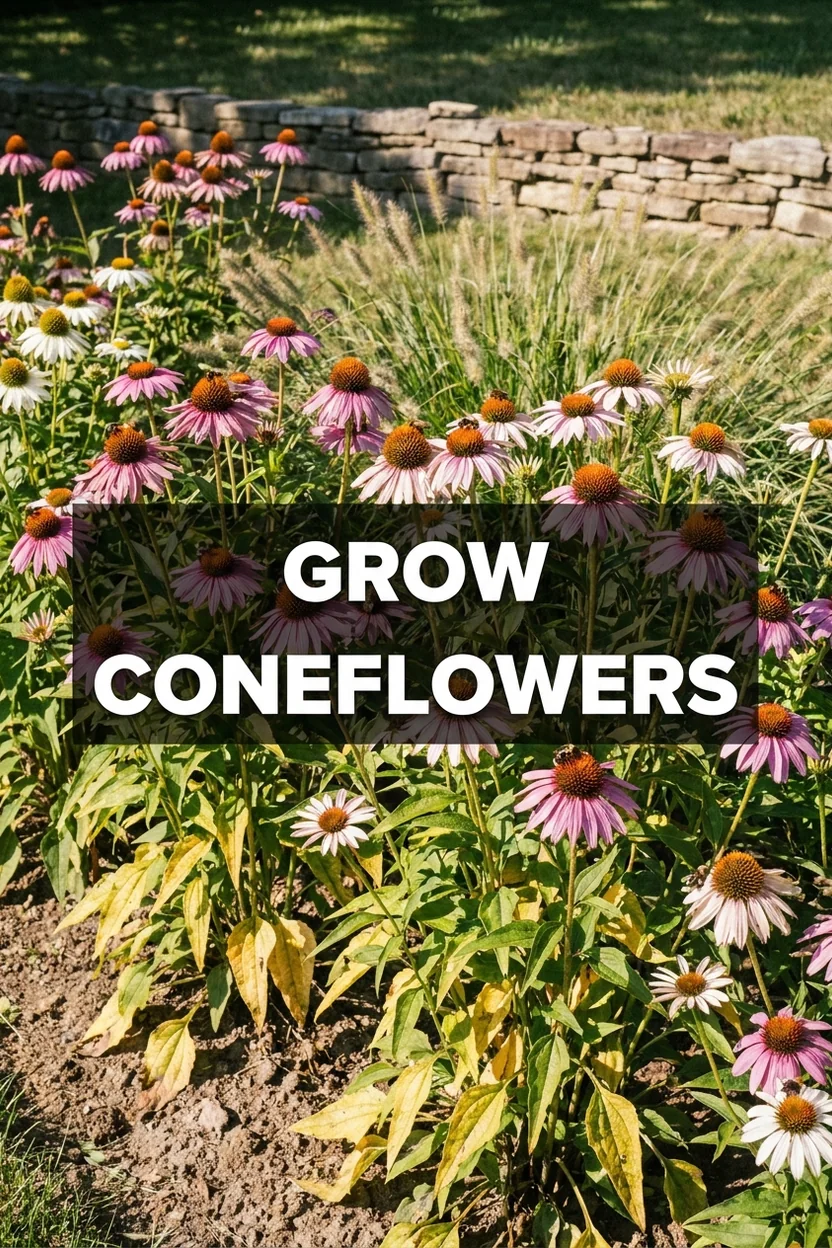
How to Grow Coneflowers (Echinacea) That Feed Pollinators
Pets & Toxicity
Recorded toxicity for plants linked in this guide. An unknown status is not a safety assessment.
No linked plant is recorded as toxicDetailsHide
Echinacea purpurea 'White Swan' — Toxicity
Non-toxicView Echinacea purpurea 'White Swan' plant profileEchinacea purpurea 'PowWow Wild Berry' — Toxicity
Non-toxicView Echinacea purpurea 'PowWow Wild Berry' plant profile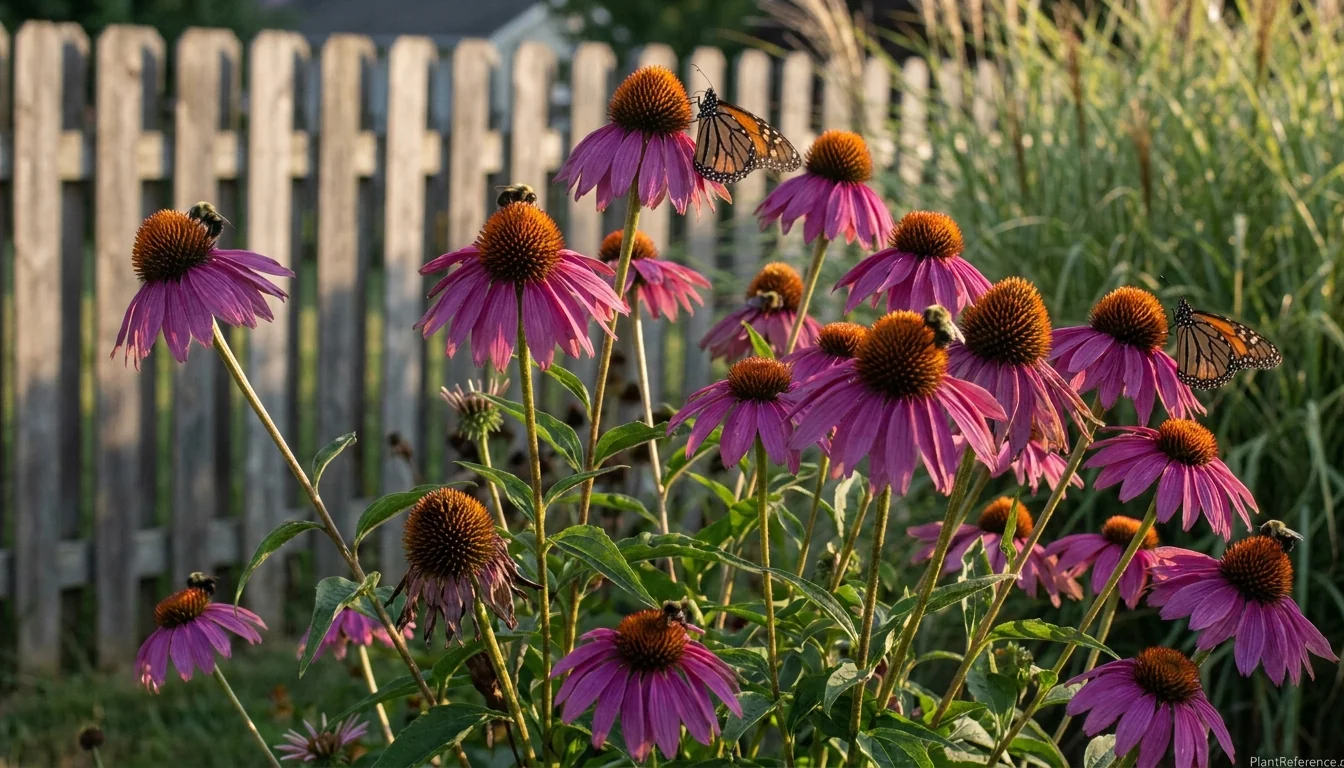
— Image © PlantReference.org 2026
Coneflowers are the plant I recommend to clients who tell me they kill everything. Learning how to grow coneflowers takes about five minutes, and most of that time is spent unlearning habits picked up from vegetable gardening. They are prairie plants. They want sun, drainage, and neglect.
Coneflowers Want Poor Soil, Not Good Soil
🌿Echinacea purpurea (ek-in-AY-shee-uh pur-PUR-ee-uh) comes out of the North American tallgrass and prairie edge, where it survives drought, wind, and forty-below winters by pushing a deep fibrous root system straight down through heavy ground.
That root system is why coneflowers are drought-tolerant once established, and it's also why the usual perennial-bed advice backfires. Rich, heavily composted soil produces tall, sappy stems that flop the moment a thunderstorm hits. The plant reads abundance and grows leaves instead of flowers.
Full sun, six hours minimum, eight or more for the sturdiest stems
Average to poor soil with no added compost at planting time
Soil pH between 6.0 and 7.0, which suits most garden ground as-is
Reliable drainage, especially through winter
No fertilizer, ever, on established plants
Drainage is the one thing you cannot compromise on. Coneflowers handle drought comfortably and standing water not at all — winter crown rot in soggy ground is the single most common cause of death. If your beds hold water, the diagnostics in Poor Drainage in Raised Beds: Causes and Fixes for Waterlogged Soil apply directly.
Species or Modern Hybrid: Pick Before You Buy
Breeders have pushed Echinacea well past purple in the last twenty years, into orange, coral, yellow, and double forms. The colours are real. The longevity often isn't. Straight species and near-species selections routinely run ten to fifteen years; some of the flashier hybrids fade out in three.
Selection | Hardiness | Height | Notes |
|---|---|---|---|
Zone 3-9 | 36 in (90 cm) | Large 3-4 in blooms, no staking | |
Zone 3-9 | 30 in (75 cm) | Cream petals, strong seeder | |
Zone 3-8 | 24 in (60 cm) | Compact, blooms first year from seed | |
Echinacea 'Cheyenne Spirit' | Zone 4-9 | 30 in (75 cm) | Mixed warm colours, good vigour |
Zone 3-8 | 40 in (100 cm) | Narrow drooping petals, very tough | |
Zone 4-8 | 36 in (90 cm) | The yellow species, needs sharp drainage |
If you want a plant that is still there in 2036, buy 🌿Echinacea purpurea 'Magnus' or the straight species. It is the coneflower I put in every pollinator planting I design, and I have never had one fail on a well-drained site. Echinacea 'Cheyenne Spirit' is the most reliable of the multi-colour strains if you want a wider palette.
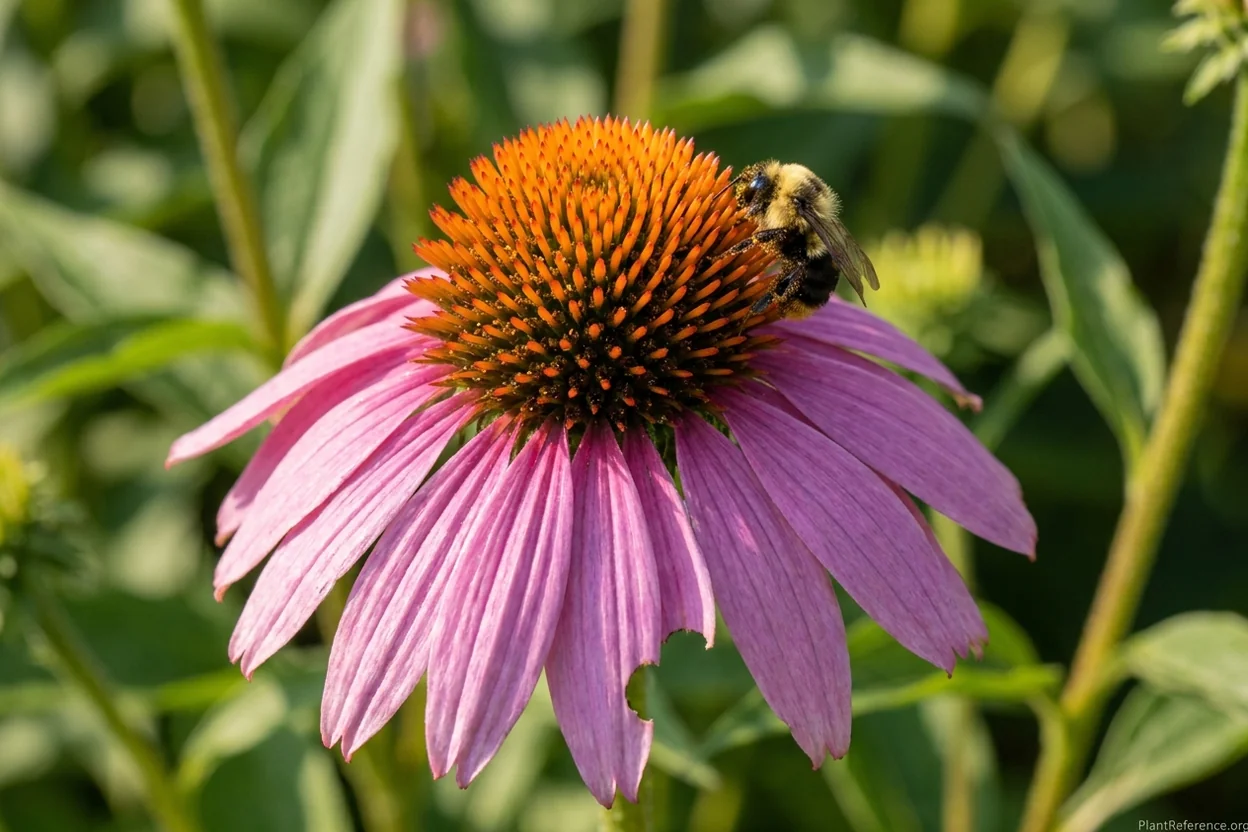
Double-flowered forms are worth a note of caution. The extra petals come at the expense of the accessible disc florets, which means they carry far less nectar and pollen. If the point of the planting is pollinators, stay with single forms — the same principle that shapes plant choice in Plan a Perennial Garden That Blooms Spring to Fall.
Planting Coneflowers From Plants or Seed
Spring is the better planting window in cold zones. A spring-planted coneflower has the whole season to root down before its first freeze, which matters more here than it does south of Zone 6.
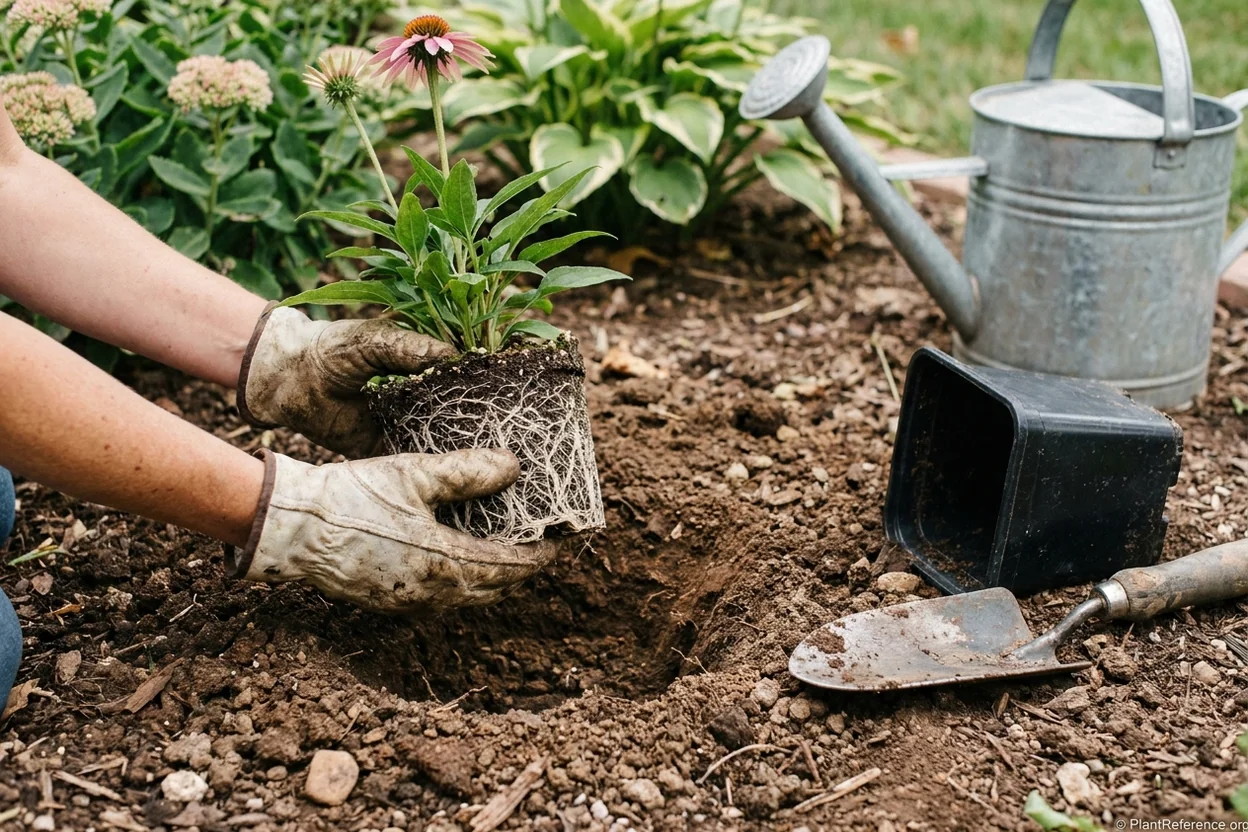
Dig a hole twice the width of the root ball and exactly as deep. Set the crown level with the surrounding soil — buried crowns rot. Backfill with the native soil you dug out, not a bag of amendment, and water in thoroughly.
Space plants 18 to 24 inches (45 to 60 cm) apart for air circulation
Water deeply once a week through the first summer only
Skip fertilizer entirely, including at planting
Mulch 2 inches (5 cm) deep but keep it 3 inches (8 cm) off the crown
Expect little to no bloom the first year on plants set out in spring
From seed, coneflowers need cold stratification. Sow outdoors in late autumn and let winter do the work, or mix seed with damp sand in a sealed bag and refrigerate for 8 to 10 weeks before sowing indoors. Germination takes 10 to 20 days at 65 to 70°F (18 to 21°C). Most seed-grown plants flower in their second year; 🌿Echinacea purpurea 'PowWow Wild Berry' is one of the few that will bloom in the first.
The Maintenance They Actually Need
This is a short section by design. Coneflowers are the lowest-input perennial in most of my plantings, and the biggest risk is doing too much.
Season | Task | Why |
|---|---|---|
Early spring | Cut old stems to 4 in (10 cm) | Clears winter debris before new growth |
Late spring | Optional pinch at 12 in (30 cm) | Shorter, sturdier, later-blooming plants |
Summer | Deadhead spent blooms | Extends flowering by three to four weeks |
Late summer | Stop deadheading | Lets seed heads form for autumn birds |
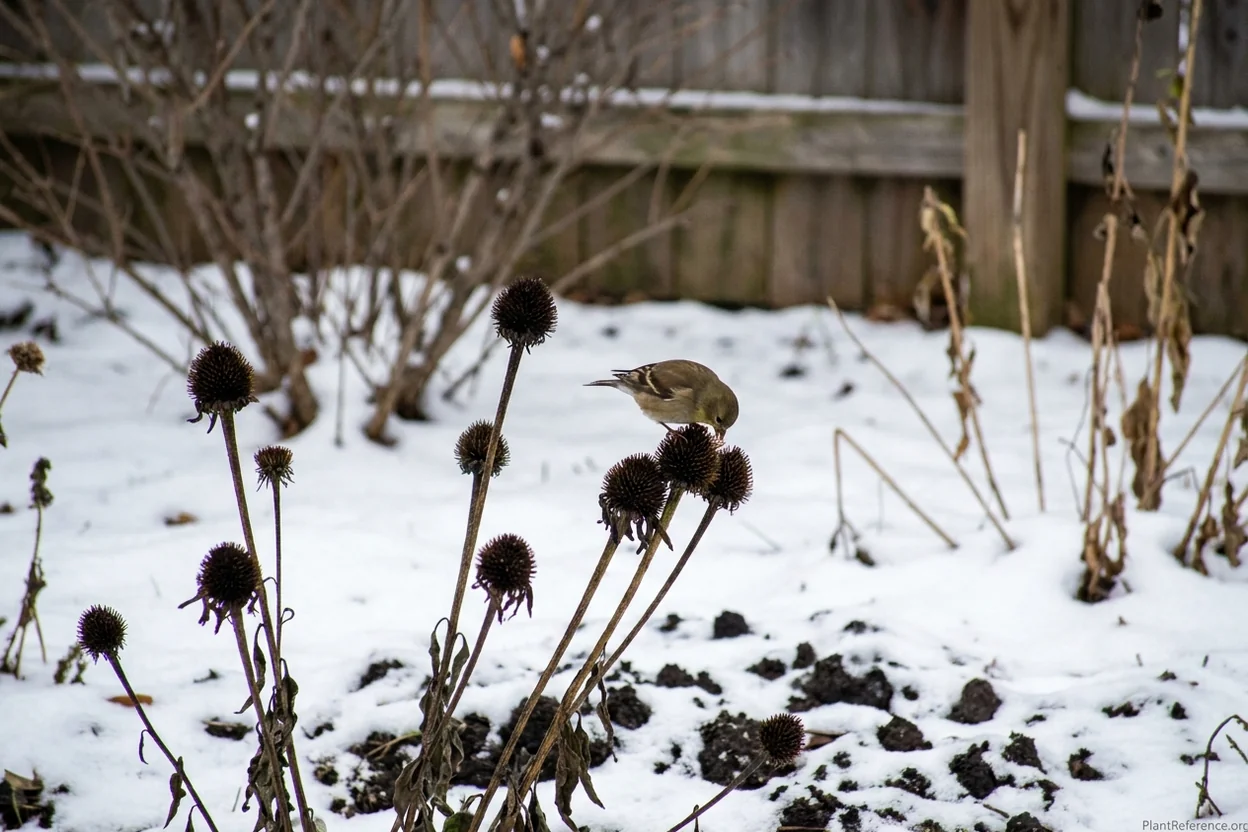
Autumn | Leave stems standing | Winter structure plus goldfinch forage |
Every 3-4 years | Divide in early spring | Prevents centre die-out and bloom decline |
That early-spring cutback is the only truly required job. Skip the pinch if you like tall plants; take it if your coneflowers have been leaning. Cutting the stems back by a third in late May delays bloom by about two weeks and produces a noticeably stiffer plant.
Deer generally leave coneflowers alone, though hungry populations will browse new spring growth — the ratings in Deer-Resistant Perennials: A Zone-by-Zone Planting Guide hold up better on established clumps than on first-year plants. Rabbits are the bigger nuisance in my experience, and a low wire cage for the first spring solves it permanently.
Deadheading Versus Feeding the Birds
There's a genuine trade-off here, and it's worth deciding deliberately rather than defaulting.
Deadheading spent flowers redirects energy into new buds and reliably extends bloom from roughly six weeks to nine or ten. Cut each spent stem back to the next set of leaves or an emerging side bud, not just below the flower head.
But the seed cones are the reason to grow the plant if you care about wildlife. Goldfinches strip them through autumn and winter, and I've watched them working coneflower heads in January with snow on the ground. Leaving them also gives the winter border something to look at.
Deadhead consistently from first bloom through early August
Stop entirely by mid-August so late flowers can set seed
Leave every stem standing through winter, cut back in March
Expect self-sown seedlings around the parent plant each spring
Move volunteers while small or hoe them off if you want tidy clumps
Named cultivars do not come true from seed. Self-sown seedlings from 🌿Echinacea purpurea 'White Swan' or Echinacea 'Cheyenne Spirit' will revert toward the purple species, which is fine in a naturalistic planting and irritating in a formal one.
Divide Every Three to Four Years
Coneflowers decline predictably. The centre of the clump goes woody and bare, flower count drops, and the outer stems start splaying outward. That donut pattern is the same signal that tells you to lift a daylily, and the timing logic in Why Your Daylilies Stopped Blooming (And How to Fix It) carries straight across.
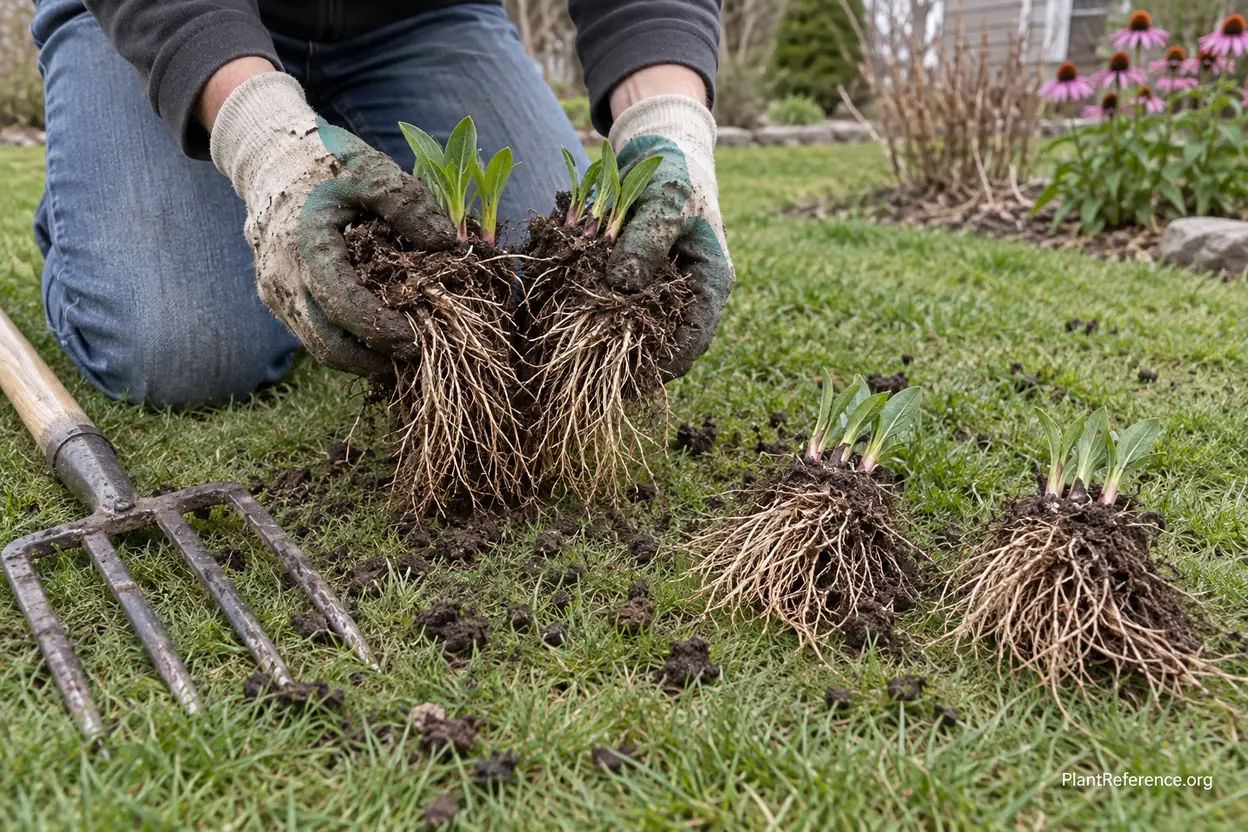
Divide in early spring as new shoots break the surface. Coneflowers are summer and autumn bloomers, so spring division harnesses the season's growth surge and costs you very little bloom.
Water the clump thoroughly 24 to 48 hours before lifting
Dig a full circle at the drip line and lever the whole clump out
Tease the fibrous roots apart by hand, or use two forks back to back
Keep divisions with at least three healthy shoots and a solid root mass
Discard the woody dead centre rather than replanting it
Replant immediately at the original depth and water in
The fibrous root system means coneflowers separate more easily than the dense crowns of hostas or the rhizomes of bearded iris — full species-by-species detail is in How to Divide Perennials: A Species-by-Species Guide. Amend the hole with a little compost when you replant, since you've disturbed the soil, but keep it modest.
Three Problems Worth Knowing About
Coneflowers are tough, but three issues account for nearly everything that goes wrong.
Winter crown rot is the killer. Plants that vanish over winter almost always sat in saturated ground, not cold. Raise the bed or move the plant; nothing you spray will help.
Aster yellows is a phytoplasma disease spread by leafhoppers, and it produces unmistakable symptoms — green, deformed flower heads with tufts of leafy growth sprouting from the cone. There is no cure. Dig the plant out, roots and all, and put it in the trash rather than the compost heap.
Floppy stems trace back to too much shade, too much nitrogen, or both. Move the plant into full sun, stop feeding, and pinch in late spring. Staking treats the symptom; the diagnostics in Nutrient Deficiencies in Raised Beds: Visual Diagnosis and Treatment help you find the cause.
Powdery mildew shows up in humid summers on crowded plants and is mostly cosmetic. Space at 18 to 24 inches (45 to 60 cm), don't overhead-water in the evening, and it stays a non-event. The organic controls in Raised Bed Pest Problems: Identification and Organic Control Methods cover the rare season when it gets ahead of you.
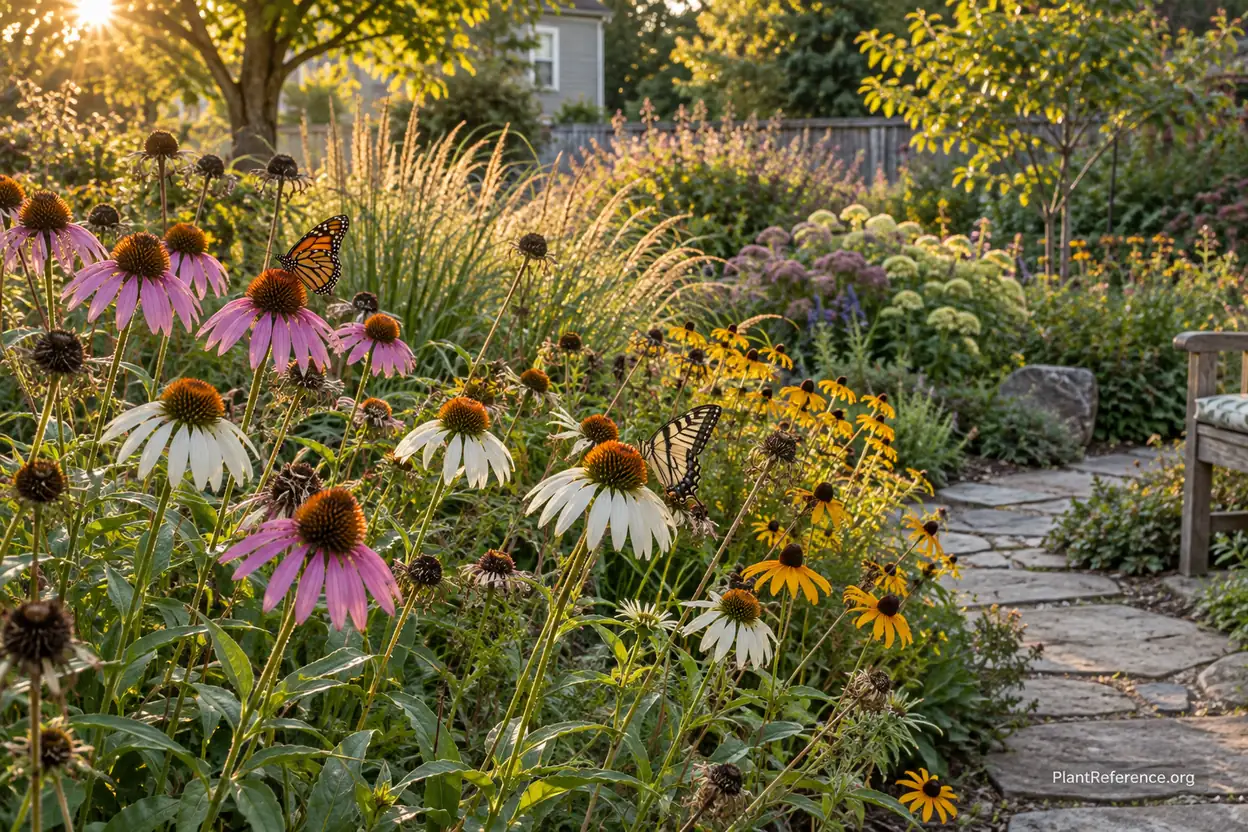
Where coneflowers really earn their keep is in combination. Plant them in drifts of five or seven rather than as single specimens, run them alongside ornamental grasses and 🌿Echinacea pallida for a longer bloom sequence, and let hostas handle the shaded end of the same bed — the pairing logic in How to Grow Hostas: Varieties, Care & Pest Solutions and How to Grow Daylilies: The Complete Guide to Division fills out the rest of the season. If you're testing whether your ground is genuinely suitable, start with a soil check as described in Raised Bed Soil pH Problems: Testing, Adjusting, and Maintaining Balance before buying a flat of plants.
Frequently Asked Questions
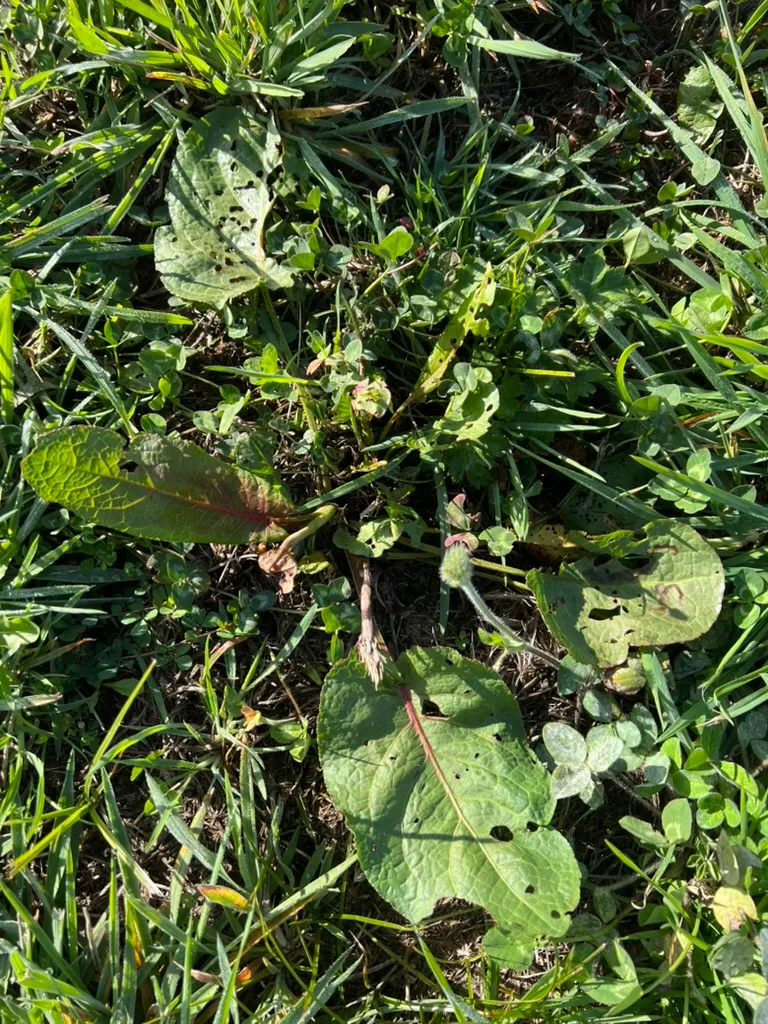
Reading about plants and recognising them are different skills. These three build the second.
- Daily PlantIdentify the day’s mystery plant from a close-up photograph.
- Keyed OutWork a dichotomous key, lead by lead, to name a hidden specimen.
- Name That PlantName a specimen from botanical clues dealt hardest first.
Free to play, no account needed
Tagged with
Kevin is a landscape contractor in the Boston area who specializes in cold-climate perennial gardens and hardscaping. He studied landscape design and worked at a prominent nursery on the North Shore before starting his own design-build firm. Kevin's gardens are built to handle New England weather—freeze-thaw cycles, nor'easters, late springs, and heavy snow loads. He's particularly interested in native perennials and shrubs that provide four-season interest without constant maintenance. Kevin writes about cold-hardy plant selection, winter garden structure, and building landscapes that look good even in February.