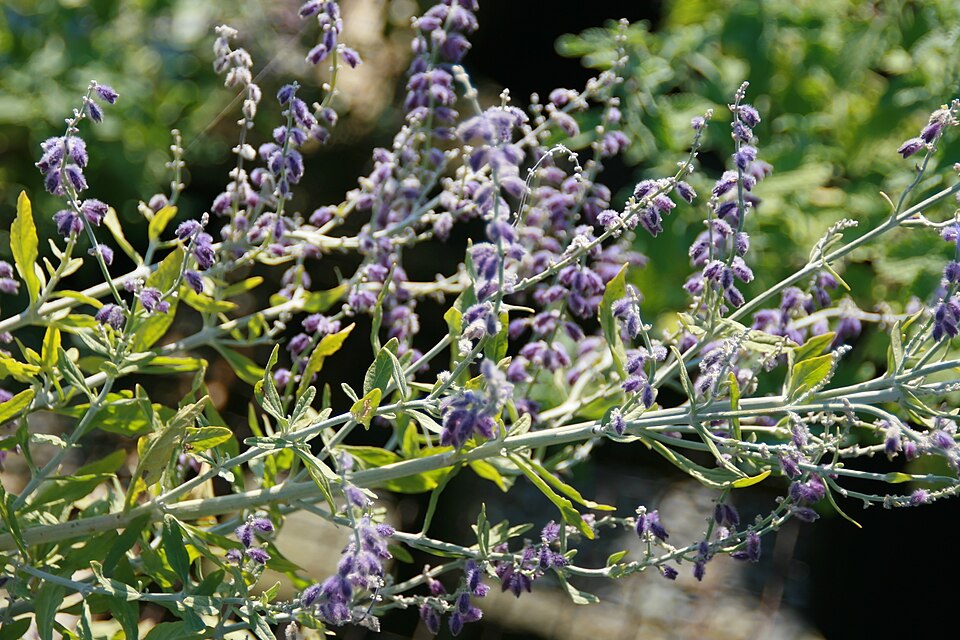
Perovskia, Genus, atriplicifolia, Species,
- Genus & species
Russian Sage
Central Asia (Afghanistan, Pakistan, Tibet, and western China; dry rocky slopes and steppes at 5000-8000 ft / 1500-2400 m)
Overview
Perovskia atriplicifolia (reclassified as Salvia yangii under recent phylogenetic revisions) is a deciduous subshrubby perennial reaching 3–5 feet (0.9–1.5 m) tall with a spread of 3–4 feet (0.9–1.2 m) and an upright open multi-stemmed habit with square silvery-white stems. Native to central Asia, this species opens tall airy panicles of small tubular lavender-blue flowers from July through September that create a haze of blue above the aromatic finely dissected gray-green to silvery-gray foliage. Opposite leaves run 1–2 inches (2.5–5 cm) long, deeply lobed to pinnatisect in outline, and release a strong sage-like fragrance when bruised or brushed against. The silvery-white stems persist through winter and hold structural interest in the dormant-season garden. Growth rate runs fast. Hardy to zone 4. The entire plant carries a silvery aromatic character that separates it from the greener Mediterranean herbs often planted in similar xeriscape roles. Recognized as the 2012 Perennial Plant Association Plant of the Year in recognition of its garden durability, long bloom window, and broad climate adaptability.
Native Range
Perovskia atriplicifolia is native to central Asia, ranging across Afghanistan, Pakistan, Tibet, and western China. The species grows on dry rocky slopes and open steppes at 5,000–8,000 feet (1,500–2,400 m) elevation. The high-altitude arid native ecology translates in garden cultivation to extreme drought tolerance, heat tolerance, and the requirement for sharp drainage and lean soil. The species has been reclassified under recent phylogenetic revisions to Salvia yangii, though the older Perovskia atriplicifolia name remains in common horticultural use.Suggested Uses
Planted in perennial borders, gravel gardens, or massed in xeriscape compositions at 3–4 foot (0.9–1.2 m) spacing in zone-4-and-warmer gardens. The lavender-blue haze effect above silvery foliage and stems supplies three-season garden interest that extends from summer bloom through the silvery winter stem display. Extreme drought tolerance fits the species to rain garden edges, xeriscape beds, and hot south-facing borders where lusher perennials fail. Full sun and lean soil are essential because flopping occurs in rich or moist conditions. Shade, wet soils, and fertile high-nitrogen soils are poor fits for the species.How to Identify
Appearance
Size & Dimensions
Height3' - 5'
Width/Spread3' - 4'
Bloom Information
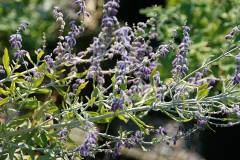
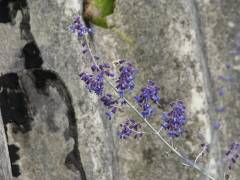
Tall airy panicles of small tubular lavender-blue flowers 0.3–0.4 inch (8–10 mm) long open from July through September and create a haze of blue above the silvery foliage. Fresh bloom duration runs 6–8 weeks. Dried flower stems persist through autumn and winter and hold structural form until spring cutback.
Detailed Descriptions
Flower Description
Lavender-blue; small tubular 0.3-0.4 inch; tall airy panicles; July-September; creates blue haze effect above the foliageFoliage Description
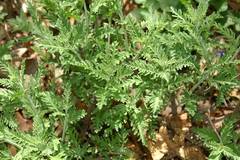
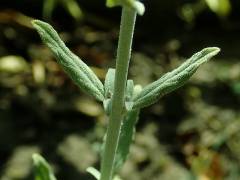
Gray-green to silvery-gray; finely dissected pinnatisect 1-2 inches; aromatic sage-scented foliage; opposite arrangement; silvery-white square stemsGrowing Conditions
Sun Requirements
Requires 6-12 hours of direct sunlight daily
• Full Sun: 6+ hours of direct sunlight
• Partial Shade: 3-6 hours of direct sunlight
• Full Shade: Less than 3 hours of direct sunlight
Care & Maintenance
Care Guide
Full sun in well-drained lean alkaline to neutral soil (pH 6.5–8.0) matches the species' cultivation needs. Hardy to zone 4 (−30°F / −34°C). Full sun and lean soil are both essential because rich fertile soil or moist conditions cause the upright stems to flop outward and lose the species' characteristic vertical form. Drought tolerance runs extreme after establishment, and mature plants handle extended summer drought without supplementary irrigation. Cutback runs to 6–12 inches above ground level in early spring as new growth emerges from the woody base. Autumn cutback is avoided because the silvery stems hold winter structural interest.Pruning
All stems are cut back to 6–12 inches (15–30 cm) in March through April when new growing buds are visible on the lower stems. The species blooms on new wood, so hard spring cutback does not compromise the bloom window. The silvery stems hold winter structural interest across the dormant season and are left standing until spring.Pruning Schedule
Prune: March–April
early spring