Perovskia, Genus, 'Longin', Cultivar,
- Genus
- Cultivar
Longin Russian sage
Central Asia parentage (Longin Ziegler selection, Switzerland; stiffest upright habit; least-dissected leaves)
Overview
Perovskia 'Longin' is a deciduous, subshrubby perennial reaching 3-4 feet (0.9-1.2 m) tall with a spread of 2-3 feet (0.6-0.9 m) and a stiffly upright, narrowly columnar habit with silvery-white stems. This cultivar is distinguished by the least-dissected foliage of the commonly grown Russian sages—the leaves are only shallowly lobed to nearly entire, 1.5-2.5 inches (4-6 cm) long, giving a bolder, coarser texture compared to the finely cut species. The foliage is gray-green to silvery. Airy panicles of small tubular lavender-blue flowers appear July-September. Growth rate is moderate to fast. Hardy to zone 4. The stiffly upright stems and the less-dissected, bolder foliage give this a more architectural character than 'Filigran' or the species. Selected by Longin Ziegler, Switzerland.
Native Range
Perovskia is native to central Asia. 'Longin' was selected by Longin Ziegler, Switzerland, for upright habit and less-dissected foliage.Suggested Uses
Planted in borders or as a vertical accent at 2-3 foot (0.6-0.9 m) spacing. The stiffest, most upright Russian sage—resists flopping. Bolder leaf texture than other cultivars. Same lavender-blue haze bloom. Full sun and lean soil essential. Not suitable for shade, wet soils, or fertile conditions.How to Identify
Appearance
Size & Dimensions
Height3' - 4'
Width/Spread2' - 3'
Bloom Information
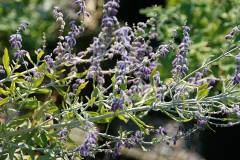
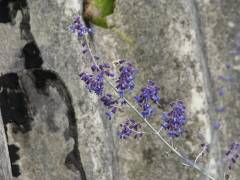
Airy panicles of small tubular lavender-blue flowers, July-September. Same bloom character as the species. Bloom duration is 6-8 weeks.
Detailed Descriptions
Flower Description
Lavender-blue; small tubular; airy panicles; Jul-SepFoliage Description
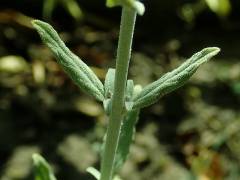
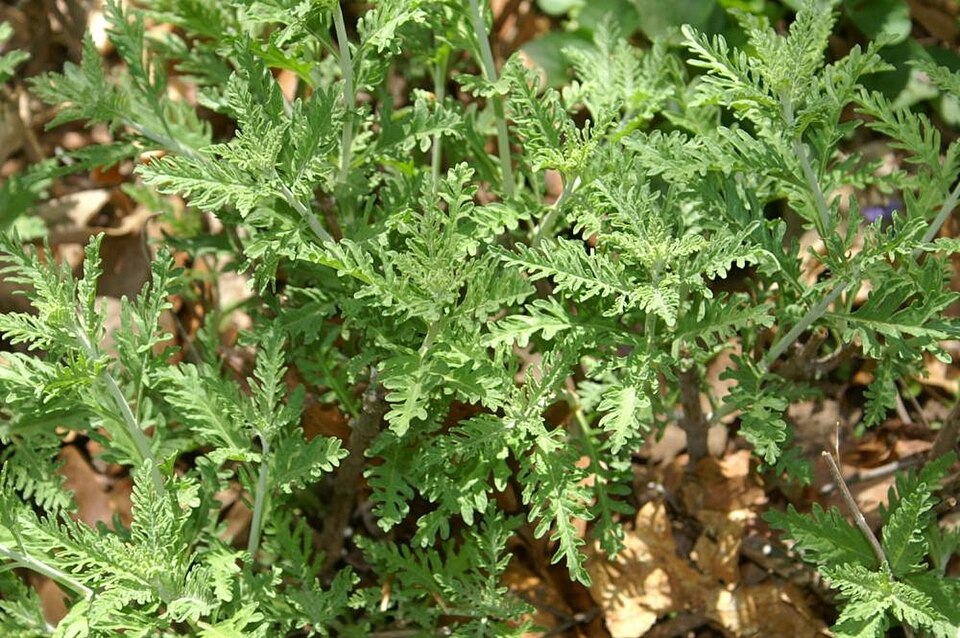
Gray-green to silvery; shallowly lobed to nearly entire 1.5-2.5 inches; bolder texture; aromatic; silvery-white stemsGrowing Conditions
Sun Requirements
Requires 6-12 hours of direct sunlight daily
• Full Sun: 6+ hours of direct sunlight
• Partial Shade: 3-6 hours of direct sunlight
• Full Shade: Less than 3 hours of direct sunlight
Care & Maintenance
Care Guide
Plant in full sun in well-drained, lean soil (pH 6.5-8.0). Hardy to zone 4. The stiffly upright habit resists flopping. Full sun and lean soil essential. Extremely drought tolerant. Cut back to 6-12 inches in early spring.Pruning
Cut back all stems to 6-12 inches (15-30 cm) in March-April. Blooms on new wood. Leave stems for winter structure.Pruning Schedule
Prune: March–April
early spring