Salvia, Genus, yangii, Species,
- Genus & species
Russian sage
Central Asia (Afghanistan, Pakistan, Tibet, Himalayas)
Overview
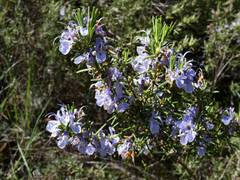
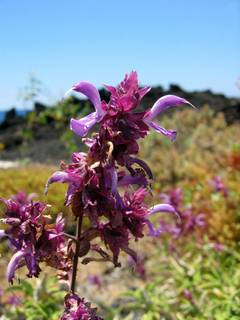
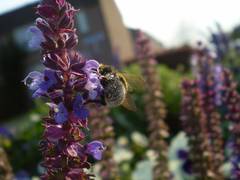
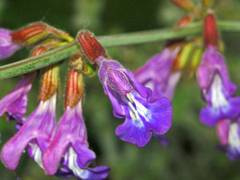
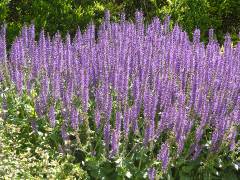
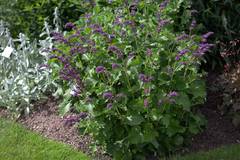
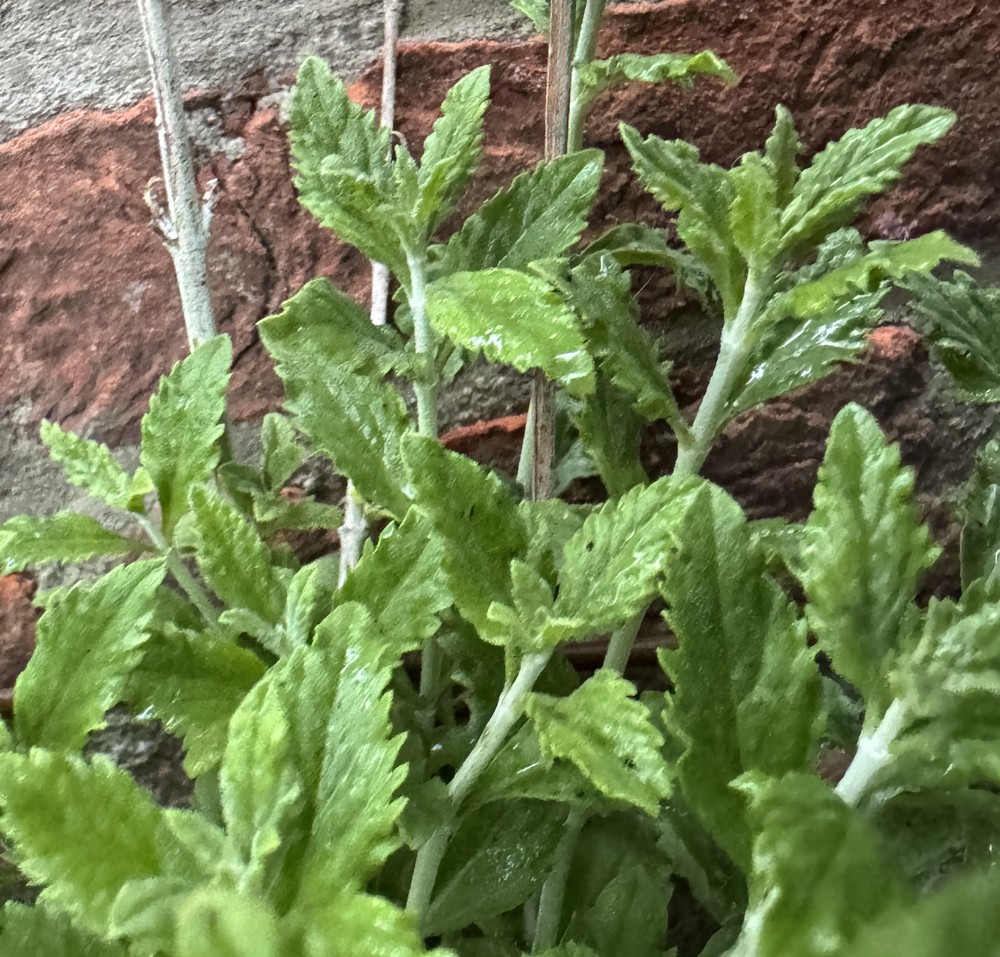
Salvia yangii is a deciduous subshrub reaching 3-4 feet (90-120 cm) tall and 2-4 feet (60-120 cm) wide, with an upright, multi-branched form and slender, square, silvery-white stems woody at the base. Foliage is grey-green, deeply lobed to dissected, 1-2 inches (2.5-5 cm) long, and aromatic when crushed with a sage-like scent. Tubular violet-blue flowers 0.3 inch (8 mm) long are held in long, branching panicles 12-18 inches (30-45 cm) tall above the foliage from mid-summer through early fall. Stems and flower calyces are covered with white woolly pubescence, contributing to the silvery overall appearance. The lower portion of the stems is woody and persists year-round; upper growth dies back to the woody base each winter in zones 5-8. New growth emerges late, often not until mid-spring after most other perennials. The species was reclassified from Perovskia atriplicifolia to Salvia yangii in 2017 based on phylogenetic studies. Plants tolerate poor, dry, alkaline soils; root and crown rot develop in heavy clay or consistently moist sites.
Native Range
Salvia yangii (formerly Perovskia atriplicifolia) is native to central Asia, including Afghanistan, Pakistan, Tibet, and adjacent areas of the Himalayas, occurring on dry rocky slopes, scrubland, and steppes at 2,000-8,000 feet (600-2,400 m) elevation.Suggested Uses
Used in mixed perennial borders, dry rock gardens, gravel gardens, and naturalistic prairie plantings, spaced 2.5-3 feet (75-90 cm) apart. The drought tolerance and silvery foliage suit xeriscape plantings in zones 5-8. Container culture in pots of at least 5 gallons (19 L) with sharp drainage is feasible, though plants may not overwinter reliably in containers in zones 5-6 due to soil temperature swings.How to Identify
Appearance
Size & Dimensions
Height3' - 4'
Width/Spread2' - 4'
Bloom Information
Violet-blue flowers in branched panicles open from mid-July through September in zones 5-8, with peak bloom lasting 6-8 weeks. In zones 9-10, flowering may begin in late June and finish by late August. Individual panicles continue extending and producing new flowers over 4-6 weeks. Cooler temperatures in late September can intensify the violet-blue flower color before frost ends bloom.
Detailed Descriptions
Foliage Description
Silvery grey-greenGrowing Conditions
Sun Requirements
Requires 6-12 hours of direct sunlight daily
• Full Sun: 6+ hours of direct sunlight
• Partial Shade: 3-6 hours of direct sunlight
• Full Shade: Less than 3 hours of direct sunlight
Care & Maintenance
Care Guide
Water weekly during the first growing season; established plants tolerate drought of 4-6 weeks and grow most strongly in dry, well-drained soils. Plants in heavy clay or consistently moist sites develop root rot and crown rot. Soil should be alkaline to neutral, pH 6.5-8.0; chlorosis is uncommon and typically reflects waterlogging rather than pH. Few significant pests or diseases occur in cultivation; aphids occasionally feed on new growth without affecting plant health. Plants typically live 6-10 years, after which the woody base becomes open and is replaced. Mulch should be inorganic (gravel or stone) rather than organic, since deep organic mulch holds excess moisture against the woody crown.Pruning
Cut stems back to 6-8 inches (15-20 cm) above the woody base in late winter or early spring before new growth emerges; flower panicles form on new wood, so this hard pruning produces full flowering. Without spring pruning, plants become open and floppy with reduced flowering. Spent flower panicles can be left through winter for visual structure or removed in fall.Pruning Schedule
Prune: March
early spring
Container Growing
Suitable for container growing
Minimum container size: 5 gallons