Salvia, Genus, farinacea, Species,
- Genus & species
mealy sage
Central Texas and New Mexico; limestone rocky hillsides and dry prairies
SunFull Sun
Overview
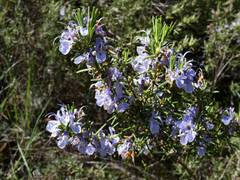
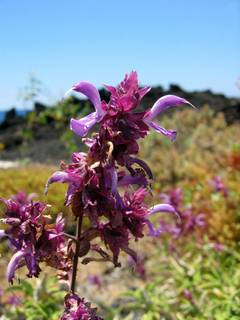
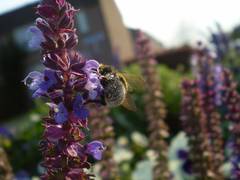
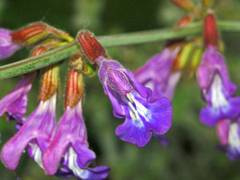
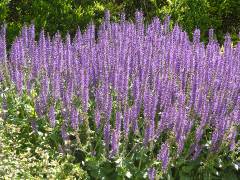
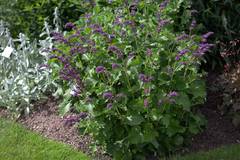
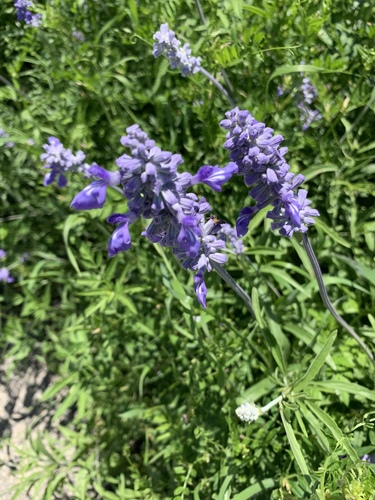
Salvia farinacea is an upright tender perennial (grown as an annual in cold climates, perennial in USDA zones 8-10) in the family Lamiaceae, reaching 18-36 inches (45-90 cm) tall and 12-18 inches (30-45 cm) wide. Plants carry dense slender flower spikes 4-8 inches (10-20 cm) long of small tubular two-lipped flowers in violet-blue, purple, or white, set against a white mealy (farinose) calyx coating that continues between and around the florets and produces a two-toned effect even in solid-color forms. The species epithet 'farinacea' (Latin, 'mealy') refers to this calyx coating. Flowering runs June through October for up to 20 weeks of continuous display when sheared midsummer. Foliage is narrow lance-shaped gray-green and slightly aromatic, carried on the square stems that are a family trait of Lamiaceae. 'Victoria Blue' (deep violet-blue) is among the blue-flowered annuals most commonly used for cutting and drying because spikes retain color well after drying. Growth rate is fast, reaching full size in 6-8 weeks from transplant. Native to limestone rocky hillsides and dry prairies of central Texas and New Mexico. Non-toxic. Deer-resistant due to aromatic foliage.
Native Range
Salvia farinacea is native to central Texas and New Mexico, on limestone rocky hillsides and dry prairies in full sun on lean alkaline well-drained soils.Suggested Uses
Planted in annual borders, cutting gardens, and containers of at least 3 gallons (11 L) at 12-18 inch (30-45 cm) spacing. The violet-blue spikes pair with yellow and white companion flowers for high contrast. 'Victoria Blue' is selected for cutting and drying because the farinose calyces retain color after drying. Rich over-fertilized sites fall outside the use range because high fertility reduces flowering.How to Identify
Appearance
Size & Dimensions
Height1'6" - 3'
Width/Spread1' - 1'6"
Bloom Information
Dense slender spikes 4-8 inches (10-20 cm) of violet-blue, purple, or white small tubular two-lipped flowers carried against a white farinose calyx coating, borne June through October over 20 weeks of continuous flowering. A midsummer shear by one-third in July or August generates a fresh spike flush. Spikes harvested at the half-open stage dry well and retain color, which supports use in dried-flower production.
Detailed Descriptions
Flower Description
Violet-blue, purple, or white small tubular two-lipped flowers set against a white mealy (farinose) calyx coating; dense slender spikes 4-8 inches (10-20 cm); June-OctoberFoliage Description
Gray-green; narrow lance-shaped 1-3 inches (2.5-8 cm); slightly aromatic; carried on square stems; deciduousGrowing Conditions
Sun Requirements
Requires 6-10 hours of direct sunlight daily
• Full Sun: 6+ hours of direct sunlight
• Partial Shade: 3-6 hours of direct sunlight
• Full Shade: Less than 3 hours of direct sunlight
Care & Maintenance
Care Guide
Grows in full sun in lean well-drained soil at pH 6.5-8.0. Alkaline sites are tolerated and suit the species. Rich soil is unsuitable because high fertility produces leafy growth at the expense of flowering. Seed is started indoors 6-8 weeks before last frost; germination is erratic at 1-3 weeks. Pinching at 6 inches (15 cm) builds branching before planting out. Heat and drought tolerance develop after establishment. The species is grown as a tender annual in zones below 8 and as a short-lived perennial in zones 8-10, where a one-third late-winter cutback resets the plant before new growth.Pruning
Growing tips are pinched once at 6 inches (15 cm) for a bushier habit before planting out. A shear by one-third in midsummer (July-August) produces a fresh spike flush. Spent spikes are cut back to lateral buds for continuous production. Annual plants are composted after frost. In zones 8-10, a one-third cutback in late winter resets overwintered plants before spring growth.Pruning Schedule
Prune: July–August
summer
Container Growing
Suitable for container growing
Minimum container size: 3 gallons
Toxicity
Non-toxicPlanting Guide
Planting Methods & Timing
Planting Method
transplant
Indoor Start
7 weeks before last frost
Direct Sow Timing
Not practical; seed is started indoors 6-8 weeks before last frost; germination is erratic at 1-3 weeks.
Days to Maturity
70–90 days
Plant Spacing
15 inches