Image 1 of 8
1 / 8
Plant Reference
Salvia, Genus, microphylla, Species, 'Hot Lips', Cultivar,
- Genus & species
- Cultivar
baby sage, hot lips
Sierra Madre Occidental of Mexico (Chihuahua, Sonora, Jalisco, Oaxaca) and southeastern Arizona; oak woodlands and canyon scrub 4,500-8,000 feet (1,400-2,400 m)
Overview
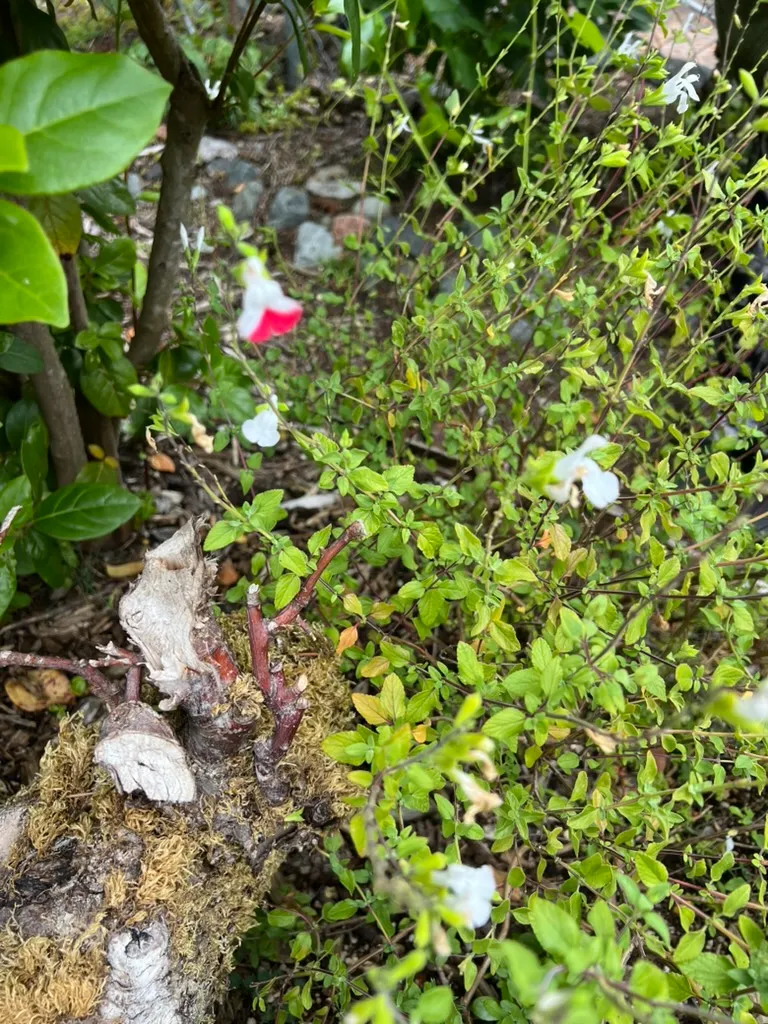
Salvia microphylla 'Hot Lips' is a semi-woody semi-evergreen subshrub in the family Lamiaceae growing 24-36 inches (60-90 cm) tall and wide. Bicolor tubular two-lipped flowers 0.75-1 inch (2-2.5 cm) long carry a bright red upper lip and a white lower lip from late spring through fall (May-October), a 24-week flowering window in mild climates. Flower color is temperature-sensitive and shifts across the season: all-white below 60 F (16 C), all-red in sustained high heat, and red-and-white bicolor at 65-75 F (18-24 C). In cool-summer climates, the bicolor pattern holds for most of the season. Foliage is small oval to rounded dark green strongly aromatic and slightly sticky 0.5-1.25 inch (1.5-3 cm) leaves carried on semi-woody stems with a fruity-sage scent. The species epithet 'microphylla' derives from Greek mikros (small) + phyllon (leaf). Hummingbird visitation in the native range is the primary pollination vector. Shearing by one-half to two-thirds in early spring is the annual reset. Wet heavy winter soil produces crown rot, which places the cultivar outside the use range on poorly drained clay. Native to the Sierra Madre Occidental of Mexico and southeastern Arizona at 4,500-8,000 feet (1,400-2,400 m). Non-toxic. Deer-resistant from aromatic foliage. Drought-tolerant after establishment. Hardy in USDA zones 7-9. Growth rate is moderate to fast, reaching full size in 1-2 years.
Native Range
Salvia microphylla is native to the Sierra Madre Occidental of Mexico (Chihuahua, Sonora, Jalisco, Oaxaca) and southeastern Arizona, in oak woodlands and canyon scrub at 4,500-8,000 feet (1,400-2,400 m) elevation.Suggested Uses
Planted in borders, rock gardens, hummingbird gardens, and containers of at least 5 gallons (19 L) in zones 7-9 at 24-30 inch (60-75 cm) spacing. The temperature-driven bicolor expression carries the red-and-white pattern across most of the season in cool-summer climates. Combines with other drought-tolerant Mediterranean-style perennials on lean soils. Heavy clay and consistently wet sites fall outside the use range because of crown rot.How to Identify
Appearance
Size & Dimensions
Height2' - 3'
Width/Spread2' - 3'
Bloom Information
Bicolor tubular two-lipped flowers 0.75-1 inch (2-2.5 cm) with a red upper lip and white lower lip, borne late May through October in zones 7-9 over a 24-week window. Color expression is temperature-dependent: all-white below 60 F (16 C), all-red in sustained high heat, and red-and-white bicolor at 65-75 F (18-24 C). Cool-summer climates hold the bicolor pattern for most of the season. Hummingbird visitation is continuous through the bloom window. An optional midsummer shear refreshes the fall flush.
Detailed Descriptions
Flower Description
Bicolor with bright red upper lip and white lower lip; temperature-sensitive (all-white below 60 F / 16 C, all-red in high heat, red-and-white bicolor at 65-75 F / 18-24 C); tubular two-lipped 0.75-1 inch (2-2.5 cm); May-OctoberFoliage Description
Dark green; small oval to rounded 0.5-1.25 inches (1.5-3 cm); strongly aromatic; slightly sticky; carried on semi-woody stems; semi-evergreenGrowing Conditions
Sun Requirements
Requires 6-10 hours of direct sunlight daily
• Full Sun: 6+ hours of direct sunlight
• Partial Shade: 3-6 hours of direct sunlight
• Full Shade: Less than 3 hours of direct sunlight
Care & Maintenance
Care Guide
Grows in full sun in lean sharply drained soil at pH 6.0-7.5. Hardy to USDA zone 7. Wet winter soil is the primary loss mode because it produces crown rot, so heavy clay sites and depressions where water pools fall outside the use range. In zone 7, a warm south- or west-facing wall placement improves cold survival at the margin. Shearing by one-half to two-thirds in early spring (March-April) is the annual reset before new growth begins. An optional lighter midsummer shear produces a compact form and supports the fall bicolor flush. Drought tolerance develops after establishment, which allows the cultivar to hold in dry rocky sites common to its native range.Pruning
All stems are sheared by one-half to two-thirds in early spring (March-April) before new growth begins. An optional light midsummer shear produces a compact form and strengthens the fall flush. Winter-killed stems are removed. The plant resprouts from the semi-woody stems in mild winters and from the root crown in colder zone 7 conditions.Pruning Schedule
Prune: March–April
early spring
Container Growing
Suitable for container growing
Minimum container size: 5 gallons