Salvia, Genus, mellifera, Species,
- Genus & species
black sage
California and northern Baja California
Overview
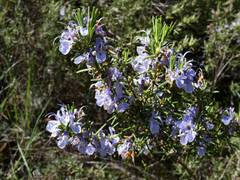
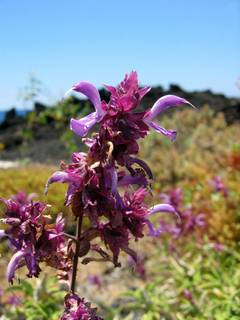
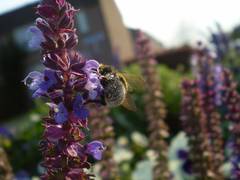
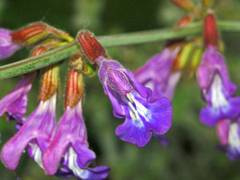
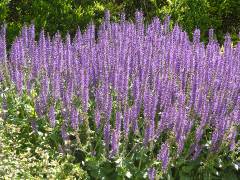
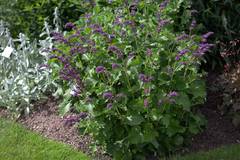
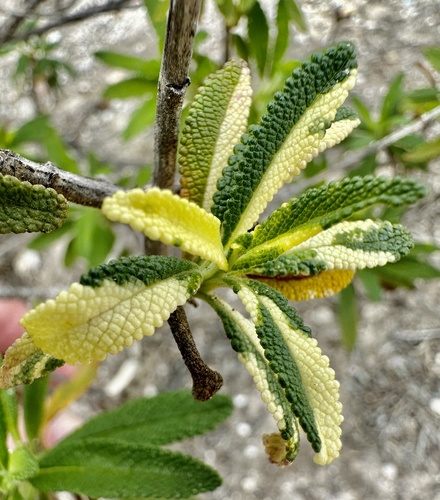
Salvia mellifera is an aromatic evergreen shrub in the mint family, growing 3–6 feet (0.9–1.8 m) tall and as wide, with brittle, square stems that arch and root where they touch the ground. The dark green, oblong leaves are 1–3 inches (2.5–7.5 cm) long, wrinkled above and hairy below, releasing a strong scent in heat. From late winter to early summer it bears whorled clusters of small two-lipped flowers along the upper stems, pale blue to lavender or white, spaced in tiered rings. The dried flower stalks darken to nearly black through summer, giving the plant its common name. It grows in coastal sage scrub and chaparral on dry, well-drained slopes. During drought the shrub drops many leaves to conserve water, regrowing them after rain. It releases aromatic compounds that suppress nearby seedlings. The nectar-rich flowers are a major source for honeybees in the California spring.
Native Range
Native to California and northern Baja California, where it is one of the dominant shrubs of coastal sage scrub. It grows on dry slopes and flats from the coast to the inland foothills below 4,000 feet (1,200 m).Suggested Uses
Used in California native and dryland gardens, slope stabilization, and habitat plantings in coastal sage scrub restoration. Suited to unirrigated banks and xeriscapes where summer water is withheld. Grown as a nectar plant for honeybees, native bees, and hummingbirds.How to Identify
Appearance
Size & Dimensions
Height3' - 6'
Width/Spread3' - 6'
Bloom Information
Detailed Descriptions
Flower Description
pale blue to lavender or whiteFoliage Description
dark greenGrowing Conditions
Sun Requirements
Requires 6-12 hours of direct sunlight daily
• Full Sun: 6+ hours of direct sunlight
• Partial Shade: 3-6 hours of direct sunlight
• Full Shade: Less than 3 hours of direct sunlight
Care & Maintenance
Care Guide
Grows in full sun on dry, well-drained soils with a pH of 6.0–8.0, including sandy and rocky slopes. It tolerates extreme summer drought once established and rots with summer irrigation or heavy, wet soil. No water is needed after the first year in its native climate. Plants are grown from seed or cuttings and decline in rich soil or with frequent feeding. Hardy in USDA zones 8 to 10. It is short-lived in cultivation, often persisting 10 to 15 years before it grows woody and open.Pruning
Light pruning after flowering keeps the shrub dense and removes blackened flower stalks. Cutting back by no more than one-third stays clear of the bare old wood, which is slow to resprout. Hard renewal pruning is risky and can kill the plant.Pruning Schedule
Prune: June–July
summer