Salvia, Genus,
- Genus
sages
Worldwide (Americas, Eurasia, Africa)
Overview
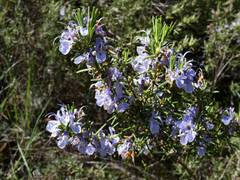
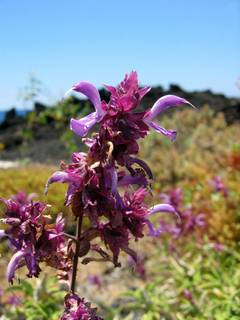
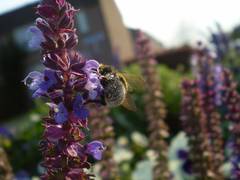
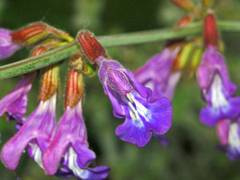
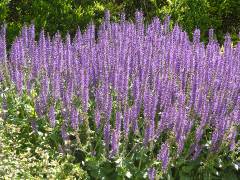
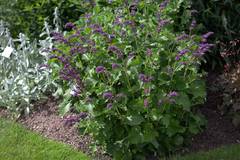
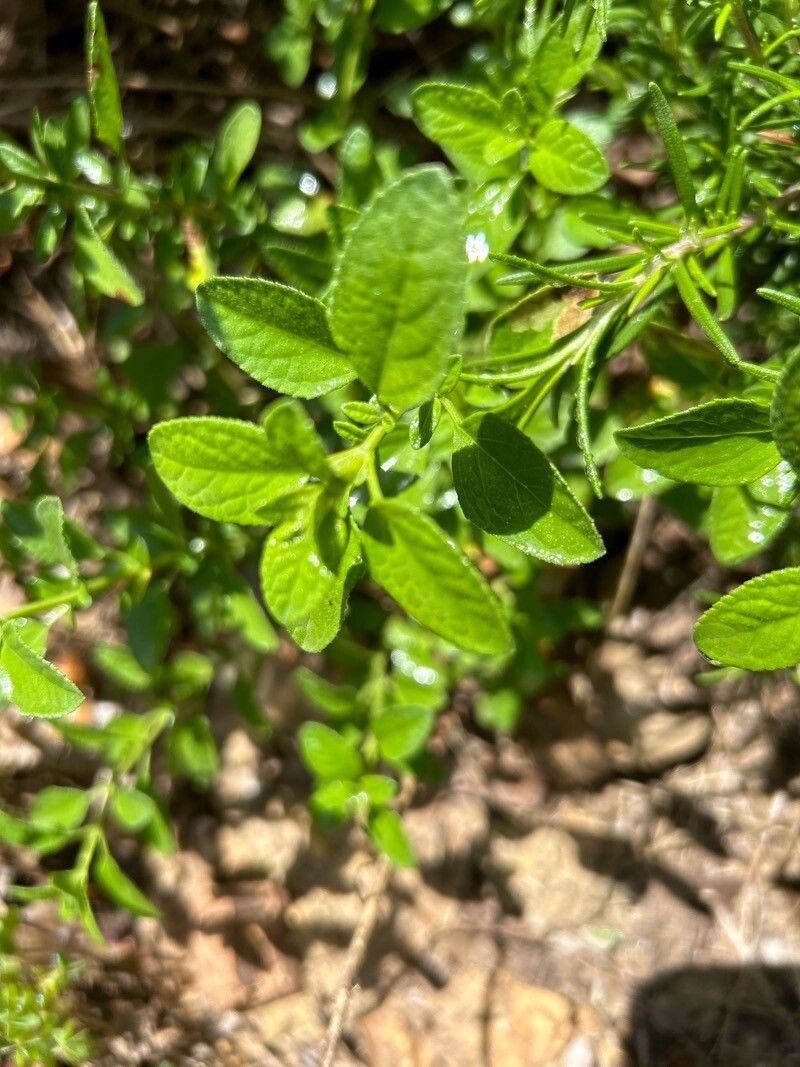
Salvia is the largest genus in the mint family, Lamiaceae, with roughly 900 to 1,000 species of annuals, biennials, perennials, and soft-wooded shrubs distributed across the Americas, Europe, Asia, and Africa. Plants share the square stems and opposite, often aromatic leaves of the mint family, with foliage ranging from 2 to 20 cm (0.8 to 8 in) long. The two-lipped flowers are carried in whorls along upright spikes and span blue, violet, purple, red, pink, white, and yellow, each 1–5 cm (0.4–2 in) long. A hinged stamen mechanism levers pollen onto visiting bees and, in red-flowered American species, hummingbirds. Plants range from the 30 cm (12 in) culinary sage S. officinalis to shrubby species over 2 m (6.5 ft) tall. Many species carry aromatic oils in the foliage that deter browsing animals. Flowering is long, often repeating from early summer to frost as old spikes are removed. Most species are short-lived and tender, and many grown as perennials in mild regions are treated as annuals where winters are cold.
Native Range
The genus is nearly cosmopolitan, with three main centers of diversity: Central and South America, central Asia and the Mediterranean, and eastern Asia. Species occupy habitats from dry hillsides to moist meadows across these regions.Suggested Uses
Used in borders, herb gardens, gravel and Mediterranean plantings, and containers, where the upright flower spikes draw bees and hummingbirds. Culinary species are grown for seasoning, and aromatic types for their scented foliage. The need for sharp drainage limits use in heavy, wet soils.How to Identify
Appearance
Size & Dimensions
Height1' - 6'
Width/Spread1' - 4'
Bloom Information
Detailed Descriptions
Flower Description
blue, violet, purple, red, pink, white, or yellowFoliage Description
green to gray-greenGrowing Conditions
Sun Requirements
Requires 6-10 hours of direct sunlight daily
• Full Sun: 6+ hours of direct sunlight
• Partial Shade: 3-6 hours of direct sunlight
• Full Shade: Less than 3 hours of direct sunlight
Water & Climate
Water Needs
Drought Tolerance
Drought tolerant when established
Care & Maintenance
Care Guide
Most species grow in full sun and sharply drained soil, tolerating a pH of 6.0 to 7.5 and lean ground. Established plants withstand drought, and many rot in wet winter soils through crown decay. Mediterranean and shrubby species are hardy only to USDA zones 7–10, while some herbaceous species reach zone 4. Tender species are grown as annuals or lifted over winter in cold regions. Light feeding keeps growth balanced, as rich soil produces lax stems. Cutting plants back after the first bloom maintains form and flowering.Pruning
Shearing spent flower spikes through the season prolongs bloom and tidies the plant. Cutting woody species back by a third in spring, once new growth appears, removes winter-damaged stems. Hard pruning into old bare wood often fails to resprout.Pruning Schedule
Prune: March & July
early springsummer
Container Growing
Suitable for container growing
Minimum container size: 2 gallons