Image 1 of 20
1 / 20
Plant Reference
Achillea, Genus, millefolium, Species,
- Genus & species
common yarrow
Circumboreal across temperate regions of Europe, western Asia, and North America; in North America the species is native from the Pacific coast east to the Atlantic and from the Arctic south into Mexico, growing in open meadows, prairies, roadsides, and other disturbed or low-fertility sites; naturalized widely beyond its native range
Overview
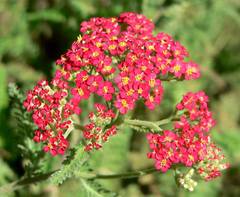
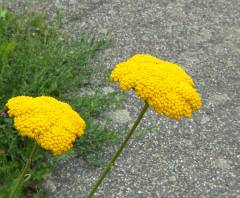
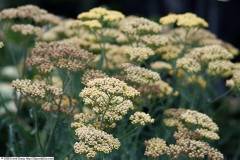
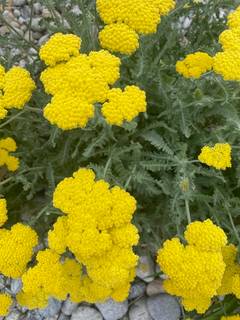
Achillea millefolium is a rhizomatous herbaceous perennial in the family Asteraceae with a circumboreal native range spanning temperate Europe, western Asia, and North America, and the species is one of a small number of cultivated perennials native to both Eurasia and North America (most species are native to a single continent). Plants grow 12-36 inches (30-90 cm) tall depending on soil fertility and moisture, spreading 18-36 inches (45-90 cm) wide through shallow rhizomes that produce dense colonies in open sites. Stems are upright to slightly sprawling, angular in cross-section, and covered in white woolly hairs. Leaves are alternate and bipinnately to tripinnately dissected into threadlike segments 2-5 inches (5-13 cm) long, giving the foliage the feathery appearance that gave the species its name (millefolium means thousand-leaved in Latin), and all plant parts carry a pungent camphorous aroma when crushed or damaged. Flat-topped corymbs 2-5 inches (5-13 cm) across open at stem tips from June through September, each corymb composed of many small flower heads with 3-8 short ray florets surrounding a yellow-white disc. The species-type flower color is white, pink-flowered variants occur in wild populations, and over a century of cultivated breeding has extended the color range into yellow ('Coronation Gold'), red ('Paprika', 'Red Velvet'), salmon, apricot ('Terracotta'), and various pink shades. The total bloom period across a colony extends 8-12 weeks, and cutting the plants back by one-half in July after the first bloom flush often stimulates a second round of flowers 4-6 weeks later in zones 4-7. In high-fertility or irrigated soils the stems grow taller, become weaker, and flop outward from the center of the clump — the species is adapted to lean low-moisture soils and flopping in rich garden conditions is the primary cultivation limitation. The rhizomatous spread is aggressive on open ground and colonies routinely extend beyond their intended area in 2-3 years, which makes the species better suited to meadow and naturalistic plantings than to formal borders with closely spaced companions. Common yarrow has a long history of medicinal use (the genus name honors the Greek hero Achilles, who according to Homer's Iliad used the plant to staunch the wounds of his soldiers at the siege of Troy) and contains a complex mixture of essential oils and other compounds that make the foliage and flowers toxic to dogs, cats, and horses in large quantities.
Native Range
Achillea millefolium has a circumboreal native range spanning temperate Europe, western Asia, and North America, a broad cross-continental distribution that is uncommon among cultivated perennials (most species are native to a single continent). In North America the species grows natively from the Pacific coast east to the Atlantic coast and from the Arctic regions of Alaska and northern Canada south into the mountains of Mexico, and taxonomic treatments have at various times separated the North American populations into distinct subspecies or varieties based on ploidy level and morphology. The species grows wild in open meadows, tallgrass and shortgrass prairies, roadsides, abandoned fields, and other open disturbed or low-fertility sites. European and North American populations have been moving around the temperate world through nursery commerce and agricultural seed contamination for at least two centuries, and the species is now naturalized on every continent except Antarctica.Suggested Uses
Planted in perennial borders, meadow plantings, pollinator and wildlife gardens, prairie restorations, and naturalized lawn mixtures at 18-24 inch (45-60 cm) spacing in zones 3-9. The long bloom period (8-12 weeks) and high pollinator value make yarrow a working component of pollinator meadow plantings, and the cut flowers and dried flowers carry well in floral arrangements and long-lasting winter dried bouquets. Colored cultivated selections extend the design palette beyond the white species type into yellow, red, salmon, apricot, and deep pink for coordinated perennial color schemes. The rhizomatous spread makes the species more suitable to naturalistic plantings than to formal closely-spaced borders where the aggressive colony expansion displaces smaller neighbors. Yarrow tolerates foot traffic along path edges and is a component of low-mow eco-lawn mixtures on lean low-fertility soils. Not suited to formal borders with closely spaced delicate perennials where the spreading colony displaces neighbors, rich irrigated soils where flopping requires staking, grazing pastures where the species is toxic to livestock, or deep shade where both bloom and stem strength deteriorate.How to Identify
Appearance
Size & Dimensions
Height1' - 3'
Width/Spread1'6" - 3'
Bloom Information
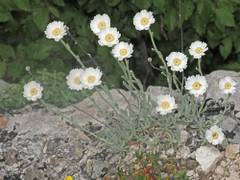
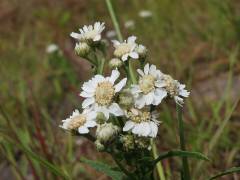
Flat-topped corymbs 2-5 inches (5-13 cm) across of small white flower heads open from June through September across most of the hardiness range, with bloom starting as early as May in zones 8-9 and as late as July in zones 3-4. Individual corymbs last 2-3 weeks of good display, and the total colony bloom period extends 8-12 weeks depending on zone. Cutting plants back by one-half in July after the first flush often stimulates a second round of flowering 4-6 weeks later in zones 4-7. Flowers are visited by bees, butterflies, hoverflies, and other short-tongued pollinators, and yarrow is a major component of pollinator-focused meadow plantings because of its long bloom period and accessible flat flower heads.
Detailed Descriptions
Flower Description
species type carries white ray florets surrounding a yellow-white disc; pink-flowered forms occur as natural variants; cultivated selections extend the color range into yellow, red, salmon, apricot, and deep pink; flowers are borne in flat-topped corymbs 2-5 inches (5-13 cm) across with each corymb composed of many small flower heads carrying 3-8 small ray florets eachFoliage Description
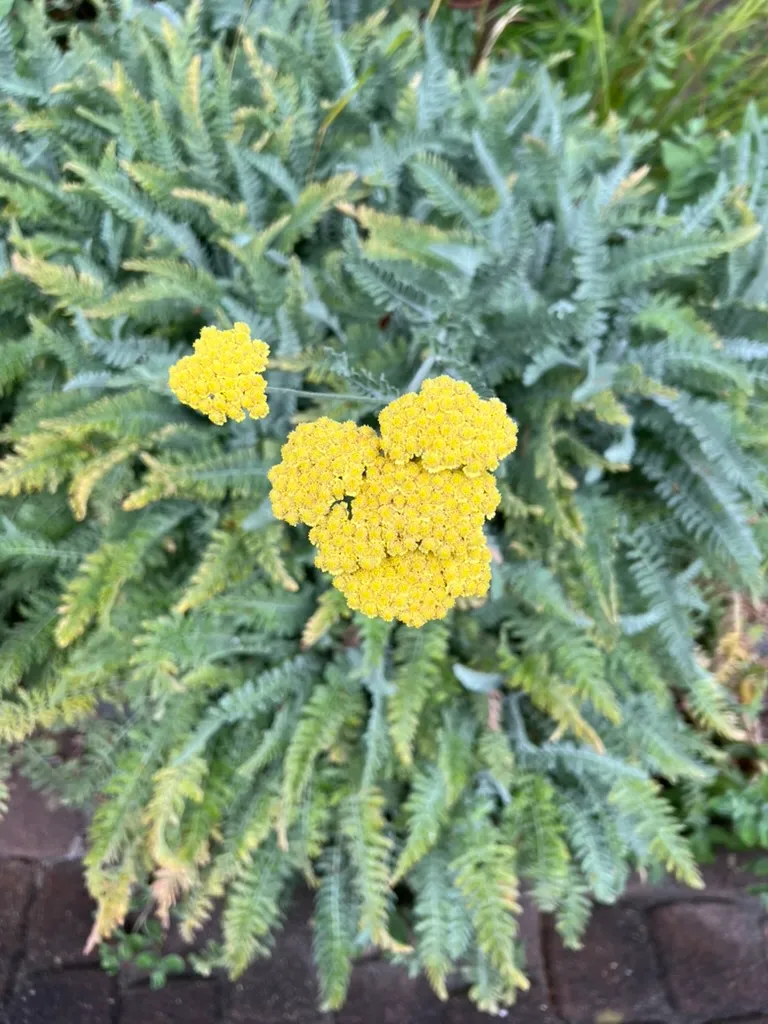
gray-green and aromatic; bipinnately to tripinnately dissected into threadlike segments 2-5 inches (5-13 cm) long, giving the foliage a feathery appearance that is the source of the species name millefolium (thousand-leaved); alternate arrangement on woolly-hairy stemsGrowing Conditions
Sun Requirements
Requires 4-12 hours of direct sunlight daily
• Full Sun: 6+ hours of direct sunlight
• Partial Shade: 3-6 hours of direct sunlight
• Full Shade: Less than 3 hours of direct sunlight
Care & Maintenance
Care Guide
Plant in well-drained soil with a pH of 5.5-7.0 in full sun to partial shade (4-12 hours); full sun produces the densest flowering and strongest stems. Tolerated soil types include loam, sand, and clay. The species is drought-tolerant once established and tolerates 3-5 weeks without supplemental watering during normal summer conditions, and extended drought causes lower leaves to yellow and die back but rarely kills established plants. Rich or irrigated soil produces taller, weaker stems that flop outward from the center of the clump in mid-summer, and lean low-fertility soil without added compost or fertilizer is the working condition for upright flower stems without staking. Rhizomatous colonies spread aggressively on open ground, and division of clumps every 2-3 years in spring or fall is the standard management approach to keep yarrow within its intended area. Powdery mildew develops on foliage in humid conditions with poor air circulation but is cosmetic rather than fatal and rarely requires treatment. Aphids occasionally feed on new growth but populations self-regulate through beneficial insect predation. In zones 3-5 a light mulch after first hard frost protects the crown through winter temperature extremes. The foliage and flowers are toxic to dogs, cats, and horses in substantial quantities and the species is poorly suited to grazing pastures. Deer browse is rare.Pruning
Plants are cut back by one-half in late June through July after the first bloom flush to stimulate a second round of flowering 4-6 weeks later in zones 4-7. In late fall after foliage dies back, all stems are cut to 6-8 inches (15-20 cm) above ground level, or alternatively the stems are left standing through winter for structural interest and bird seed foraging and cut back in early spring before new growth emerges. Rhizomatous clumps are divided in spring or fall every 2-3 years by digging and splitting the root mass with a spade or sharp knife, which controls spread and rejuvenates older plants that have begun to die out from the center.Pruning Schedule
Prune: March & July
summerearly spring